

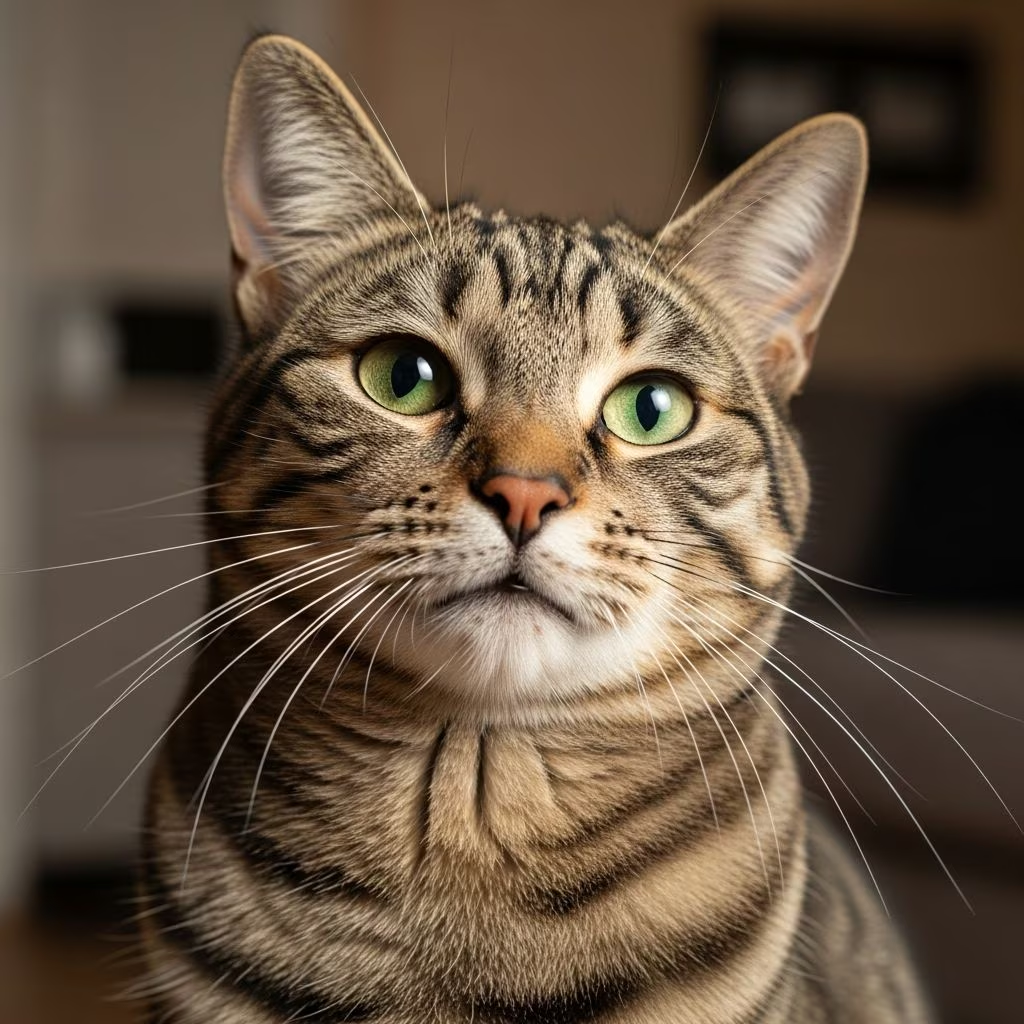
The gentle, rumbling sound of a cat’s purr is one of the most soothing aspects of feline companionship. But did you know that not all purrs are created equal? Cats produce different types of purrs, each conveying unique emotions or needs, from pure contentment to subtle requests for food or even self-soothing during distress. This article delves into the science of purring, explores the various purr types, and explains how these vibrations may promote healing. Understanding these nuances can deepen your bond with your cat and help you respond to their subtle cues more effectively.
How Do Cats Produce Purrs?
The exact mechanism of cat purring has long intrigued scientists, but recent research points to the larynx, or voice box, as the primary source. As air flows over the vibrating vocal cords during both inhalation and exhalation, it creates the characteristic rumbling sound. The laryngeal muscles rapidly contract—up to 20-30 times per second—causing the glottis (the space between the vocal cords) to open and close, producing vibrations.
Key elements include a unique ‘neural oscillator’ in the cat’s brain that triggers these muscle movements subconsciously, without the cat needing to consciously control it. Pads in the vocal cords may also facilitate this process, and muscular input from the larynx is essential, as evidenced by the absence of purring in cats with laryngeal paralysis. Frequencies typically range from 20-30 Hz in domestic cats, with variations between inhalation (ingressive) and exhalation (egressive) phases.
Not all felids purr equally. Cats with fully ossified hyoid bones, like domestic cats, cheetahs, and pumas, can purr, while big cats like lions and tigers with incompletely ossified hyoids roar but cannot purr. This anatomical difference underscores the evolutionary divergence in feline vocalizations.
Healing Frequencies of Cat Purrs
Cat purrs vibrate at frequencies between 25 and 150 Hz, a range that coincides with those known to promote bone healing, reduce pain, and aid wound recovery in humans and animals. Researcher Elizabeth Von Muggenthaler has proposed that purring serves as a ‘natural healing mechanism,’ potentially strengthening bones and easing discomfort.
Studies show these low-frequency vibrations can expedite healing for burns and fractures while providing pain relief. The consistent rumble may help cats self-heal during injury or stress, explaining why injured cats often purr. For owners, the therapeutic effect extends to humans—listening to a cat’s purr can lower stress and blood pressure, fostering mutual well-being.
Types of Cat Purrs
Cats exhibit remarkable vocal flexibility, with purrs varying by context. Each cat’s purr is unique, like a fingerprint, often more individually recognizable than their meows. Purrs generally signal relaxation but can convey hunger, pain, or fear. Here’s a breakdown of the main types:
- Contentment Purr: The classic ‘happy purr’ occurs during petting, cuddling, or self-satisfaction. It’s steady, low-volume, and rhythmic, indicating pleasure and trust.
- Solicitation Purr: Used to request food or attention, this purr embeds a high-frequency ‘cry’ component, mimicking human baby cries to elicit caregiver responses. Humans can distinguish it from non-solicitation purrs subconsciously.
- Pain or Distress Purr: Contrary to common belief, cats purr when injured, anxious, or frightened as a self-soothing mechanism. It’s often lower amplitude and paired with other stress signals like flattened ears.
- Mother-Kitten Purr: Mothers purr to communicate with and soothe newborns, guiding them to milk sources via vibrations. Kittens purr in response to signal safety.
- Communication Purr: In multi-cat households, purrs convey affiliation or territory, with variations in pitch and volume signaling social bonds or mild tension.
| Purr Type | Frequency Range | Context | Human Perception |
|---|---|---|---|
| Contentment | 20-30 Hz | Relaxation, petting | Pleasant, soothing |
| Solicitation | 20-50 Hz + high cry | Hunger, attention-seeking | Urgent, manipulative |
| Pain/Distress | 25-150 Hz | Injury, fear | Subdued, concerning |
| Mother-Kitten | 20-27 Hz | Nursing, bonding | Gentle, nurturing |
Can All Cats Purr?
Domestic cats (Felis catus) purr reliably, but not all wild felids do. Purring cats include cheetahs (18-23 Hz), pumas, ocelots, servals, and lynxes, all with flexible hyoid structures supporting the larynx. Roaring cats like lions, tigers, jaguars, and leopards cannot purr due to their elongated vocal tracts and incompletely ossified hyoids, which prioritize roaring.
Interestingly, the snow leopard purrs despite a partially ossified hyoid, challenging strict anatomical rules. Domestication has amplified vocal variability in house cats, making purrs more stable and identifiable than meows, which adapt to situations.
Why Do Cats Purr?
Purring serves multiple evolutionary purposes beyond contentment. Kittens purr to communicate contentment while nursing, strengthening mother-offspring bonds. Adults purr for pleasure, but also during pain to self-soothe, possibly activating healing vibrations.
Solicitation purrs exploit human nurturing instincts, blending purrs with meow-like cries for food. In social contexts, purrs signal non-threat and affiliation. Recent studies confirm purrs reveal individual identity better than meows, aiding recognition in familiar groups. Overall, purring enhances survival through communication, healing, and bonding.
Frequently Asked Questions (FAQs)
What does it mean when my cat purrs?
Your cat’s purr usually signals contentment, but context matters—it could also indicate hunger, pain, or anxiety. Observe body language for clues.
Do all cats purr the same way?
No, each cat’s purr is unique in pitch, volume, and pattern, much like fingerprints. Purrs are more individually consistent than meows.
Why do cats purr when stressed or in pain?
Purring acts as self-soothing, with healing frequencies (25-150 Hz) potentially aiding recovery from injury or reducing pain perception.
Can purring help humans heal?
Yes, the 25-150 Hz vibrations may promote bone growth, ease pain, and lower stress in humans exposed to cat purrs.
Why can’t big cats like lions purr?
Big cats have incompletely ossified hyoids suited for roaring, not the rapid glottis vibrations needed for purring.
Is purring voluntary?
No, it’s subconscious, driven by a brain neural oscillator and laryngeal muscles during breathing.
References
- Purr – Wikipedia — Wikipedia contributors. 2023-10-01. https://en.wikipedia.org/wiki/Purr
- Decoding the Cat’s Purr — Heineke Veterinary Hospital. 2023-01-15. https://heinekevet.com/decoding-the-cats-purr/
- Different Types of Cat Purrs: Vet-Reviewed Sounds & Science — Catster. 2024-05-20. https://www.catster.com/lifestyle/different-types-of-cat-purrs/
- Why and how do cats purr? — Library of Congress. 2023-11-10. https://www.loc.gov/everyday-mysteries/zoology/item/why-and-how-do-cats-purr/
- Cats’ purrs reveal who’s who better than their meows — Phys.org. 2025-12-15. https://phys.org/news/2025-12-cats-purrs-reveal-meows.html
- What Do My Cat’s Purrs Mean? — Cat Friendly Homes. 2023-08-05. https://catfriendly.com/why-does-my-cat/why-does-my-cat-purr/
- Feline Love Language: What the Purr Means — Fear Free Happy Homes. 2024-02-28. https://www.fearfreehappyhomes.com/feline-love-language-what-the-purr-means/



