

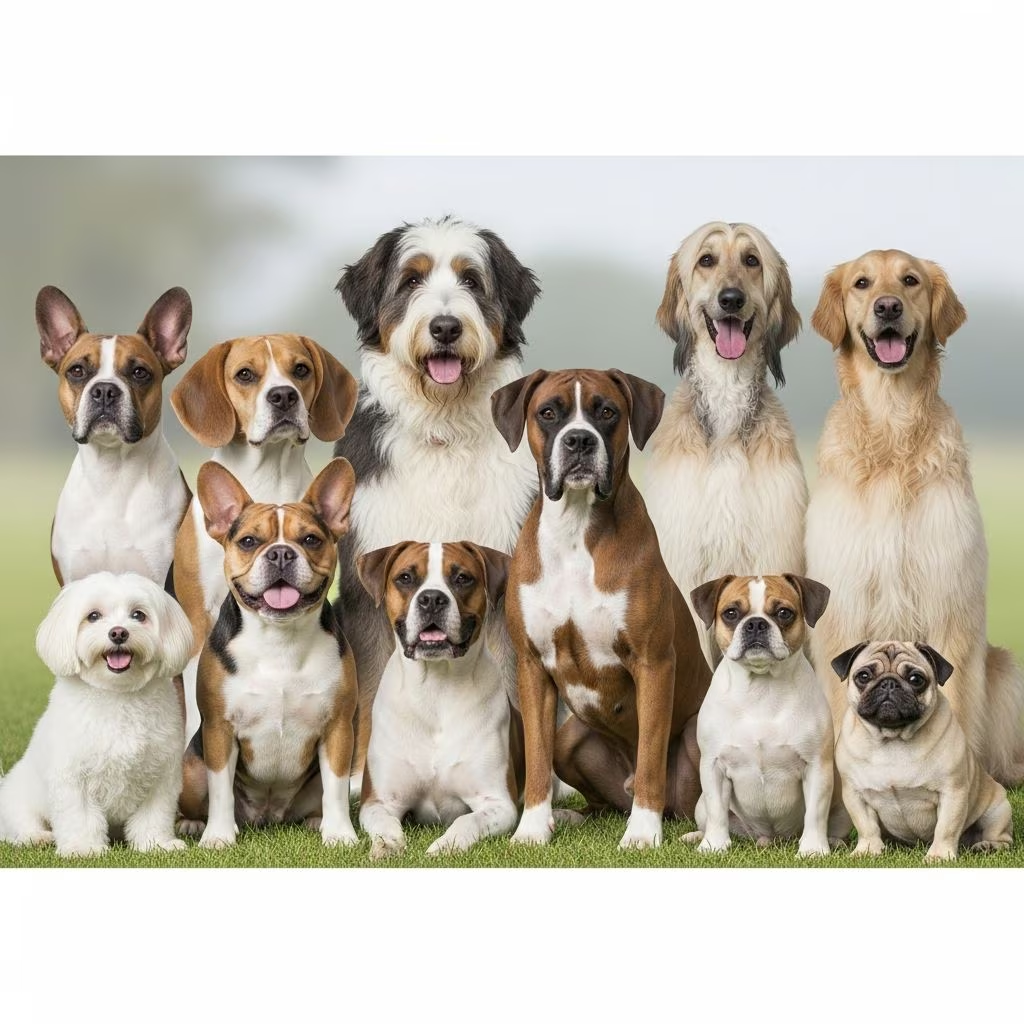
Dogs experience taste differently from humans, relying heavily on their sense of smell rather than taste buds alone. With around 1,700 taste buds compared to humans’ 9,000, canines prioritize meaty flavors and aromas that trigger strong preferences.
How Many Taste Buds Do Dogs Have?
Dogs possess approximately **1,700 taste buds**, significantly fewer than the 9,000 found in humans. Each taste bud contains about 50 taste-receptor cells, enabling detection of basic flavors like meaty, sour, salty, and possibly umami. However, their taste perception is secondary to olfaction.
Research confirms dogs’ taste receptors respond to chemicals triggering human-like sensations, but with less intensity. A pilot study using a 2-bowl test on pet dogs showed clear individual preferences among four poultry-flavored commercial foods, with dogs consuming far more of their preferred option—often exclusively.
This limited taste bud count explains why dogs are less discerning about subtle flavors but excel at detecting meaty profiles. Early studies from the 1970s aligned dog taste responses with human triggers, though modern research emphasizes smell’s dominance.
What Can Dogs Taste?
Dogs can detect **four primary tastes**: salty, sour, sweet (though weakly), and bitter, with a strong affinity for meaty/umami flavors. Unlike humans, their sensitivity to sweet is minimal due to fewer dedicated receptors.
- Meaty/Umami: Most preferred; tests show dogs favor beef and pork over chicken or lamb.
- Salty: Appealing in moderation, enhancing palatability.
- Sour: Detectable but often less favored.
- Bitter: Receptors present but fewer than humans’; some dogs avoid bitter foods like certain berries.
- Sweet: Limited perception; dogs do not crave sweets like humans, debunking myths of sugar-loving pups.
In a NIH-funded pilot, dogs showed bimodal consumption patterns—either devouring one food or ignoring it—highlighting strong, binary preferences rather than nuanced tasting.
Taste vs. Smell: Which is More Important for Dogs?
For dogs, **smell trumps taste**, with up to a **90% correlation** between odor preference and overall food acceptance. Dogs have 200-300 million olfactory neurons (vs. humans’ 6 million), dedicating 10-40% of their brain to smell.
When dogs approach food, they sniff first; scent chemicals interact with taste buds to enhance flavor perception. In the 2-bowl study, dogs chose based on odor before tasting, consuming 89% more of their first pick, suggesting visual/olfactory cues drive selection.
“Dogs nearly always consumed more of the food chosen first, indicating selection via odor rather than taste sampling.”
Moisture and texture also factor in—warm, moist foods are preferred over dry, cold ones—but smell remains primary. Without appealing aromas, even nutritious food may be rejected.
Why Do Dogs Have Different Tastes?
Individual **taste preferences** in dogs stem from genetics, early experiences, and physiology. Puppies’ preferences can be shaped by their mother’s diet during pregnancy and nursing, imprinting flavors from familiar foods.
The pilot study revealed dog-specific patterns: some universally preferred one food (e.g., Food 1 over others), while others split between options. Factors like stronger initial preferences predicted better first-choice accuracy.
Industry experts note dogs favor higher-calorie, protein-rich formats, but balance is key for health. Palatability drivers include smell (90%), moisture, and texture.
| Factor | Influence on Preference | Example |
|---|---|---|
| Genetics | High | Bitter avoidance varies by breed/lineage |
| Early Exposure | High | Puppy food imprints lifelong tastes |
| Smell | 90% correlation | Meaty aromas boost acceptance |
| Texture/Moisture | Moderate | Warm/wet > dry/cold |
Do All Dogs Like the Same Flavors?
No—**preferences vary widely**. While most favor beef/pork over chicken/lamb, individuals differ. The 2-bowl test across six dogs showed some strongly preferred Food 1, others split between Foods 2/3, and one (Bo) showed weak distinctions.
Commercial panels with 42 dogs confirmed exclusive consumption of one option, mirroring pet behaviors. Strong aromas or high protein draw crowds, but picky eaters exist due to past experiences or health.
- Universal: Meaty > poultry in many tests.
- Variable: Some reject bitter or strong odors.
- Learned: Early weaning foods set baselines.
Why Is My Dog a Picky Eater?
Picky eating often ties to **smell dissatisfaction**, health issues, or routine changes. If aroma lacks appeal (e.g., stale food), dogs ignore it despite nutrition. Studies show non-preferred foods are eaten minimally or not at all.
Other causes:
- Dental pain: Makes chewing unpleasant.
- Age: Seniors lose taste/smell sensitivity.
- Stress: New environments suppress appetite.
- Overfeeding treats: Reduces meal interest.
Tip: Warm food to release aromas, mimicking fresh kills.
What Should I Feed My Picky Dog?
Opt for **high-palatability foods** with strong meaty smells, moisture, and variety. Test preferences via 2-bowl method at home. Balance with nutrition—avoid over-relying on toppers.
- Protein-first formulas (beef/pork bases).
- Wet or rehydrated kibble for moisture.
- Novel flavors to combat boredom.
- Consult vets for underlying issues.
Research stresses matching caloric density to preferences without excess.
Frequently Asked Questions (FAQs)
Do dogs have taste buds?
Yes, dogs have about 1,700 taste buds focused on meaty, salty, sour, and bitter flavors, though less sensitive than humans.
Can dogs taste sweet?
Dogs detect sweet weakly due to fewer receptors; they don’t crave it like humans and rely more on smell.
Why do dogs sniff food before eating?
Smell drives 90% of palatability; they assess via odor first, enhancing taste perception.
Do puppies’ tastes change?
Early dam diet imprints preferences, but exposure expands palates over time.
How to test my dog’s food preference?
Use a 2-bowl test: offer equal portions, observe first choice and consumption—predicts strong likes accurately.
References
- Food and Food-Odor Preferences in Dogs: A Pilot Study — National Center for Biotechnology Information (PMC). 2018-03-15. https://pmc.ncbi.nlm.nih.gov/articles/PMC5863557/
- Palatable preferences — Petfood Processing. 2024-01-01. https://www.petfoodprocessing.net/articles/18894-palatable-preferences
- Accounting for Taste: What Do Dogs Find Most Delicious? — American Kennel Club (AKC). 2023-05-12. https://www.akc.org/expert-advice/nutrition/accounting-taste-probing-mysteries-dogs-find-delicious/
- The Science Behind Dogs’ Taste Buds — WoofCrate. 2024-08-20. https://woofcrate.ca/blogs/woofpost-blog/the-science-behind-dogs-taste-buds
- How Good Is Your Dog’s Sense of Taste? — Psychology Today. 2011-04-15. https://www.psychologytoday.com/us/blog/canine-corner/201104/how-good-is-your-dogs-sense-of-taste



