

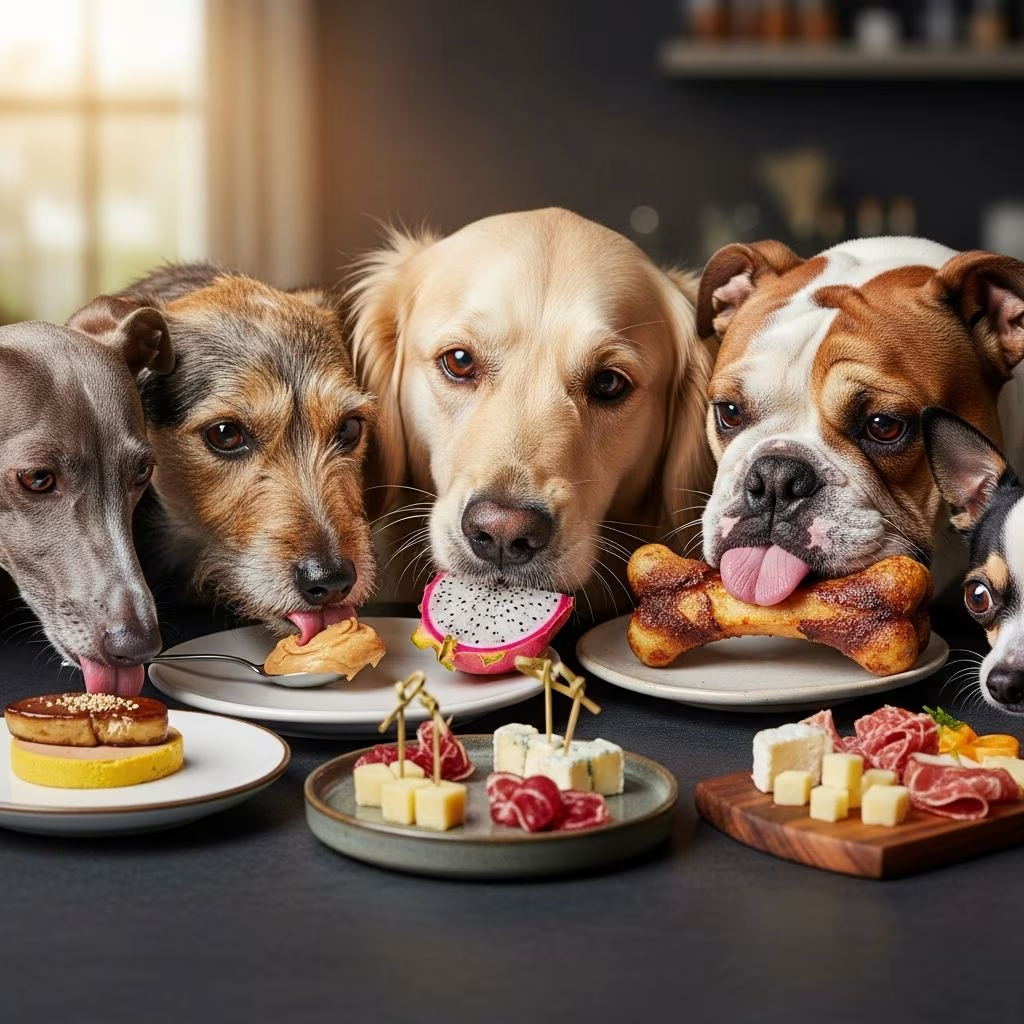
Dogs exhibit highly individualized food preferences, primarily driven by their acute sense of smell rather than taste alone. Research shows smell correlates up to 90% with taste preference in dogs, with olfaction comprising about 10% of their brain dedicated to detecting aromas.
How Dogs Experience Taste and Smell
Dogs possess around 1,700 taste buds compared to humans’ 9,000, making their sense of taste less dominant. However, they detect sour, bitter, salty, sweet, and umami flavors, with umami and meaty tastes particularly appealing due to associations with nutrient-rich animal tissues.
Their olfactory system is far superior, featuring over 200-220 million olfactory neurons. This allows dogs to discern food quality through scent before tasting, often choosing based on odor during initial sampling.
- Smell primacy: Up to 90% correlation between odor preference and consumption.
- Taste sensitivity: Less acute than smell; dogs favor higher moisture, texture, and calorie-dense foods.
- Olfactory power: Nose directs warmed, moistened air to epithelium for precise detection.
In a pilot study using a modified 2-bowl test, pet dogs showed clear preferences among four commercial poultry-flavored foods (Old Roy, Nutro Natural Choice, Royal Canin Medium Adult, Purina Dog Chow), consuming far more of preferred options after initial odor-based selection. Preferences strengthened over repeated tests, with 89% eating more of their first-chosen food.
Factors Influencing Dog Food Preferences
Several elements shape why one dog devours kibble while another snubs it.
Genetics and Breed Differences
Genetic factors influence palatability preferences. Early-life experiences and breed heritage play roles; for instance, breeds with hunting backgrounds may prefer gamier scents.
Dogs tend toward exclusive consumption of preferred foods, eating large quantities of one and ignoring others, as seen in bimodal intake distributions.
Age and Life Stage
Puppies often explore widely but develop strong preferences young. Seniors may become picky due to dental issues or reduced smell sensitivity, favoring softer, moisture-rich foods.
Higher moisture boosts elasticity and aroma release, enhancing appeal.
Health and Medical Influences
Illness, dental pain, or medications can alter taste perception. Gastrointestinal issues may link to food aversions, while parasites or allergies mimic pickiness.
| Factor | Impact on Preference | Example |
|---|---|---|
| Genetics | Predisposes to specific flavors/aromas | Hunting breeds favor meaty scents |
| Age | Seniors prefer moist textures | Increased moisture aids acceptance |
| Health | Dental pain reduces hard kibble intake | Shift to soft foods |
| Experience | Early exposure sets lifelong tastes | Consistent feeding builds loyalty |
Texture, Moisture, and Temperature
Dogs prioritize after smell: moisture (even small increases boost acceptability), texture (crunchy vs. soft), and temperature (warm enhances aroma).
Studies confirm higher-calorie formats are favored, but must balance with total intake.
Why Is My Dog a Picky Eater?
Pickiness often stems from abundant choices leading to neophilia (novelty-seeking). Dogs may reject familiar food after sampling varied treats.
- Overfeeding treats: Disrupts meal appetite.
- Inconsistent routine: Free-feeding erodes hunger drive.
- Low-quality base diet: Unappealing smell/texture.
- Stress/anxiety: Suppresses appetite.
In preference tests, dogs like Bo showed weaker choices, predicting less reliable first-sniff selections.
How to Improve Your Dog’s Appetite
Enhance palatability scientifically.
- Warm the food: Releases more volatiles, mimicking fresh prey warmth.
- Add toppers: Safe, low-cal options like bone broth or fish oil amplify aroma.
- Establish routine: Scheduled meals build hunger; remove uneaten food after 15-20 minutes.
- Enhance moisture: Soak kibble for better release and texture.
- Consult vet: Rule out medical causes before assuming behavioral pickiness.
Panel tests mirror home behavior: dogs gorge preferred foods, avoiding others.
Choosing the Right Food for Your Dog
Match to preferences while prioritizing nutrition.
- Ask the shelter/breeder: Note past successes.
- Observe reactions: Enthusiasm, quick eating signal hits.
- Perform home tests: Offer two foods side-by-side; measure intake over days.
- Nutritional balance: Palatability secondary to complete profiles (AAFCO standards).
Umami-rich animal proteins boost appeal without excess calories.
Dog Food Preference Testing at Home
Replicate lab methods safely.
Simple 2-Bowl Test
Equal portions of two foods; observe first choice and 10-minute intake. Repeat 3-5 days for patterns.
- Prevent pre-meal snacking.
- Measure precisely.
- Avoid influencing (stay neutral).
Interpreting Results
Intake ratio >2:1 indicates strong preference. Consistent first-choice alignment predicts reliability.
No preference? Alternate or mix for variety.
Frequently Asked Questions (FAQs)
Why do dogs sniff food before eating?
Dogs rely on smell (90% driver) to assess palatability via 200M+ neurons; taste confirms.
Can dogs taste sweet flavors?
Yes, but less sensitively than humans; they detect but prioritize savory/umami.
How does smell affect dog food choice?
Primary factor; dogs choose odor-preferred foods first and consume 89% more of them.
What makes dog food more palatable?
Strong aromas, moisture, texture, animal proteins; warm enhances volatiles.
Is pickiness genetic?
Partly; combined with experience, breeds show flavor predispositions.
Key Takeaways
- Smell dominates (90% correlation); taste secondary.
- Individual preferences clear in tests; strengthen over time.
- Boost appeal: warm, moisten, routine feed.
- Test at home for best match.
References
- Food and Food-Odor Preferences in Dogs: A Pilot Study — Nicoll et al., PMC – NIH. 2018-03-15. https://pmc.ncbi.nlm.nih.gov/articles/PMC5863557/
- Palatable preferences — Pet Food Processing. 2024-01-01. https://www.petfoodprocessing.net/articles/18894-palatable-preferences
- Sensory attributes, dog preference ranking, and oxidation rate… — Silva et al., Journal of Animal Science (Oxford Academic). 2022-08-01. https://academic.oup.com/jas/article/100/8/skac191/6590789
- The Science Behind Dogs’ Taste Buds — WoofCrate. 2023-05-10. https://woofcrate.ca/blogs/woofpost-blog/the-science-behind-dogs-taste-buds



