

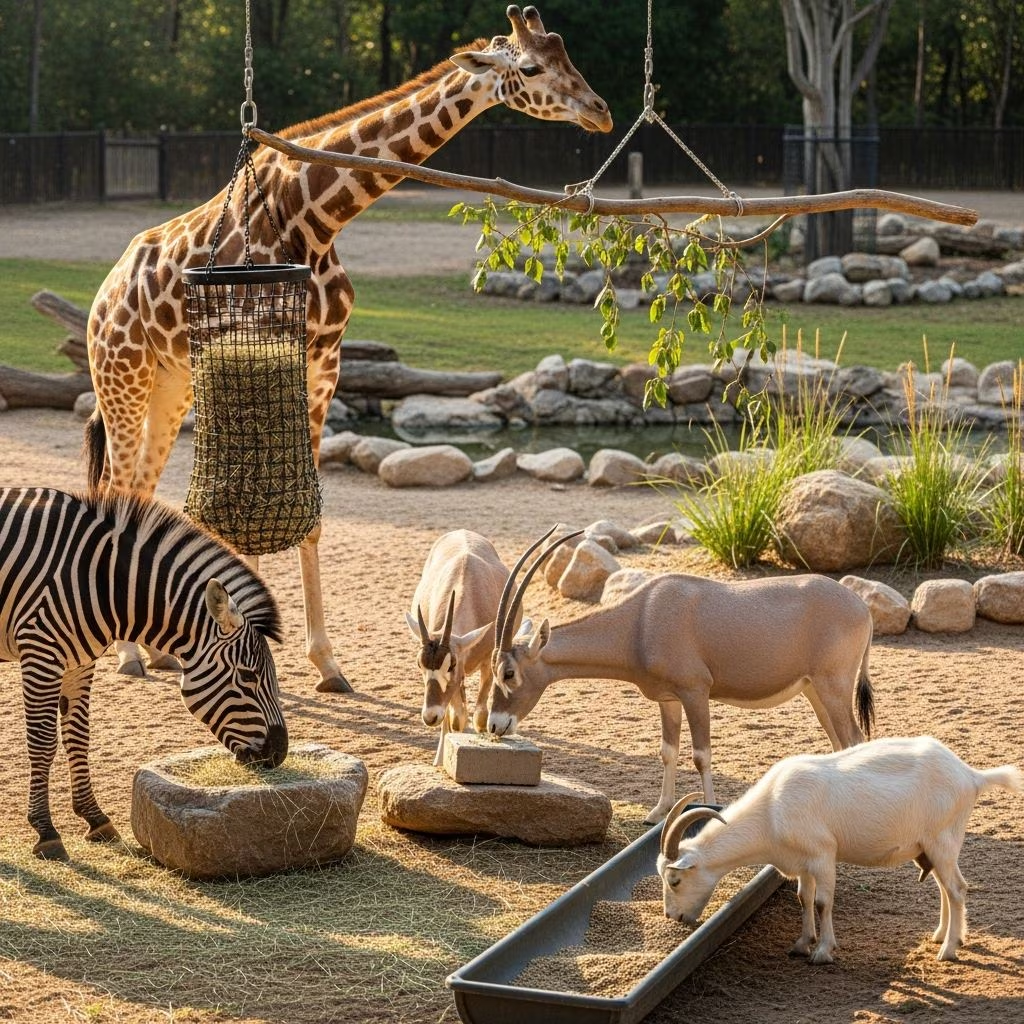
Introduction to Captive Ungulate Nutrition
Managing the dietary needs of hoofed animals in captive environments presents unique challenges that differ significantly from their wild counterparts. Unlike free-roaming populations that naturally select diverse forage sources, animals in zoo and managed settings depend entirely on caretakers to provide nutritionally complete diets. The absence of established universal nutritional standards for ungulates and related species means that animal care professionals must adapt knowledge from domestic livestock species while accounting for the specific physiological demands of exotic hoofed animals.
The foundation of any successful ungulate feeding program rests on understanding the distinction between grazing and browsing species, as their natural feeding behaviors translate directly into dietary requirements and food preferences. This foundational knowledge enables handlers to design feeding protocols that not only meet basic nutritional needs but also support psychological well-being through species-appropriate feeding practices.
Forage as the Nutritional Cornerstone
High-quality forage forms the dietary foundation for nearly all hoofed animals in captivity. Rather than relying on a single hay source, progressive facilities recognize that consistent hay analysis provides critical information about nutrient profiles and allows for informed supplementation decisions. Analyzing each batch of hay for dry matter content, crude protein, crude fat, neutral detergent fiber (NDF), and acid detergent fiber (ADF) enables caretakers to adjust concentrate supplementation proportionally.
The selection between grass-based and legume-based hays should account for the specific species being fed. Commercially harvested hay frequently contains suboptimal levels of essential vitamins and minerals, necessitating careful supplementation to address these natural deficiencies. While many animals readily consume hay regardless of quality, prioritizing palatable, well-preserved forage supports both digestion and overall nutritional intake.
Critical Mineral Analysis in Forage
Comprehensive forage testing should include evaluation of the following minerals:
- Calcium and phosphorus ratios
- Magnesium, manganese, and selenium concentrations
- Trace mineral profiles including copper, zinc, and cobalt
- Iron content and bioavailability
These minerals play essential roles in bone development, enzyme function, reproductive success, and immune competence. Imbalances can manifest subtly through reduced growth rates, poor coat quality, or increased disease susceptibility before obvious clinical signs appear.
Concentrate Supplementation Strategies
Pelleted concentrate feeds serve a critical supplementary role but carry inherent risks when provided in excessive quantities. The primary objective of concentrate feeding involves delivering vitamins and minerals absent in forage while maintaining digestive health. Grazing-oriented species should receive no more than 20% of their daily calories from concentrated pellets, while browsing species tolerate higher concentrate levels up to 35% of total diet when necessary.
Selecting appropriately sized pellets prevents selective consumption and ensures uniform nutrient intake across group-fed animals. A pellet diameter of 5-10 millimeters accommodates most ungulate species while remaining small enough to prevent choking hazards and large enough to promote proper rumen or colon function.
Minimizing Digestive Complications
Excess concentrate consumption provokes various gastrointestinal complications including acidosis, colic, and obesity. These conditions become particularly problematic in group feeding situations where individual animals cannot be monitored for overconsumption. Energy-dense pellets must be formulated with sufficient fiber content to support proper microbial fermentation and maintain healthy intestinal motility.
Animals provided with access to unlimited concentrates may preferentially consume pellets over forage, a behavioral pattern that inevitably leads to nutritional imbalances and digestive disease. Progressive facilities implement portion-controlled feeding schedules that emphasize forage intake while maintaining concentrate supplementation within safe parameters.
Browser Versus Grazer Pellet Formulations
Species-specific pellet formulations account for the different nutritional demands between animals adapted to consuming ground-level grasses and those evolved to browse elevated vegetation. Browser pellets contain elevated crude fiber and NDF concentrations (25% and 40% respectively) to support the digestion of woody browse materials, while grazer formulations emphasize moderate fiber levels (15% and 25% respectively) optimized for grass fermentation.
| Nutrient Component | Browser Pellet Target Range | Grazer Pellet Target Range |
|---|---|---|
| Crude Protein | 13–20% | 12–16% |
| Crude Fat | 3–5% | 3–5% |
| Crude Fiber | 20–30% | 15–20% |
| Calcium | 0.8–1.4% | 0.6–0.9% |
| Phosphorus | 0.5–0.8% | 0.5–0.7% |
| Vitamin A (IU/kg) | 8,000–15,000 | 9,000–20,000 |
| Vitamin E (mg/kg) | 600–800 | 300–1,000 |
Vitamin and Mineral Supplementation Principles
Most forage sources contain minimal amounts of biotin, selenium, and vitamins A, D, and E. Targeted supplementation with B-complex vitamins, unsaturated fatty acids, and macroelements including magnesium, sodium, and potassium corrects these deficiencies. Microminerals requiring supplementation include copper, cobalt, manganese, iodine, iron, and zinc.
However, oversupplementation presents equally serious health consequences. Excessive iron supplementation can trigger hemosiderosis—a condition involving pathological iron accumulation in organs—particularly in certain browsing species. Black rhinos exemplify this sensitivity and require dietary iron restricted to less than 100 milligrams per kilogram of dry matter. Other specialized species may demonstrate similar hemosiderosis susceptibility, warranting conservative iron supplementation practices.
Species-Specific Nutritional Considerations
While establishing universal ungulate feeding guidelines provides a practical starting point, individual species sometimes require tailored dietary approaches based on unique physiological characteristics. Large grazing species such as elephants benefit from supplemental calcium supplied through specialized grazer pellets, supporting their massive skeletal structure and the demands of their extended lifespan.
Dietary plasticity—the ability to consume and derive nutrition from diverse plant materials—varies considerably among hoofed animals. Some species demonstrate remarkable flexibility in consuming both browse and grass materials depending on seasonal availability, while specialists require more narrowly defined plant material to thrive. Understanding each species’ natural feeding ecology guides more sophisticated dietary planning.
Salt Blocks and Mineral Supplementation Access
Continuous access to salt blocks containing balanced vitamin and mineral supplements addresses electrolyte needs while providing enrichment opportunities. Mineral-fortified salt blocks designed specifically for exotic species supply elevated concentrations of targeted microelements and macronutrients beyond those present in standard salt products.
Despite their benefits, salt blocks require careful monitoring to prevent behavioral complications. Excessive salt block consumption can promote stereotypic behaviors and neurotic activity patterns, particularly in animals experiencing inadequate environmental enrichment or psychological stress. Supervision of salt block access and provision of alternative enrichment activities helps maintain natural behavior patterns while preventing salt toxicity.
Practical Implementation of Feeding Programs
Group Feeding Considerations
Most captive facilities maintain ungulates in social groups rather than feeding individual animals, presenting challenges for precise nutritional management. Pelleted diets designed with moderate energy density and adequate fiber content reduce the risk of selective overconsumption that occurs when individual animals compete for preferred forage or concentrate sources. This precaution minimizes gastrointestinal disease and metabolic complications arising from unequal nutrient distribution.
Hay Selection and Storage
Procurement of consistent, high-quality hay represents a foundational step in ungulate nutrition management. Palatable, well-preserved hay encourages adequate forage consumption, even when animals simultaneously receive pelleted concentrates. Conversely, poor-quality or moldy hay remains a persistent problem, as some animals paradoxically consume inferior forage despite having access to superior alternatives, potentially leading to nutritional deficiency or mycotoxin exposure.
Nutrient Analysis Workflow
Implementing a systematic approach to forage evaluation enhances dietary precision. Rather than assuming consistent hay composition across different harvests or suppliers, analyzing representative samples from each new hay batch enables rapid adjustment of concentrate supplementation. This proactive approach prevents both deficiency and excess while demonstrating measurable improvements in animal condition scores and reproductive success.
Advanced Nutritional Concepts for Captive Populations
Energy Demands Across Life Stages
Nutritional requirements fluctuate significantly across different physiological states. Gestating females—particularly during the final trimester—experience substantially elevated energy demands, with costs approaching 50% higher than non-reproductive baselines. Lactating females face even greater metabolic demands extending across months, requiring compensatory energy intake beyond baseline maintenance requirements.
Young, growing animals demand diets optimized for rapid tissue deposition while avoiding skeletal deformities from mineral imbalances. Aging populations require careful management to maintain body condition without obesity, particularly as metabolic efficiency naturally declines in later years.
Seasonal Nutritional Planning
While captive animals theoretically receive consistent nutrition year-round, mimicking natural seasonal variation may support physiological rhythms and behavioral patterns. Adjusting forage types, concentrate timing, and supplementation levels to reflect natural seasonal transitions can enhance reproductive success, immune competence, and overall welfare.
Enrichment Through Dietary Variation
Beyond meeting nutritional requirements, feeding practices provide valuable opportunities for environmental enrichment. Providing diverse hay types including alfalfa, oat, Sudan grass, and barley varieties promotes foraging behavior and sensory stimulation. Introduction of edible local plants and native vegetation creates novel feeding experiences while supporting cognitive engagement.
Varying feeding times and frequencies encourages natural feeding patterns that differ from the constant forage availability of typical captive settings. Strategic provision of treats masked in supplemental flavoring compounds facilitates medication administration while delivering additional enrichment benefits.
Common Nutritional Challenges and Solutions
Obesity Management
Excessive concentrate provision and inadequate exercise frequently result in obesity, a progressive condition impairing reproductive success, joint function, and overall longevity. Reducing concentrate portions to absolute minimum levels necessary for micronutrient supplementation while emphasizing forage consumption forms the primary intervention. Implementation of environmental enrichment and physical activity opportunities further supports weight management.
Mineral Deficiencies and Imbalances
Calcium-phosphorus imbalances lead to skeletal deformities, particularly in growing animals. Excessive iron in pelleted supplements can precipitate hemosiderosis in susceptible species. These complications require species-specific formulation adjustments based on individual facility experiences and veterinary monitoring.
Conclusion: Integrating Nutrition with Holistic Animal Care
Successful nutritional management of captive hoofed animals synthesizes scientific knowledge about nutrient requirements with practical facility capabilities and species-specific behavioral needs. Regular forage analysis, appropriate pellet selection, mindful supplementation, and monitoring of individual animal condition represent essential components of comprehensive dietary programs. As our understanding of exotic ungulate physiology continues to evolve, these foundational principles provide a practical framework adaptable to diverse captive settings and individual species requirements.
References
- Nutrition in Ungulates and Subungulates — Merck Veterinary Manual. Accessed 2026. https://www.merckvetmanual.com/management-and-nutrition/nutrition-exotic-and-zoo-animals/nutrition-in-ungulates-and-subungulates
- Nutritional composition of browse and diets fed to ungulates at the Abu Dhabi Falcon Hospital — Journal of Zoo and Aquarium Research. 2014. https://jzar.org/jzar/article/view/138
- Suggested Guidelines for Ungulate Enrichment — American Association of Zoo Keepers (AAZK). https://www.aazk.org/
- Linking population performance to nutritional condition in an alpine ungulate — Journal of Mammalogy, Oxford University Press. 2020. https://doi.org/10.1093/jmammal/gyaa068
- Dietary Plasticity of Generalist and Specialist Ungulates — PLOS ONE, National Center for Biotechnology Information. 2013. https://www.ncbi.nlm.nih.gov/pmc/articles/PMC3745446/
- Nutrition integrates environmental responses of ungulates — Functional Ecology, British Ecological Society. 2009. https://besjournals.onlinelibrary.wiley.com/doi/10.1111/j.1365-2435.2009.01528.x
- From conception to recruitment: Nutritional condition of the dam and its influence on offspring performance — Frontiers in Ecology and Evolution. 2023. https://www.frontiersin.org/journals/ecology-and-evolution/articles/10.3389/fevo.2023.1090116/full



