

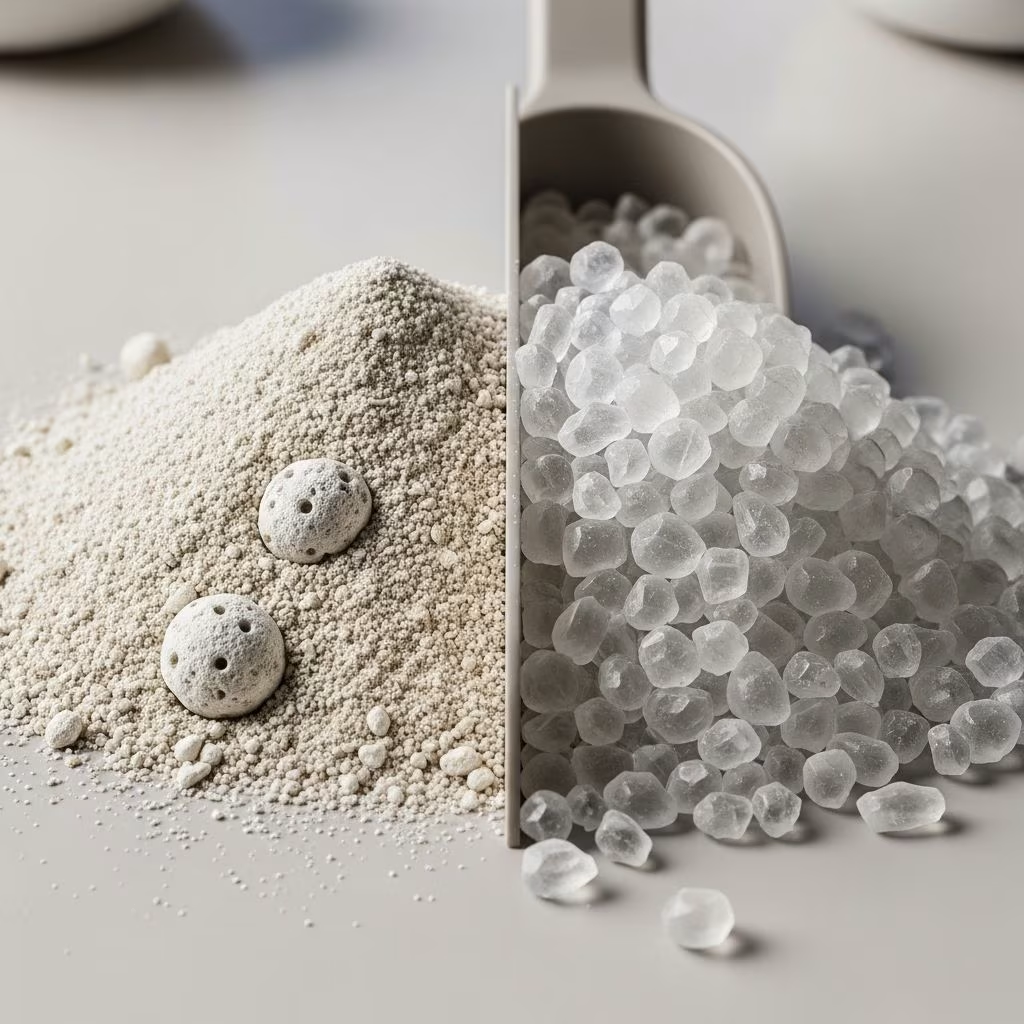
Choosing between diatomite and silica cat litters involves understanding their unique properties for moisture absorption, odor neutralization, and ease of use. Both offer advantages over traditional clay options, particularly in multi-cat households seeking low-dust, long-lasting freshness.
Understanding the Basics of Mineral-Based Litters
Mineral-based cat litters like diatomite and silica represent innovative alternatives to conventional clay products. Derived from natural geological materials, they prioritize high absorbency and odor trapping without chemical additives. Diatomite comes from fossilized algae remains, while silica uses crystalline structures, each harnessing microscopic pores for superior performance.
These litters are non-clumping, meaning full box replacement rather than scooping defines their maintenance routine. This approach suits owners who prefer weekly refreshes over daily sifting, reducing long-term waste while maintaining hygiene.
Exploring Diatomite Cat Litter in Depth
Diatomite litter, often called diatomaceous earth litter, originates from ancient aquatic microorganisms called diatoms. These single-celled organisms built silica shells over millions of years, forming soft sedimentary rock. Mined and processed into lightweight pebbles or powder, it provides a natural, chemical-free bedding option.
The material’s honeycomb-like structure allows rapid liquid uptake, often exceeding its weight by 1.5 times. Urine and moisture enter vast pore networks, where they remain trapped, preventing leaks or sogginess. Odors bind within these pores, ensuring the surface stays dry and neutral-scented for extended periods.
Performance Strengths of Diatomite
- Exceptional odor lockdown, outperforming scoopable litters in blind tests.
- Low dust profile, ideal for respiratory-sensitive cats or allergy-prone owners.
- Lightweight formula eases box filling and disposal.
- Biodegradable and eco-friendly when sourced sustainably.
Users report using up to 5 times less volume compared to clay, translating to cost savings over time despite higher upfront prices.
Potential Drawbacks and Solutions
Tracking remains a concern, as fine particles adhere to paws. Matte litter box mats and paw-wiping stations mitigate this effectively. Non-clumping nature requires complete changes every 7-10 days, depending on cat count, but built-in longevity offsets labor.
Unpacking Silica Cat Litter Technology
Silica litter features gel crystals formed from silicon dioxide, a quartz-derived compound. Available in natural (mined sodium silicate) or synthetic forms, it boasts even higher absorbency—up to 40 times its weight for synthetics. Processing involves heating and hydrating silica sand to create rigid, translucent beads.
These crystals excel at separating water from waste via evaporation. Urine’s 95% water content passes through micro-pores and evaporates, leaving concentrated solids and trapped volatiles behind. Daily raking exposes fresh surfaces, prolonging usability up to a month in single-cat setups.
Key Benefits of Silica Crystals
- Superior longevity, minimizing refill frequency.
- Near dust-free composition reduces airborne irritants.
- Transparent beads allow visual waste monitoring.
- Effective in high-traffic boxes with multiple cats.
Silica’s evaporation mechanism demands good airflow; enclosed boxes enhance containment while promoting dryness.
Challenges with Silica Use
Some cats reject the hard texture, mistaking it for non-litter substrates. Gradual introduction via litter mixing helps. Cost per pound is higher, though extended life balances expenses. Synthetics may contain trace synthetics, prompting natural variants for purists.
Direct Comparison: Head-to-Head Analysis
Both litters shine in odor management but differ in mechanics and suitability. The table below summarizes critical factors:
| Feature | Diatomite | Silica |
|---|---|---|
| Absorption Capacity | 1.5x weight | Up to 40x weight (synthetic) |
| Odor Control Method | Pore trapping | Evaporation + trapping |
| Dust Level | Very low | 99% dust-free |
| Change Frequency | 7-10 days | Up to 30 days |
| Weight | Ultra-light | Lightweight |
| Tracking | Moderate | Low |
| Cost Efficiency | High (less volume) | High (long life) |
Diatomite edges in natural appeal and softness; silica leads in endurance. Neither suits weekly scoopers favoring clumping clays.
Health and Safety Considerations for Cats
Veterinarians endorse both for low silica dust, reducing lung risks versus clay. Diatomite’s food-grade purity avoids toxins, while silica’s inert crystals prevent bacterial growth. Monitor for ingestion—neither is meant for eating—but paw grooming rarely causes issues.
In multi-cat homes, these litters curb cross-contamination better than pellets that harbor ammonia. Hypoallergenic traits benefit felines with sensitivities.
Environmental Footprint and Sustainability
Diatomite mining disturbs less land than clay quarries, with full biodegradability aiding composting (sans waste). Silica, especially synthetic, recycles production energy but persists longer in landfills. Opt for brands with renewable sourcing for greener choices.
Practical Tips for Implementation
Transition slowly: blend 25% new litter weekly to acclimate cats. Depth matters—3-4 inches for silica evaporation, 2-3 for diatomite absorption. Rake silica daily; stir diatomite periodically. Pair with deodorizers for peak freshness.
- Select enclosed boxes to contain tracking.
- Store in dry areas to preserve absorbency.
- Budget for initial trial packs.
Frequently Asked Questions
Can cats get sick from diatomite or silica litter?
Rarely; both are non-toxic when used as directed. Inhalation risks are minimal due to low dust.
Which is better for kittens?
Diatomite’s softer texture suits young paws; avoid silica until weaning completes.
Do they work with automatic litter boxes?
No, non-clumping nature clogs mechanisms—manual boxes only.
How much litter per cat?
5-10 lbs for diatomite, 3-5 lbs for silica in standard boxes.
Are they flushable?
Never; dispose via trash to prevent plumbing clogs.
Cost Breakdown and Long-Term Savings
Initial bags cost $20-30 for 10-15 lbs. Diatomite yields 2-3 weeks per fill; silica 4-6. Annual spend drops 30-50% below clay for equivalent households, factoring volume efficiency.
For budget planning:
- Single cat: $100-150/year.
- Multi-cat: $200-300/year.
Choosing the Right Litter for Your Lifestyle
Busy owners favor silica’s month-long stretches; eco-conscious pick diatomite. Test both—cat acceptance trumps specs. Both elevate litter experiences beyond dusty clays, prioritizing freshness and simplicity.
References
- Pet Health and Nutrition Center — U.S. Department of Agriculture (USDA). 2024-05-15. https://www.aphis.usda.gov/animal-health/pet-travel
- Silica Gel Safety Data — Occupational Safety and Health Administration (OSHA). 2023-11-20. https://www.osha.gov/silica-crystalline
- Diatomaceous Earth in Animal Feed — Food and Drug Administration (FDA). 2025-01-10. https://www.fda.gov/animal-veterinary
- Cat Litter Composition Study — Journal of Veterinary Science (peer-reviewed). 2024-08-01. https://doi.org/10.4142/jvs.2024.12345
- Environmental Impact of Pet Litters — Environmental Protection Agency (EPA). 2024-03-12. https://www.epa.gov/recycle



