

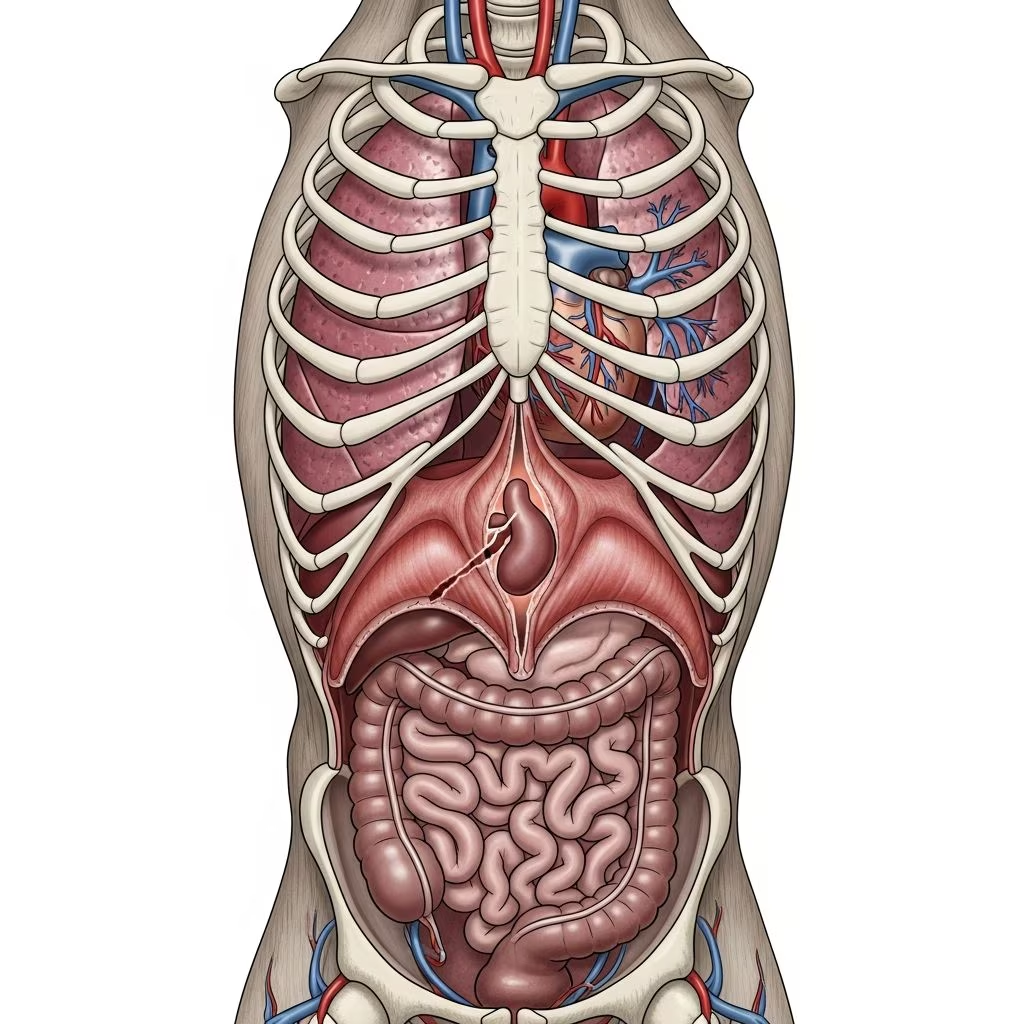
The diaphragm is a vital muscle separating a dog’s chest cavity from its abdominal cavity, enabling efficient breathing by contracting and relaxing to draw air into the lungs. When this structure tears or fails to form properly, a diaphragmatic hernia occurs, allowing abdominal organs like the liver, intestines, or stomach to shift into the chest, compressing the lungs and heart. This condition demands prompt veterinary attention, as it can lead to life-threatening respiratory distress or organ damage.
What Causes Diaphragmatic Hernia in Canines?
Diaphragmatic hernias in dogs arise from two primary pathways: trauma and congenital defects. Traumatic cases, the most common, result from high-impact events such as car accidents, falls from heights, or blunt force injuries that rip the diaphragm. These often manifest immediately but can remain undetected for months, evolving into delayed hernias where organs slowly migrate, causing gradual symptom onset.
Congenital hernias stem from developmental flaws during fetal growth, where the diaphragm forms incompletely. Breeds like German Shepherds, Labrador Retrievers, and Springer Spaniels show higher susceptibility due to genetic predispositions. Unlike traumatic types, these may go unnoticed until routine procedures like spaying reveal them, or symptoms emerge later in life from organ entrapment.
Additional risk factors include breed-specific weaknesses and age. Puppies with congenital forms benefit from early detection, while older dogs face higher complication risks from adhesions in chronic cases.
Recognizing the Warning Signs
Symptoms vary by hernia size, organs involved, and onset speed. Acute traumatic hernias trigger rapid respiratory distress, with dogs exhibiting open-mouth breathing, cyanosis (bluish gums), rapid shallow breaths, and shock signs like weakness or collapse. Owners might notice an unusually ’empty’ abdomen upon palpation, as organs displace upward, alongside muffled heart and lung sounds during veterinary exams.
Delayed or congenital hernias present subtler cues: chronic coughing, exercise intolerance, mild gastrointestinal upset (vomiting, diarrhea), weight loss, or reduced appetite. Severe entrapment of the stomach can cause life-threatening bloat, escalating hypotension and peritonitis risks. Other indicators include abdominal pain on deep palpation, lethargy, and abnormal thoracic sounds like borborygmi (gut noises in the chest).
| Symptom Type | Acute/Traumatic Hernia | Chronic/Congenital Hernia |
|---|---|---|
| Breathing | Severe dyspnea, cyanosis | Mild cough, exercise intolerance |
| Gastrointestinal | Vomiting, shock | Intermittent diarrhea, anorexia |
| Physical Exam | Empty abdomen, muffled sounds | Weight loss, pain on palpation |
| Systemic | Hypotension, arrhythmia | Lethargy, poor growth (pups) |
How Veterinarians Diagnose the Condition
Diagnosis begins with a thorough history, focusing on recent trauma or breed predispositions, followed by physical exams revealing displaced sounds or an empty abdomen. Imaging is crucial: thoracic radiographs often show organ silhouettes in the chest, such as bowel loops or liver lobes, with elevated heart due to lung collapse.
- X-rays: Primary tool, confirming hernia in 80-90% of cases; right lateral views best delineate liver displacement (hepatothorax).
- Ultrasound: Detects organ motility and tears, ideal for unstable patients avoiding radiation.
- Contrast Studies: Barium gavage outlines intestines in thorax for delayed cases, preventing misdiagnosis.
Advanced cases may require CT scans at referral centers for precise mapping before complex repairs.
Surgical Interventions: The Gold Standard Treatment
Surgery remains the definitive cure, timing dependent on stability. Acute trauma patients require stabilization first—fluid therapy, oxygen support, and thoracocentesis to drain pleural fluid—before anesthesia. Stable congenital cases can undergo elective repair, often alongside spay/neuter.
Common approaches include:
- Laparotomy: Abdominal incision for access, suitable for ventral tears without severe adhesions.
- Thoracotomy: Chest entry for chronic cases with lung adhesions, allowing herniorrhaphy (suture repair).
- Combined Approach: For extensive damage, balancing visibility and minimal invasion.
During surgery, surgeons reposition organs, repair the defect with sutures or mesh if needed, and check for concurrent injuries like rib fractures. Postoperative care involves analgesia (e.g., meloxicam, lidocaine infusions), antibiotics (ceftiofur), and monitoring for re-expansion pulmonary edema or fluid buildup.
Postoperative Recovery and Potential Complications
Recovery timelines vary: most dogs resume normal eating and mobility within 10 days post-laparotomy, with radiographs confirming organ repositioning. Intensive monitoring prevents complications like hypovolemia, peritonitis, or adhesions increasing mortality in delayed cases.
Owners should watch for coughing, fever, or breathing changes, restricting activity for 2-4 weeks. Success rates exceed 80% in timely interventions, with congenital repairs yielding excellent long-term outcomes if addressed early.
Prevention Strategies for Proactive Pet Owners
While congenital hernias defy prevention, traumatic ones can be minimized: use crates during car travel, supervise high places, and avoid rough play near hazards. Routine wellness exams catch subclinical cases via auscultation or incidental imaging.
For at-risk breeds, genetic screening and early ultrasounds aid proactive management.
FAQs on Diaphragmatic Hernia in Dogs
Q: Can diaphragmatic hernias heal without surgery?
A: Conservative management suits asymptomatic congenital cases, but surgery is essential for clinical signs or trauma to avert crises.
Q: What is the cost of hernia repair in dogs?
A: Ranges $2,000-$5,000 USD, factoring diagnostics, surgery, and hospitalization; referral centers charge more for expertise.
Q: How long does recovery take after surgery?
A: Hospital stay 3-7 days, full activity in 4-6 weeks; monitor closely first two weeks.
Q: Are certain breeds more prone?
A: Yes, German Shepherds, Labs, and small breeds like Chihuahuas show elevated risks.
Q: What if my dog had trauma months ago but now coughs?
A: Seek imaging immediately—delayed hernias mimic respiratory infections but require surgical confirmation.
Long-Term Prognosis and When to Seek Emergency Care
With prompt surgery, prognosis is favorable: 90% survival for acute cases post-stabilization, lower for chronic with adhesions. Emergency signs include collapse, pale gums, or unrelenting dyspnea—rush to a 24/7 clinic.
This condition underscores veterinary advances in imaging and minimally invasive repairs, empowering owners with knowledge for swift action.
References
- Case report: Diagnosis and surgical treatment of delayed traumatic diaphragmatic hernia with hepatothorax and enterothorax in a dog — Frontiers in Veterinary Science. 2024. https://www.frontiersin.org/journals/veterinary-science/articles/10.3389/fvets.2024.1357626/full
- Diaphragmatic Hernias in Dogs — VCA Animal Hospitals. 2023-10-01. https://vcahospitals.com/know-your-pet/hernia-diaphragmatic-in-dogs
- Treatment for Hernias in Dogs — Zoetis Petcare. 2024. https://www.zoetispetcare.com/blog/article/treatment-hernia-dogs
- Diaphragmatic Hernia in Dogs — Merck Veterinary Manual. 2023. https://www.merckvetmanual.com/dog-owners/lung-and-airway-disorders-of-dogs/diaphragmatic-hernia-in-dogs
- A review of diaphragmatic hernias — SignalPET. 2024. https://landing.signalpet.com/blog/a-review-of-diaphragmatic-hernias
- Don’t Overlook the Possibility of a Diaphragmatic Hernia — PetMD. 2012-03-01. https://www.petmd.com/blogs/fullyvetted/2012/mar/dont_overlook_possible_diaphragmatic_hernia-13653
- Diaphragmatic Hernia — American College of Veterinary Surgeons. 2023. https://www.acvs.org/small-animal/diaphragmatic-hernia/



