
Diamond Dove: Personality, Food & Care Guide
Complete guide to caring for diamond doves: personality, diet, housing, and breeding.
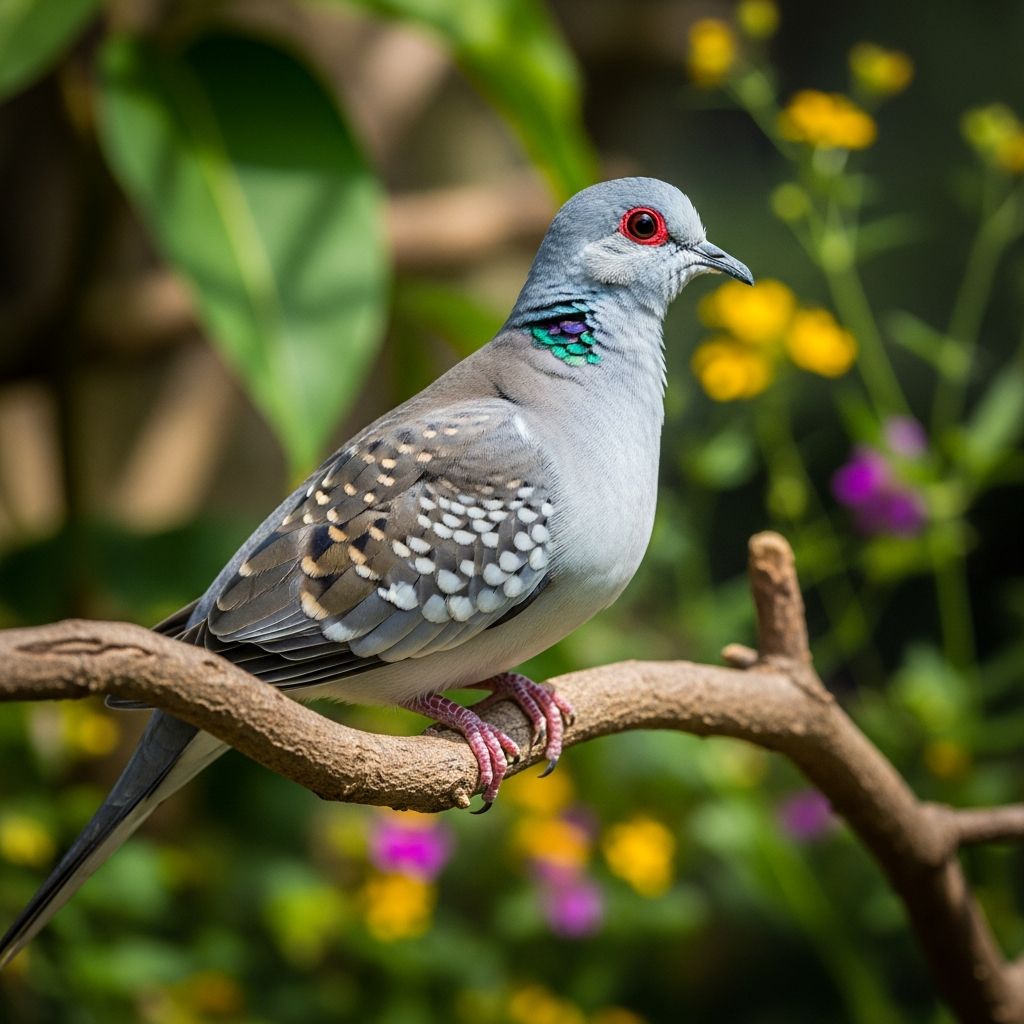
What Is A Diamond Dove?
The diamond dove is one of the most delicate and charming bird species available to pet owners today. These tiny, elegant birds feature a body about the size of a lovebird, but with a noticeably long, slender tail that gives them a graceful appearance. The natural coloration, known as the nominate bird, displays a darkish-gray plumage with distinctive white specks scattered across the wings, resembling small diamonds—hence their name. Over the years, breeders have developed several color mutations, including beautiful white and silver varieties.
One of the most striking features of the diamond dove is its prominent red eye ring, which provides a stunning contrast against their soft gray feathers. The species is dimorphic, meaning visible differences exist between males and females. While both sexes possess the characteristic red eye ring, males display a noticeably larger and more vivid ring compared to females, whose eye rings have a more brownish cast. This sexual dimorphism makes it relatively easy to pair these birds, which is particularly valuable for beginning hobbyists looking to establish a breeding program.
Adult diamond doves are remarkably small, typically weighing between 29.6 to 31.6 grams on average, making them one of Australia’s smallest pigeon species. Despite their diminutive size, these birds possess a great tolerance to high heat levels due to remarkable physiological adaptations in body temperature, metabolism, respiration, water balance, and behavior.
Native Region and Natural Habitat
Diamond doves are endemic to Australia, with their natural range extending throughout the dry deserts of the northern and central regions of the country. These adaptable birds thrive in semi-arid and lightly arid environments, typically settling in areas near water sources where vegetation provides adequate food and shelter. They have occasionally been spotted in Southern Australia, particularly in parks and gardens during periods when the center of Australia becomes exceptionally dry.
In their natural habitat, diamond doves are gregarious birds, often observed in pairs or small groups foraging on the ground. They have adapted remarkably well to their environment, spending considerable time ground-feeding on seeds from various grass species and occasionally consuming ants. Their behavioral patterns and feeding habits have evolved perfectly to suit the challenging conditions of their Australian homeland.
Physical Characteristics and Appearance
Diamond doves measure between 19 to 21 centimeters in length, or approximately 9 to 11 inches, making them incredibly compact birds. The males typically display a light blue-gray coloration on the head, neck, and breast, while females show a slightly more brownish-gray tone. Males over six months of age usually possess noticeably larger bodies than females, with larger and blockier heads.
The wings and back feature a smoky brown color with distinctive white spots bordered by black edges. The tail is brown-gray, while the abdomen maintains a creamy color. Their bill is dark gray, and their legs and feet are characteristically pink. Juveniles present a distinctly different appearance, with light gray bills, fawn-colored irises and eye rings, gray feet and legs, and gray breasts lacking the white wing spots found in adults.
Care and Housing Requirements
Doves have significantly different housing needs compared to parrots, and understanding these distinctions is crucial for proper care. Unlike parrots that climb up cage bars, diamond doves navigate their environment primarily through flight, moving back and forth across available space. This means a wide cage is an essential feature rather than a luxury. A spacious, horizontal enclosure promotes natural flying behavior and contributes to overall bird health and well-being.
Since diamond doves spend a considerable portion of their day on the ground, providing ample floor space where they can walk comfortably is equally important as vertical flight space. Offering a variety of perch styles with varying diameters helps promote excellent foot health and prevents common problems associated with repetitive perching on uniform surfaces. Diamond doves also require regular opportunities for bathing, which is essential for maintaining healthy plumage and overall hygiene.
Key Housing Features:
- Wide, spacious enclosure to accommodate flight
- Adequate ground space for walking and natural behavior
- Multiple perches of varying diameters and styles
- Regular bathing opportunities
- Protection from predators and aggressive birds
- Garden aviary setting when possible for natural interaction
Nutrition and Feeding
Proper nutrition is fundamental to maintaining the health and vitality of captive diamond doves. Unlike parrots that crack seeds with their beaks, doves swallow seeds whole and therefore require grit in their diet to aid in seed digestion within their crop. A well-balanced seed mixture forms the foundation of their diet, supplemented with generous amounts of fresh greens and soft fruits to provide essential vitamins and minerals.
During breeding season, diamond doves particularly appreciate well-cooked hardboiled eggs and specialized egg food, which provide additional protein necessary for reproductive success. These nutritious offerings support egg production and help parents nourish their chicks effectively. Fresh water should always be available, and feeding schedules should be consistent to maintain optimal health.
Recommended Diet Components:
- High-quality seed mixture as primary food
- Dietary grit for proper seed digestion
- Variety of fresh greens daily
- Soft fruits for enrichment and nutrition
- Hardboiled eggs and egg food during breeding
- Fresh, clean water at all times
Personality and Behavior
Diamond doves possess gentle, calm dispositions that appeal to many bird enthusiasts. Unlike more gregarious parrot species, diamond doves are not naturally inclined to seek human interaction unless they have been hand-fed from a young age or you personally hand-feed their offspring. These birds are content in the company of other doves and will not bite when handled, though they may seem indifferent to human attention. They are not ideal pets for children who desire an interactive bird that enjoys being held and petted regularly.
These birds exhibit strong pair bonding and thrive when kept with a compatible partner. They are highly social creatures that engage in constant communication with their companions, especially in flock settings. A flock of multiple birds creates a lively social environment with considerable vocalization throughout daylight hours. If not bonded to people, diamond doves absolutely require the company of another dove to ensure psychological well-being.
Diamond doves are not particularly active or destructive birds. They spend much of their time perching, preening, and quietly observing their surroundings. They perform ground-feeding behaviors naturally, often moving with a characteristic waddling gait. Their flight is strong and direct, sometimes undulating, and their wings can produce a distinctive whistling “frrr” noise during flight.
Speech and Sound Characteristics
One of the most appealing qualities of diamond doves is their minimal noise output compared to larger parrot species. These birds are not generally loud and produce soft, pleasant cooing sounds that many people find soothing rather than disruptive. The cooing has a mournful quality with a soft, pleasant falsetto tone. Typical calls consist of two long coos followed by a pause and then a long, short, and long coo pattern. Sometimes they produce just two long coos. An alarm coo consists of a few short but loud coos when they sense danger.
Males are typically much more vocal than females, engaging in characteristic bow coos as a mating display as early as six weeks of age. This display involves the bird repeatedly touching his beak to the ground, fanning his tail, and cooing rhythmically. Females are exceptionally quiet, and when they do vocalize, they produce higher-pitched sounds. Even in new environments, birds may remain quiet for weeks before fully acclimating and expressing their natural vocalizations.
Diamond doves are particularly suitable for older individuals, apartment dwellers, or anyone who prefers quieter birds. However, it’s important to remember that the more birds you keep together, the more vocalization you will experience, particularly if you allow them to breed freely. This exponential increase in noise with larger flocks is something potential owners should consider carefully.
Breeding and Reproduction
Diamond doves breed readily in captivity, making them popular among breeding enthusiasts. These birds construct nests from interwoven grasses and twigs, and their nests are characteristically fragile in construction. The female typically lays two white eggs, which are then incubated for 13 to 14 days. The chicks grow rapidly and are usually fully feathered and capable of flying by two weeks of age.
In their natural habitat, diamond doves tend to breed after rain but primarily during spring in Southern Australia. In captivity, birds will breed well in open nests that are slightly larger than a canary’s nest, with a liner and nesting material provided. During breeding season, offering well-cooked hardboiled eggs and specialized egg food significantly enhances breeding success.
Diamond Dove Populations in the Wild
The diamond dove is a favorite among both novice bird enthusiasts and experienced fanciers alike, thanks to its tiny stature, beautiful appearance, and relatively easy care requirements. Originally from Australia, diamond doves can be easily found in pet shops worldwide, and they breed fairly readily both in captivity and in their native habitat. This accessibility combined with their manageable care needs makes them an excellent choice for bird hobbyists at all experience levels.
In the wild, populations remain stable across their range, though they occasionally expand into Southern Australia during favorable conditions. Their adaptability to various semi-arid environments and their efficient use of available resources contribute to their successful persistence in their natural habitat.
Ideal Living Situations
Diamond doves perform exceptionally well in garden aviary settings where they can fly freely and interact naturally with other birds and their environment. However, caution must be exercised when introducing larger or more aggressive bird species, as diamond doves lack the ability to defend themselves effectively against predatory or territorial birds. A peaceful, protected aviary provides an ideal environment for these gentle creatures.
For those unable to provide aviary space, a spacious indoor cage with appropriate flight room remains a suitable alternative. The key is ensuring adequate space for natural flight behavior and ground-level activities. Pair bonding remains essential—single birds should only be considered if the owner is available for substantial daily interaction or if they will receive considerable attention from household members.
Frequently Asked Questions About Diamond Doves
Q: Are diamond doves good pets for beginners?
A: Yes, diamond doves are considered one of the easiest bird species to care for, making them excellent choices for beginner bird owners. They are friendly, peaceful, quiet, and require less demanding care than many other pet bird species. Their straightforward dietary needs, manageable housing requirements, and gentle temperament make them ideal for those new to bird ownership.
Q: Do diamond doves need to be kept in pairs?
A: While diamond doves can survive as single birds, they are naturally gregarious and highly social creatures. If not bonded to people, they absolutely require the company of another dove companion. A pair or small group of doves will be significantly happier than a solitary bird. Single birds can work only if they receive extensive daily human interaction.
Q: How can I determine the sex of a diamond dove?
A: Males have a larger and more vivid red eye ring compared to females, which have a more brownish-tinted eye ring. Males over six months old typically display more pronounced blue-gray coloring on their head, neck, breast, back, and wings, while females show a brownish-gray tone. Males are generally slightly larger with blockier heads.
Q: What is the lifespan of a diamond dove?
A: With proper care, diamond doves can live for many years, with some individuals reaching 8 years of age or beyond. Providing appropriate housing, nutrition, veterinary care, and social companionship contributes significantly to longevity and quality of life.
Q: Can diamond doves be housed with other bird species?
A: Diamond doves should generally be kept with other doves or similarly gentle bird species. They lack defensive capabilities against larger or aggressive birds, so housing them with predatory or territorial species is not recommended. Always ensure any companions share similar temperaments and care requirements.
Q: How much space do diamond doves need?
A: These birds require a spacious, wide cage or aviary that allows for flight and ground movement. The enclosure should be large enough to accommodate multiple perches of varying heights and diameters. A garden aviary setting provides ideal space, but indoor cages can work with adequate dimensions.
Q: What should I feed my diamond dove?
A: Provide a high-quality seed mixture supplemented with fresh greens, soft fruits, and grit for proper digestion. During breeding season, offer well-cooked hardboiled eggs and specialized egg food. Always maintain fresh, clean water. Avoid foods toxic to birds and ensure proper nutritional balance.
References
- Diamond Dove Personality, Food & Care – Pet Birds by Lafeber Co. — Lafeber Company. 2025. https://lafeber.com/pet-birds/species/diamond-dove/
- Diamond dove — Wikipedia. 2025. https://en.wikipedia.org/wiki/Diamond_dove
- Diamond Dove — Birds in Backyards. 2025. https://www.birdsinbackyards.net/species/Geopelia-cuneata
- Diamond Dove Home Page – Acquiring — Diamond Dove Information. 2025. https://www.diamonddove.info/bird02_Acquiring.htm
- Diamond Dove – Stay connected with nature and your friend — My Bird Buddy. 2025. https://app.mybirdbuddy.com/birds/diamond-dove/d31a2d20-ecee-49fa-831b-600c45067463
Similar Articles








Read full bio of Sneha Tete


