

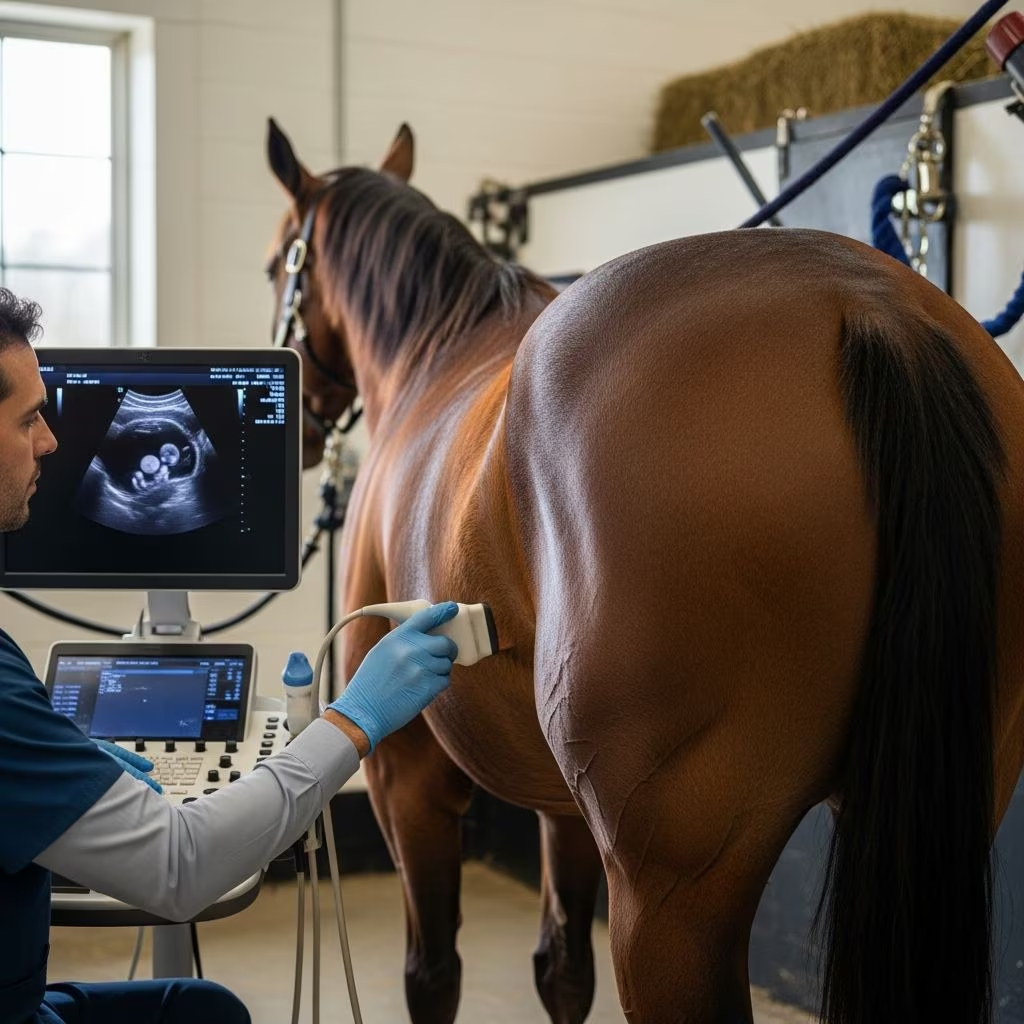
Confirming pregnancy in mares is a cornerstone of successful equine breeding programs. Accurate and timely diagnosis allows breeders to manage resources effectively, identify potential complications early, and plan for rebreeding if necessary. This article delves into the primary diagnostic approaches, their optimal timing, advantages, and limitations, drawing from established veterinary practices to guide horse owners and professionals.
Why Early Pregnancy Detection Matters in Equine Breeding
Detecting pregnancy soon after breeding optimizes mare management. A typical protocol involves checks at specific intervals: around days 14-18 to confirm pregnancy and rule out twins; days 25-30 to verify embryo heartbeat and development; days 40-60 for fetal assessment; and a later fall evaluation to ensure viability. Early identification of non-pregnant mares enables prompt rebreeding, typically within days 19-20, maximizing the breeding season.
Failure to diagnose accurately can lead to wasted time, increased costs, and missed opportunities. Moreover, twins in horses often result in abortion, so early detection is crucial for intervention.
Rectal Palpation: A Traditional Hands-On Approach
Rectal palpation remains a fundamental, cost-effective method for pregnancy diagnosis, relying on the veterinarian’s tactile expertise to assess uterine and cervical changes.
Key Changes Detected by Palpation
- Cervix: By days 14-21 post-ovulation, the pregnant cervix becomes elongated, tightly closed, and features a prominent portio vaginalis.
- Uterus: Increased tone and wall thickening obscure endometrial folds by days 14-18.
- Conceptus: At 25-28 days, a 3.5 cm bulge—the embryonic vesicle—may be felt ventrally in the uterine horn base, especially in maiden or barren mares. By days 18-20, it enlarges enough for reliable detection.
Palpation allows age estimation based on conceptus size and shape, progressing from a fluid-filled vesicle to a more defined embryo. Skilled practitioners can palpate up to day 50, noting structures like the embryo proper by day 40.
Advantages and Limitations
This method is accessible without advanced equipment but requires experience to avoid misdiagnosis, such as confusing cysts with embryos. It’s less precise before day 25 and riskier for twins or later stages due to the mare’s size.
Ultrasonography: The Gold Standard for Precision
Transrectal ultrasonography has revolutionized equine pregnancy diagnosis, offering visual confirmation as early as day 9-10 post-ovulation. Using a 5-10 MHz linear transducer, it visualizes the anechoic yolk sac (4 mm diameter) and tracks development accurately until day 45.
Developmental Milestones Visible on Ultrasound
| Days Post-Ovulation | Key Observations |
|---|---|
| 9-10 | Round anechoic yolk sac ~4 mm; specular reflector artifact |
| 10-11 | Early embryo detection; mobility in uterine lumen |
| 14-16 | Recommended initial exam; twins, corpus luteum, uterine edema assessment |
| 24-25 | Heartbeat visible; embryo fixation in uterine horn |
| 25-30 | Normal growth evaluation; twin recheck |
| 40-45 | Fetal membranes, precise gestation staging |
From days 6-16, the spherical conceptus migrates through the uterine horns and body, distinguishable by echogenic lines and motility, aiding differentiation from cysts. Beyond early stages, it monitors fetal health, heartbeat, and foaling date estimation.
Benefits Across Breeding Scenarios
- Earliest detection (day 10+)
- Multiple pregnancy identification for management
- Non-invasive; assesses ovarian/uterine health, progesterone status
- Viability checks, including low-risk indicators like small corpus luteum
Clinics like Roland Veterinary emphasize its safety and timeliness for decision-making. It’s superior for comprehensive info, from pregnancy status to potential issues.
Hormone-Based Blood Tests: Complementary Diagnostics
Endocrine assays provide non-invasive alternatives or confirmations, measuring pregnancy-specific hormones.
Equine Chorionic Gonadotropin (eCG)
Produced by endometrial cups formed 40-120 days post-ovulation from chorionic girdle invasion, eCG elevation confirms pregnancy in this window. Reliable from day 35 to 100-140, but false-positives occur post-fetal death, and it’s ineffective before 40 or after 120 days.
Progesterone and Other Hormones
Post-maternal recognition (days 12-14), progesterone stays elevated in pregnant mares, but levels <1 ng/mL indicate non-pregnancy. Not definitive alone, as open mares can have high levels. Total estrogens or estrone sulfate rise later (post-100 days), aiding late-term checks. Equine pregnancy panels combine progesterone (chemiluminescence) and estrone sulfate (RIA) for robust diagnosis.
Test Selection Guide
| Test | Optimal Window | Pros | Cons |
|---|---|---|---|
| eCG | 35-140 days | Direct pregnancy indicator | Narrow window; false positives |
| Progesterone | 14+ days | Rules out non-pregnancy | Not specific to pregnancy |
| Estrone Sulfate | 100+ days | Late confirmation | Too late for early management |
For unknown breeding dates, combine eCG and estrogens. Labs offer quick kits, though ultrasound trumps for early accuracy.
Integrated Pregnancy Monitoring Schedule
A phased approach ensures comprehensive oversight:
- Days 14-18: Ultrasound/palpation for initial confirmation, twins
- Days 25-30: Heartbeat, growth check
- Days 40-60: Fetal development, hormone backup if needed
- Late Gestation: Estrogens for viability; palpation less common
Adjust for risks like prior twins or infertility.
Common Challenges and Troubleshooting
Challenges include uterine cysts mimicking embryos, false hormone results, or mare temperament complicating exams. Ultrasound resolves ambiguities via motility and growth patterns. Progesterone supplementation aids at-risk pregnancies identified by small corpora lutea or edema.
FAQs on Mare Pregnancy Diagnosis
What is the earliest way to check if a mare is pregnant?
Transrectal ultrasound detects embryos at 9-11 days post-ovulation.
Can I use blood tests instead of ultrasound?
Yes, eCG from day 35-140 or progesterone post-day 14, but ultrasound provides more details.
How do I know if twins are present?
Ultrasound at 14-16 days identifies multiples for reduction if needed.
Is rectal palpation safe?
When performed by experts, yes, though ultrasound is safer and more precise early on.
What if hormone tests are negative but I suspect pregnancy?
Retest or ultrasound; timing matters—eCG misses early/late stages.
Advances and Future Directions
Refined ultrasound tech and point-of-care hormone kits enhance accessibility. Research continues on non-invasive biomarkers for even earlier detection, promising streamlined breeding.
References
- Pregnancy Determination in Horses — Merck Veterinary Manual. 2023. https://www.merckvetmanual.com/management-and-nutrition/management-of-reproduction-horses/pregnancy-determination-in-horses
- How Can I Tell if a Mare is Pregnant? — The Horse. 2022-01-15. https://thehorse.com/149581/how-can-i-tell-if-a-mare-is-pregnant/
- Laboratory methods of equine pregnancy diagnosis — PubMed (Equine Vet J). 1979. https://pubmed.ncbi.nlm.nih.gov/405788/
- Ultrasound Pregnancy Diagnosis and Cycle Checks — Roland Veterinary Clinic. 2023. https://www.rolandvetclinic.com/ultrasound-pregnancy-diagnosis-and-cycle-checks-roland-ia/
- Pregnancy Examination — Colorado State University Equine Reproduction Laboratory. 2022-11-16. https://vetmedbiosci.colostate.edu/erl/2022/11/16/pregnancy-examination/
- Pregnancy Detection — University of Wisconsin–Madison, Animal Sciences. 2023. https://ansci.wisc.edu/jjp1/equine/preg_det/growth1.html



