

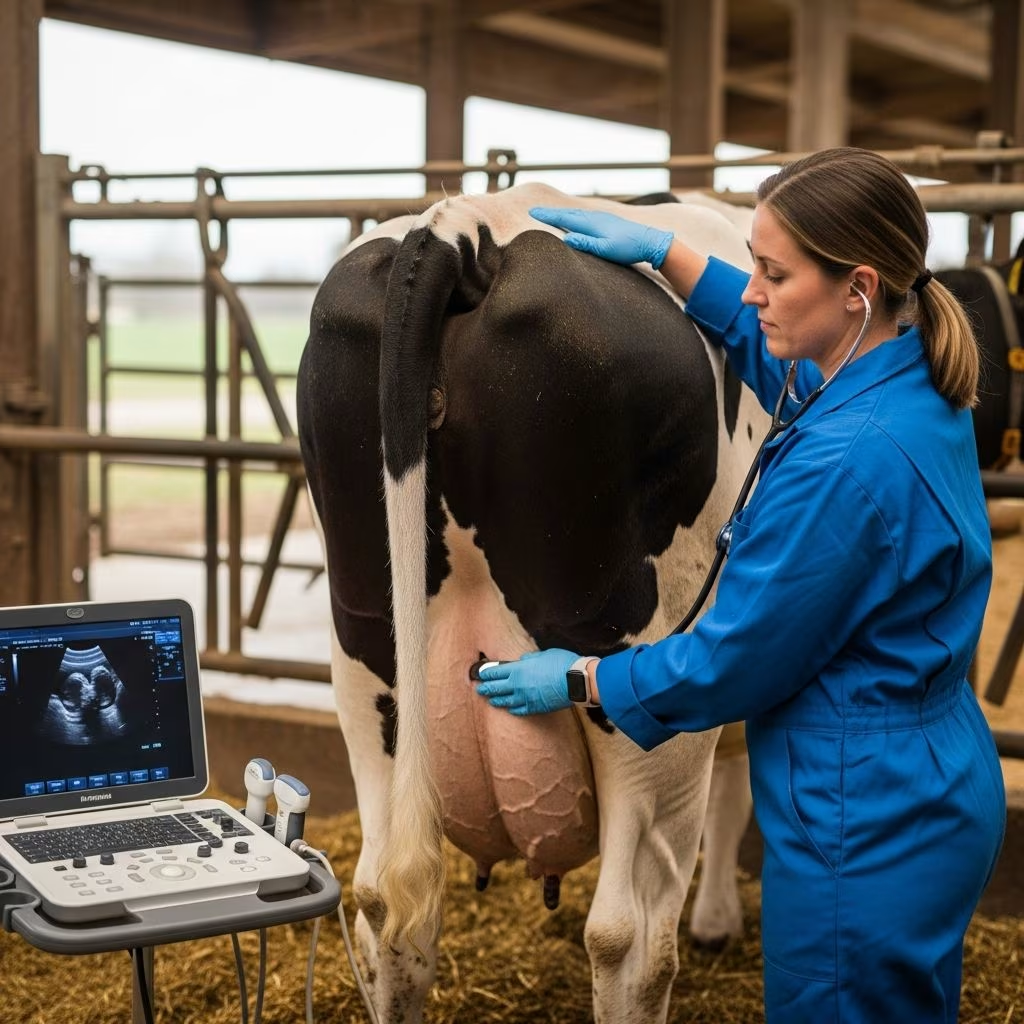
Accurate pregnancy diagnosis in cattle is fundamental to effective herd management, enabling producers to identify non-pregnant animals early, shorten calving intervals, and improve overall reproductive efficiency. Traditional and modern techniques allow detection as early as 28 days post-breeding, supporting timely decisions on culling, rebreeding, or nutritional adjustments.
Why Early Pregnancy Checks Matter
Determining pregnancy status soon after breeding season—typically 45-60 days—helps maximize profitability by removing open cows from feed resources and preparing pregnant ones for gestation needs. Early identification of non-pregnant animals reduces maintenance costs and allows rebreeding within the same season, potentially increasing calf crop percentage by 10-20%.
In beef operations, this practice confirms AI success or natural service outcomes, while dairy farms use it to maintain milk production schedules. Benefits include precise calving date predictions, fetal sexing, and detection of twins or abnormalities, all contributing to lower veterinary costs and higher weaning weights.
Core Methods for Pregnancy Detection
Several reliable approaches exist, categorized into manual, imaging, and laboratory-based tests. Each offers unique benefits based on herd size, timing, and available expertise.
Transrectal Palpation: The Traditional Standard
This hands-on technique involves a veterinarian or trained technician inserting a sleeved arm into the cow’s rectum to manually assess the uterus and ovaries. It detects pregnancy by feeling amniotic fluid, fetal membranes, or the fetus itself, with experienced users identifying it from 30-35 days post-breeding.
Advantages include low cost—no equipment beyond lubricant and sleeves—and speed, making it ideal for small herds. It estimates fetal age up to 120 days and works well in late gestation. However, it requires animal restraint in a chute, skill to avoid injury, and is less precise for very early pregnancies or sexing.
Ultrasonography: Advanced Visualization
Transrectal ultrasound uses a probe to produce real-time images of the reproductive tract, spotting embryos as early as 28 days. It excels in aging fetuses accurately in the first trimester, sexing calves from 55-70 days (90%+ accuracy), and evaluating ovarian structures like cysts.
Modern portable units have reduced costs, enabling field use on large herds. Color Doppler variants detect corpus luteum vascularization as early as day 20, though primarily for research. Drawbacks include equipment expense and training needs, but it’s superior for comprehensive exams.
Blood and Milk Testing: Lab-Based Options
Indirect methods measure pregnancy-specific proteins or hormones. The BioPRYN test detects pregnancy-associated glycoproteins (PAGs) in blood samples from tail or jugular veins, accurate >99% for pregnant cows and 95% for open ones from 28-30 days. Results return in 24-48 hours via lab analysis.
Milk progesterone tests identify non-pregnant cows (>95% accuracy) at 24 days post-AI by low levels, but false positives occur in 20-25% of cases, necessitating follow-ups. These are non-invasive, mail-in options suited for remote herds, though less immediate than palpation.
Comparing Detection Techniques
The table below summarizes key methods for quick reference:
| Method | Earliest Detection | Accuracy | Cost | Additional Info |
|---|---|---|---|---|
| Rectal Palpation | 30-35 days | >95% | Low | Fetal age estimate; no equipment |
| Ultrasound | 28 days | >95% | Medium-High | Sexing, viability check |
| BioPRYN Blood Test | 28-30 days | 95-99% | Low per sample | Lab turnaround; yes/no result |
| Milk Progesterone | 24 days | 75-95% | Low | Best for non-pregnants; multiples needed |
Data derived from veterinary extension services and research.
Step-by-Step Guide to Safe Palpation
- Prepare Equipment: Long palpation sleeve, OB lubricant, chute for restraint.
- Position Cow: Secure in head gate; tail up, perineum cleaned.
- Insert Arm: Lubricate fully; advance slowly to cervix, then uterus.
- Assess Structures: Check for fluid pocket (35+ days), membranes (45+ days), fetus (60+ days).
- Evaluate Ovaries: Feel for corpus luteum.
- Withdraw Carefully: Clean animal; record findings.
A systematic check minimizes errors and animal stress.
Optimizing for Beef vs. Dairy Herds
Beef producers favor palpation post-breeding season for cost-effectiveness, integrating with preconditioning. Dairy operations prioritize ultrasound for frequent checks and sexed semen confirmation, aligning with dry-off schedules.
For heifers, gentler handling prevents damage; start at 45 days. Large herds benefit from mobile vet services or trained staff, noting legal restrictions—only licensed vets can diagnose for others.
Advanced Insights: Fetal Sexing and Twins
Ultrasound sexing at 55-110 days visualizes genital tubercle, aiding sire selection for replacements. Twin detection via multiple fluid pockets improves dystocia risk assessment, as unilateral twins reduce issues.
Challenges and Best Practices
Common pitfalls include operator inexperience (lowering early accuracy) and cow stress causing false negatives. Best practices: Train annually, combine methods (e.g., blood test then palpation), and track records for AI vs. bull breeding.
Legal note: Pregnancy diagnosis is veterinary practice; own-herd checks ok, but not for hire without license.
Future Trends in Cattle Pregnancy Tech
Emerging tools like automated PAG sensors and AI-enhanced ultrasound promise faster, cheaper checks. Research advances color Doppler for day-20 detection via luteal blood flow.
Frequently Asked Questions
How soon can I check for pregnancy after breeding?
Ultrasound or blood tests at 28-30 days; palpation reliably from 35 days.
Can I sex the calf during pregnancy check?
Yes, ultrasound from 55 days with 90%+ accuracy in optimal windows.
Is blood testing accurate for early gestation?
BioPRYN exceeds 99% for confirms, 95% for opens from day 28.
What’s the cost of ultrasound pregnancy checks?
Varies; portable units dropped prices, often $2-5/head plus vet fee.
Why prioritize non-pregnant identification?
Rebreed opens quickly, cut feed costs, boost herd fertility rates.
References
- Pregnancy Determination in Cattle — Merck Veterinary Manual. 2023. https://www.merckvetmanual.com/management-and-nutrition/management-of-reproduction-cattle/pregnancy-determination-in-cattle
- Pregnancy Determination in Beef Cattle — LSU AgCenter. 2023. https://www.lsuagcenter.com/articles/page1684937777813
- Part 5 – Pregnancy Diagnosis — NADIS. 2023. https://www.nadis.org.uk/disease-a-z/cattle/fertility-in-dairy-herds/part-5-pregnancy-diagnosis/
- Pregnancy Diagnosis in Heifers and Cows — University of Nebraska-Lincoln Extension. 2023. https://preec.unl.edu/news/pregnancy-diagnosis-heifers-and-cows-provides-management-options/
- Determining Pregnancy in Cattle — Texas A&M Beef Skillathon. 2023. https://beefskillathon.tamu.edu/determine-pregnancy/
- Consider Options for Pregnancy Diagnosis — NDSU Agriculture. 2024-08. https://www.ag.ndsu.edu/news/newsreleases/2024/august/consider-options-for-pregnancy-diagnosis-in-beef-cattle
- Cattle Reproduction: Pregnancy Diagnosis — UT Beef & Forage Center. 2023. https://utbeef.tennessee.edu/cattle-genomics-pregnancy-diagnosis-in-beef-cattle/



