

The equine heart is a robust organ designed to support the immense physical demands of horses, but like any complex system, it can develop problems that affect performance, health, and longevity. Early and accurate diagnosis of cardiovascular disorders is crucial for horse owners, trainers, and veterinarians. This process typically begins with a detailed review of the horse’s history and observable symptoms, progressing to targeted physical assessments and sophisticated diagnostic tools. By understanding these steps, owners can better collaborate with professionals to safeguard their animals’ well-being.
Understanding Symptoms and Medical History
Horses with heart conditions often exhibit subtle signs that savvy owners might notice first. Common indicators include exercise intolerance, where the horse tires unusually quickly during rides or work; coughing, especially after exertion; swelling in the legs due to fluid buildup (edema); or labored breathing at rest. Behavioral changes like reluctance to move or episodes of collapse can also signal trouble. Veterinarians start by gathering a thorough history: age, breed, usage (racing, show jumping, pleasure riding), recent illnesses, medications, and any witnessed events like fainting or poor recovery post-exercise.
This initial step helps narrow possibilities. For instance, young horses might have congenital defects, while older ones could suffer from degenerative valve issues. Documenting patterns—such as symptoms worsening in hot weather or during transport—provides clues about underlying circulatory inefficiencies. Owners play a key role here, keeping logs of performance metrics, appetite, and vital signs to share during consultations.
Key Components of the Physical Examination
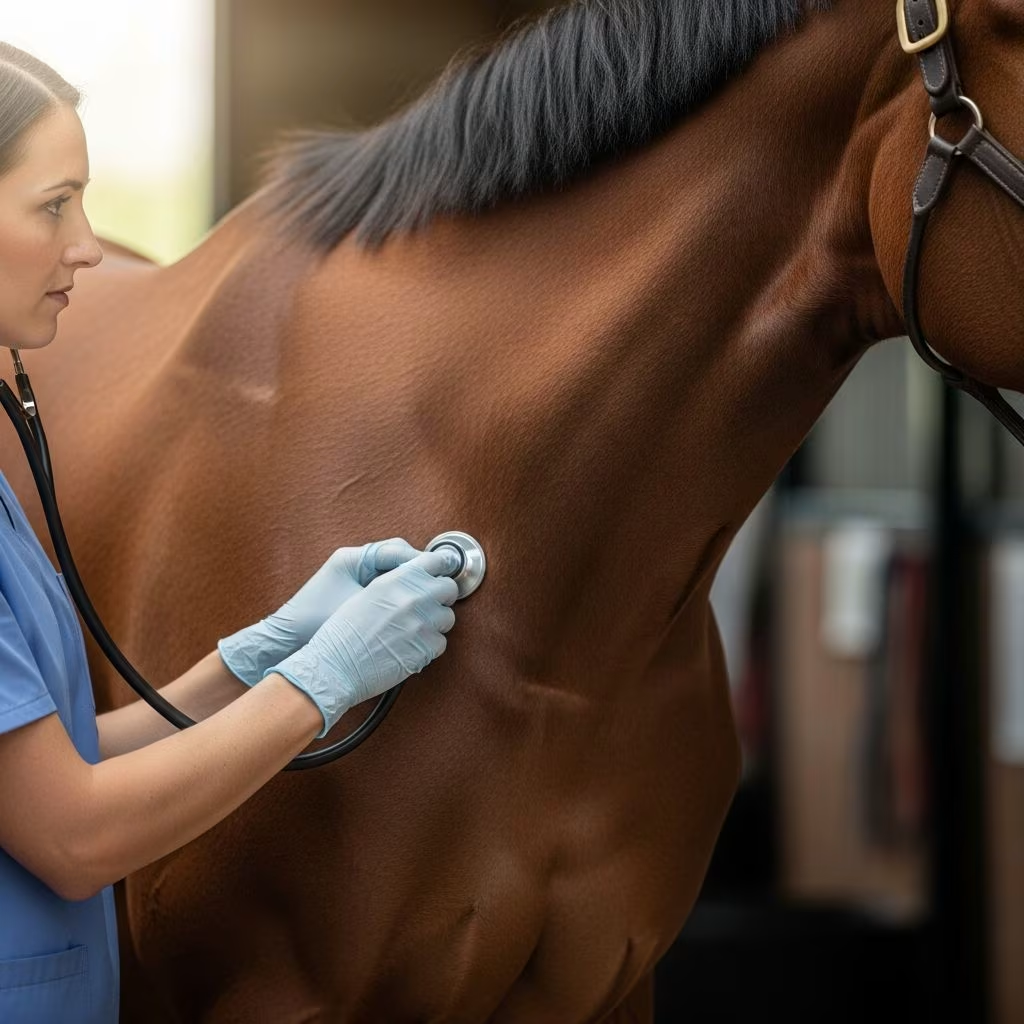
The cornerstone of heart disease detection is the hands-on physical exam, which reveals much without invasive procedures. Veterinarians use a stethoscope to auscultate—the act of listening to internal sounds—the heart, lungs, and gut. Normal equine heart sounds are a rhythmic ‘lub-dub’ at 28-44 beats per minute at rest, varying by fitness level. Abnormalities like murmurs (whooshing noises from turbulent blood flow), extra sounds (gallops indicating stiff ventricles), or irregular rhythms suggest issues such as valve regurgitation or arrhythmias.
Pulse assessment is equally vital. Felt at the facial artery under the jaw, a normal pulse is strong and regular. Deviations—rapid (tachycardia over 60 bpm at rest), weak, or bounding—point to compensation for poor cardiac output or infection. Mucous membrane checks follow: healthy gums are pink with quick refill (under 2 seconds) after blanching. Pale, blue-tinged (cyanosis), or brick-red colors indicate poor oxygenation or congestion.
- Jugular vein inspection: Look for pulsations or distension signaling right-heart failure.
- Limb and ventral abdomen palpation: Detect edema from fluid retention.
- Respiratory evaluation: Crackles or wheezes may accompany pulmonary involvement.
Extended auscultation in a quiet environment, sometimes with phonocardiography (sound recording), enhances accuracy. Heart rate context matters: a loud murmur with a normal 36 bpm rate is less worrisome than one with tachycardia.
Electrocardiography: Tracking Electrical Activity
Electrocardiography (ECG or EKG) captures the heart’s electrical impulses, essential for pinpointing arrhythmias—irregular beats that can cause poor performance or sudden death. Base-apex leads, placed at the heart base and opposite point of maximum impulse, suffice for field use. Portable devices or smartphone attachments like AliveCor Vet simplify capture, allowing instant sharing for expert review.
Key findings include atrial fibrillation (AF), marked by absent P waves, irregular R-R intervals, and f-waves; premature beats; or blocks. Resting ECGs detect baseline issues, but exercising telemetry—girth-mounted units—reveals exertion-induced problems critical for athletes. Continuous 24-hour Holter monitoring with video syncs rhythms to behavior, ideal for collapse cases. While ECG doesn’t measure chamber size well in horses due to their heart’s properties, it’s definitive for rhythm disorders.
Echocardiography: Visualizing Heart Structure and Function
Echocardiography, or cardiac ultrasound, is the gold standard for structural assessment. Using 2D, Doppler, and color-flow modes, vets image valves, chambers, walls, and blood flow in real-time. Portable units enable field exams, though clinics offer advanced digital setups.
It diagnoses:
- Valve insufficiencies (e.g., mitral regurgitation, common in performance horses).
- Myocardial function via ejection fraction and wall motion.
- Congenital defects like ventricular septal defects (VSD).
- Pericardial effusions or tumors.
- Pulmonary hypertension.
Doppler quantifies regurgitation severity and pressure gradients. Serial echoes track progression, guiding therapy like anti-arrhythmics. In AF horses, it rules out underlying structural disease.
Advanced and Supportive Diagnostic Tools
Beyond basics, several tools refine diagnoses. Cardiac troponin I blood tests detect muscle damage, elevated in myocarditis or infarction. Blood pressure measurement via coccygeal or median arteries establishes norms (e.g., systolic 144-194 mmHg median). Radiography, limited to lateral views in adults, assesses pulmonary edema but rarely heart size.
For foals, ventrodorsal X-rays and angiography evaluate congenital shunts. Cardiac catheterization, though rare, measures intracardiac pressures. Nuclear scintigraphy or contrast echo detects shunts via bubble studies. Lab work—CBC, chemistry, cultures—identifies infections or organ strain.
| Test | Purpose | Setting | Key Advantage |
|---|---|---|---|
| Resting ECG | Rhythm analysis | Field/Clinic | Quick, portable |
| Exercising ECG | Performance arrhythmias | Treadmill/Field | Dynamic assessment |
| Echocardiogram | Structure/Function | Clinic/Field | Non-invasive imaging |
| Troponin I | Muscle injury | Lab | Specific biomarker |
| Radiography | Pulmonary changes | Clinic | Visualizes lungs |
Putting It All Together: A Diagnostic Approach
A complete workup integrates these elements. Start with history and physical, proceed to ECG for rhythms, echo for anatomy, and add biomarkers/exercise tests as needed. For example, a horse with exercise intolerance gets auscultation (murmur?), ECG (AF?), echo (valve leak severity?), and troponin (damage?). This stepwise method ensures comprehensive evaluation without unnecessary tests. Specialists, like board-certified cardiologists, enhance complex cases.
Performance horses warrant exercising ECGs; retirees focus on resting studies. Foals emphasize congenital screening. Tailoring prevents over-diagnosis of benign findings, like innocent murmurs in fit athletes.
Common Cardiovascular Conditions Diagnosed
Valvular Regurgitation: Mitral/tricuspid most frequent; systolic murmurs, echo-confirmed. Often indolent, but severe cases cause atrial enlargement/AF.
Arrhythmias: AF (performance issue), ventricular ectopy. ECG definitive.
Congenital Defects: VSD, PDA; echo primary.
Myocarditis/Pericarditis: Troponin, echo.
Owner’s Role and Next Steps
Monitor daily: track heart rate (use stethoscope), note swelling/breathing. Prompt vet calls for new signs. Post-diagnosis, follow-up echoes monitor progress. Many horses live productively with managed conditions.
Frequently Asked Questions (FAQs)
Can heart murmurs be normal in horses?
Yes, innocent flow murmurs occur in thin-walled, high-output equine hearts, especially athletes. Echo distinguishes pathological ones.
How often should performance horses get cardiac checks?
Annually or pre-season, plus if symptoms arise. Exercising ECGs for competitors.
Is heart surgery common in horses?
Rare due to size/cost; management focuses on drugs, rest.
What if my horse collapses?
Emergency: ECG, echo urgently to rule arrhythmias/shunts.
Does diet affect equine heart health?
Indirectly; obesity strains heart. Balanced nutrition supports.
References
- Diagnosis of Cardiovascular Disease in Horses — Merck Veterinary Manual. 2023. https://www.merckvetmanual.com/horse-owners/heart-and-blood-vessel-disorders-of-horses/diagnosis-of-cardiovascular-disease-in-horses
- Equine Medicine: Cardiac Disease — Georgia Veterinary Medical Association. 2023-04-10. https://gvma.net/2023/04/10/equine-medicine-cardiac-disease/
- Cardiology — University of Missouri Veterinary Health Center. Accessed 2026. https://vhc.missouri.edu/equine-hospital/internal-medicine/cardiology/
- Practical Field Cardiology for Horses — EquiManagement. Accessed 2026. https://equimanagement.com/research-medical/disease/practical-field-cardiology-for-horses/
- Introduction to Equine Cardiology (Proceedings) — dvm360. Accessed 2026. https://www.dvm360.com/view/introduction-equine-cardiology-proceedings
- Cardiology: The Equine Heart — The Horse. 2016-11-01. https://thehorse.com/137428/cardiology-the-equine-heart/



