

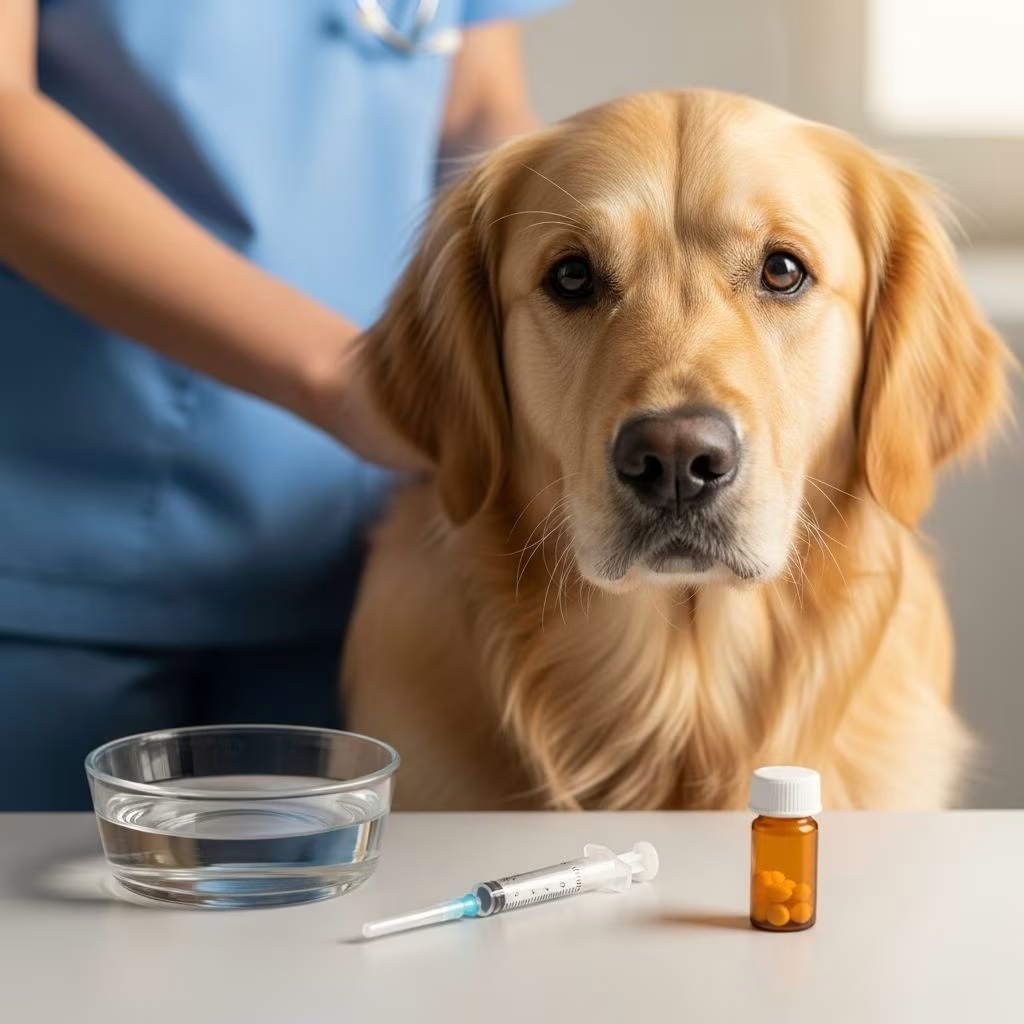
Diabetes insipidus represents a uncommon yet impactful disorder in veterinary medicine, disrupting the body’s ability to regulate water balance. Unlike the more familiar diabetes mellitus, which involves blood sugar issues, this condition stems from problems with antidiuretic hormone (ADH), also known as vasopressin. Animals afflicted with it exhibit relentless thirst and produce vast amounts of pale, watery urine, often leading to dehydration if unmanaged.
Understanding the Physiology Behind Water Regulation
The hypothalamus in the brain produces ADH, a crucial hormone transported to and stored in the posterior pituitary gland. When blood becomes concentrated—due to high sodium levels or low water volume—ADH signals the kidneys to reabsorb water, concentrating urine and conserving fluids. This mechanism prevents excessive fluid loss. In diabetes insipidus, this finely tuned system falters, resulting in persistent dilute urine regardless of hydration status.
Two primary functions define ADH’s role: enhancing water permeability in kidney collecting ducts via aquaporin-2 channels and promoting vasoconstriction to maintain blood pressure. Disruptions at any point—from production to kidney response—trigger the hallmark symptoms.
Main Forms of Diabetes Insipidus
Veterinary experts classify diabetes insipidus into central and nephrogenic types, each with distinct origins.
- Central Diabetes Insipidus (CDI): Arises from inadequate ADH production or release. Common culprits include pituitary tumors, head trauma, infections, or congenital defects. In young animals without neurological signs, tumors are less likely.
- Nephrogenic Diabetes Insipidus (NDI): Occurs when kidneys fail to respond to ADH, despite normal or elevated hormone levels. Genetic forms appear in puppies around 8-12 weeks, notably in breeds like German Shepherds and Miniature Poodles. Acquired NDI links to kidney diseases, medications, or metabolic imbalances disrupting the renal osmotic gradient.
Psychogenic polydipsia, a behavioral mimic, involves compulsive water drinking suppressing ADH, but it differs fundamentally as it responds partially to deprivation.
Recognizing Clinical Signs in Pets
Owners often notice pets drinking excessively—sometimes over 800ml/kg/day—and matching urine output exceeding 50ml/kg/day. This polyuria-polydipsia duo dominates, potentially causing incontinence, especially in deep-chested dogs. Dehydration looms despite fluid intake, manifesting as lethargy or sunken eyes.
Rarely, electrolyte shifts provoke neurological issues like depression or seizures, particularly with pituitary masses. In congenital NDI, signs emerge early, with urinary accidents common. Differentiating from diabetes mellitus requires confirming no glucosuria or hyperglycemia.
| Sign Category | Frequent Observations | Infrequent Complications |
|---|---|---|
| Fluid-Related | Extreme thirst, large urine volumes, incontinence | Dehydration despite drinking |
| Behavioral | Constant water seeking | Lethargy, weakness |
| Neurological | Rare | Seizures, depression (from tumors or electrolytes) |
Diagnostic Approaches for Accurate Identification
Diagnosis begins by excluding common polyuria causes like kidney failure, hypercalcemia, or diabetes mellitus. Initial tests include complete blood count (CBC), serum chemistry for kidney/liver function and glucose, plus urinalysis revealing low specific gravity (<1.006-1.008).
The gold standard, water deprivation test, monitors urine concentration after controlled fluid restriction. Normal animals concentrate urine effectively; DI patients do not. Risks like severe dehydration necessitate veterinary oversight. A desmopressin response trial follows: CDI dogs show >50% urine specific gravity rise (often >1.025), while NDI shows minimal change.
Advanced imaging—CT or MRI—probes pituitary neoplasia in older animals with CDI signs. Renal biopsy may clarify primary NDI.
Treatment Strategies Tailored to Type
Management hinges on type and cause. CDI responds robustly to desmopressin (DDAVP), a synthetic ADH analog administered as eye drops, nasal spray, oral tablets, or injections (e.g., 0.1-4μg twice daily). Many achieve control with minimal dosing.
NDI treatment focuses on symptom relief: low-sodium diets enhance urine concentration, hydrochlorothiazide boosts osmolality paradoxically, and unlimited water access prevents crisis. Desmopressin offers partial benefit in some cases.
Addressing root causes—surgery for tumors (e.g., hypophysectomy) or trauma recovery—can resolve secondary cases. Post-hypophysectomy CDI often self-corrects in 2-4 weeks with prophylactic desmopressin.
CDI vs. NDI Treatment Overview
| Treatment | Central DI Efficacy | Nephrogenic DI Efficacy |
|---|---|---|
| Desmopressin | High (urine SG >1.025) | Low to moderate |
| Hydrochlorothiazide + Low-Salt Diet | Supportive | Primary (increases osmolality) |
| Surgery/Underlying Cause Fix | Curative if possible | Rarely applicable |
Prognosis and Long-Term Care
With treatment, prognosis excels, especially for CDI. Lifelong therapy suits most, barring trauma-induced reversals. Regular renal monitoring ensures stability. Owners must provide constant water, watch for dehydration, and adhere to meds. Unmanaged, it progresses to stupor, coma, and death.
Genetic NDI demands ongoing management without cure, but quality life is attainable.
Preventive Insights and Breed Predispositions
Prevention proves challenging for idiopathic cases, but prompt trauma care and routine checkups aid early detection. Breeds like German Shepherds and Poodles warrant vigilance for hereditary NDI. Post-surgical prophylaxis minimizes CDI risk.
Frequently Asked Questions (FAQs)
What triggers diabetes insipidus in my dog?
Central type from pituitary issues or trauma; nephrogenic from kidney defects or diseases.
Is it the same as sugar diabetes?
No—diabetes insipidus concerns water balance via ADH, not insulin.
How do vets test for it safely?
Via blood/urine panels, water deprivation under supervision, and desmopressin trials.
Can my pet outgrow it?
Rarely; most require lifelong care, except trauma or post-op cases.
What if treatment fails?
Monitor electrolytes, reassess type, ensure compliance; prognosis remains favorable with adjustments.
This disorder, though rare, responds well to targeted interventions, restoring normalcy for affected animals.
References
- Canine Diabetes Insipidus – YouTube — YouTube. Accessed 2026. https://www.youtube.com/watch?v=GuL5hzVV_Dk
- Diabetes insipidus in a dog — Vet Times. Accessed 2026. https://www.vettimes.com/news/vets/small-animal-vets/diabetes-insipidus-in-a-dog
- Diabetes Insipidus in Dogs — VCA Animal Hospitals. Accessed 2026. https://vcahospitals.com/know-your-pet/diabetes-insipidus-in-dogs
- Diabetes Insipidus — VetFolio. Accessed 2026. https://www.vetfolio.com/learn/article/diabetes-insipidus
- Diabetes insipidus — PubMed (Review). 2008-02-01. https://pubmed.ncbi.nlm.nih.gov/18278747/
- Diabetes Insipidus in Dogs — PetMD. Accessed 2026. https://www.petmd.com/dog/conditions/endocrine/c_dg_diabetes_insipidus



