

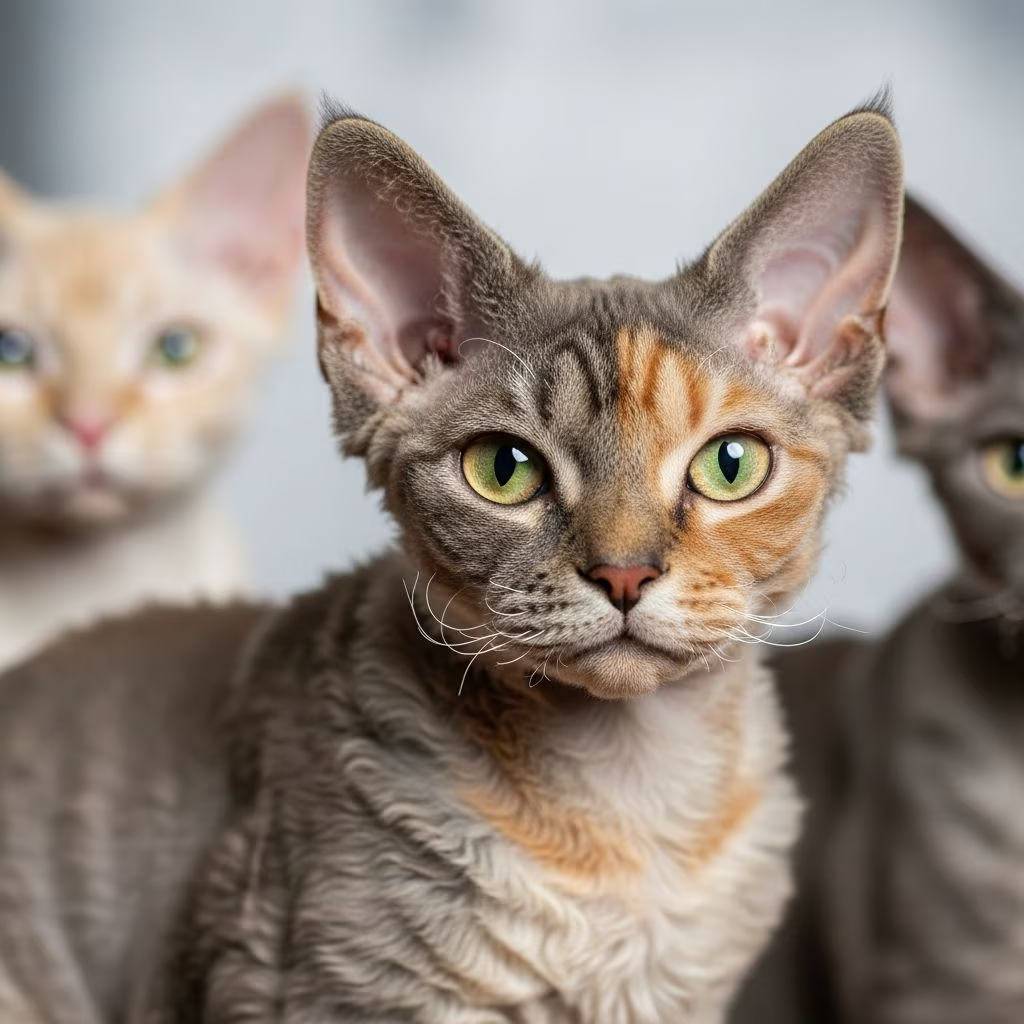
The Devon Rex stands out among cat breeds due to its distinctive wavy coat, which comes in a wide spectrum of colors and patterns. This guide delves into the visual diversity of this enchanting breed, exploring how their fur variations enhance their pixie-like appearance and appeal to enthusiasts worldwide.
Understanding the Unique Coat of the Devon Rex
The hallmark of the Devon Rex is its soft, curly fur, resulting from a genetic mutation affecting guard hairs and undercoat. Unlike straight-haired breeds, their coat ripples with loose waves, ranging from tight curls to a suede-like texture. This fur can manifest in virtually any color imaginable, allowing for endless combinations that highlight the breed’s elf-like features, such as large low-set ears and expressive eyes.
Coat development begins in kittenhood, with initial fuzz giving way to mature waves around three to six months. Adult Devons maintain this texture, shedding minimally, which makes them appealing for those seeking low-maintenance companions. Their warm-to-the-touch bodies, due to thinner insulation, pair perfectly with these vibrant coats, making them ideal snugglers during cooler months.
Solid Colors: Pure Hues in Wavy Glory
Solid colors form the foundation of Devon Rex aesthetics, offering clean, uniform shades that accentuate the fur’s natural curls. These cats display rich tones without stripes or spots, creating a sleek, velvety look.
- Black: Deep ebony coats absorb light, giving a mysterious sheen to the waves.
- White: Crisp purity contrasts sharply with large ears and eyes.
- Blue: A diluted gray-blue, softer and more subdued.
- Red: Vibrant ginger hues that glow under sunlight.
- Cream: Pale, warm tones resembling fine cashmere.
These solids are recognized across registries like TICA, emphasizing even distribution for show quality. Owners often note how solid-colored Devons appear almost otherworldly, their curls mimicking soft shadows on a monochromatic canvas.
Tabby Patterns: Striped and Spotted Variations
Tabby patterns add dynamic flair to the Devon Rex coat, breaking up solids with bold markings. The wavy texture distorts these lines into artistic swirls, unique to the breed.
| Tabby Type | Description | Common Colors |
|---|---|---|
| Classic | Bold, swirling patterns like marbled bullseyes on the sides | Brown, blue silver, red |
| Mackerel | Narrow stripes with spots, resembling fish skeletons | Brown, silver, cameo |
| Spotted | Round spots instead of stripes, highly contrasted | Brown, black silver |
Tabby Devons often feature agouti banding, where individual hairs show alternating light and dark segments, enhancing the curl’s depth. Silver tabbies introduce a shimmering undercoat, while brown tabbies evoke wild ancestry with dense markings. These patterns suit the breed’s playful personality, as if their fur mirrors their mischievous antics.
Parti-Colors and Tortoiseshells: Blended Beauties
Parti-color and tortoiseshell (tortie) Devons showcase blended pigments, creating mottled masterpieces. These are predominantly female due to sex-linked genetics.
- Tortoiseshell: Intermingled black, red, and cream in random patches.
- Tortoiseshell and White (Calico/Tri-Color): Tortie base with white spotting.
- Bicolors: Two colors, often white with another shade like blue or red.
The curls break up these blends into softer edges, preventing harsh divisions. A tortie Devon might have fiery red curls blending into shadowy black waves, offering a living mosaic effect. These patterns are prized for their rarity and complexity in the show ring.
Shaded and Tipped Coats: Subtle Elegance
Shaded and tipped varieties introduce gradient effects, where color concentration varies along the hair shaft.
- Chinchilla Silver: Black tipping on a white undercoat, sparkling like frost.
- Shaded Silver: Deeper tipping for a smoky appearance.
- Shell Cameo: Red tipping on cream, warm and glowing.
- Smoke: Solid undercoat hidden by lighter tipping, revealed in motion.
These coats demand precise genetics for even distribution, making them show favorites. The waviness amplifies the illusion of depth, as light catches tipped ends differently. Devon owners describe shaded cats as ethereal, their fur shifting hues with every turn.
Eye Colors and Matching with Coats
Devon Rex eyes are large and oval, often harmonizing with coat colors. While any eye color is permissible, certain pairings enhance breed standards.
- Copper or gold eyes suit solid and tabby coats.
- Blue eyes appear in white or bicolor patterns.
- Odd eyes (one blue, one copper) occur in some whites.
- Green eyes complement shaded silvers.
Aquamarine or odd-colored eyes add whimsy, aligning with the breed’s alien-like charm. Eye-coat harmony influences show judging, emphasizing overall balance.
Rare and Emerging Color Variations
Breeders continue exploring genetics, yielding rare combos like chocolate, lilac, or sable Devons. These pointed patterns, akin to Siamese influences, feature darker extremities.
- Chocolate Point: Warm brown points on ivory body.
- Lilac Point: Soft mauve dilutions.
- Sable: Rich sepia tones throughout.
Not all registries accept points in pure Devons, but they represent exciting frontiers. Longhair variations, like Selkirk Rex crosses, occasionally produce elongated curls in new shades.
Caring for the Devon Rex Coat Across Colors
Regardless of color, the fragile wavy coat requires gentle care. Weekly bathing with mild shampoo preserves curls, while sparse brushing prevents breakage.
- Avoid over-grooming to protect short whiskers.
- Provide heat sources, as thin fur offers less warmth.
- Monitor for bald spots from licking, common in all colors.
Diet impacts coat vibrancy; high-quality food supports curl formation and color intensity. Regular vet checks screen for myopathy or HCM, ensuring healthy fur expression.
Devon Rex Personality: Matching Colors to Lifestyle
Beyond visuals, Devons are intelligent, social pixies thriving in active homes. Their colors often reflect energy—fiery reds for bold jumpers, silvers for elegant perchers.
These medium-sized cats (6-9 lbs) love tricks, fetch, and family integration, suiting non-allergic households due to low shed. Boredom leads to mischief, so enrich with toys matching their coat’s vibrancy.
Choosing Your Ideal Devon Rex Color
Select based on preference and home: solids for minimalism, tabbies for pattern lovers, torties for uniqueness. Visit breeders or rescues to see live curls—photos can’t capture wave motion.
Consider show potential if competing; TICA standards favor even curls and bold contrasts. Ultimately, any color Devon brings joy, loyalty, and warmth.
Frequently Asked Questions (FAQs)
What colors are most common in Devon Rex cats?
Black, white, tabby browns, and reds dominate, with torties prized for rarity.
Do Devon Rex colors change with age?
Kittens molt around 3 months, refining colors and curls by 6-9 months.
Are all Devon Rex coats curly?
Yes, varying from loose waves to tight curls; bald patches may occur naturally.
Can Devon Rex colors be bred on demand?
Most yes, via selective pairing; points and shades require specific genetics.
Do coat colors affect health?
No direct link, but genetic testing ensures overall vitality across shades.
References
- Devon Rex Cat Breed: Characteristics and Personality — WebMD. 2023-05-15. https://www.webmd.com/pets/cats/what-to-know-about-devon-rex
- Devon Rex — The International Cat Association (TICA). 2024-01-10. https://tica.org/breed/devon-rex/
- Devon Rex Cat Breed Information — Purina UK. 2023-11-20. https://www.purina.co.uk/find-a-pet/cat-breeds/devon-rex
- Devon Rex Cat Breed — Hill’s Pet Nutrition. 2024-02-05. https://www.hillspet.com/cat-care/cat-breeds/devon-rex
- Devon Rex Cat Breed Guide — Metro Pet Vet. 2023-08-12. https://www.familyvet.net/services/cats/breeds/devon-rex



