

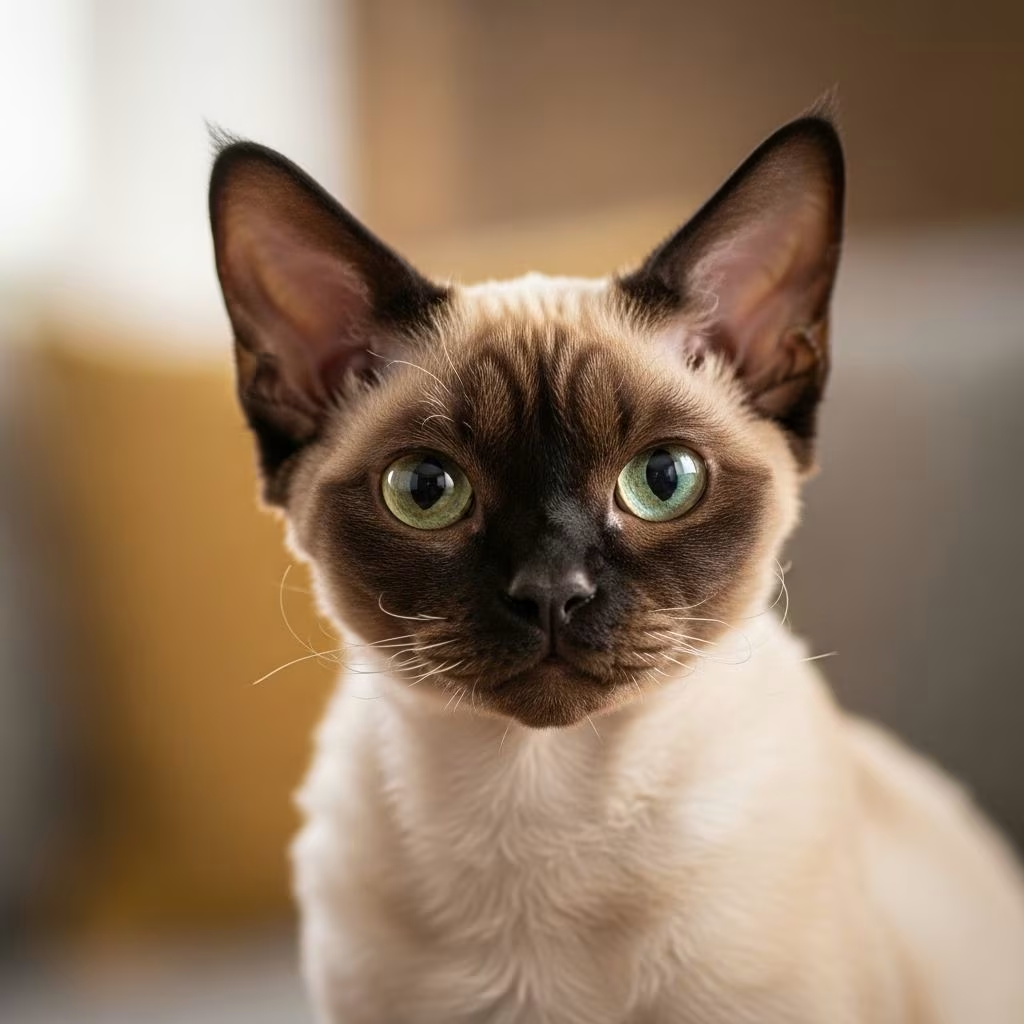
The **Devon Rex** is a distinctive cat breed celebrated for its unique wavy coat, large ears, and elf-like appearance. Known as the “pixie cat” or “poodle cat,” this medium-sized feline combines a playful personality with deep loyalty, making it an ideal companion for active households.
Devon Rex Overview
The Devon Rex stands out with its soft, curly fur, resembling a miniature poodle, and facial features that evoke a mischievous sprite. Originating from England, this breed developed from a spontaneous genetic mutation discovered in 1960 near Devonport, leading to its name. Unlike other Rex breeds like the Cornish Rex, the Devon Rex’s curl stems from a different gene, resulting in loose, pixie-like waves rather than tight ripples.
Adult Devon Rex cats typically weigh 6 to 10 pounds, with males slightly larger than females. They possess a slender, muscular build, long legs, and a barrel-shaped chest that accentuates their agile, athletic frame. Their lifespan averages 14 to 17 years, often extending longer with proper care.
Devon Rex History
The story of the Devon Rex begins in 1959 when a feral cat in Buckfastleigh, Devon, England, gave birth to a curly-coated kitten named Kirlee. This anomaly caught the eye of feline geneticist Michael Worner, who recognized its potential as a new breed. Kirlee’s coat mutation, later identified as a recessive gene on a different chromosome from the Cornish Rex, formed the foundation of the breed.
Breeding programs in the 1960s crossed Kirlee with other cats, including Cornish Rexes, to establish the line while preserving the unique curl. The Cat Fanciers’ Association (CFA) provisionally recognized the Devon Rex in 1967, granting full championship status in 1979. Today, it thrives worldwide, cherished for its distinctive look and charming demeanor.
Devon Rex Physical Characteristics
The Devon Rex’s appearance is unmistakably whimsical, dominated by enormous low-set ears that fan outward like butterfly wings, often measuring proportionally larger than those of other breeds. These ears, combined with a short wedge-shaped head, prominent cheekbones, and large oval eyes set wide apart, create an elfin or alien-like expression.
Short, fragile whiskers and eyebrows frequently break, giving a perpetually tousled look. The body is lithe and muscular, with a slender neck, oval paws, and a long tapering tail covered in soft waves. Unlike sleek-coated cats, the Devon Rex boasts a dense undercoat with minimal guard hairs, producing loose, random curls concentrated on the sides, back, and tail.
| Feature | Description |
|---|---|
| Head | Short wedge, prominent cheekbones, short muzzle |
| Ears | Large, low-set, wide-based, rounded tips |
| Eyes | Large, oval, sloping toward ears; any color |
| Body | Medium-fine frame, muscular, barrel chest |
| Coat | Soft, wavy, loose curls; sparse on head/neck |
| Tail | Long, slender, well-furred |
Coat Colors and Patterns
Devon Rex cats display a vast array of colors and patterns, from solid shades to tabbies, points, and minks. Classic tabby features dense markings with an ‘M’ on the forehead, necklaces on the chest, and a dorsal stripe. Ticked tabbies show agouti hairs banded in multiple colors. Pointed patterns exhibit darker extremities with lighter bodies, while minks blend sepia and pointed traits.
- Silver Tabby: Pale silver ground with dense black markings.
- Brown Tabby: Coppery brown base, black markings.
- Red Tabby: Rich red markings on apricot ground.
- Cream Tabby: Pale cream with buff contrasts.
- Pointed: Blue eyes, dark points on lighter body.
Devon Rex Personality and Temperament
Devon Rex cats are the epitome of fun-loving felines, often likened to dogs for their sociable, trainable nature. Intensely loyal, they form profound bonds with owners, following them room-to-room and craving involvement in daily activities. Their vocalizations include soft chirps, trills, peeps, and purrs rather than loud meows.
Highly intelligent and curious, Devons excel at learning tricks like fetching or walking on a leash. They delight in playful antics, leaping to high perches, hiding in boxes, and “helping” with chores—sometimes tumbling into baths or showers. While affectionate, they possess a mischievous streak, stealing food or unraveling yarn if bored.
- Playful and energetic, loving interactive toys and climbing.
- Sociable with strangers, children, dogs, and other pets.
- Talkative but gentle in communication.
- Needy for attention; may vocalize when lonely.
Devon Rex Health and Care
Devon Rexes require dedicated care due to their delicate coat and genetic predispositions. Weekly bathing prevents oil buildup, as their sparse fur doesn’t distribute skin oils effectively. Use mild cat shampoos, followed by thorough drying to avoid chills. Brush gently with a rubber curry brush to enhance curls without breakage.
Provide high-quality, high-protein diets to fuel their active metabolism, but monitor portions to prevent obesity. Fresh water and dental care are essential, as their unique skull shape can lead to teeth crowding.
Common Health Issues
- Myopathy: Muscle weakness causing tremors or ‘bunny hopping’ gait; often improves with age.
- Hypertrophic Cardiomyopathy (HCM): Heart thickening; screen via echocardiograms.
- Patellar Luxation: Kneecap dislocation.
- Urinary Tract Issues: Prone to crystals/stones.
- Skin Conditions: Oiliness leading to acne or infections.
Annual vet checkups, vaccinations, and genetic testing from reputable breeders mitigate risks. Their low-shedding coat appeals to allergy sufferers, though not truly hypoallergenic.
Devon Rex Grooming and Maintenance
Grooming the Devon Rex focuses on preserving their signature curls while managing skin health. Bathe every 2-4 weeks with lukewarm water and feline-specific products to remove excess oils. Avoid over-brushing, as guard hairs snap easily; opt for soft slicker brushes or damp cloths.
Trim nails biweekly, clean ears weekly to prevent wax buildup in those large cups, and provide scratching posts to maintain claw health. Their fragile whiskers self-regulate length but indicate overall coat condition.
Devon Rex Training and Ideal Environment
Devons thrive on mental stimulation and physical exercise. Interactive toys, puzzle feeders, and cat trees satisfy their climbing urges. Training succeeds with positive reinforcement; many learn to high-five, sit, or retrieve.
Ideal homes feature experienced owners offering ample playtime. They adapt to apartments if enriched but prefer space for zooming. Supervise with young children due to fragile skin, though they tolerate gentle handling well.
- Daily play sessions: 20-30 minutes.
- Vertical spaces: Shelves, towers.
- Companions: Excellent with multi-pet homes.
Pros and Cons of Owning a Devon Rex
| Pros | Cons |
|---|---|
| Affectionate and loyal | Requires frequent bathing |
| Playful and trainable | Prone to mischief when bored |
| Low shedding | Genetic health concerns |
| Good with kids/pets | High energy needs attention |
| Long lifespan | Fragile coat/whiskers |
Frequently Asked Questions (FAQs)
Are Devon Rex cats hypoallergenic?
Devon Rex cats produce less dander due to low shedding, benefiting mild allergy sufferers, but they are not fully hypoallergenic. Consult an allergist for testing.
Do Devon Rex cats get along with dogs?
Yes, their sociable nature makes them excellent companions for dogs, often playing and cuddling together when introduced properly.
How often should I bathe a Devon Rex?
Bathe every 2-4 weeks to manage oily skin, using gentle cat shampoo. Overbathing dries their skin.
Are Devon Rex cats good with children?
Generally yes, they are patient and playful, but supervise due to their delicate build and energy.
What is the average lifespan of a Devon Rex?
Typically 14-17 years, with some living beyond 20 with excellent care.
Do Devon Rex cats shed a lot?
No, their curly undercoat sheds minimally compared to straight-haired breeds.
References
- Devon Rex – The Cat Fanciers’ Association — CFA. Accessed 2026. https://cfa.org/breed/devon-rex/
- Devon Rex Cat Breed: Characteristics and Personality — WebMD. Accessed 2026. https://www.webmd.com/pets/cats/what-to-know-about-devon-rex
- Devon Rex Cat Breed Information — Purina UK. Accessed 2026. https://www.purina.co.uk/find-a-pet/cat-breeds/devon-rex
- Devon Rex Cat Breed — Hill’s Pet Nutrition. Accessed 2026. https://www.hillspet.com/cat-care/cat-breeds/devon-rex
- Devon Rex Cat: Traits, Temperament, & Trivia — Four Paws. Accessed 2026. https://www.fourpaws.com/pets-101/cat-corner/devon-rex-cat



