

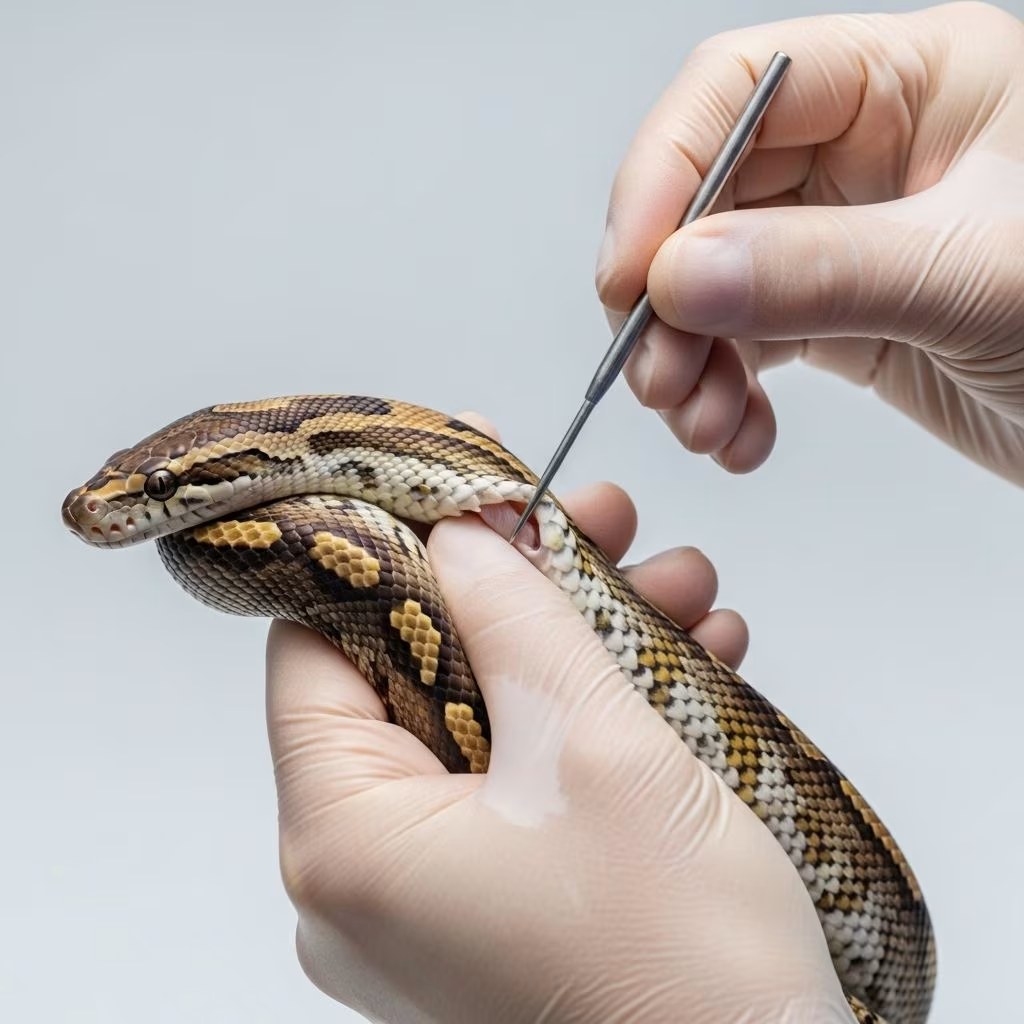
Identifying the sex of a snake is crucial for breeders aiming to pair compatible mates, pet owners curious about their reptile’s biology, and veterinarians providing care. Unlike mammals, snakes lack obvious external genitalia, requiring specialized techniques that range from hands-on manipulation to advanced lab analysis. This article delves into the most reliable methods, their procedures, limitations, and safety considerations, drawing on established veterinary practices.
Understanding Snake Anatomy for Sex Identification
Snakes possess unique reproductive structures that form the basis for sexing. Males feature paired hemipenes, tubular organs stored inverted within the base of the tail in hemipenal pockets. These evert during mating. Females have shorter hemiclitoral pockets or scent glands instead. The cloaca, a multi-purpose vent near the tail base, serves as the entry point for most sexing methods. Tail morphology often differs: males typically have longer, thicker tails to accommodate hemipenes, while females taper more quickly.
Subcaudal scales, the rows under the tail, help measure probe depth in traditional techniques. Familiarity with these features prevents errors and injuries during handling.
Visual Examination: The Non-Invasive Starting Point
Begin sexing with observation, the safest initial approach. Examine tail shape from above: male tails maintain girth longer before tapering, housing hemipenes, whereas female tails slim rapidly post-cloaca. This works best for species like colubrids (e.g., rat snakes, beauty snakes), where differences are pronounced.
- Male indicators: Gradual taper, thicker base, sometimes visible spurs (vestigial hind legs).
- Female indicators: Sharp taper, slimmer overall tail.
- Species caveats: Ineffective for ball pythons or boas with similar silhouettes.
Check for spurs near the cloaca; larger in males. Inspect dorsal scales for hemipenal pocket bulges in colubrids. Experience refines accuracy, but this method alone risks misidentification in ambiguous cases.
Popping Technique: Ideal for Hatchlings
Popping everts hemipenes in newborns by gentle pressure. Best within weeks of hatching, before muscles strengthen. Use a clear plastic tube to secure the snake safely, minimizing spinal stress.
- Position hatchling tail-up in tube, exposing cloaca.
- Place thumb and forefinger distal to cloaca.
- Apply rolling pressure toward cloaca; male hemipenes protrude as pink bulbs.
- No eversion indicates female.
Risks: Limited to young snakes; older ones resist. Potential cloacal or spinal injury from excess force. Misidentification if eversion fails in males.
| Age Suitability | Success Rate | Risk Level |
|---|---|---|
| Hatchlings (0-4 weeks) | High | Low if gentle |
| Juveniles | Low | Medium |
| Adults | Not feasible | High |
Cloacal Probing: Standard for Adults
Probing introduces a lubricated metal rod into the cloaca to gauge pocket depth. Males allow 8-16 subcaudals; females 1-3 (up to 8-9 in some like diamond pythons). Select probe diameter matching hemipene size—too narrow risks deep female insertion or puncture.
Procedure:
- Lubricate probe generously.
- Insert gently into cloaca, directing ventrally then posteriorly.
- Probe both sides; males equal depth, females vary.
- Count spanned subcaudals at maximum comfortable insertion.
Non-sterile, but hygiene prevents infection. Challenging in small or large snakes; funnel-shaped female pockets complicate readings.
Safety Note: Never force; stop if resistance. Probe bilaterally to confirm.
Advanced Molecular Sexing: The Gold Standard
Genetic testing detects W-chromosome markers in females using shed skin, swabs, or blood. Non-invasive, age-independent, accurate across 80+ species like colubrids, vipers (boas/pythons forthcoming).
Advantages over manual methods:
- Zero injury risk.
- Works for all sizes/ages.
- Eliminates operator error.
Labs like LABOKLIN process samples quickly, ideal for breeders verifying pairings.
Species-Specific Sexing Challenges
Colubrids (Corn Snakes, Kingsnakes)
Visual tail taper and probing excel; hemipenal pockets visible.
Boas and Pythons
Similar tails hinder visuals; probing cautious due to deep female pockets. Popping for hatchlings.
Vipers and Pit Vipers
Genetic preferred; probing viable but venom risks demand expertise.
| Family | Best Method | Challenges |
|---|---|---|
| Colubridae | Visual/Probing | Experience needed |
| Boidae/Pythonidae | Probing/Genetic | Deep female probes |
| Viperidae | Genetic | Venomous handling |
Safety Protocols and Common Mistakes
Always warm snake to activity temperature; cold reptiles resist probing. Use proper tools: graduated probes, lubricant. Avoid solo handling of biters/venomous—employ tubes or assistants.
Frequent errors:
- Undersized probes: False male readings in females.
- Single-side probing: Misses asymmetries.
- Excess force: Cloacal tears, prolapse.
Post-procedure: Monitor for swelling, regurgitation. Consult herpetological vets for uncertainty.
Why Accurate Sexing Matters for Breeding
Mismatched sexes waste resources; incorrect pairings cause stress, failed clutches. Females produce infertile eggs, males court futilely. Verified sexing optimizes genetics, health.
FAQs
Can I sex my snake at home?
Visual/popping/probing possible with practice, but genetic testing ensures certainty without risk.
Is probing painful?
Done correctly, minimal discomfort—like a deep itch. Improper technique causes harm.
What if methods conflict?
Default to genetic analysis; manual techniques prone to 10-20% error rates in novices.
Best age for sexing?
Hatchlings for popping, 6+ months for probing, any for DNA.
How much does genetic testing cost?
Varies by lab; often $20-50 USD, worth precision for breeding programs.
Choosing Your Sexing Strategy
For hobbyists: Start visual, advance to probing with training. Breeders: Invest in genetics for reliability. Combine methods for confirmation. Resources abound in herp societies, vet clinics.
Mastering snake sexing enhances husbandry, enabling informed decisions on housing, feeding, reproduction. Prioritize welfare—gentle handling yields best outcomes.
References
- Sex Determination in Snakes — LABOKLIN. 2023. https://laboklin.com/en/sex-determination-in-snakes/
- Determining the Sex of Snakes — Vida Preciosa International, Inc. 2022. https://www.vpi.com/publications/determining-the-sex-of-snakes
- How to Sex your Snake: Visually, Popping, and Probing! — YouTube (Transcript). 2020. https://www.youtube.com/watch?v=BF9B7p7aUrM
- 5 WAYS TO TELL IF YOUR SNAKE IS A BOY OR GIRL! — YouTube (Transcript). 2021. https://www.youtube.com/watch?v=PcdCyvWoiBE



