

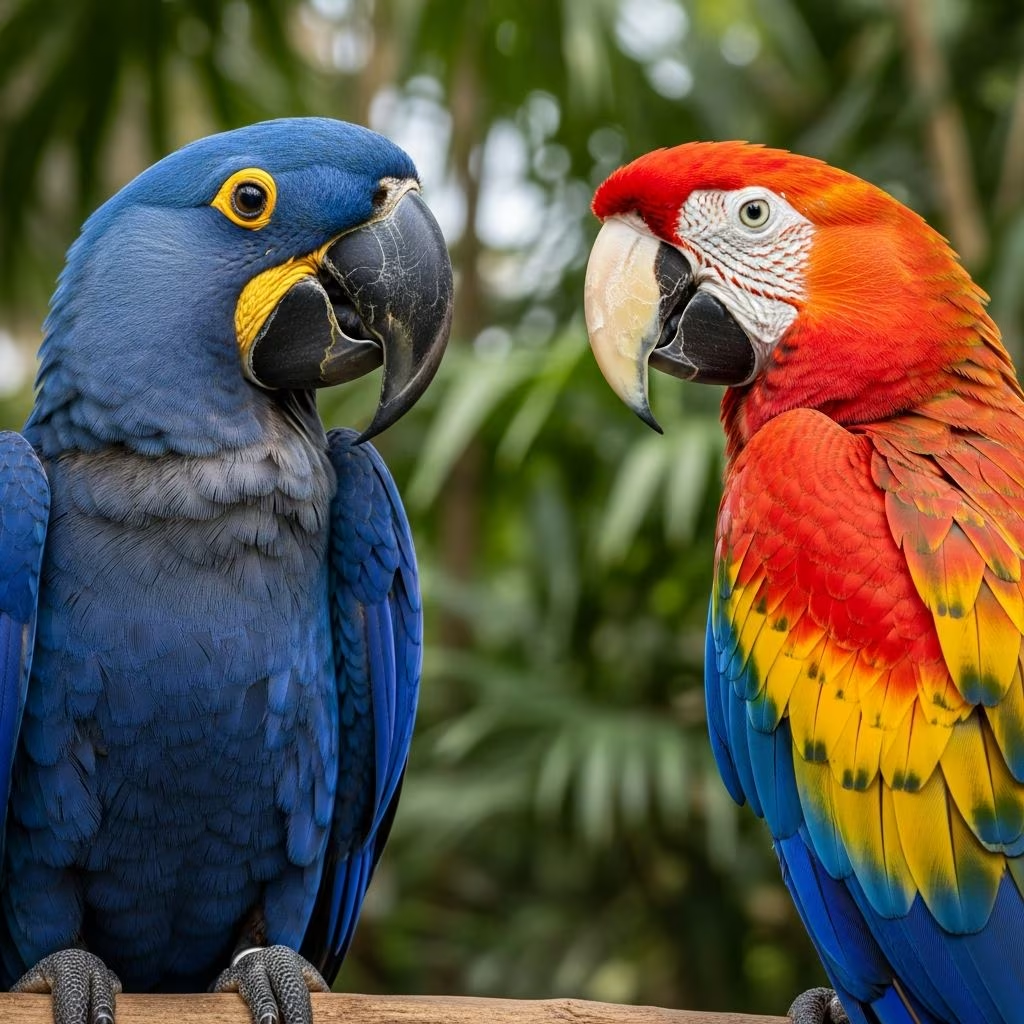
Determining the Sex of a Macaw: A Comprehensive Guide
Macaws are magnificent, intelligent birds that can live for several decades, making them wonderful long-term companions for bird enthusiasts. Whether you’re a breeder, avian veterinarian, or dedicated macaw owner, determining your bird’s sex is essential for proper care, breeding programs, and understanding your pet’s behavior. Unlike some bird species that display obvious physical differences between males and females, many macaw species are sexually monomorphic, meaning they lack visible external sex distinctions. This guide explores the various methods available for accurately determining the sex of your macaw.
Understanding Macaw Sexual Dimorphism
Most macaw species are considered sexually monomorphic, which presents a significant challenge for bird owners and professionals alike. Sexual dimorphism refers to the distinct physical differences between males and females of a species. While some large parrots exhibit subtle differences in size, coloration, or head shape, macaws typically do not display obvious external indicators that distinguish males from females. This characteristic makes accurate sex determination more challenging than it might be with other bird species.
However, experienced observers may notice slight variations in behavior, vocalizations, or subtle physical characteristics. Some male macaws may appear slightly larger or display different personality traits, but these observations are not definitive indicators and should not be relied upon as the sole method for sex determination. The most reliable approach requires combining multiple observation techniques or utilizing scientific testing methods.
Behavioral Observation Methods
One of the most accessible methods for determining macaw sex involves careful behavioral observation over an extended period. While behavior alone cannot definitively determine sex, certain patterns may provide clues when combined with other observations.
Nesting and Reproductive Behaviors
During breeding season, behavioral differences become more apparent. Female macaws may display nest-seeking behaviors, such as exploring small spaces, chewing wood, or regurgitating food. Males typically exhibit courtship displays, which may include head bobbing, spreading wings, vocalizing more frequently, and offering food to potential mates. Observing these seasonal behaviors can provide valuable information about your macaw’s sex, particularly if you have multiple birds and can compare their actions during breeding periods.
Aggression and Territoriality
Some macaw owners report that males tend to be more aggressive and territorial than females, particularly during breeding season. However, this behavior varies significantly among individual birds and cannot be considered a reliable indicator. Females can be equally aggressive when protecting a nest or territory, while some males display minimal aggressive tendencies. Personality and individual temperament play substantial roles in determining behavioral patterns.
Vocalization Patterns
Macaws are known for their loud vocalizations, and some observers suggest that males may vocalize differently than females. Male macaws might produce deeper calls or exhibit more frequent vocalizations, particularly during breeding season. However, female macaws are equally capable of loud vocalizations, and individual variation far exceeds any sex-related differences. This method is not reliable for definitive sex determination.
Physical Examination Techniques
Physical examination can reveal subtle differences that may suggest a macaw’s sex, though these methods are not definitive without laboratory confirmation.
Body Size and Structure
While macaw species do not display obvious sexual dimorphism, some breeding professionals report that males may be marginally larger or have slightly different body proportions compared to females. Male macaws might possess slightly broader heads or more robust frames, though these differences are minimal and highly variable among individuals. Experienced handlers working with established populations may recognize subtle size differences, but this method requires extensive comparative experience and cannot be applied reliably to individual birds without reference populations.
Behavioral Positioning
Some veterinarians suggest that differences in posture and positioning during perching or flight may provide clues. Males occasionally display a more upright, assertive posture, while females may appear slightly more compact. However, these observations are subjective and cannot replace scientific testing methods for accurate determination.
Vent Sexing and Veterinary Examination
Vent sexing, also called cloacal examination, involves gentle manual inspection of the cloaca (the bird’s anus) to evaluate the internal reproductive anatomy. This method requires significant expertise and specialized training, as improper technique can injure the bird. Experienced avian veterinarians can sometimes detect differences in the size or texture of reproductive organs through careful palpation, though this method is not entirely reliable for monomorphic species like macaws.
Vent sexing is most effective during breeding season when reproductive organs are enlarged and more distinguishable. During non-breeding periods, the reproductive organs regress, making differentiation extremely difficult. This method is generally performed only by highly trained professionals and carries some risk of causing stress or injury to the bird if not executed properly.
Surgical and Laparoscopic Methods
Laparoscopy involves inserting a specialized optical instrument through a small surgical incision to directly visualize internal reproductive organs. This method provides definitive visual confirmation of sex but requires general anesthesia, post-operative care, and significant veterinary expertise. Due to the invasive nature and associated risks, laparoscopy is typically reserved for valuable breeding birds or clinical situations where sex determination is critical. The procedure carries inherent surgical risks including infection, bleeding, and anesthetic complications, making it less practical for routine sex determination in companion macaws.
Hormone Analysis Methods
Steroid hormone analysis involves collecting fecal samples over several days and measuring testosterone and estrogen levels through laboratory analysis. This non-invasive method can differentiate sexes by comparing hormone profiles, as males typically produce higher testosterone levels while females produce higher estrogen levels. However, hormone levels fluctuate with reproductive cycles, season, and individual variation, potentially complicating interpretation. Additionally, this method is time-consuming and relatively expensive, requiring specialized laboratory facilities and expertise.
DNA-Based Sexing Methods: The Gold Standard
Molecular techniques for sex determination have revolutionized avian sexing and represent the most accurate, reliable, and increasingly popular method for determining macaw sex. These methods directly identify sex chromosomes, providing definitive results regardless of age, physical appearance, or behavioral patterns.
How DNA Sexing Works
Birds possess two distinct sex chromosomes: the Z chromosome and the W chromosome. Males are ZZ (homogametic), while females are ZW (heterogametic). DNA sexing techniques target the chromodomain helicase DNA-binding (CHD) genes located on these sex chromosomes. The CHD-Z and CHD-W genes contain different intron lengths, allowing laboratories to distinguish between them using polymerase chain reaction (PCR) technology.
When DNA is amplified from a male bird, PCR produces a single amplicon fragment of approximately 400 base pairs from the Z chromosome CHD1-Z gene segment. When DNA is amplified from a female bird, the procedure yields two fragments: one from the Z chromosome (approximately 400 bp) and one from the W chromosome (approximately 300 bp). These size differences are easily visualized on electrophoresis gels, allowing technicians to definitively determine sex.
Sample Collection and Processing
DNA sexing requires minimal, non-invasive samples that can be collected without stress to the bird. Suitable samples include:
- Feathers with the calamus (shaft) intact, which contain DNA in the follicle
- Blood samples collected in appropriate sterile tubes
- Eggshell membranes from eggs produced by the bird
- Buccal swabs from the inside of the mouth
The feather method is particularly popular for macaws because feathers can be collected painlessly during routine grooming or naturally shed molting, eliminating the need for handling stress associated with blood draws. DNA is extracted from these samples using relatively simple laboratory protocols, then amplified using specific primer pairs designed to target sex chromosome regions.
PCR Primer Pairs Used in Macaw Sexing
Several primer pair combinations have been developed and validated for avian sex determination. For blue-and-yellow macaws specifically, research has identified particularly effective primer pairs:
| Primer Pair | Male Result (Z chromosome) | Female Result (Z + W chromosomes) | Effectiveness |
|---|---|---|---|
| P2/P8 | Single 350 bp band | 350 bp + 400 bp bands | Effective for many species |
| 2550F/2718R | 630 bp band | 630 bp + 460 bp bands | Highly efficient for macaws |
| 1237L/1272H | Single band | Two bands | Effective for macaws |
Research on blue-and-yellow macaws demonstrated that the 2550F/2718R primer pair was particularly efficient, producing clear, distinct size differences that facilitate accurate sexing results.
Advantages of DNA Sexing
DNA-based sexing offers numerous advantages over alternative methods. The technique provides highly accurate results with minimal invasiveness, as samples require no special handling or procedures. Results are typically available within one to two days, making this method rapid compared to hormone analysis. DNA sexing can be applied to birds as young as 5-7 days old, allowing early sex determination in breeding programs or chick management situations. The method is equally effective for monomorphic species like macaws that lack visible sex differences, eliminating the uncertainty associated with behavioral or physical observation methods.
DNA sexing is also reliable for young birds before secondary sexual characteristics develop and for birds outside breeding season when hormonal and behavioral indicators are minimal. The accuracy of this method is extremely high because it directly targets genetic material coding for sex determination, rather than relying on indirect indicators subject to individual and environmental variation.
Practical Recommendations for Macaw Owners
For most macaw owners seeking to determine their bird’s sex, DNA-based testing represents the optimal approach. The combination of accuracy, non-invasiveness, rapid results, and applicability to birds of any age makes this method superior to other techniques. Many avian veterinarians now offer DNA sexing services, and specialized avian diagnostic laboratories can process samples by mail, making this method accessible to owners worldwide.
When collecting feather samples for DNA sexing, ensure that feathers include the calamus (the white portion at the base of the feather). Pluck several feathers to ensure adequate DNA material, as shed feathers without follicles may not contain sufficient DNA. Place samples in clean paper envelopes, never plastic bags, which can promote mold growth and degrade DNA. Send samples promptly to the laboratory according to their specific instructions for optimal results.
Breeding Program Applications
For serious breeders managing macaw populations, accurate sex determination is essential for establishing breeding pairs and maintaining genetic diversity. DNA sexing enables breeders to identify available males and females quickly, facilitating appropriate pair formation and reproductive management. Research on captive macaw populations demonstrates that DNA-based sexing methods provide the accuracy and reliability necessary for successful breeding programs and genetic management of both common and endangered macaw species.
Frequently Asked Questions
Q: Can I determine my macaw’s sex by observing behavior alone?
A: While behavioral observation may provide clues, it cannot definitively determine sex. Behavioral patterns vary significantly among individual macaws regardless of sex. Definitive sex determination requires either DNA testing or other scientific methods.
Q: At what age can macaws be reliably sexed?
A: DNA sexing can be performed on chicks as young as 5-7 days old, making it the only reliable method for very young birds. Physical examination methods require adult birds, typically after sexual maturity or during breeding season when reproductive organs are fully developed.
Q: How accurate is DNA sexing for macaws?
A: DNA sexing has extremely high accuracy rates, typically exceeding 99% when performed by experienced laboratories. The method directly identifies sex chromosomes, eliminating the ambiguity present in behavioral or morphological assessment methods.
Q: How much does macaw sex determination cost?
A: DNA sexing typically costs between $25-$50 per bird through most avian veterinary clinics and diagnostic laboratories. This represents a reasonable investment compared to potential costs of inappropriate breeding decisions or veterinary complications from invasive procedures.
Q: Can I perform DNA sexing at home?
A: While DNA extraction and PCR are theoretically possible at home with appropriate equipment, professional laboratory services are recommended for accuracy and reliability. Most bird owners find it more practical to submit samples to established avian diagnostic laboratories.
Q: Why can’t I just visually inspect my macaw to determine sex?
A: Most macaw species are sexually monomorphic, meaning males and females lack obvious external physical differences. While experienced handlers may recognize subtle differences in body size or structure, these indicators are not definitive and vary considerably among individual birds.
References
- Molecular techniques for sex identification of captive birds — National Center for Biotechnology Information, PMC. 2019. https://pmc.ncbi.nlm.nih.gov/articles/PMC6813601/
- Molecular sexing in the formation of pairs of blue-and-yellow macaw — Research, Society and Development Journal. 2021. https://rsdjournal.org/rsd/article/download/19330/17159/235786
- Bird Sexing – Test Bird DNA for male or female — Bento Lab. https://bento.bio/protocol/bird-sexing/
- Conditions for rapid sex determination in 47 avian species by PCR — San Diego Zoo Wildlife Alliance. 2003. https://sandiegozoowildlifealliance.org/sites/default/files/fee_calendar/Post-Lesson_%20Jensen%20et%20al%20(2003)_0.pdf
- Sexing for parrots – NeorniLab — NeorniLab Advanced Avian Diagnostics. https://www.neornilab.be/en/tests/testing-parrots/sexing-parrots



