

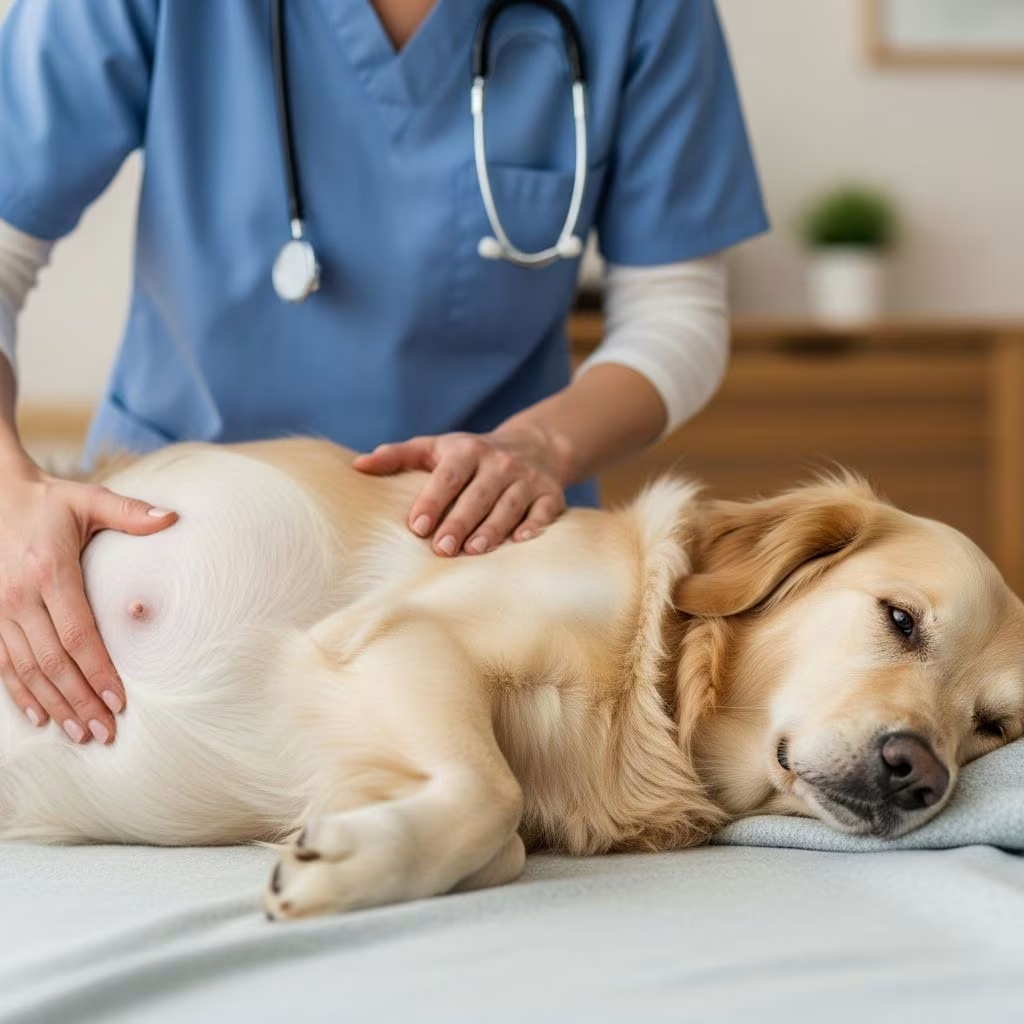
When a dog becomes pregnant, expecting owners naturally become curious about the developing puppies and when they might be able to observe signs of life within the womb. One of the most exciting milestones in canine pregnancy is the moment you can feel or see the puppies moving inside the mother dog’s abdomen. Understanding when this occurs and how to safely monitor fetal activity helps owners provide appropriate care throughout the gestation period and prepare for the arrival of newborn puppies.
The Timeline for Detecting Fetal Activity in Pregnant Dogs
The ability to feel puppies move in a pregnant dog follows a predictable developmental timeline. Visible and tangible puppy movements typically become noticeable around the seventh week of pregnancy. However, this doesn’t mean nothing is happening earlier in the gestation period—significant development occurs from conception onward, even though external signs remain subtle or undetectable to the owner’s touch.
The anatomical reason for this delayed sensation relates to the unique structure of canine fetal development. Unlike human pregnancies where a single amniotic sac surrounds each fetus, puppies in the womb are cushioned by two separate fluid-filled sacs. This double-layering of protective fluid creates a substantial buffer that dampens the transmission of movement to the mother’s abdominal wall. As puppies grow larger and the pregnancy progresses into the final weeks, they eventually become too large to be significantly cushioned by this fluid, and their movements become pronounced enough to feel and sometimes even see from outside the mother’s body.
Early Pregnancy Phase: Weeks One Through Three
The first three weeks of canine pregnancy rarely show obvious external signs. During this initial phase, fertilized eggs travel through the reproductive tract and begin implanting in the uterine horn. Most owners won’t notice anything unusual during these early days.
Subtle indicators that may emerge include behavioral shifts in the mother dog. She may become unusually quiet, spending more time sleeping than normal. Some pregnant dogs display increased clinginess or neediness, seeking more frequent contact with their owners. Appetite can be unpredictable—some dogs experience mild nausea or decreased food interest, while others maintain normal eating patterns.
Physical changes begin to emerge toward the end of week three. The nipples enlarge and develop a noticeably pinker coloration, a phenomenon known as “pinked-up” nipples. This hormonal shift prepares the mother’s body for future milk production. At this stage, exercise remains appropriate, though owners should avoid excessive exertion, particularly in hot weather conditions.
Mid-Pregnancy Development: Weeks Four Through Six
The middle trimester marks the transition from subtle changes to more apparent pregnancy signs. By week four, fetuses become visible on ultrasound examination, allowing veterinarians to definitively confirm pregnancy. The tiny developing puppies have begun forming spinal columns and facial features, though they remain microscopic to the naked eye.
This phase brings noticeable physical changes to the mother dog. Weight gain concentrates around the abdominal area, creating a rounder, more prominent belly that becomes progressively more noticeable. The abdomen feels increasingly firm to the touch. Nipples continue enlarging and become more prominent, with the vulva also showing signs of swelling. Vaginal discharge, typically clear in appearance, may become noticeable.
Behavioral modifications often include nesting behaviors, where the mother begins gathering blankets, towels, or other soft materials to create a comfortable sleeping area. She may rearrange bedding repeatedly, instinctively preparing for the eventual birth.
By day 28 of pregnancy, blood tests can confirm pregnancy through hormone detection. Between days 28 and 35, veterinarians can palpate (physically feel) the developing puppies through the abdominal wall before they become completely surrounded by protective fluid. This window of opportunity requires a gentle touch from a trained professional, as rough handling could potentially damage the uterine wall or cause miscarriage.
Late Pregnancy Stage: Weeks Seven Through Nine
The final phase of canine pregnancy brings dramatic changes and marks the period when movement detection becomes reliably possible. By week seven, puppies have grown substantially and no longer fit comfortably within the increasingly crowded confines of the uterus. Their movements become vigorous enough to create visible rippling along the mother’s flanks and perceptible movement to gentle palpation.
At this stage, placing your hand gently on the mother’s belly may allow you to feel distinct kicks and rolling motions as the puppies shift position. Some owners even report seeing movement through the fur and skin as the mother’s abdomen heaves and undulates. This phenomenon results from the combination of larger fetal size and the mother’s increasingly thin abdominal wall as her body stretches to accommodate the growing litter.
Weeks seven through nine bring heightened physical discomfort for the mother dog. Her enlarged abdomen hangs lower on her body, filled with nearly full-term puppies ready for birth. Restlessness and anxiety become pronounced, with many dogs pacing frequently, displaying mild panting, or seeking frequent position changes. She may appear uncomfortable when lying down and may repeatedly stand and resettle.
Milk may begin leaking from nipples as the body prepares for nursing. Behavioral patterns often shift noticeably—some dogs become extremely clingy and demanding of owner attention, while others withdraw and seek solitude. Loss of appetite increases as available abdominal space decreases.
Safe Techniques for Monitoring Fetal Movement
While detecting puppy movement is exciting, owners must approach physical examination with appropriate caution. The mother dog’s abdomen contains developing life that requires protection from rough handling or excessive pressure.
- Use only gentle, light pressure when placing hands on the mother’s belly
- Never attempt deep palpation or forceful probing of the abdominal area
- Watch the mother dog’s body language—if she appears uncomfortable, uncertain, or tries to move away, stop immediately
- Avoid unnecessary belly touching during early pregnancy when puppies are more vulnerable
- Allow the mother to initiate or permit contact rather than forcing examination
- During late pregnancy, brief, gentle observation often provides adequate movement detection
Diagnostic Methods Veterinarians Use to Monitor Development
Professional veterinary examination provides far more detailed information about fetal development than owner observation alone. Veterinarians employ three primary diagnostic techniques:
Palpation involves the veterinarian’s trained fingers feeling for embryonic sacs. This technique works best between weeks three and four when fetuses can still be felt individually before becoming cushioned by protective fluid.
Ultrasound represents the most effective early detection method, successfully identifying pregnancy between days 25 and 35. Ultrasound allows veterinarians to visualize developing puppies, count litter size, assess individual puppy development, and observe heartbeats—providing comprehensive data about pregnancy progression.
X-ray imaging proves most useful during the final pregnancy stages to estimate litter size and assess skeletal development. X-rays rarely serve as initial pregnancy diagnostic tools but provide valuable information as birth approaches.
Physical and Behavioral Changes Throughout Gestation
| Pregnancy Stage | Timeline | Primary Changes | Movement Detection |
|---|---|---|---|
| Early Phase | Weeks 1-3 | Pinked nipples, increased sleep, possible nausea | Not detectable |
| Mid Phase | Weeks 4-6 | Weight gain, enlarged abdomen, nesting behaviors | Not reliably detectable by owners |
| Late Phase | Weeks 7-9 | Visible belly heaving, restlessness, milk leakage | Clearly visible and palpable |
Appetite and Nutritional Considerations During Pregnancy
Nutritional needs fluctuate throughout the pregnancy timeline. Early pregnancy may suppress appetite temporarily, but by mid-pregnancy, the mother dog typically experiences significantly increased food intake, with appetite continuing to rise until approximately day 45. After day 45, appetite often decreases as the enlarged uterus compresses the digestive organs.
Providing high-quality, nutrient-dense food supports proper fetal development and maintains the mother’s health. Puppies’ skeletal structures solidify during weeks seven and eight, requiring adequate calcium and phosphorus. Multiple small meals often prove more comfortable than single large meals during late pregnancy when abdominal space becomes limited.
Pre-Labor Indicators and Final Week Preparation
As pregnancy approaches its natural conclusion, specific signs indicate that labor will occur within hours or days. The mother dog’s body temperature typically drops approximately 24 hours before labor begins, reaching around 98 degrees Fahrenheit. This temperature shift represents one of the most reliable pre-labor indicators.
Behavioral changes intensify dramatically in the final days. Nesting becomes frantic, with the mother dog digging and rearranging bedding materials with increased urgency. Restlessness manifests as constant pacing, inability to settle into comfortable positions, and excessive panting even without physical exertion. Some dogs refuse food entirely during the 24 hours preceding labor.
Physical changes include further nipple enlargement as milk fully comes in and abdominal firmness increases noticeably. The combination of enlarged nipples and a hardened abdomen reliably indicates that birth will occur within days.
Preparing a Safe Environment for Birth
Once puppies become detectable and pre-labor signs begin appearing, preparing appropriate birthing accommodations becomes essential. A dedicated whelping box lined with clean, absorbent materials provides a secure space where the mother feels comfortable delivering. Placement in a quiet, dimly-lit area away from household traffic reduces stress and allows the mother to focus on labor.
Having emergency veterinary contact information readily available ensures quick access to professional assistance if complications arise. Most dog pregnancies progress without incident, but unexpected developments occasionally require immediate medical intervention.
Frequently Asked Questions About Puppy Movement Detection
When exactly can I expect to feel puppies moving?
Around week seven of pregnancy, puppy movement becomes consistently detectable through gentle abdominal palpation and often visible as belly movement. However, individual variation exists depending on litter size and the mother’s body composition.
Why is movement harder to detect early in pregnancy?
The double-layered fluid sac surrounding each puppy provides cushioning that effectively dampens movement transmission to the abdominal wall. As puppies grow larger relative to available space, their movements overcome this dampening effect.
Is it safe to repeatedly feel my pregnant dog’s belly?
Gentle, brief abdominal touching during late pregnancy is generally safe, but frequent intensive palpation should be avoided. Excessive handling could cause unnecessary stress. Owners should stop immediately if the mother shows discomfort or resistance.
Should I be concerned if I don’t feel movement at seven weeks?
Individual variation occurs in pregnancy progression. Factors including litter size, maternal body condition, and fetal positioning influence movement detectability. If pregnancy concerns exist, veterinary ultrasound provides definitive assessment of fetal development and health.
What do healthy puppy movements feel like?
Healthy movements feel like gentle rolling, kicking, or undulating sensations within the abdominal area. As birth approaches, movements often become more vigorous and visible, creating obvious rippling along the mother’s flanks.
Conclusion
The journey of canine pregnancy offers a fascinating window into fetal development, with puppy movement detection serving as one of the most exciting milestones for expecting dog owners. Understanding the predictable timeline of pregnancy progression, recognizing appropriate movement detection windows, and employing safe examination techniques allows owners to stay informed while protecting both mother and developing puppies. By week seven, most owners can perceive movement through gentle observation, marking a thrilling confirmation of the puppies growing within. Combining owner observation with professional veterinary guidance ensures healthy pregnancy progression and optimal preparation for the arrival of newborn puppies.
References
- Dog Pregnancy: An Owner’s Guide to the Different Stages — PetPace. https://petpace.com/dog-pregnancy-guide/
- Stages of Pregnancy in Dogs — Veterinary Healthcare Associates. https://vhavets.com/blog/stages-of-pregnancy-in-dogs/
- 6 Signs of a Dog in Labor — Veterinary Emergency Group. https://www.veg.com/post/6-signs-of-a-dog-in-labor
- Is my dog pregnant? Signs, nutrition and care — Pooch and Mutt. https://www.poochandmutt.co.uk/blogs/health/is-my-dog-pregnant-signs-nutrition-and-care
- What to Expect If Your Dog Is Expecting — Campbell River Veterinary Clinic. https://www.campbellrivervet.com/resources/blog/may-2022/what-to-expect-if-your-dog-is-expecting
- Everything You Need to Know About Birthing Puppies — Noah Vets. https://www.noahvets.com/everything-you-need-to-know-about-birthing-puppies/



