

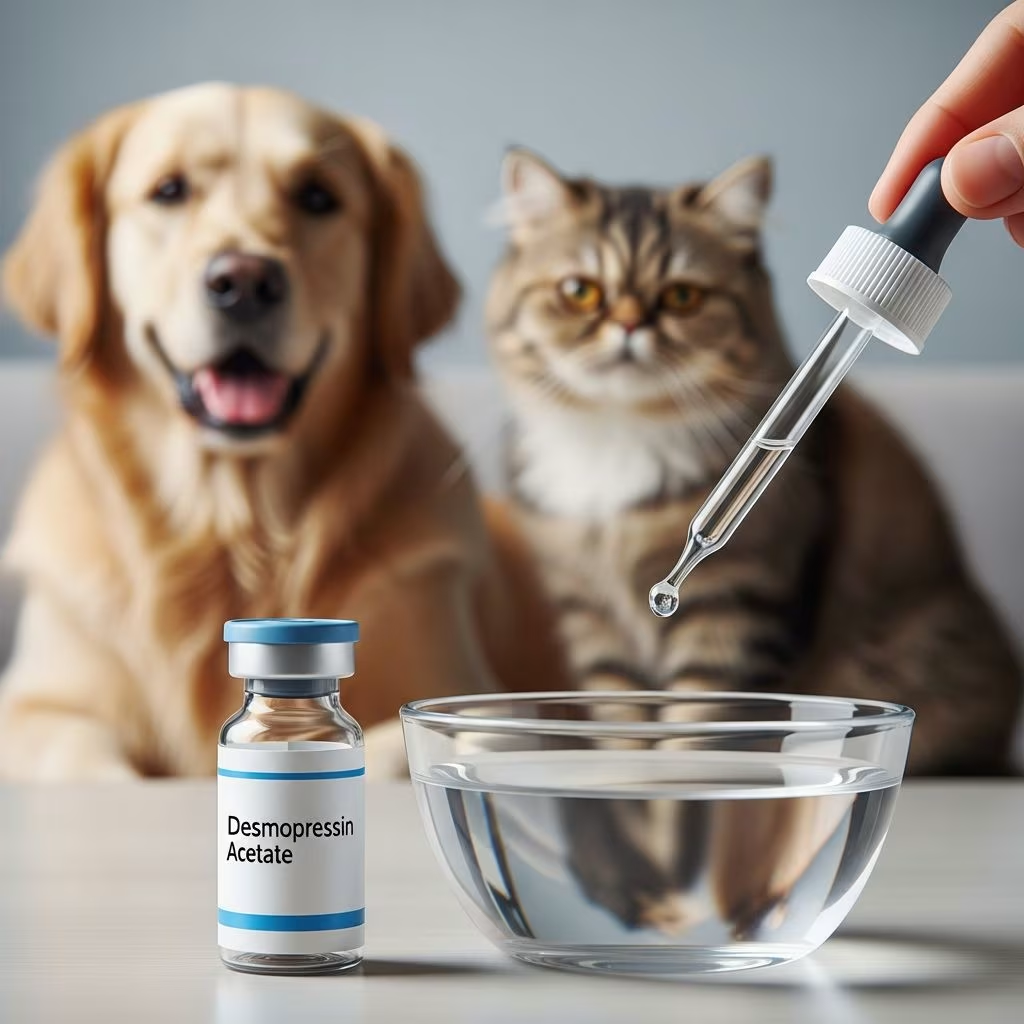
Desmopressin Acetate for Pets
Desmopressin acetate is a synthetic medication that plays a critical role in managing specific medical conditions in companion animals. This comprehensive guide provides pet owners and veterinary professionals with essential information about this medication, including its uses, administration methods, dosing guidelines, and important safety considerations.
What Is Desmopressin Acetate?
Desmopressin acetate is a synthetic analogue of vasopressin, also known as antidiuretic hormone (ADH). This medication mimics the natural hormone’s effects by acting on the kidneys to decrease urine output and increase water reabsorption. The drug is specifically designed to address hormonal deficiencies in pets and is available in multiple formulations to accommodate different treatment needs.
The medication works by binding to vasopressin receptors in the kidneys, promoting the reabsorption of water and reducing the volume of urine produced. This mechanism makes it particularly effective for certain urinary conditions in both dogs and cats.
Primary Uses of Desmopressin Acetate
Central Diabetes Insipidus Treatment
Desmopressin acetate is the treatment of choice for central diabetes insipidus in both dogs and cats. Central diabetes insipidus (CDI) is a condition characterized by insufficient production of ADH in the pituitary gland, leading to excessive thirst and urination. When pets suffer from this condition, their kidneys cannot concentrate urine properly, resulting in polyuria (excessive urination) and polydipsia (excessive thirst).
Dogs and cats with CDI can experience dramatic improvements when treated with desmopressin acetate. Owners typically notice reduced water intake and significantly less frequent urination within a few days of starting treatment. The medication effectively replaces the missing hormone, allowing the kidneys to function normally.
Diagnostic Applications
Beyond its therapeutic use, desmopressin acetate serves an important diagnostic function. Because numerous conditions can cause increased water consumption and urine production, veterinarians may use desmopressin acetate to help differentiate between central diabetes insipidus and other causes of polyuria and polydipsia. A positive response to the medication can confirm a diagnosis of CDI.
Von Willebrand’s Disease Management
A less common but important use for desmopressin acetate is in animals with type 1 Von Willebrand’s disease, an inherited bleeding disorder. Veterinarians may administer this medication at the time of surgery to help control or prevent bleeding complications in affected animals.
Glucocorticoid-Induced Polyuria and Polydipsia
Recent research has demonstrated that desmopressin acetate can help manage polyuria and polydipsia in dogs receiving glucocorticoid therapy such as prednisolone. When glucocorticoids are administered for various medical conditions, they frequently cause excessive thirst and urination as adverse effects. Administration of desmopressin alongside glucocorticoid therapy has been shown to significantly decrease water intake and increase urine specific gravity, offering relief from one of the most frustrating side effects of corticosteroid treatment.
Available Formulations and Dosage Forms
| Dosage Form | Formulation Details | Strength | Primary Application |
|---|---|---|---|
| Ophthalmic Solution | Sterile solution applied to the eye | 0.02% | Most common for chronic management |
| Injection Solution | Sterile solution intended for injection | 0.01% | Subcutaneous or intravenous administration |
| Oral Tablets | Quarter-scored tablets for dosing flexibility | 0.2 mg per tablet | Less common due to reduced effectiveness |
The ophthalmic solution is the most frequently prescribed formulation for ongoing diabetes insipidus management. The injectable form may be utilized in clinical settings or when oral administration is impractical. Compounded formulations are also available through specialty pharmacies to meet individual patient needs.
Administration Methods
Ophthalmic Administration
Desmopressin acetate is usually given as an eye drop, making it the preferred route for home administration. The medication is applied to the conjunctiva, the membrane lining the lower eyelid sac. When treating central diabetes insipidus, the ophthalmic solution is generally administered once or twice daily. This route is convenient for pet owners and allows for consistent, long-term management of the condition.
To administer eye drops properly, owners should wash their hands thoroughly before and after application. The medication should be instilled into the lower eyelid pocket, allowing it to be absorbed through the mucous membranes.
Injectable Administration
Veterinarians may administer desmopressin acetate by intravenous injection or by injection under the skin (subcutaneous injection). Injectable administration ensures consistent absorption and is particularly useful in acute clinical situations or when immediate results are needed. Intravenous desmopressin has proven effective in reversing aspirin-induced coagulopathy in dogs requiring surgery, demonstrating its utility beyond chronic disease management.
Important Administration Notes
Desmopressin acetate cannot be given by mouth in its standard formulation, as the medication is not effective when taken orally. This limitation necessitates either eye drop or injection administration for therapeutic benefit.
Effectiveness and Monitoring
Desmopressin acetate has proven highly effective in managing central diabetes insipidus in both dogs and cats. Owners frequently observe dramatic improvements in symptoms, including significantly reduced water intake and less frequent urination, often within a few days of starting treatment.
Because individual responses to desmopressin can vary considerably, regular monitoring is essential for optimal treatment outcomes. Veterinarians typically recommend:
- Urine specific gravity testing to assess urinary concentration
- Periodic bloodwork to monitor electrolyte levels, particularly sodium concentration
- Home monitoring of water intake and urination frequency
- Regular communication with the veterinarian about symptom changes
Adjusting the dose based on these observations ensures each pet receives optimal benefit without unnecessary medication or inadequate treatment. Some pets may require dose adjustments over time as their condition stabilizes.
Potential Side Effects and Safety Considerations
Common Side Effects
While desmopressin acetate is generally well-tolerated, certain side effects may occur. The most significant concern is hyponatremia, which is a decrease in serum sodium concentration. This complication can develop with prolonged use or excessive dosing, making regular monitoring of blood sodium levels essential.
Some pets may experience local irritation at the injection site if the medication is administered subcutaneously, though this is typically mild and temporary.
Drug Interactions
Pet owners and veterinarians must discuss all medications and supplements the pet is receiving, as certain drugs can interact with desmopressin acetate. Medications that may increase the effects of desmopressin acetate include:
- Fludrocortisone
- Chlorproamide
- Urea
Concurrent use of these medications requires careful veterinary supervision and potential dose adjustment of desmopressin acetate.
Use in Pregnancy
Desmopressin acetate has not been extensively studied in pregnant dogs or cats. Large doses administered to pregnant laboratory animals have not caused apparent harm to the fetus. The medication should only be used during pregnancy if the benefits clearly outweigh potential risks, making this determination a decision best made by the attending veterinarian.
Important Precautions and Contraindications
Desmopressin acetate is not effective for nephrogenic diabetes insipidus, a condition where the kidneys are unresponsive to ADH. In such cases, alternative treatments must be pursued. Proper diagnosis is therefore essential before initiating desmopressin therapy.
Pets with certain cardiovascular conditions, severe hyponatremia, or a history of adverse reactions to the medication should not receive desmopressin acetate without careful veterinary evaluation.
Storage and Handling
Desmopressin acetate should be stored according to manufacturer instructions, typically at room temperature away from direct light and moisture. Injectable and ophthalmic solutions must remain sterile and should not be used if the solution appears cloudy or discolored. Pet owners should keep the medication in its original container and follow all labeling instructions regarding storage duration and conditions.
Cost and Availability
Desmopressin acetate is available through veterinary pharmacies and specialty compounding pharmacies. The cost varies depending on the formulation, strength, and whether the medication is a commercial product or a compounded preparation. Pet owners should discuss pricing and availability options with their veterinarian, as some formulations may need to be specially ordered or compounded.
Frequently Asked Questions
Q: How quickly does desmopressin acetate work?
A: Dogs and cats with central diabetes insipidus typically respond well to treatment, forming more concentrated urine and drinking much less water. Many owners notice improvement within a few days, though full effectiveness may take slightly longer to establish. Response times vary between individual pets.
Q: Can desmopressin acetate be used long-term?
A: Yes, desmopressin acetate is designed for long-term management of central diabetes insipidus. Pets often require ongoing treatment throughout their lives. Regular veterinary monitoring ensures the medication continues to be effective and safe with appropriate dosing adjustments as needed.
Q: What should I do if I miss a dose?
A: If you miss a dose of desmopressin acetate, administer it as soon as you remember. However, if it is nearly time for the next scheduled dose, skip the missed dose and resume the regular dosing schedule. Never double-dose to make up for a missed application.
Q: Is desmopressin acetate safe for all pets?
A: Desmopressin acetate is generally safe for dogs and cats when prescribed by a veterinarian and administered according to directions. However, it is not appropriate for pets with nephrogenic diabetes insipidus or certain other medical conditions. Your veterinarian will determine if this medication is suitable for your specific pet.
Q: Can desmopressin acetate be combined with other medications?
A: Desmopressin acetate can often be used with other medications, but certain drug interactions are possible. Always inform your veterinarian about all medications, supplements, and herbal therapies your pet is receiving to ensure safe concurrent use.
Q: How is desmopressin acetate different from treating diabetes mellitus?
A: Diabetes insipidus and diabetes mellitus are entirely different conditions. Diabetes insipidus involves a hormonal deficiency affecting water regulation, while diabetes mellitus involves problems with blood glucose and insulin. Desmopressin acetate specifically treats diabetes insipidus and has no role in managing diabetes mellitus.
References
- Desmopressin Acetate for Dogs and Cats — Wedgewood Pharmacy. 2022-07-12. https://www.wedgewood.com/medications/desmopressin-acetate/
- Effects of desmopressin acetate administration in healthy dogs receiving prednisolone — National Center for Biotechnology Information (NCBI). 2022. https://pmc.ncbi.nlm.nih.gov/articles/PMC8478070/
- Intravenous administration of desmopressin acetate to reverse acetylsalicylic acid-induced coagulopathy in three dogs — Journal of Veterinary Emergency and Critical Care. 2013-07-15. https://pubmed.ncbi.nlm.nih.gov/23855456/
- Desmopressin Eye Drops: A Unique Approach to Diabetes Insipidus in Pets — Skippack Pharmacy. 2024. https://www.skippackpharmacy.com/desmopressin-eye-drops-a-unique-approach-to-diabetes-insipidus-in-pets/
- Pharmacotherapeutics in Diabetes Insipidus in Animals — Merck Veterinary Manual. 2024. https://www.merckvetmanual.com/pharmacology/systemic-pharmacotherapeutics-of-the-urinary-system/pharmacotherapeutics-in-diabetes-insipidus-in-animals



