

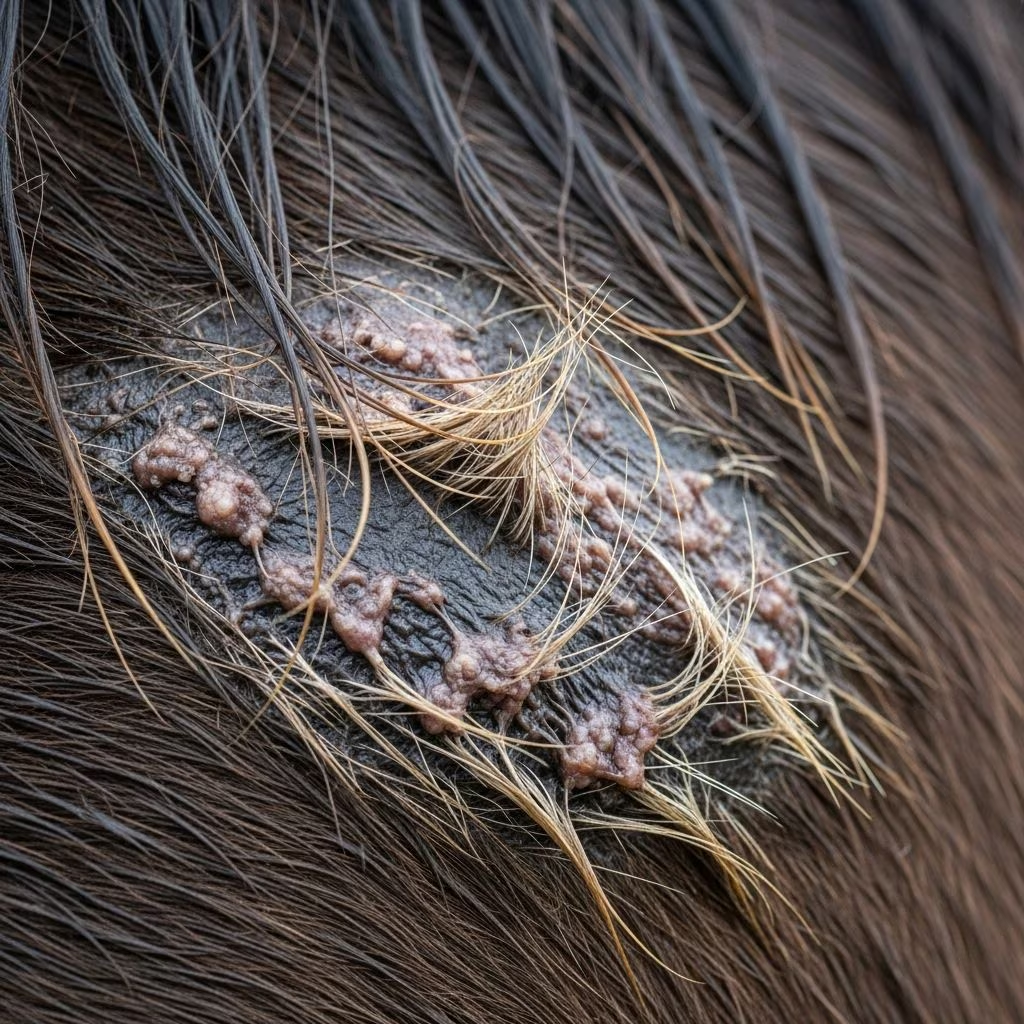
Dermatophilosis represents a significant bacterial skin infection impacting a wide array of animals, from livestock to wildlife. Triggered by the unique bacterium Dermatophilus congolensis, it thrives in moist environments, producing characteristic crusty lesions that can impair animal health and productivity.
The Pathogen Behind the Disease
At the core of dermatophilosis lies Dermatophilus congolensis, a Gram-positive, spore-forming bacterium with a life cycle akin to fungi, featuring zoospores and hyphal forms. This adaptability allows it to persist in the environment and on animal skin as a commensal until favorable conditions activate infection. First identified in cattle in Zaire in 1910, the bacterium spreads globally, excluding Antarctica, with heightened prevalence in tropical and subtropical regions.
The infectious zoospores emerge under wet, humid conditions, penetrating skin compromised by trauma, parasites, or prolonged moisture exposure. Once inside, they multiply, forming hyphae that lead to exudative dermatitis. Chronically infected carriers, particularly sheep, serve as reservoirs, mechanically disseminating spores via flies, ticks, or direct contact.
Susceptible Species and Epidemiological Patterns
Numerous mammals fall prey to this infection, including major livestock like cattle, sheep, goats, and horses, alongside wildlife such as deer, rabbits, and raccoons. Dogs, cats, pigs, and even reptiles like crocodiles report rare cases, while human zoonotic transmission occurs through close contact with affected animals, typically manifesting as mild, self-resolving lesions—though immunocompromised individuals face greater risks.
Outbreaks correlate strongly with rainy seasons or humid climates, where persistent wetting along the dorsum, legs, face, and ears promotes lesion development. In sheep, known as ‘lumpy wool,’ it affects lambs post-marking, with prevalence up to 90% in some flocks. Horses suffer ‘rain scald’ or ‘strawberry footrot,’ while cattle exhibit similar exudative crusts.
| Species | Common Name for Disease | Typical Lesion Sites |
|---|---|---|
| Cattle | Streptothricosis | Back, sides, udder |
| Sheep | Lumpy wool | Dorsal midline, face, ears |
| Horses | Rain rot, strawberry footrot | Back, pasterns |
| Goats | Cutaneous dermatophilosis | Legs, head |
| Wildlife (e.g., deer) | Rain scald | Topline, limbs |
Clinical Manifestations and Progression
Infections initiate as small papules and pustules, evolving into moist, exudative areas matted with hair and debris, forming thick, ‘paintbrush-like’ crusts. Removing these reveals hyperemic, bleeding undersurfaces. Lesions favor gravity-dependent or wetting-prone sites: the topline in sheep and horses, interdigital spaces in cattle, and facial areas in goats.
- Early stage: Papular eruptions with serous exudate.
- Peak stage: Crusty scabs incorporating hairs, causing matting and alopecia.
- Chronic stage: Recurrent spread to new skin areas, leading to emaciation, reduced mobility, and anorexia if mouth or feet are involved.
Most cases self-limit within 2-3 weeks as weather dries, yielding spontaneous healing sans scars. Severe, generalized forms, however, debilitate animals, potentially fatal in young or stressed individuals. Secondary impacts include wool contamination in sheep, downgrading fleece value.
Diagnostic Approaches
Veterinarians rely on clinical presentation—crusty lesions post-wetting—corroborated by lab confirmation. Microscopic exam of stained crusts reveals parallel rows of Gram-positive hyphae or branching filaments, pathognomonic for D. congolensis. Cytology from lesion bases shows characteristic ‘railroad track’ bacteria. Culture on selective media or histopathology provides definitive identification, though the organism’s fastidious nature challenges isolation.
Differential diagnoses encompass ringworm, bacterial pyoderma, zinc-responsive dermatosis, and viral exanthems. In endemic areas, gross morphology suffices for presumptive diagnosis during outbreaks.
Treatment Strategies
Many infections resolve sans intervention, hastened by dry conditions and immune competence. Symptomatic care involves gentle crust removal, topical antiseptics, and barrier creams to mitigate moisture. Systemic antibiotics target severe, painful, or non-resolving cases.
Recommended antimicrobials include:
- Long-acting penicillin (e.g., procaine/benzathine at 20 mg/kg IM) for sheep and lambs.
- Oxytetracycline (20 mg/kg IM) as first-line in Australia for sheep, administered 40+ days pre-shearing.
- Other options: lincomycin/streptomycin (where registered), though resistance emerges in some isolates.
Topical agents like lime sulfur dips aid horses. Avoid aggressive debridement to prevent bacteremia. In wildlife, treatment is rarely pursued due to impracticality.
Prevention and Control Measures
Proactive management curtails outbreaks:
- Environmental control: Ensure drainage, shelter from rain, and rapid drying of coats.
- Parasite management: Eradicate ticks, flies, and lice that traumatize skin and vector spores.
- Isolation:
- Hygiene: Disinfect housing; monitor during wet seasons.
- Vaccination: Experimental in cattle, but inconsistent efficacy limits use.
Quarantine clinically affected animals; cull chronic carriers in flocks.
In sheep flocks, early antibiotic intervention during high-prevalence outbreaks preserves lamb health. Human precautions—gloves, handwashing—prevent zoonoses.
Zoonotic Potential and Public Health
Though rare, D. congolensis transmits to humans via contaminated fomites or lesions, causing cutaneous nodules or pustules, typically self-resolving. High-risk groups include farmers and vets handling exudates without protection. Immunosuppressed persons warrant prompt medical attention. No animal-human epidemics reported, but vigilance is key.
Research Insights and Future Directions
Recent studies highlight antimicrobial resistance in isolates, urging stewardship. Genomic analyses elucidate virulence factors, informing novel vaccines or diagnostics. Climate change may exacerbate outbreaks via intensified rainfall, necessitating adaptive strategies in livestock production.
Frequently Asked Questions (FAQs)
What triggers dermatophilosis outbreaks?
Prolonged moisture, skin trauma, and insect vectors activate dormant bacteria on carriers.
Can dermatophilosis kill animals?
Rarely; most heal spontaneously, but severe cases in compromised animals can lead to secondary complications and death.
Is treatment always necessary?
No, mild cases resolve alone; antibiotics reserved for extensive or persistent infections.
How do you differentiate it from ringworm?
Microscopy shows bacterial hyphae vs. fungal hyphae; crusts are exudative and moist-based.
Does it affect wool quality?
Yes, ‘lumpy wool’ in sheep reduces market value due to matted, contaminated fleeces.
This detailed examination underscores dermatophilosis as a manageable yet recurrent challenge in veterinary practice, emphasizing environmental stewardship and timely intervention for optimal animal welfare.
References
- Dermatophilosis in Dogs – Dog Owners – MSD Veterinary Manual — MSD Veterinary Manual. Accessed 2026. https://www.msdvetmanual.com/dog-owners/skin-disorders-of-dogs/dermatophilosis-in-dogs
- Dermatophilosis – NSW Department of Primary Industries — NSW DPI. Accessed 2026. https://www.dpi.nsw.gov.au/about-us/services/laboratory-services/veterinary/dermatophilosis
- Dermatophilosis lambs – Flock and Herd case studies — Flock and Herd. Accessed 2026. http://www.flockandherd.net.au/sheep/ireader/dermatophilosis.html
- Dermatophilosis – Commonwealth of Pennsylvania — PA Game Commission. Accessed 2026. https://www.pa.gov/agencies/pgc/wildlife/wildlife-health/wildlife-diseases/dermatophilosis
- Identification and Antimicrobial Resistance of Dermatophilus … – PMC — PMC (PubMed Central). 2021-07-28. https://pmc.ncbi.nlm.nih.gov/articles/PMC8310134/
- Dermatophilosis – Cornell Wildlife Health Lab — Cornell University. Accessed 2026. https://cwhl.vet.cornell.edu/resource/dermatophilosis



