Dental Cleaning in Dogs: Complete Veterinary Guide
Professional dental cleaning for dogs removes tartar and plaque to prevent periodontal disease and improve oral health.
Understanding Dental Cleaning in Dogs
Professional dental cleaning is one of the most important preventive health procedures available for dogs. Just like humans, dogs accumulate plaque and tartar on their teeth over time, which can lead to serious periodontal disease, tooth loss, and systemic health problems. Unlike brushing your dog’s teeth at home, a professional veterinary dental cleaning provides a comprehensive evaluation and thorough removal of plaque and tartar both above and below the gum line—the area where the most significant dental disease occurs.
Dental disease in dogs is progressive and often silent in its early stages. Many pet owners don’t realize their dog has dental problems until significant damage has already occurred. A professional dental cleaning performed by a veterinarian can identify early signs of disease, prevent tooth loss, and maintain your dog’s overall health and quality of life.
What is Involved with a Dental Exam?
Before any dental cleaning procedure can take place, your veterinarian will conduct a thorough dental examination. This initial assessment is critical for determining whether a dental cleaning is necessary and identifying any potential risks associated with anesthesia.
Pre-Anesthetic Evaluation
Your veterinarian will review your dog’s complete medical history and perform a comprehensive physical examination. This evaluation helps identify any underlying health conditions that might affect the safety of anesthesia. Specifically, your veterinarian will assess your dog’s heart function, kidney health, and liver function, as these organs are crucial for processing anesthetic medications.
Pre-Anesthetic Blood Work
Pre-anesthetic blood tests are an essential part of the dental cleaning process. These tests ensure that your dog’s kidney and liver function are adequate for safe anesthesia. Blood work typically includes a complete blood count (CBC) and a chemistry panel that evaluates organ function. This diagnostic step helps your veterinarian determine the appropriate anesthetic protocol and identify any conditions that might require special consideration during the procedure. For dogs with certain health conditions, additional testing may be recommended, such as an electrocardiogram (ECG) to evaluate heart function.
Conscious Oral Evaluation
Before administering anesthesia, your veterinarian will perform a visual assessment of your dog’s mouth while conscious. This initial examination can reveal obvious signs of periodontal disease, such as visible plaque buildup, red or swollen gums, or tooth mobility. This conscious evaluation helps your veterinarian anticipate what procedures may be needed during the anesthetized cleaning.
Why Anesthesia is Necessary
General anesthesia is absolutely essential for a thorough and safe professional dental cleaning. While some pet owners express concern about anesthesia, it is actually necessary to ensure your dog’s safety and comfort and to allow the veterinarian to perform a complete dental procedure.
Without anesthesia, it would be impossible to:
– Perform a thorough tooth-by-tooth examination- Access and clean beneath the gum line where the most significant disease exists- Take dental radiographs safely and accurately- Evaluate periodontal pockets and gum health- Extract diseased teeth if necessary- Prevent your dog from experiencing discomfort or fear during the procedure
Modern anesthesia protocols used in veterinary medicine are extremely safe, especially when combined with pre-anesthetic blood work and monitoring. Veterinarians use the minimum amount of anesthetic necessary to keep your dog comfortable and safe throughout the procedure.
What Happens During a Professional Dental Cleaning Visit?
Comprehensive Oral Examination
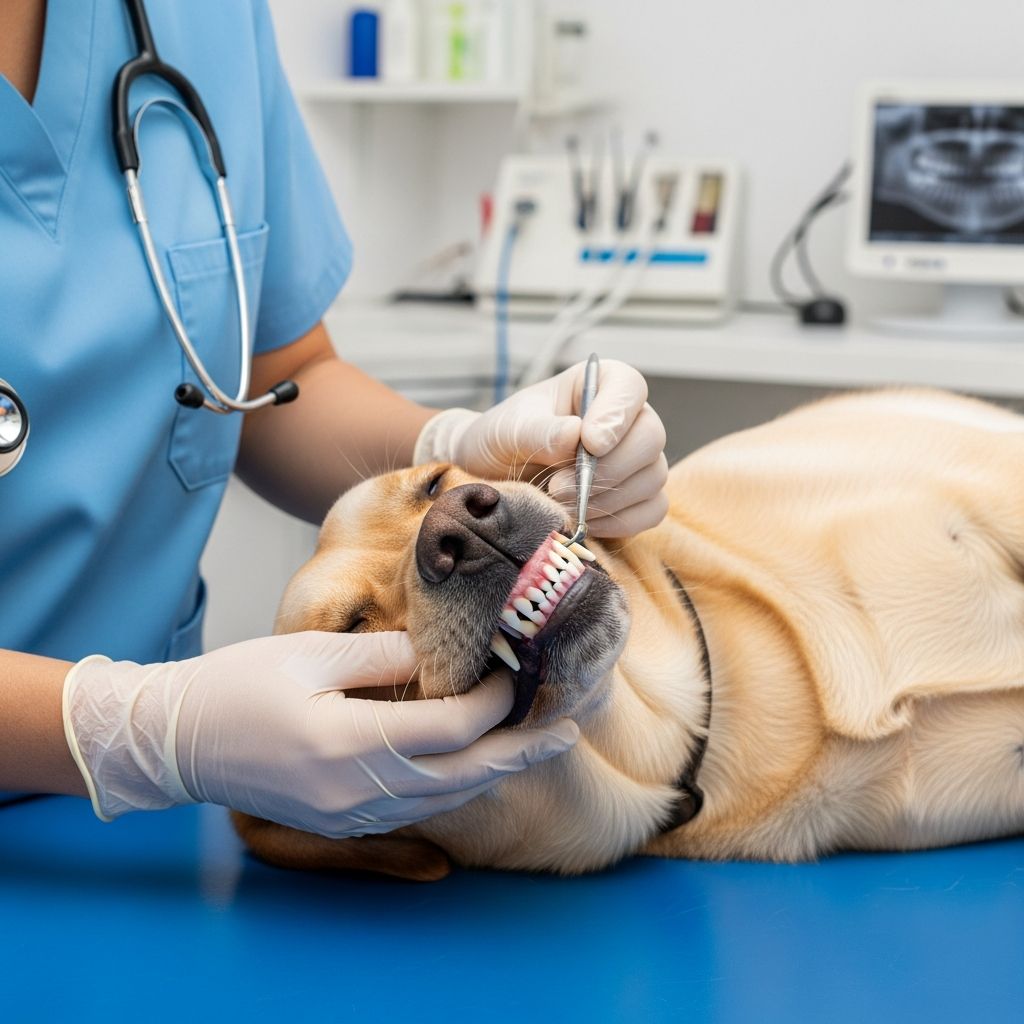
Once your dog is under general anesthesia, your veterinarian will perform a detailed examination of the entire oral cavity. Using a dental probe, similar to the instrument used during human dental cleanings, your veterinarian will systematically evaluate each tooth and the surrounding tissues. The dental probe is used to measure gum recession, identify periodontal pockets where bacteria accumulate, assess tooth mobility, and note any abnormalities such as fractures, cavities, or exposed root surfaces. All findings are carefully documented in your dog’s medical record to track changes over time.
Dental Radiography
Dental X-rays are a critical component of professional dental cleaning. These radiographs allow your veterinarian to see what is happening beneath the gum line and below the tooth surface, where approximately two-thirds of the tooth structure exists. X-rays can reveal hidden problems such as bone loss, root infections, retained tooth roots, or impacted teeth. For dogs, dental radiographs typically assess 42 permanent teeth and their root structures. Any abnormalities identified on radiographs will be addressed during the cleaning procedure.
Teeth Scaling and Cleaning
After the examination and radiographs are complete, tooth scaling is performed using specialized instruments. Your veterinarian will use both hand scalers and ultrasonic scalers to remove plaque and tartar from all tooth surfaces. The ultrasonic scaler is particularly effective at removing stubborn tartar deposits. Scaling is performed both above the gum line (supragingival scaling) and below the gum line (subgingival scaling). The area below the gum line is especially important because this is where the most significant periodontal disease develops. Bacteria colonize below the gum tissue, and plaque and tartar accumulation in this area causes the most damage to the tooth structure and supporting tissues.
Polishing and Sealing
After scaling is complete, your veterinarian will polish all tooth surfaces. This polishing step serves multiple important purposes. It removes microscopic scratches created by the scaling process, smooths the tooth surface, and creates a protective finish that discourages bacteria and plaque from adhering to the teeth. A smoother tooth surface significantly decreases the rate of subsequent plaque buildup. In some cases, your veterinarian may recommend application of a sealant to provide additional protection against plaque accumulation.
Fluoride Treatment
Many veterinarians apply fluoride treatment to the teeth following polishing. Fluoride helps strengthen tooth enamel and provides additional protection against decay and bacterial adhesion.
Extraction and Additional Procedures
If during the examination or radiographic assessment your veterinarian identifies severely diseased teeth or teeth with advanced periodontal disease, extraction may be recommended. Tooth extraction is indicated when damage to the supporting structures exceeds the point where the tooth can be saved. Extraction sites are typically sutured with absorbable sutures to promote proper healing and prevent food and bacteria from entering the extraction site.
Post-Operative Recovery and Care
Anesthesia Recovery
After the dental cleaning procedure is complete, the anesthesia is discontinued and your dog begins the recovery process. Modern gas anesthesia, commonly used in veterinary dentistry, allows for rapid and smooth recovery. Your veterinarian will maintain your dog’s airway through an endotracheal tube until your dog is able to swallow and protect their own airway. This safety measure ensures adequate oxygen delivery and prevents aspiration. Most dogs are able to have their breathing tube removed within minutes of turning off the anesthetic gas.
During recovery, your dog will be placed under a warming device to maintain body temperature, as anesthesia interferes with temperature regulation. Your veterinarian will continue to monitor vital signs and provide supportive care until your dog is fully awake and able to stand.
Same-Day Discharge
In most cases, dogs can go home the same day as their dental cleaning procedure. Your veterinarian will provide detailed post-operative instructions regarding feeding, activity restriction, medication administration, and any necessary follow-up care. It is common for dogs to experience mild soreness in the mouth for a few days following the procedure. Pain medication may be prescribed to manage any discomfort during the healing process.
Home Care Following Dental Cleaning
To maximize the benefits of professional dental cleaning and prevent rapid plaque reaccumulation, home dental care is essential. Your veterinarian may recommend daily tooth brushing using a dog-specific toothpaste. Regular brushing is the most effective way to control plaque formation and extend the interval between professional cleanings. Additionally, providing appropriate chew toys and dental treats, while not substitutes for brushing, may provide some benefit in maintaining dental health.
Benefits of Professional Dental Cleaning
Prevention of Periodontal Disease
Professional dental cleaning is the most effective way to prevent and manage periodontal disease. By removing plaque and tartar, especially from below the gum line, your veterinarian can stop the progression of disease and prevent tooth loss. Regular professional cleanings, combined with home care, significantly improve long-term dental health outcomes.
Early Detection of Dental Problems
Professional dental cleanings allow your veterinarian to identify dental problems early, when treatment is most effective and often less invasive. Many dental conditions cause no obvious signs until they are advanced, so regular professional cleanings are an important preventive tool.
Improved Overall Health
Dental disease and periodontal infection have been linked to systemic health problems affecting the heart, kidneys, and liver. By maintaining good oral health through professional cleanings and home care, you help protect your dog’s overall health and potentially extend their lifespan.
Frequently Asked Questions About Canine Dental Cleaning
Q: How often should my dog have a professional dental cleaning?
A: The frequency depends on your dog’s individual needs and home care routine. Some dogs may benefit from annual cleanings, while others with excellent home care and good genetics may only need cleaning every two to three years. Your veterinarian can recommend an appropriate schedule based on your dog’s specific situation.
Q: Is anesthesia safe for senior dogs?
A: Modern anesthesia protocols are safe for most senior dogs when appropriate pre-anesthetic bloodwork and physical examination are performed. In fact, delaying necessary dental care in senior dogs often leads to more serious health consequences. Your veterinarian will assess your senior dog’s individual health status and develop an appropriate anesthetic plan.
Q: Can I brush my dog’s teeth to avoid professional cleaning?
A: While regular tooth brushing at home is excellent for maintaining dental health and extending the interval between professional cleanings, it cannot completely replace professional cleaning. Home brushing cannot access areas beneath the gum line, where the most significant disease occurs. Professional cleaning remains necessary for most dogs.
Q: What signs indicate my dog needs a dental cleaning?
A: Signs that your dog may need a dental cleaning include bad breath, visible plaque or tartar on the teeth, red or swollen gums, difficulty eating, dropping food from the mouth, behavioral changes related to mouth pain, and loose or missing teeth. If you notice any of these signs, contact your veterinarian.
Q: How long does a dental cleaning procedure take?
A: The duration varies depending on the extent of disease and the procedures required. A routine cleaning may take 30 minutes to an hour, while more complex cases requiring extractions may take longer. Your veterinarian will provide an estimate based on your dog’s specific needs.
Q: Will my dog have pain after the procedure?
A: Some mild soreness is normal for a few days following dental cleaning, especially if extractions were performed. Your veterinarian will prescribe appropriate pain medication to manage any discomfort and ensure your dog’s comfort during the healing process.
References
- Dental Cleaning in Dogs — VCA Animal Hospitals. 2025. https://vcahospitals.com/know-your-pet/dental-cleaning-in-dogs
- 2019 AAHA Dental Care Guidelines for Dogs and Cats — American Animal Hospital Association. 2019. https://www.aaha.org/resources/2019-aaha-dental-care-guidelines-for-dogs-and-cats
- What is a Professional Veterinary Dental Cleaning? — American Veterinary Dental College (AVDC). 2025. https://afd.avdc.org/what-is-a-professional-veterinary-dental-cleaning
- Step by Step Description of a Dental Cleaning — Dogwood Veterinary Clinic. 2025. https://www.dogwoodvetclinic.com/step-by-step-description-of-a-dental-cleaning
- From Cleaning to Surgery: A Guide to Pet Dental Procedures — Houston Pet Dentals. 2025. https://houstonpetdentals.com/blog/pet-dental-procedures
- What to Expect During Your Pet’s Dental Procedure — Zoetis Petcare. 2025. https://www.zoetispetcare.com/blog/article/pet-dental-procedure
Similar Articles






Read full bio of medha deb