

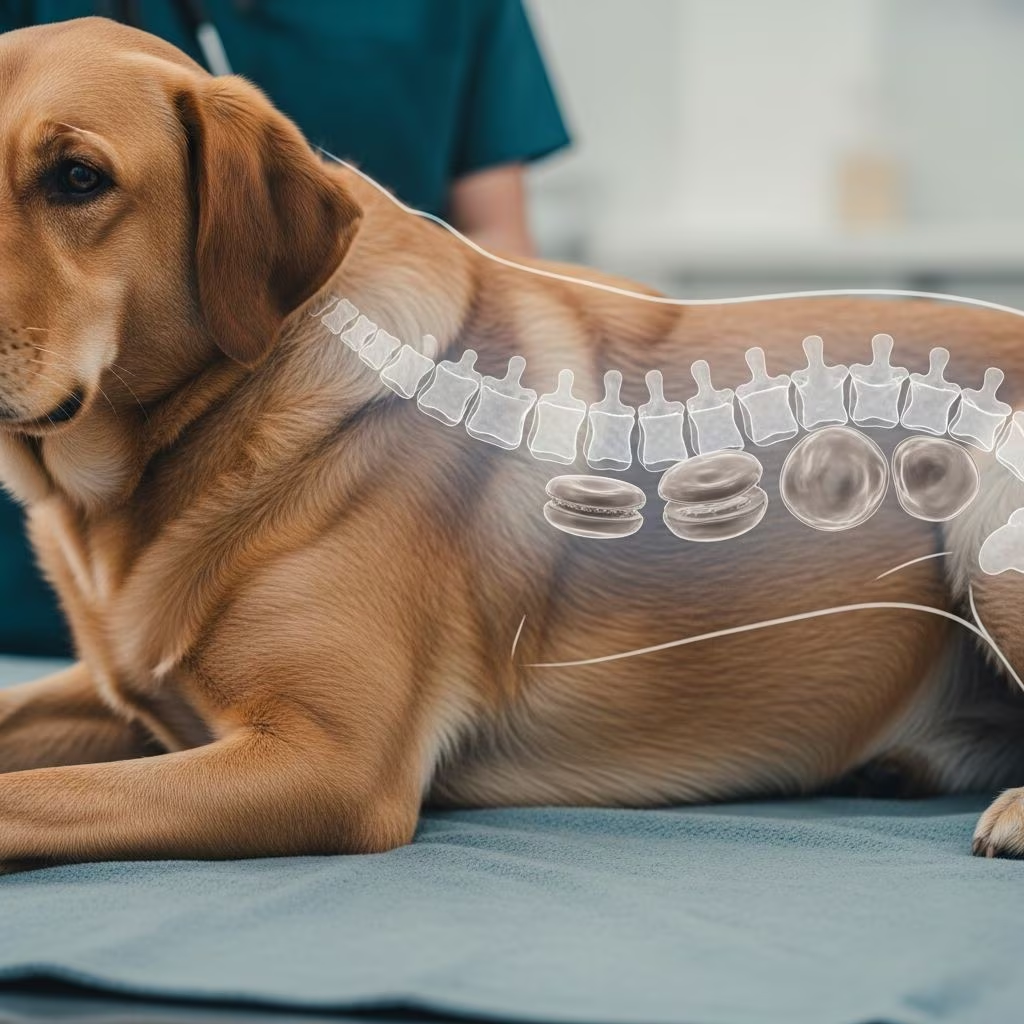
Understanding Degenerative Disc Disease in Dogs
Degenerative disc disease is a progressive condition affecting the intervertebral discs in a dog’s spine. These discs act as shock absorbers between vertebrae, and over time, they can deteriorate and potentially herniate, compressing the spinal cord. This condition is particularly common in certain dog breeds, especially those with short legs and long bodies such as Dachshunds, Shih Tzus, and Lhasa Apsos, though any dog can develop this disease as they age.
The intervertebral discs consist of two parts: an outer fibrous layer called the annulus fibrosus and an inner gel-like core called the nucleus pulposus. When these discs degenerate, the nucleus can rupture through the annulus and press against the spinal cord, causing pain, nerve damage, and potentially paralysis. Understanding the stages of this disease is crucial for dog owners to recognize symptoms early and seek appropriate veterinary care.
The Five Stages of Degenerative Disc Disease
Degenerative disc disease in dogs progresses through five distinct stages, each with increasing severity. It’s important to note that these stages may overlap in some dogs, and dogs may move from one stage to another over a period of hours to days.
Stage 1: Mild Pain
Stage 1 disc disease produces mild pain and is usually self-correcting in a few days. Dogs at this stage may show subtle signs such as slight reluctance to move, mild stiffness, or occasional yelping when jumping or climbing stairs. Many owners may not notice any significant symptoms, as the pain is minimal and often resolves without intervention. However, this stage indicates that degenerative changes are occurring in the disc.
Stage 2: Moderate to Severe Pain
Stage 2 disc disease causes moderate to severe pain in the neck or lumbar (lower back) area. At this stage, dogs typically exhibit more noticeable symptoms including reluctance to jump, climb stairs, or engage in normal activities. They may have difficulty posturing to urinate or defecate, show signs of anxiety such as shivering or panting, and display a hunched back or tense neck muscles. The pain is localized to the affected area of the spine.
Stage 3: Partial Paralysis
Stage 3 disc disease causes partial paralysis (paresis) and results in the dog walking in staggering or uncoordinated movements. Dogs at this stage experience neurological deficits that affect their gait and coordination. They may drag their back legs, stumble frequently, or have difficulty maintaining balance. The partial paralysis indicates that the herniated disc material is compressing nerve roots and affecting signal transmission from the spinal cord to the affected limbs.
Stage 4: Paralysis with Sensation
Stage 4 disc disease causes paralysis but the ability to feel is present. At this advanced stage, dogs lose the ability to move one or more limbs but retain pain sensation. They may be unable to walk or stand but can still respond to pain stimuli. This stage represents significant spinal cord compression and requires urgent veterinary attention.
Stage 5: Paralysis with Loss of Sensation
Stage 5 disc disease causes paralysis and loss of feeling. This is the most severe stage, where dogs cannot move affected limbs and have also lost the ability to feel pain in those areas. This indicates severe spinal cord damage and represents a medical emergency. The longer the spinal cord remains compressed at this stage, the greater the risk of permanent neurological damage.
Common Symptoms and Clinical Signs
The symptoms of degenerative disc disease vary depending on which region of the spine is affected and the stage of the disease. Owners should watch for the following clinical signs:
Pain and Mobility Issues
– Limping or lameness in front or hind limbs- Unsteady or wobbly walking- Dragging back legs or stumbling- Reluctance to jump or climb stairs- Unwillingness to engage in normal activities- Pain when the neck or back is moved or touched
Neurological Symptoms
– Hunched back or neck with tense muscles- Weakness in limbs- Staggering or uncoordinated movements- Difficulty with proprioception (awareness of body position)- Partial or complete paralysis- Loss of sensation in affected limbs
Behavioral Changes
– Anxious behavior such as shivering or excessive panting- Decreased activity level- Decreased appetite- Reluctance to move or play- Vocalization or crying out in pain
Urinary and Digestive Issues
– Loss of bladder control (urinary incontinence)- Loss of bowel control (fecal incontinence)- Difficulty posturing to urinate or defecate
Diagnosis of Degenerative Disc Disease
Veterinarians diagnose degenerative disc disease through a combination of clinical examination and diagnostic imaging. During a physical examination, your veterinarian will assess your dog’s gait, reflexes, pain response, and neurological function. They will palpate the spine to identify areas of pain or sensitivity.
X-rays can reveal calcified or degenerated discs and help identify which disc or discs are affected. However, X-rays cannot show soft tissue herniation clearly. Advanced imaging such as MRI (magnetic resonance imaging) or CT (computed tomography) scans provides detailed visualization of the spinal cord, nerve roots, and disc material. These imaging modalities are particularly valuable when surgery is being considered, as they help surgeons identify exactly where the compression is occurring.
Myelography, an older diagnostic technique involving the injection of contrast material around the spinal cord, may also be used in some cases to visualize spinal cord compression.
Treatment Options for Degenerative Disc Disease
Treatment for degenerative disc disease depends on the stage of disease, severity of symptoms, and neurological status of the dog. Treatment can range from conservative medical management to emergency surgery.
Conservative Medical Management
Dogs with stage 2 and 3 disease are usually treated with anti-inflammatory drugs, pain relievers, muscle relaxers, and exercise restriction. Conservative management consists of 4 to 6 weeks of strict crate rest, meaning that the patient is confined to a crate, playpen, or small room except when walked on a leash outside to urinate and defecate. Dogs with mild signs often see improvement within 48 hours with oral anti-inflammatory medications and cage rest.
Medications Used in Conservative Management
Veterinarians typically prescribe a combination of medications to address pain, inflammation, and anxiety:
– Anti-inflammatory medications: Prednisone or NSAIDs (non-steroidal anti-inflammatory drugs) to reduce swelling around the spinal cord- Pain medications: Gabapentin, Tramadol, or Amantadine to manage chronic pain- Muscle relaxers: Methocarbamol to reduce muscle tension and spasms- Sedatives: Trazodone or Acepromazine to keep dogs calm and reduce activity during recovery
It’s important to understand that medications help your pet be calmer and more comfortable, but they will not fix the underlying problem. Rest and time are what help your pet heal.
Strict Rest and Activity Restriction
Strict rest is truly the most important aspect of conservative management as it allows any defects in the annulus fibrosus to form scar tissue, which often prevents further herniation of intervertebral disc material and further spinal cord compression. During the recovery period, dogs should not be allowed to run, jump, use stairs, or play with other pets. All exercise should be restricted to leash walks for bathroom breaks only.
Physical Rehabilitation
After the initial acute phase of rest, physical therapy becomes an important component of recovery. As the dog’s recovery progresses, rehabilitation may include laser therapy and underwater treadmill work. Exercises may be prescribed to be done at home, with a gradually increasing program of walks. Some veterinarians use electroacupuncture for medically managed IVDD dogs as augmentative pain control, with both clinical and research evidence supporting its use in multimodal pain management.
Surgical Treatment
If the pain or lack of coordinated movements persists after four to seven days of treatment or if the neurological status declines from one day to the next, surgery may be required. Dogs with stage 4 disease should have surgery, although a small percentage will recover without it. Dogs with stage 5 disease should have surgery immediately. The sooner the surgery is done, the better the prognosis. Ideally, these dogs should be operated on within the first 24 hours of the onset of paralysis.
Surgical Procedure
IVDD surgery involves creating a small window in the bone around the spinal cord to gain access to the disc material. The goal of surgery is to evaluate the herniation and relieve the pressure on the spinal cord. This is done by removing a portion of the bony vertebra over the affected part of the spinal cord (called a laminectomy) or through a hemilaminectomy, where only half of the vertebra is removed. The surgeon then carefully removes the herniated intervertebral disc material that is compressing the spinal cord, relieving pain and promoting healing to improve your pet’s quality of life.
Post-Operative Recovery
After surgery, the same activity restrictions apply, focusing on conservative management to allow the spinal cord to heal. Recovery from IVDD surgery requires six to eight weeks of restricted activity. The spinal cord recovers slowly, and extra care must be taken to prohibit running, jumping, going up or down stairs, playing with other dogs, and hopping on or off furniture. Physical therapy and rehabilitation become especially important after surgery to help restore function and mobility.
Prognosis and Long-Term Management
The prognosis for degenerative disc disease varies depending on the stage at which treatment is initiated and the dog’s individual response to therapy. Dogs with early-stage disease that respond well to conservative management often have an excellent prognosis and may return to normal or near-normal function. Dogs with stage 5 disease that undergo surgery within 24 hours of the onset of paralysis have a significantly better chance of regaining function than those where surgery is delayed.
Unfortunately, even with surgery, some dogs will not regain function and will have lasting neurological issues. However, many dogs adapt well to their limitations and can enjoy a good quality of life with appropriate management, including pain control, physical therapy, and environmental modifications such as ramps, orthopedic bedding, and assistance devices.
Prevention and Management Strategies
While degenerative disc disease cannot always be prevented, especially in predisposed breeds, certain management strategies can help reduce the risk or slow progression:
– Maintain appropriate body weight to reduce stress on the spine- Provide low-impact exercise and avoid high-impact activities- Use ramps or stairs to help dogs access elevated surfaces- Keep your dog on a leash when outdoors to prevent jumping and running- Provide supportive bedding and comfortable resting areas- Avoid letting your dog jump on or off furniture- Regular veterinary check-ups to monitor for early signs of disc disease
Frequently Asked Questions
Q: What breeds are most prone to degenerative disc disease?
A: Dogs with short legs and long bodies, such as Dachshunds, Shih Tzus, Lhasa Apsos, Basset Hounds, and Corgis, are genetically predisposed to early degenerative disc changes. However, any dog can develop this condition as they age.
Q: Can degenerative disc disease be cured?
A: Degenerative disc disease cannot be cured, but it can be effectively managed with conservative treatment or surgery depending on severity. The goal of treatment is to relieve pain, prevent further deterioration, and maintain quality of life.
Q: How long does recovery take after disc disease surgery?
A: Recovery from IVDD surgery typically requires 6 to 8 weeks of restricted activity. However, full neurological recovery may take longer, and some dogs may continue to show improvement for several months after surgery.
Q: What is the success rate of surgery for degenerative disc disease?
A: Success rates depend on the stage of disease and timing of surgery. Dogs with stage 5 disease that undergo surgery within 24 hours of paralysis onset have significantly better outcomes than those with delayed surgery. Overall, many dogs regain substantial function following decompressi…



