

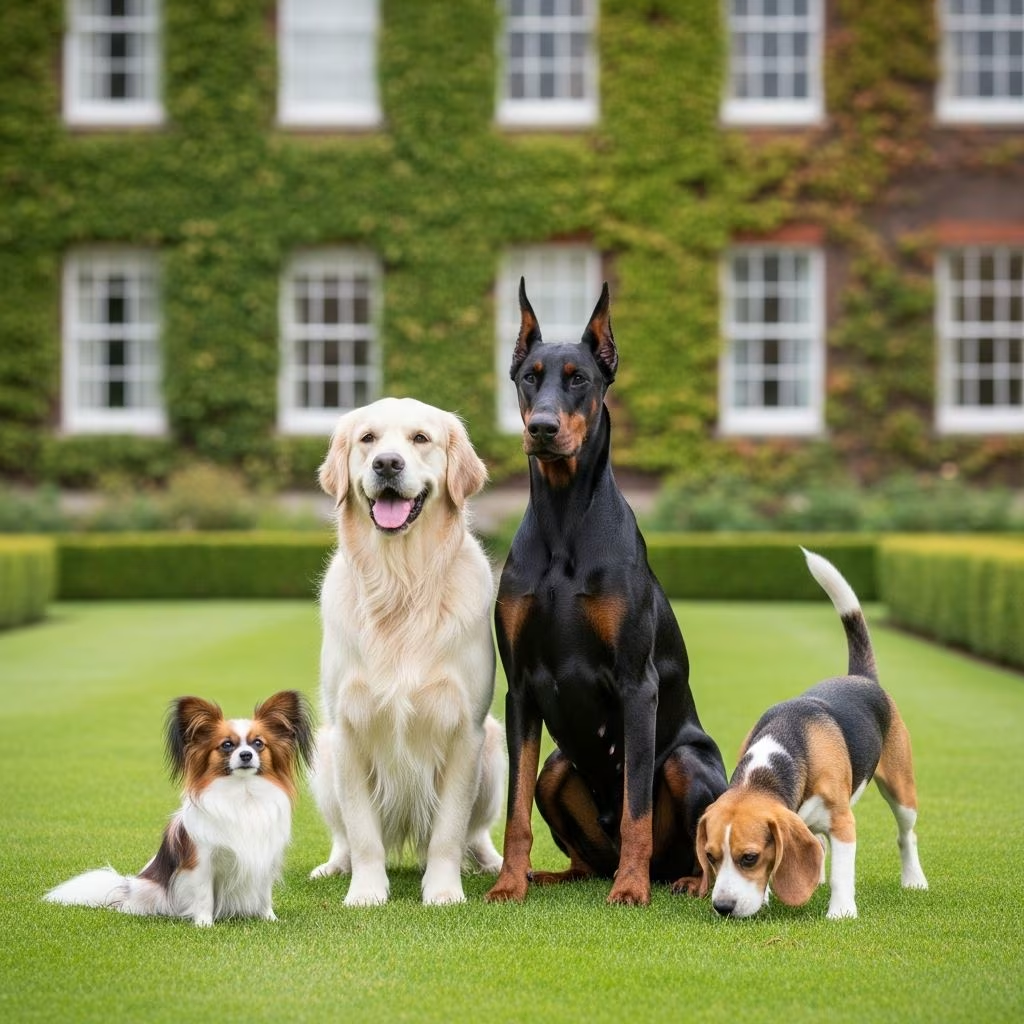
Purebred dogs result from intentional breeding between two parents of the same recognized breed, ensuring verifiable ancestry and consistent traits across generations. This selective process distinguishes them from mixed breeds, offering predictability in appearance, size, and behavior that appeals to many owners seeking specific qualities.
Core Characteristics of Purebred Canines
At its essence, a purebred dog embodies a lineage where both sire and dam belong to an established breed, with genetics honed over generations to emphasize particular physical and behavioral attributes. According to the American Kennel Club (AKC), this means the dog’s ancestry traces back through multiple generations of the same breed, promoting what is known as ‘breeding true’—where offspring reliably inherit defined standards for height, coat, color, and temperament.
This consistency arises from deliberate human intervention rather than random mating. Breeders focus on traits like a Labrador Retriever’s broad chest and retrieving instinct or a Border Collie’s intense herding drive, refining these through controlled pairings. Even minor natural variations, such as subtle coat shade differences, remain within breed parameters, though rare mutations can occur without negating purebred status if parental breeds match.
Purebred Versus Pedigree: Key Distinctions
While often conflated, purebred and pedigree statuses differ fundamentally. A purebred dog simply requires parents from the same recognized breed with documented lineage, independent of formal registration. Pedigree dogs, however, must be officially recorded in registries like the AKC’s stud books, verifying ancestry through registered parents.
Not all purebreds achieve pedigree certification due to administrative hurdles or welfare issues, yet they retain their genetic purity. Conversely, pedigree implies purebred origins, as registries demand proof of same-breed parentage. This paperwork enables participation in shows, trials, and sanctioned breeding.
| Aspect | Purebred | Pedigree |
|---|---|---|
| Definition | Parents same breed, verifiable ancestry | Registered with official body like AKC |
| Registration | Not always required | Mandatory |
| Event Eligibility | Limited without papers | Full access to shows/competitions |
| Genetic Consistency | High | High, officially documented |
Advantages of Choosing Purebred Dogs
Opting for a purebred offers substantial predictability, a primary draw for families and active owners. Knowing a puppy’s adult size, energy needs, and grooming demands simplifies lifestyle matching—for instance, a low-maintenance Doberman versus a high-groom Collie.
- Trait Reliability: Generations of selection yield uniform physical builds and behaviors, aiding in selecting for apartments (e.g., smaller breeds) or farms (e.g., working herders).
- Performance Potential: Breeds excel in roles like guiding or agility due to ingrained instincts, outperforming unpredictable mixes.
- Health Screening Opportunities: Reputable breeders test for breed-specific issues, providing certificates that inform owners.
This foreseeability extends to training; a purebred’s temperament aligns with breed histories, streamlining obedience or sport preparation.
Potential Drawbacks and Health Realities
Despite merits, purebred breeding narrows gene pools, heightening risks for hereditary conditions. Closed lineages amplify issues like hip dysplasia in large breeds or breathing woes in brachycephalics.
- Limited Genetic Diversity: Less variation reduces resilience to diseases compared to outcrossed dogs.
- Breed-Specific Vulnerabilities: Predictability cuts both ways—certain lines carry elevated cancer or heart risks.
- Overbreeding Concerns: Unethical practices prioritize aesthetics over welfare, leading to conformational extremes.
Yet, responsible breeding mitigates these via health clearances and outcrossing within standards, balancing purity with vitality.
Identifying Purebred Traits in Practice
Spotting purebred features involves scrutinizing conformation and conduct. Purebreds adhere closely to standards: Dachshunds boast elongated torsos and stubby legs, while Greyhounds display aerodynamic sleekness.
Physical Markers:
- Proportional builds matching breed ideals (e.g., Labrador’s otter tail).
- Uniform coat textures, from wiry to silky.
- Distinct head shapes, like the Bulldog’s pronounced wrinkles.
Behavioral Indicators: Observe innate tendencies—herding nips from Aussies or retrieval eagerness in Spaniels—signaling lineage over learned habits.
DNA tests supplement visuals, pinpointing breed composition, though they cannot confirm registry status.
Navigating the Acquisition Process
Securing a purebred demands diligence to avoid mills. Prioritize breeders affiliated with clubs, offering transparency via parent health records and guarantees.
- Research breed suitability via AKC profiles.
- Visit facilities, assessing cleanliness and socialization.
- Request pedigrees, vet references, and contracts.
- Consider rescues specializing in purebreds for ethical adoptions.
Avoid impulsive buys; interview breeders on screening protocols to ensure ethical practices.
Breed Standards and Their Evolution
Breed standards, codified by bodies like AKC, delineate ideal traits, evolving from functional origins—hounds for hunting, terriers for vermin control—to modern companions. These blueprints guide judging and breeding, preserving heritage while adapting to contemporary needs.
Global variations exist; UKC emphasizes utility, while FCI prioritizes working prowess internationally.
Purebreds in Modern Lifestyles
Today’s purebreds adapt to urban life, therapy roles, and sports. Their predictability suits busy households, with hypoallergenic options like Poodles for allergy sufferers.
Mix misconceptions persist, but data shows purebreds thrive with proper care, matching mixed breeds in longevity when health-tested.
Frequently Asked Questions
Can a purebred dog lack papers?
Yes, purebred status hinges on parental breeds, not registration; papers confirm pedigree.
Are purebreds always healthier?
No, narrowed genetics pose risks, but ethical breeding counters this.
How do mixed breeds compare?
Mixes offer hybrid vigor but unpredictable traits; purebreds provide consistency.
What registries matter most?
AKC in the US, CKC in Canada, KC in UK—verify legitimacy.
Is backyard breeding purebred?
If parents match breeds with proof, yes; quality varies widely.
References
- What Is a Purebred Dog? How It Differs from Pedigree Dogs — Lancaster Puppies. 2023. https://www.lancasterpuppies.com/pet-advice/what-is-a-purebred-dog-how-it-differs-from-pedigree-dogs.html
- The Pros And Cons Of Owning A Purebred Dog — The Natural Dog Online. 2023. https://www.thenaturaldogonline.com/content/the-pros-and-cons-of-owning-a-purebred-dog
- What is a breed, a purebred, a pedigree dog? — DogWellNet. 2023. https://dogwellnet.com/content/health-and-breeding/breeds/dog-breeds-definitions-and-background/what-is-a-breed-a-purebred-a-pedigree-dog-r162/
- How to Tell if a Dog is Purebred or Mixed Breed — One Spoiled Dog. 2023. https://www.onespoileddog.com/blogs/news/how-to-tell-if-a-dog-is-purebred-or-mixed-breed-understanding-the-differences
- What Is a Purebred Dog? — Whole Dog Journal. 2023. https://www.whole-dog-journal.com/lifestyle/what-is-a-purebred-dog/
- Why choose a purebred dog? — Dogs Victoria. 2023. https://dogsvictoria.org.au/choosing-a-breed/why-choose-a-purebred-dog/
- AKC Facts and Stats: Why Purebreds? — American Kennel Club. 2023. https://www.akc.org/press-center/articles-resources/why-purebreds/
- Selecting a purebred puppy — Cornell University College of Veterinary Medicine. 2025-02-15. https://www.vet.cornell.edu/departments-centers-and-institutes/riney-canine-health-center/canine-health-topics/selecting-purebred-puppy



