

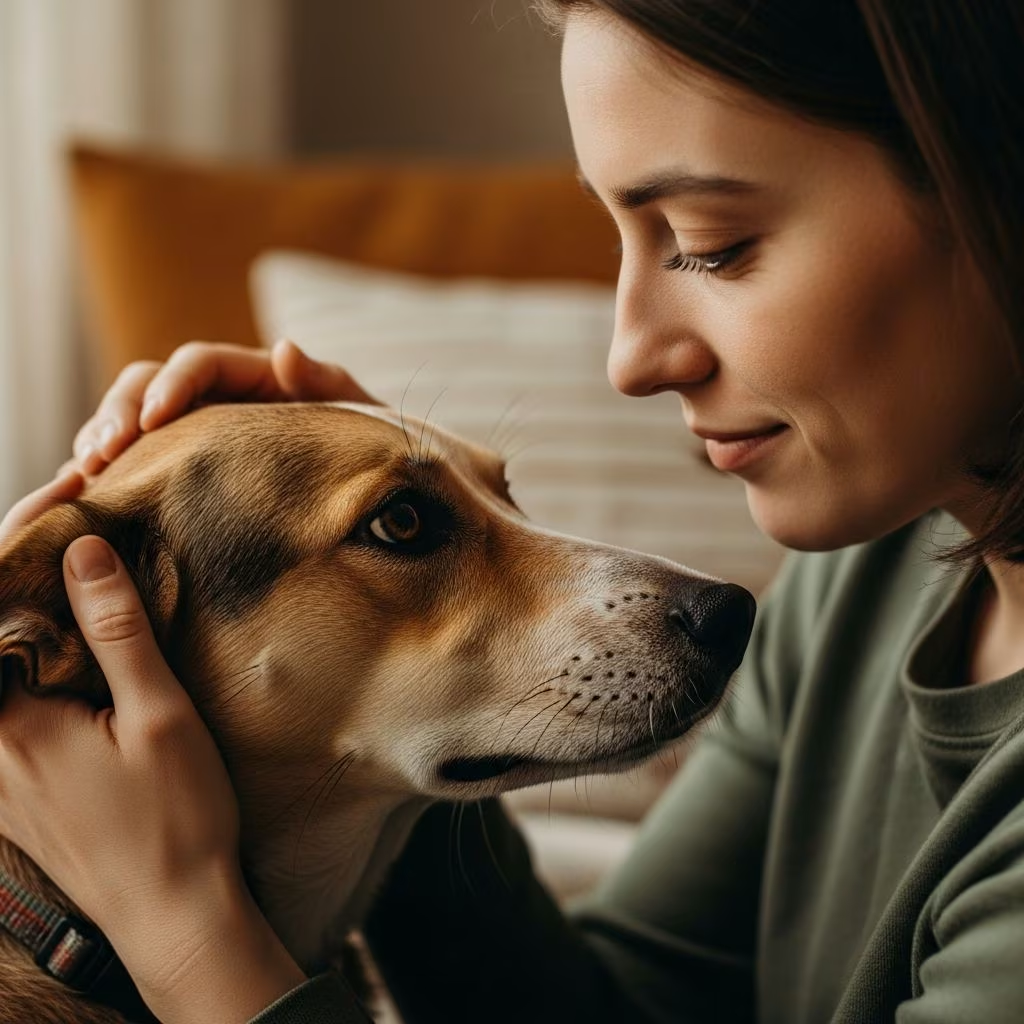
The relationship between a dog and their owner transcends simple companionship; it forms the foundation for a fulfilling life together. A strong bond ensures better behavior, heightened mutual understanding, and profound emotional support for both parties. This guide delves into actionable methods to cultivate that vital connection, drawing from established practices in canine behavior and training.
Foundations of Trust in Canine Relationships
Trust serves as the bedrock of any successful dog-owner partnership. Dogs, as social animals descended from pack-oriented wolves, instinctively seek reliable leaders. When owners consistently demonstrate dependability, dogs respond with loyalty and eagerness to please.
Positive reinforcement emerges as the most effective tool for building this trust. By rewarding desired behaviors with treats, praise, or play, owners reinforce good actions without instilling fear. Punishment-based approaches often erode confidence, leading to anxiety or avoidance, whereas rewards foster enthusiasm and security.
- Identify high-value rewards tailored to your dog’s preferences, such as food, toys, or affection.
- Time rewards immediately after the behavior to create clear associations.
- Gradually fade rewards as behaviors solidify, maintaining motivation through variable schedules.
Consistency amplifies these efforts. Dogs thrive on predictable routines, which signal stability. A regular schedule for meals, walks, and training sessions reassures your dog that you are a steadfast presence.
Harnessing Play for Emotional Closeness
Play transcends mere entertainment; it acts as a powerful bonding mechanism. Engaging in activities your dog loves releases endorphins, reducing stress and enhancing attachment.
Dedicate daily sessions to interactive games like fetch, tug-of-war, or hide-and-seek. These not only expend energy but also teach turn-taking and responsiveness, mirroring natural pack dynamics. For instance, using a tug toy before allowing access to higher-value activities builds preference hierarchies, elevating your role in their reward system.
| Play Type | Benefits | Suitable Breeds |
|---|---|---|
| Fetch | Improves recall, aerobic exercise | Retrievers, herders |
| Tug-of-War | Builds jaw strength, impulse control | Terriers, working breeds |
| Chase Games | Boosts agility, mental stimulation | Hounds, sight breeds |
| Puzzle Toys | Encourages problem-solving | All breeds |
Observe your dog’s body language during play—relaxed ears and wagging tail indicate joy, while stiff postures suggest overstimulation. Adjust intensity to keep sessions positive.
Training as a Bridge to Mutual Understanding
Training sessions double as communication workshops. Beyond obedience, they clarify expectations, reducing frustration on both sides. Start with basics like sit, stay, and come, progressing to advanced skills.
Positive methods shine here: mark correct actions with a clicker or word like “yes,” followed by rewards. This precision helps dogs discern exactly what earns praise. Professional guidance can accelerate progress, especially for complex issues, by interpreting subtle cues and customizing plans.
Socialization complements training. Expose puppies to diverse stimuli—people, sounds, environments—under controlled conditions to prevent fear responses. Local parks or structured classes provide safe venues.
- Incorporate short, frequent sessions (5-10 minutes) to maintain focus.
- End on a high note with a known success.
- Track progress in a journal to celebrate milestones.
Daily Rituals That Nurture Lasting Loyalty
Integrate bonding into everyday life for sustained impact. Morning walks set a collaborative tone, while evening cuddles promote relaxation. Use mealtimes for engagement: require a sit before dispensing food, blending necessity with training.
Mindful presence matters—put away distractions during interactions. Eye contact exercises, where you reward calm gazes, deepen emotional ties, as dogs perceive prolonged looks as affiliative.
For multi-dog homes, individual attention prevents jealousy. Rotate one-on-one time to ensure each feels prioritized.
Overcoming Common Bonding Hurdles
Challenges like fearfulness or hyperactivity test bonds but offer growth opportunities. Identify triggers through observation: a dog’s avoidance of strangers might stem from past neglect.
Counter-condition by pairing scary stimuli with rewards, gradually increasing exposure. Patience prevents setbacks; rushed progress can reinforce fears.
Adolescent dogs (6-18 months) often test boundaries. Respond with calm consistency rather than frustration, reinforcing your leadership without dominance.
| Challenge | Solution | Expected Timeline |
|---|---|---|
| Leash Reactivity | Desensitization walks, counter-conditioning | 4-8 weeks |
| Separation Anxiety | Gradual alone time, stuffed toys | 2-6 weeks |
| Hyperactivity | Structured exercise, mental puzzles | 1-4 weeks |
The Science Behind Strong Canine Bonds
Research underscores bonding’s benefits. Oxytocin, the “love hormone,” surges in both dogs and owners during positive interactions, mirroring human-parent bonds. Studies from institutions like the University of Veterinary Medicine reveal dogs prioritize owner cues over pack mates, affirming our unique role.
Relationship-based training outperforms compulsion: dogs trained positively show lower stress cortisol and higher problem-solving initiative. Long-term, bonded dogs exhibit fewer behavioral issues and longer lifespans, per veterinary data.
Advanced Techniques for Profound Partnerships
Elevate your connection with cooperative care games. Teach voluntary handling—reward paw lifts or mouth opens—to ease vet visits and grooming. This builds consent and reduces restraint struggles.
Explore scent work or agility for shared adventures. These tap dogs’ natural talents, fostering pride in teamwork. Join clubs for guided progression, enhancing social bonds.
Reflect nightly: What reinforced our connection today? Adjust tomorrow’s approach accordingly for continuous improvement.
Frequently Asked Questions
How long does it take to build a strong bond with a rescue dog?
Typically 3-6 months with consistent positive interactions, though progress varies by individual history.
Can older dogs form new bonds?
Absolutely—adults respond well to routines and rewards, often quicker than puppies due to maturity.
What if my dog ignores rewards?
Assess hunger or value; try higher-value items or stack rewards (praise + toy + treat).
Is professional training necessary?
Not always, but it’s invaluable for personalized guidance and stubborn cases.
How much daily time is needed?
15-30 minutes of focused interaction suffices, supplemented by mindful presence.
References
- The Power of Connection: Building a Strong Bond with Your Pet — Bark If You’re Dirty. 2023. https://barkifyouredirty.pet/the-power-of-connection-building-a-strong-bond-with-your-pet/
- The Power Of Relationship-Based Dog Training — Dog Adventures NW. 2023. https://dogadventuresnw.com/the-power-of-relationship-based-dog-training/
- 3 Unexpected Ways Training Strengthens Your Bond with Your Dog — Sit Means Sit Tampa. 2023. https://sitmeanssit.com/tampa/3-unexpected-ways-training-strengthens-your-bond-with-your-dog/
- Create The BEST Bond With Your Dog By Using Reinforcement — YouTube (Dog Training Video). 2023. https://www.youtube.com/watch?v=LdF0p3RxZfE
- How Training Strengthens the Bond Between You and Your Dog — Parkview Pet Vet. 2023. https://parkviewpetvet.com/resources/blog/how-training-strengthens-the-bond-between-you-and-your-dog
- Building Bonds: How Positive Dog Training Strengthens Your Connection — Paws and Stripes. 2023. https://www.pawsandstripes.org/post/building-bonds-how-positive-dog-training-strengthens-your-connection-with-your-canine



