

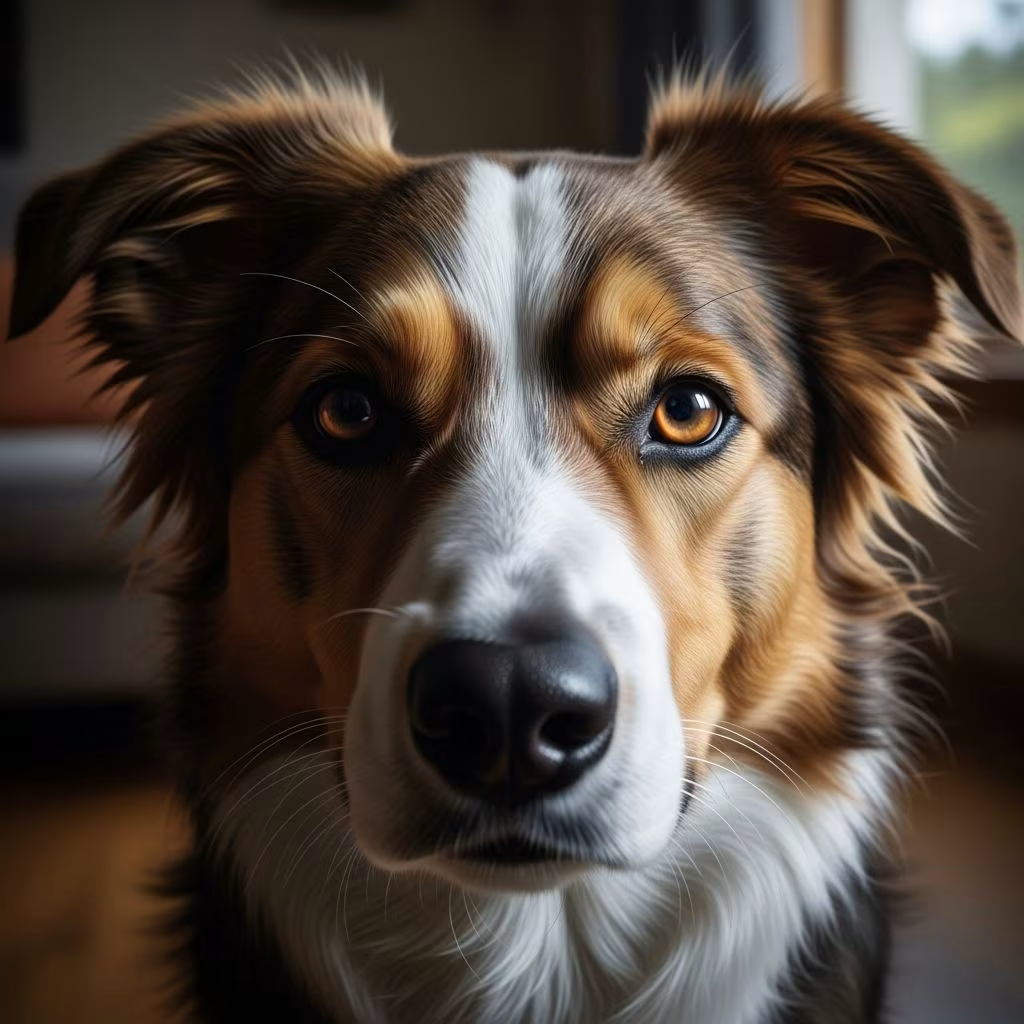
Your dog locks eyes with you across the room, unblinking and attentive. This common behavior sparks curiosity: is it love, a request, or something more? Dogs stare for varied reasons rooted in evolution, emotion, and instinct, often reflecting their deep bond with humans.
The Science of Canine Eye Contact
Mutual gazing between dogs and humans triggers oxytocin release, known as the ‘love hormone,’ fostering attachment similar to parent-infant bonds. Research from Azabu University demonstrates that prolonged eye contact elevates oxytocin in both species, creating a positive feedback loop that deepens emotional ties.
This mechanism evolved over millennia of domestication. Unlike wolves, dogs preferentially gaze at human faces for information, a trait selected through human companionship. Professor Alexandra Horowitz notes dogs scan owners’ faces for cues on daily routines like feeding or walks, as humans control these essentials.
Common Motivations Behind the Stare
Dogs communicate needs silently through staring. Key triggers include:
- Anticipating Needs: Staring signals desire for food, play, or outings. While eating, it may acknowledge you as pack leader, echoing wolf pack rituals where subordinates watch alphas dine first.
- Seeking Direction: Dogs look to owners for behavioral guidance, interpreting subtle facial cues to predict actions.
- Expressing Affection: Soft, relaxed gazes convey love, strengthened by reciprocal eye contact that boosts oxytocin.
Context matters: a loose posture with floppy tail and tilted head indicates friendliness, while stiff ears signal tension.
Reading Body Language for Accurate Interpretation
Stares vary by accompanying signals. Use this table to decode intent:
| Stare Type | Body Signals | Likely Meaning |
|---|---|---|
| Soft, wide-eyed | Relaxed ears, wagging tail, open mouth | Affection or request (e.g., treat) |
| Hard, unblinking | Raised hackles, stiff tail, forward ears | Aggression or fear—avoid eye contact |
| Blank, distant | Head lowered, pacing | Confusion or health issue |
Friendly stares often feature ‘puppy eyes’—raised brows enhancing appeal. Aggressive ones demand space; never challenge with direct stares.
When Staring Signals Deeper Emotional Bonds
Beyond basics, staring builds emotional intelligence. Dogs that gaze longer show heightened sensitivity to human emotions, distinguishing happy from angry faces via specialized brain regions. This attunement aids training, as they respond better to gestures and tone.
During meals, the stare reinforces hierarchy and trust, teaching patience. Respond calmly—ignore begging to promote self-control, rewarding quiet behavior later.
Potential Health and Behavioral Concerns
Not all stares are benign. Persistent wall-staring or zoning out may indicate issues:
- Cognitive Dysfunction Syndrome (CDS): In seniors, akin to canine Alzheimer’s, causing disorientation, pacing, and housetraining lapses.
- Sensory Detection: Acute hearing/smell picks up pests in walls.
- Neurological Problems: Seizures or OCD manifest as obsessive staring.
Monitor for clusters like nighttime restlessness or command confusion. Veterinary checks rule out underlying conditions.
Building a Stronger Human-Dog Connection
Encourage positive staring:
- Return loving gazes briefly to spike oxytocin, but break to avoid discomfort.
- Use staring moments for training: cue ‘sit’ before rewards.
- Enrich environment to curb boredom-stares—puzzles, walks.
Avoid pitfalls: inconsistent responses foster anxiety. Consistent leadership nurtures secure, attuned companions.
Breed and Individual Variations
Staring intensity differs by breed. Herding dogs like Border Collies stare intently for work cues, while companion breeds like Cavaliers emphasize affectionate gazes. Genetics influence social focus, but all benefit from oxytocin bonding.
Frequently Asked Questions
Is prolonged eye contact safe with my dog?
Yes for relaxed dogs; it strengthens bonds via oxytocin. Skip with tense body language to prevent escalation.
Why does my dog stare at me while I eat?
It’s leadership acknowledgment and bonding, not just begging. Use it to teach patience.
What if my dog stares at walls obsessively?
Possible CDS, senses, or neurology. Consult a vet if frequent.
Does staring mean my dog is dominant?
No—dogs’ gazes are affiliative, unlike wolves’. It’s trust, not challenge.
Can I train my dog to stare less?
Redirect with commands and enrichment; reward alternatives to build impulse control.
Expert Insights on Canine Cognition
Studies confirm dogs process human faces uniquely, with oxytocin enhancing attention to positive expressions. This gaze behavior underscores their adaptation as our partners, reading us better than many animals.
Embrace the stare as a window into your dog’s world—responsiveness forges unbreakable loyalty.
References
- Why Does My Dog Stare at Me While I Eat? — Southern Wind K9. 2023. https://www.southernwindk9.com/post/dog-staring-while-eating
- The (incredibly adorable) reason your dog stares at you — BBC Science Focus. 2023. https://www.sciencefocus.com/news/why-does-my-dog-stare-at-me
- Dog Body Language: Why Does My Dog Stare at Me? — Diamond Pet. 2024. https://www.diamondpet.com/blog/behavior/why-does-my-dog-stare-at-me/
- Why Does Your Dog Stare at the Wall? — Kinship. 2024. https://www.kinship.com/dog-behavior/why-does-my-dog-stare-at-the-wall
- Why Dogs Stare At You? (Warning Sign) — YouTube (Dog Psychology Channel). 2023. https://www.youtube.com/watch?v=XwrcXV9ji7E
- Dogs Watch Us Carefully and Read Our Faces Very Well — Psychology Today. 2019-04-01. https://www.psychologytoday.com/nz/blog/animal-emotions/201904/dogs-watch-us-carefully-and-read-our-faces-very-well



