

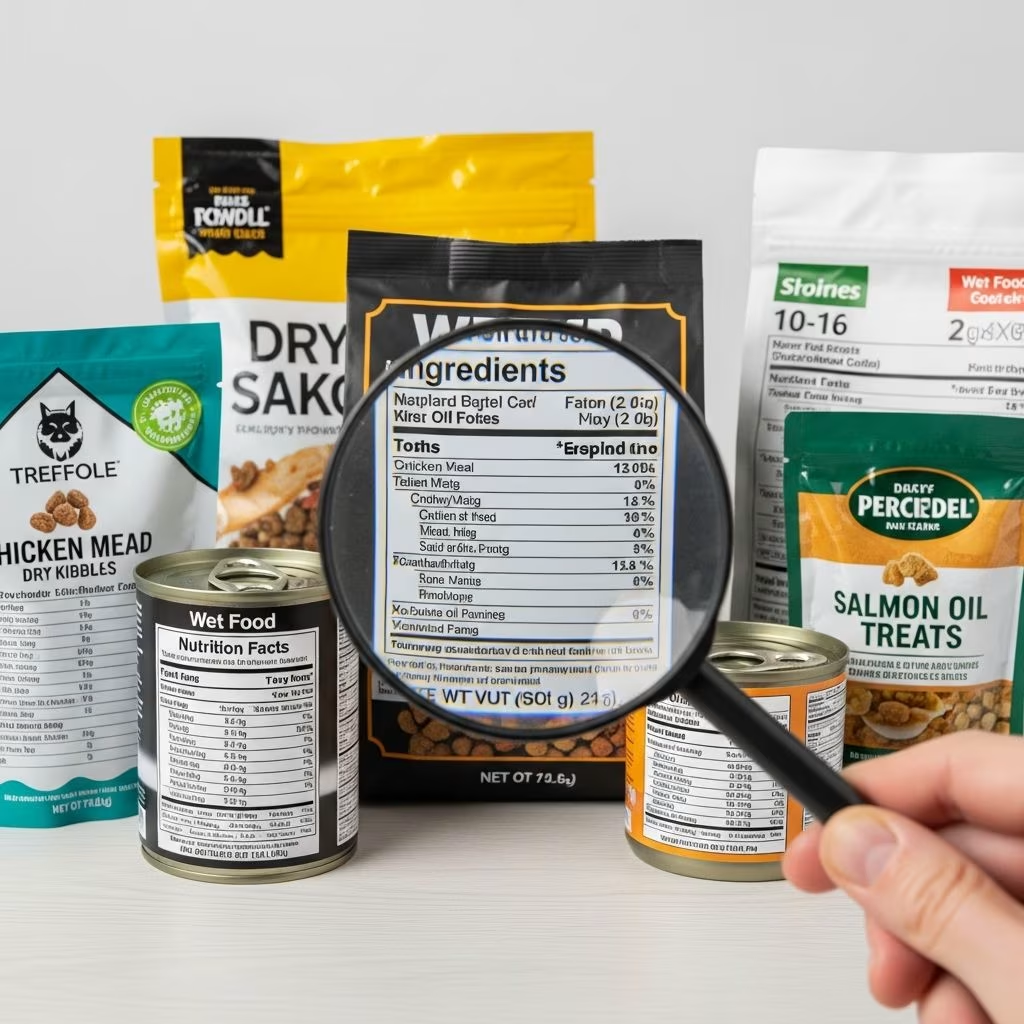
Pet food labels contain critical details that help owners select diets meeting their animals’ needs. Understanding these elements ensures pets receive complete and balanced nutrition tailored to their life stage and species.
Essential Components on Every Pet Food Package
Regulations from bodies like the FDA and AAFCO mandate specific information on all commercial pet foods. These include identification details, quantity, manufacturer contacts, nutrient breakdowns, and usage instructions.
- Product Identification: Clearly states the brand, name, and target species (e.g., dog or cat food), distinguishing complete diets from treats.
- Net Quantity: Lists the total weight or volume, often in both imperial and metric units for easy comparison.
- Manufacturer Details: Provides the name and address of the producer or distributor for accountability and inquiries.
Breaking Down the Ingredient List
Ingredients appear in descending order by pre-processing weight, offering insight into the food’s primary makeup. The top few items typically comprise the bulk of the product, so prioritize named, high-quality sources like specific meats over vague terms.
Focus on the first three to five ingredients, which should ideally feature whole proteins such as chicken or beef, followed by vegetables or grains. Avoid ambiguous phrases like “animal by-products” or “meat meal” without specifics, as they may indicate lower-quality renders. Water content affects listing order; wet foods list ingredients with moisture, while dry versions show dehydrated forms higher up.
| Ingredient Type | Examples | Implications |
|---|---|---|
| High-Quality Protein | Chicken, beef liver, salmon meal | Primary nutrient source; look for named meats first |
| Grains/Carbs | Brown rice, barley, corn | Energy providers; check for whole grains over by-products |
| Vitamins/Minerals | Thiamine mononitrate, zinc oxide | Listed by chemical name; essential but appear later |
| Additives | Preservatives, flavors | Minimize artificial ones for natural diets |
Guaranteed Analysis: Nutrient Percentages Explained
This section lists minimum crude protein and fat levels, plus maximum crude fiber and moisture. It allows comparison across products but requires dry matter basis adjustments for wet vs. dry foods. For instance, subtract moisture from totals to estimate carbs: 100 – (protein + fat + fiber + moisture).
Dog and cat foods must meet AAFCO minimums: adults need at least 18% protein (dry), puppies 22.5%; fats at 5.5% and 8.5% respectively. Higher numbers aren’t always better—balance matters.
Nutritional Adequacy: The Key to Complete Diets
The most vital part, this statement confirms if the food is “complete and balanced” for specific life stages (e.g., growth, maintenance, gestation). It indicates formulation per AAFCO profiles or feeding trials. Snacks or toppers lack this, signaling supplemental use only.
- All life stages: Suitable for puppies/kittens through adults.
- Growth: For young, growing pets.
- Adult maintenance: Everyday adult feeding.
State regulators review these for approval, ensuring compliance.
Calorie Content and Feeding Guidelines
Optional but useful, calorie statements (kcal/kg or per cup) aid weight management. Pair with directions based on pet weight, activity, and life stage—adjust for individuals. Overfeeding risks obesity; calculators on manufacturer sites help.
Comparing Wet and Dry Foods Fairly
Wet foods show higher moisture (75-85%), lowering other nutrient percentages on labels. Convert to dry matter: (nutrient % / (100 – moisture %)) x 100 for apples-to-apples comparison.
| Nutrient | Wet Food Example | Dry Matter % | Dry Food Example |
|---|---|---|---|
| Protein | 10% (78% moisture) | 45.5% | 28% |
| Fat | 6% | 27.3% | 15% |
| Fiber | 1% | 4.6% | 4% |
Common Label Terms and What They Mean
- Crude Protein: Minimum guaranteed; includes all sources, not just animal.
- Meat Meal: Concentrated protein from rendered tissues—quality varies by specificity (e.g., chicken meal vs. generic).
- Complete and Balanced: Meets all AAFCO nutrient profiles via formulation or testing.
- Natural: No artificial preservatives/colors; check definitions.
Tips for Selecting the Best Food
Match to your pet’s age, breed, health needs (e.g., joint support for large breeds). Consult vets for allergies or conditions. Transition gradually over 7-10 days to avoid digestive upset.
Frequently Asked Questions (FAQs)
What does ‘named meat first’ mean?
It indicates the primary ingredient is a specific animal protein, comprising the largest portion by weight before processing.
Is higher protein always better?
No—excess can strain kidneys in adults; balance with life stage needs is key.
How do I know if it’s for my puppy?
Check the nutritional adequacy statement for ‘growth’ or ‘all life stages’.
Are treats complete foods?
Rarely; most state they’re supplements, not sole diets.
Why compare on dry matter basis?
Accounts for moisture differences, enabling fair wet vs. dry evaluations.
Regulatory Oversight and Future Changes
FDA enforces federal rules, states handle approvals via AAFCO model regulations. Upcoming label modernizations may enhance clarity on nutrients and claims. Pet Food Institute tracks updates for transparency.
Empower yourself by routinely scanning labels. This practice aligns purchases with your pet’s wellness, potentially extending lifespan and vitality.
References
- How to Read Dog & Cat Food Labels — Stella & Chewy’s. 2023. https://www.stellaandchewys.com/blogs/articles/pet-food-labels
- How To Read Pet Food Labels — Pet Food Institute. 2024. https://www.petfoodinstitute.org/how-to-read-pet-food-labels/
- Deciphering Dog Food Labels — VCA Animal Hospitals. 2023. https://vcahospitals.com/know-your-pet/deciphering-dog-food-labels
- A Consumer’s Guide: Overview of Pet Food Labels — Virginia Tech Extension. 2022. https://www.pubs.ext.vt.edu/content/pubs_ext_vt_edu/en/FST/fst-434/fst-434.html
- How to Read Pet Food Labels — The Pet Beastro. 2023. https://www.thepetbeastro.com/blogs/bits-bites-natural-pet-health-blog/how-to-read-pet-food-labels/
- Pet Foods: How to Read Labels — University of Nebraska-Lincoln Extension. 2021. https://extensionpublications.unl.edu/assets/html/g1960/build/g1960.htm
- How To Read a Pet Food Label — HP Animal Hospital. 2024. https://www.hpanimalhospital.com/services/dogs/blog/how-read-pet-food-label



