
Decoding Pet Food Labels: The Guaranteed Analysis Explained
Master the science behind pet food labeling and make informed nutritional choices
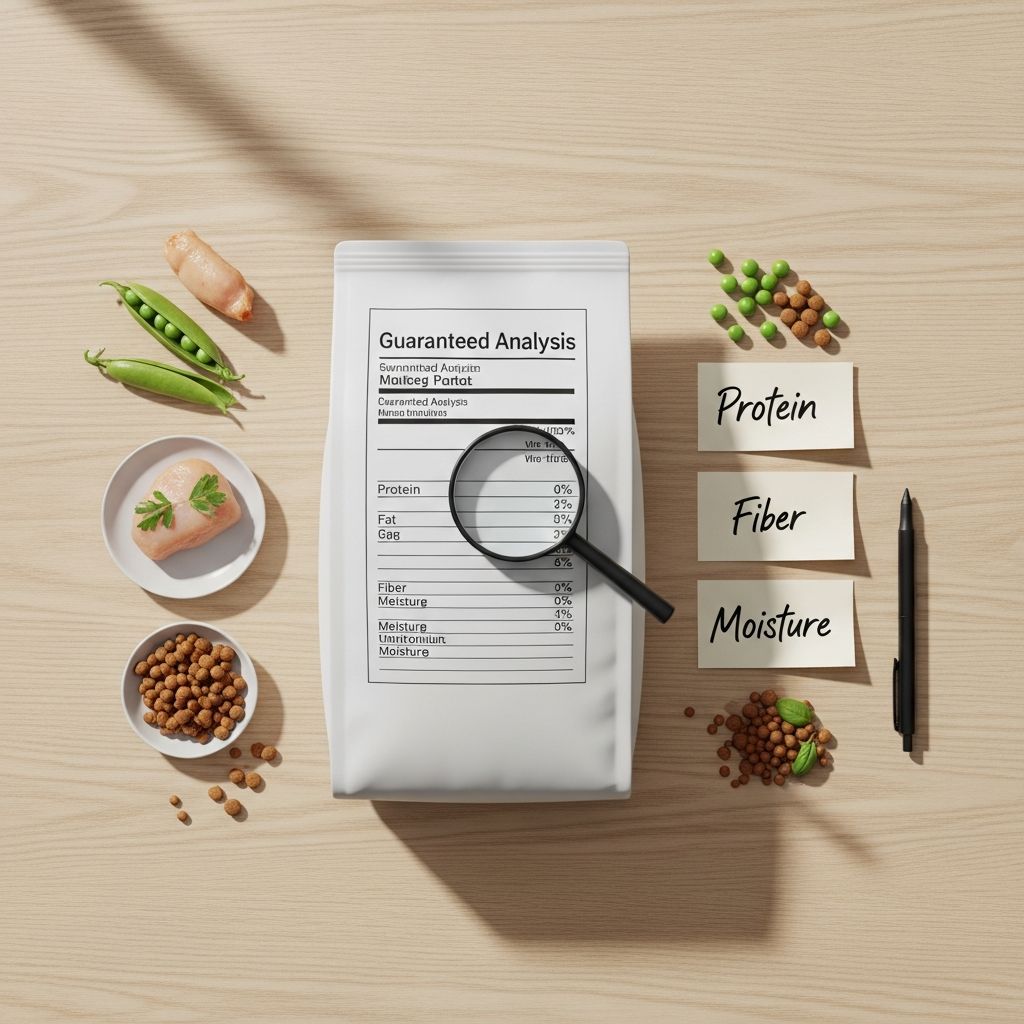
When selecting food for your pet, the back of the package often contains critical information that determines whether a product meets your animal’s nutritional needs. Among the most important—yet frequently misunderstood—elements is the guaranteed analysis (GA). This standardized label component provides quantifiable data about key nutrients, yet many pet owners overlook it or misinterpret the numbers. Understanding how to read and evaluate this information empowers you to make better feeding choices aligned with your pet’s health requirements.
What Is the Guaranteed Analysis and Why Does It Matter?
The guaranteed analysis is a mandatory declaration on all pet food packaging in the United States, established and enforced by regulatory bodies including the Association of American Feed Control Officials (AAFCO) and state feed control officials. This section provides specific, legally binding information about the nutrient composition of the product you’re purchasing.
The significance of the guaranteed analysis extends beyond consumer convenience. The GA serves multiple critical functions:
- It establishes legal accountability—manufacturers must accurately report nutrient levels or face regulatory sanctions and testing by state officials
- It enables regulatory oversight—feed control authorities sample and test products throughout production and retail distribution
- It facilitates informed decision-making—consumers can evaluate whether products suit their pets’ specific needs
- It allows for meaningful product comparisons across different brands and food formats
State feed control officials have the authority to conduct surprise inspections, pulling products from store shelves and submitting them to laboratory analysis to verify compliance. This regulatory framework ensures that what appears on the label reflects what’s actually in the package.
The Four Core Nutrients: Structure and Significance
Every guaranteed analysis must declare four fundamental nutrients that serve as primary indicators of nutritional value: crude protein, crude fat, crude fiber, and moisture. However, these nutrients aren’t listed in the same way. Understanding the distinction between minimum and maximum guarantees is essential to interpreting the information correctly.
Protein and Fat: The Minimum Guarantee Framework
Protein and fat are expressed as minimum percentages. This means the manufacturer guarantees that the product contains at least the stated amount—and likely more. The reason for emphasizing minimums relates to economics and nutrition: protein and fat represent the most expensive and biologically important macronutrients for companion animals. When a label states “minimum 22% crude protein,” the food definitely contains at least 22% but could contain 24%, 26%, or higher.
The inclusion of minimums rather than exact figures protects consumers by ensuring a baseline of nutritional value. However, this also means that if you need to strictly limit your pet’s protein or fat intake—for example, due to kidney disease or pancreatitis—the guaranteed analysis alone provides insufficient precision. In such cases, requesting a typical or average nutrient analysis from the manufacturer offers more accurate information reflecting actual product composition.
Fiber and Moisture: The Maximum Guarantee Framework
Fiber and moisture are listed as maximum percentages. This framework protects against excessive inclusion of these components. Fiber, while beneficial in appropriate amounts for digestive health, can reduce caloric density and nutrient digestibility if excessive. Moisture similarly requires careful management—too little makes kibble unpalatable, while too much (beyond 12-14% in dry foods) can facilitate bacterial growth and compromise shelf stability.
Most dry dog foods maintain a maximum moisture content of 10-12%, which balances preservation concerns with palatability. Canned foods, by contrast, typically contain approximately 80% moisture, representing a fundamentally different product format with different preservation requirements.
Understanding “Crude” and Its Measurement Implications
Pet food labels specify “crude” protein, fat, and fiber rather than refined measurements. The term “crude” does not reflect product quality but rather describes the analytical methods used to determine nutrient concentrations. These methodologies provide rough estimates rather than exact measurements, introducing natural variation between batches based on ingredient sourcing and seasonal fluctuations.
This distinction carries practical importance: manufacturers cannot produce identical nutrient profiles across every batch. Environmental factors affecting ingredient composition—harvest conditions, soil nutrient levels, ingredient supplier variations—inevitably influence final product analysis. The crude measurement approach accommodates these realities while maintaining regulatory standards.
Comparing Pet Foods: The Dry Matter Basis Approach
A critical limitation of the guaranteed analysis emerges when comparing products across different formats. Direct comparison between a dry food containing 33% crude protein and a canned product listing 8% crude protein misleadingly suggests the dry food contains substantially more protein. This comparison fails because wet foods contain far higher moisture content.
To conduct meaningful nutritional comparisons, particularly between wet and dry products, conversion to a dry matter basis becomes essential. This standardized approach removes moisture from the calculation, revealing true nutrient concentration. When evaluated on a dry matter basis, that 33% protein dry food and the 8% protein canned food may be nearly identical (both approximately 36% protein on dry matter basis).
Pet foods vary dramatically in water content—dry products typically contain 10% moisture, while canned foods contain approximately 80%. Without accounting for this difference, meaningful comparison becomes impossible. Consumers wishing to evaluate products across formats should request dry matter nutrient information from manufacturers or conduct calculations independently by removing water weight from guaranteed analysis percentages.
Beyond the Required Four: Optional Nutrient Declarations
While only protein, fat, fiber, and moisture are mandatory, manufacturers may voluntarily include additional nutrients in the guaranteed analysis. Common inclusions include:
- Calcium and phosphorus—important for bone development and maintenance
- Omega-3 and Omega-6 fatty acids—supporting skin, coat, and immune function
- Specific amino acids—addressing particular health claims
- Ash content—mineral composition indicator
- Taurine—critical for feline cardiac health
Inclusion of additional nutrients in the guaranteed analysis represents a legal commitment. Manufacturers declaring specific nutrient levels assume responsibility for verification through testing and enforcement. This makes voluntary nutrient inclusion both a marketing tool and a quality assurance statement—companies with confidence in their quality control measures are more likely to include supplementary guarantees.
How Manufacturers Determine Guaranteed Analysis Values
Pet food companies employ two primary methodologies for calculating guaranteed analysis data: computational prediction and direct laboratory testing. Advanced formulation software maintains comprehensive databases of nutrient profiles for individual ingredients, allowing manufacturers to predict final product composition before production begins. This approach provides efficiency and cost savings.
Alternatively, manufacturers conduct actual laboratory analysis on finished products, measuring nutrient levels directly. This method captures real-world variations introduced during production that software predictions might miss. Many quality-focused manufacturers employ both approaches—using software for initial formulation guidance and laboratory testing for verification.
The Typical Analysis: Supplementing the Guaranteed Minimum
The guaranteed analysis, by its nature, communicates only minimums and maximums. The typical analysis—an optional label element—provides average or actual nutrient percentages more closely resembling human nutrition labels. While typical analysis figures cannot carry the same legal guarantees as guaranteed analysis values (due to inherent batch-to-batch variation), they offer substantially better insight into expected product composition.
Unlike the guaranteed analysis, typical analysis figures reflect actual testing results and therefore vary between production batches. This variation explains why manufacturers cannot legally guarantee typical analysis values—they represent averages rather than absolute minimums or maximums. However, this information proves invaluable when making feeding decisions, particularly for animals with specific dietary restrictions or health conditions requiring precise nutrient management.
Regulatory Oversight and Enforcement Mechanisms
The guaranteed analysis holds legal weight because state feed control officials actively monitor compliance. These regulators possess authority to conduct unannounced inspections, purchase products from retail locations, and submit samples for laboratory analysis at any point in the product lifecycle—from manufacturing through consumer purchase.
This enforcement infrastructure distinguishes the guaranteed analysis from marketing claims. When a manufacturer declares specific nutrient levels, they accept regulatory scrutiny and potential penalties for misrepresentation. Products found to contain nutrient levels inconsistent with label declarations face removal from shelves and potential legal consequences for manufacturers. This accountability framework represents perhaps the most important protection consumers possess when evaluating pet food options.
Quality Control and Manufacturer Accountability
While regulatory oversight provides external accountability, internal manufacturer quality control determines daily compliance. AAFCO-compliant pet food manufacturers maintain rigorous quality assurance protocols ensuring consistent nutrient delivery across production runs. However, variations inevitably occur—ingredient sourcing differences, seasonal fluctuations, and manufacturing tolerances introduce natural fluctuation.
Manufacturers unable or unwilling to provide typical analysis data or respond to consumer inquiries about nutrient verification may warrant skepticism. A company’s transparency regarding their quality control measures and willingness to share supplementary nutritional data suggests stronger commitment to nutritional integrity than those offering only guaranteed analysis minimums.
Practical Application: Reading and Comparing Labels
When evaluating pet food options, approach the guaranteed analysis systematically:
- Identify the four mandatory nutrients and note whether each is listed as minimum (protein, fat) or maximum (fiber, moisture)
- Calculate dry matter percentages if comparing across food formats—particularly important when evaluating wet versus dry options
- Request typical analysis data from manufacturers for more precise nutritional information
- Consider your pet’s life stage, activity level, and any health conditions requiring nutrient restrictions
- Evaluate additional nutrient declarations for specific health benefits your pet may need
- Assess manufacturer transparency and willingness to answer detailed nutritional questions
Limitations and Considerations
Despite its importance, the guaranteed analysis presents inherent limitations. It captures only four nutrients while complete pet nutrition involves dozens of essential vitamins, minerals, and other compounds. Research has demonstrated that some products meeting all guaranteed analysis requirements may still fall short on nutrients not included in the guarantee—such as thiamine (vitamin B1).
The guaranteed analysis also does not address nutrient bioavailability—how effectively your pet’s digestive system absorbs and utilizes declared nutrients. Two products with identical guaranteed analysis profiles may differ substantially in nutritional value depending on ingredient quality and digestibility.
Additionally, the guaranteed analysis provides no information about ingredient quality, processing methods, or potential contaminants. It addresses quantity of specific nutrients but not overall nutritional completeness or appropriateness for individual animals.
Making Informed Feeding Decisions
The guaranteed analysis represents one tool within a comprehensive label-reading toolkit. Evaluate it alongside ingredient lists, feeding guidelines, manufacturer reputation, and your veterinarian’s recommendations. For pets with specific health conditions or dietary sensitivities, the guaranteed analysis forms a foundation for discussion with your veterinary nutritionist, who can interpret this data in context of your individual animal’s needs.
Understanding guaranteed analysis empowers informed decision-making but should not be your only consideration. Combined with other label information and professional guidance, it enables you to select products genuinely supporting your pet’s long-term health and nutritional requirements.
References
- Pet Food Institute — Pet Food Institute. 2024. https://www.petfoodinstitute.org/what-is-guaranteed-analysis/
- Nutritional Labeling Standards — Association of American Feed Control Officials (AAFCO). 2024. https://www.aafco.org/resources/startups/nutritional-labeling/
- Pet Food Label Requirements — University of Nebraska-Lincoln Extension. 2021. https://extensionpublications.unl.edu/assets/html/g1960/build/g1960.htm
- What Is Guaranteed About the Guaranteed Analysis? — Tufts University, Cummings School of Veterinary Medicine. 2020. https://sites.tufts.edu/petfoodology/2020/12/28/what-is-guaranteed-about-the-guaranteed-analysis/
- Understanding Pet Food Labels — Primal Pet Foods. 2024. https://www.primalpetfoods.com/blogs/news/understanding-pet-food-labels
Similar Articles








Read full bio of medha deb


