

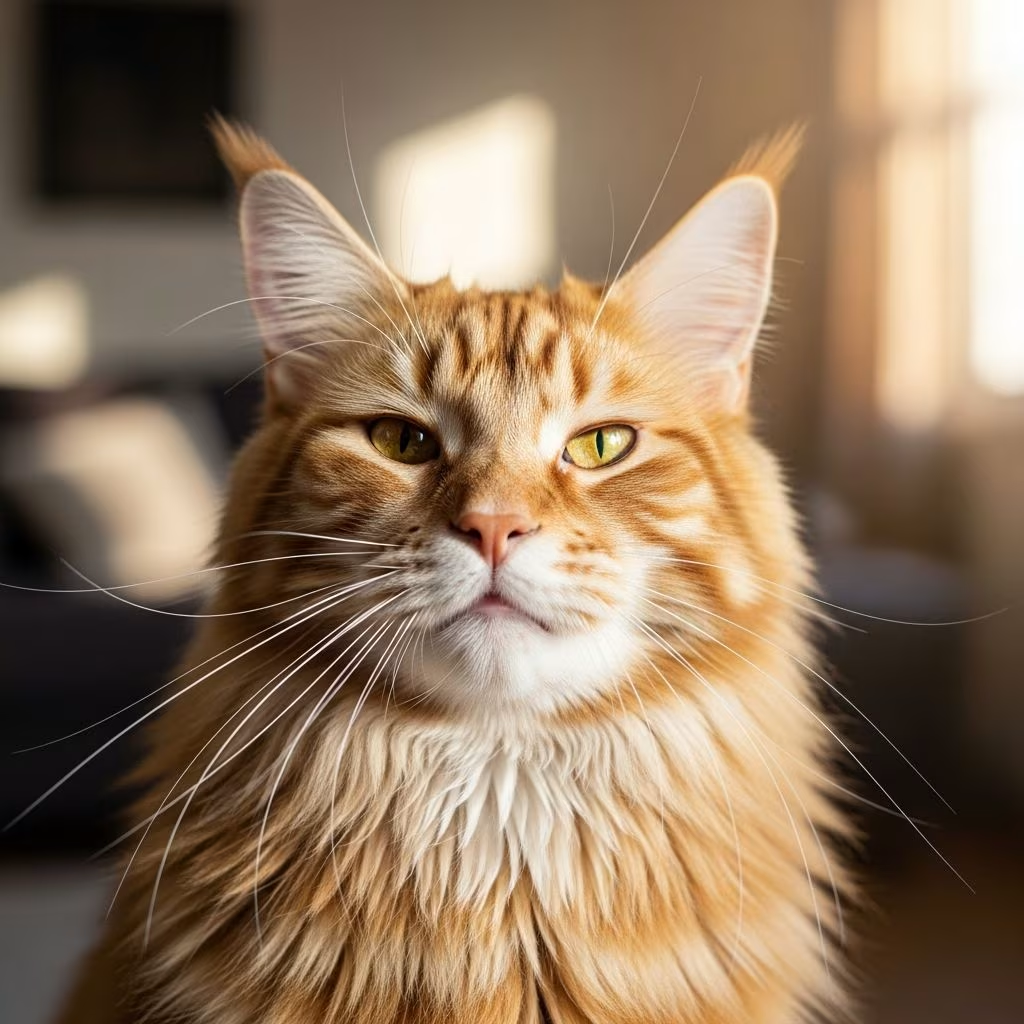
Cats communicate through a variety of sounds, but none captivates owners quite like a loud, resonant purr. This deep rumble often signals deep contentment, yet it carries layers of meaning tied to physiology, emotion, and survival. Understanding loud purring requires examining both the mechanics of how cats produce it and the contexts in which it occurs.
The Physiology of Feline Purring
The mechanism behind a cat’s purr has intrigued scientists for decades. Recent research reveals that domestic cats generate this sound through specialized structures in their larynx. Unlike typical vocalizations, purring operates at low frequencies of 20-30 Hz, achieved via fatty pads embedded in the vocal cords. These pads allow slow vibrations without constant brain input, challenging older theories of active muscle contractions.
Experiments with isolated cat larynges demonstrated self-sustaining oscillations when air is passed through, producing purr-like sounds at purr frequencies without neural signals. This passive process mirrors vocal fry in humans, where dense tissue enables low tones despite the cat’s small size. A neural oscillator in the brain initiates the process, triggering laryngeal muscles to contract 20-30 times per second with diaphragm involvement, creating the characteristic rumble on both inhalation and exhalation.
Loud purring amplifies these vibrations, often noticeable across a room. Frequencies can extend up to 150 Hz, potentially aiding physical processes like bone repair and tissue healing.
Emotional Signals in Intense Purring
While a soft purr might indicate mild pleasure, loud purring conveys stronger emotions. Cats purr vociferously during petting sessions, lap time, or safe environments, reflecting profound relaxation and trust. This bonding behavior strengthens human-feline relationships, as the vibration fosters mutual comfort.
- Contentment and Affection: The most common trigger, where loud purrs accompany kneading or drooling, mimicking kittenhood comforts.
- Maternal Communication: Mother cats purr loudly to guide blind kittens to milk sources, a vibration newborns detect easily.
- Social Harmony: Submissive cats use intense purring to appease dominants, reducing conflict risks.
Observationally, cats in veterinary settings may purr loudly from euphoria in sunlight or as self-soothing amid anxiety, highlighting purring’s dual role in positive and coping scenarios.
When Loud Purring Indicates Stress or Pain
Not all loud purrs stem from happiness. Cats in distress, injury, or pain purr intensely as a coping mechanism. This self-soothing vibration may calm nerves and mask vulnerability from predators.
Studies link purring to healing: low frequencies promote bone strengthening, pain relief, and wound recovery. One theory posits it as a ‘natural healing mechanism,’ with vibrations aiding tissue repair similar to therapeutic ultrasound. Cats with laryngeal paralysis cease purring, underscoring the larynx’s role.
| Context | Purr Characteristics | Possible Meaning |
|---|---|---|
| Relaxed petting | Loud, steady, rhythmic | Deep contentment |
| Injury or vet visit | Loud but tense body | Self-soothing, pain management |
| Feeding time | Loud with high-frequency cry overlay | Solicitation for food |
| Kitten nursing | Continuous loud rumble | Communication and bonding |
Health Benefits of Purring Vibrations
Beyond emotion, loud purring may confer tangible health advantages. Frequencies between 25-150 Hz align with ranges promoting fracture healing and soft tissue regeneration in lab studies on other animals. In cats, consistent purring could maintain bone density and muscle tone, explaining feral cats’ resilience despite hard lives.
Human benefits emerge too: exposure to purring lowers blood pressure and reduces stress, enhancing owner well-being during interactions. Encouraging loud purring through gentle stroking or play supports both cat and human health.
Individual Variations in Purr Volume
Not all cats purr equally loudly. Breed, age, personality, and health influence intensity. Siamese cats often produce higher-pitched meows but can deliver powerful purrs when content. Kittens start purring days after birth, refining the sound into adulthood.
Unique vocal signatures distinguish individual cats’ purrs more than meows, aiding owner recognition. Older cats or those with respiratory issues might purr less loudly, warranting veterinary checks if absent during expected happy moments.
Encouraging Healthy Loud Purring
To promote beneficial loud purring, create low-stress environments with vertical spaces, hiding spots, and routines. Use interactive toys, pheromone diffusers, and scheduled affection. Monitor body language: flattened ears or tail twitching amid purring may signal discomfort.
- Provide soft bedding for chin rubs, prime purr inducers.
- Avoid sudden noises or overcrowding to prevent stress-induced silence.
- Regular health checks ensure no underlying issues dampen purring.
Common Myths About Cat Purring
Several misconceptions persist. The outdated ‘blood flow’ theory suggested vena cava turbulence caused purring, now disproven by laryngeal evidence. Another myth: only happy cats purr. Reality shows multifaceted uses, from hunger signals with embedded cries to healing.
Loud purring isn’t always ‘extra happy’; context matters. Owners mistaking stress purrs for joy might overlook health needs.
FAQs on Loud Cat Purring
Why does my cat purr loudly only at certain times?
Loud purring often ties to peak comfort, like meals or cuddles, but can also signal stress relief or pain management. Observe accompanying behaviors for clues.
Is a very loud purr a sign of illness?
Not inherently, but paired with lethargy, hiding, or appetite loss, it may indicate discomfort. Consult a vet if patterns change.
Can all cats purr loudly?
Most domestic cats can, but volume varies by individual and health. Big cats roar but lack true purring ability.
Does loud purring help my cat heal faster?
Vibrations at 20-50 Hz may support bone and tissue repair, acting as internal therapy during recovery.
How can I make my cat purr more loudly?
Gentle petting on cheeks, under chin, or base of tail, combined with a calm voice, often elicits strong responses.
Loud purring enriches the cat-human bond, offering insights into feline inner worlds. By attuning to its nuances, owners enhance care and connection.
References
- How do cats purr? New finding challenges long-held assumptions — Science.org. 2019-11-06. https://www.science.org/content/article/how-do-cats-purr-new-finding-challenges-long-held-assumptions
- Why and how do cats purr? — Library of Congress. N/A. https://www.loc.gov/everyday-mysteries/item/why-and-how-do-cats-purr/
- Why Do Cats Purr | The Science Behind A Normal Feline Behavior — TVMF.org. N/A. https://www.tvmf.org/articles/why-do-cats-purr/
- Here’s how cats use purring to manipulate humans — BBC Science Focus. N/A. https://www.sciencefocus.com/nature/why-do-cats-purr
- The Science of a Purr — Community Animal Hospitals. N/A. https://communityanimalhospitals.com/science-of-a-purr/
- The Fascinating Science Behind a Cat’s Purr — El Gato Vet. N/A. https://elgatovet.com/blog/the-fascinating-science-behind-a-cats-purr/
- Scientists Discover Your Cat’s Purr Is More Unique Than Its Meow — SciTechDaily. N/A. https://scitechdaily.com/scientists-discover-your-cats-purr-is-more-unique-than-its-meow/



