

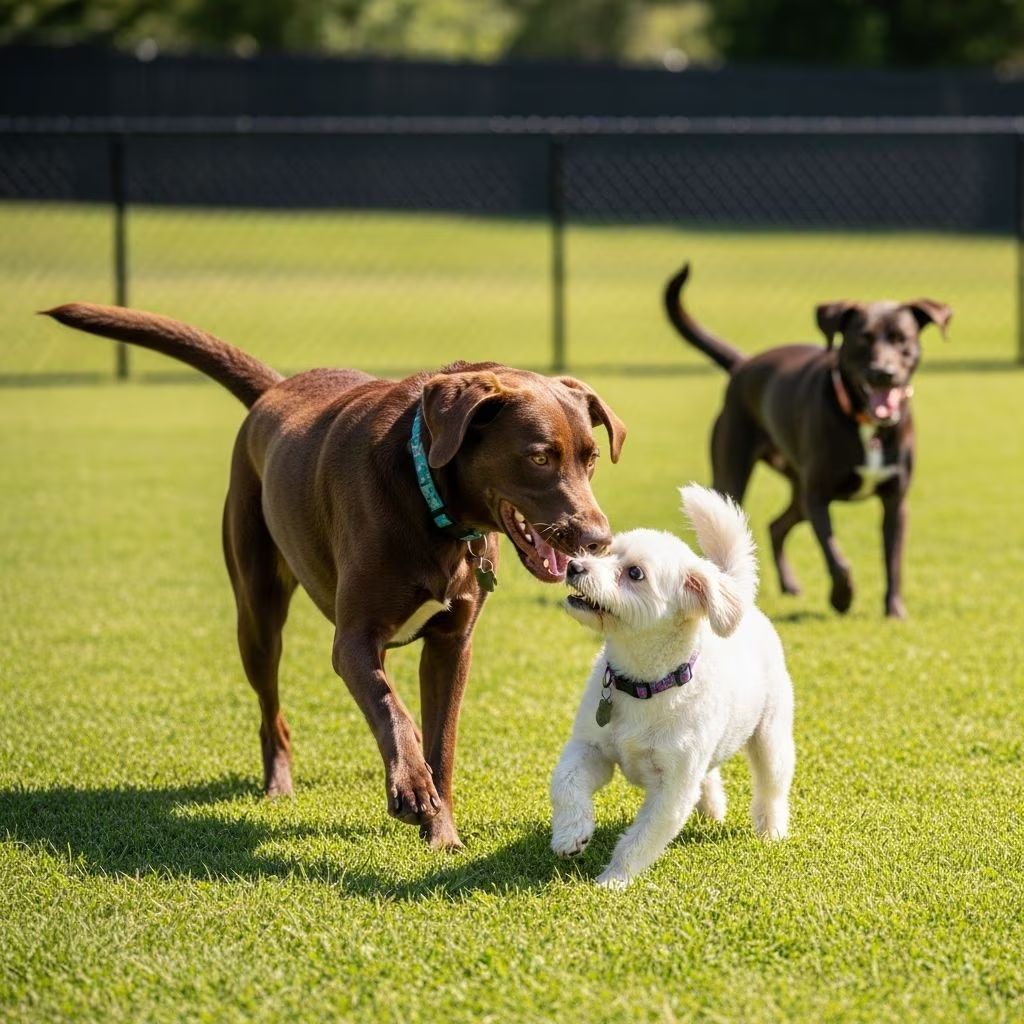
Appropriate play is essential for a dog’s physical health, mental sharpness, and social skills. It mimics natural behaviors while building confidence and reducing unwanted actions like excessive barking or chewing.
The Foundations of Canine Play
Dogs engage in play to rehearse survival skills, from chasing to wrestling, which traces back to their evolutionary needs. This activity sharpens motor abilities and prepares them for real-world challenges by practicing balance recovery and quick reactions.
Play triggers endorphin release, lowering stress and enhancing mood. For puppies, it refines coordination and bite control, crucial for adult interactions.
- Motor Skill Development: Chasing and tumbling improve agility and strength.
- Social Learning: Puppies gauge bite pressure through playmate feedback.
- Stress Relief: Focused games like fetch calm anxious dogs.
Recognizing Play Signals in Dogs
Dogs communicate play intentions clearly to avoid misunderstandings. The classic play bow—front lowered, rear raised—invites fun and signals non-threat.
Other indicators include bouncy movements, relaxed open mouths (sometimes called ‘play face’), and exaggerated spins. Repetition of actions like chasing in loops differentiates play from conflict.
| Play Signal | Description | Meaning |
|---|---|---|
| Play Bow | Chest to ground, butt up, tail wagging | Invitation to engage |
| Loose Shakes | Body wiggles or head shakes | Reducing tension |
| Role Reversal | Switching chase roles | Keeping it fair |
| Self-Handicapping | Holding back speed or strength | Preventing injury |
Observe clusters of these signs together for confirmation. A single bow amid stiff posture may not indicate true play.
Benefits for Development and Behavior
Play channels energy productively, curbing destructiveness from boredom. Structured sessions teach impulse control via games requiring waits, like ‘sit-stay-fetch’.
It fosters emotional balance, helping dogs self-regulate after excitement. Social play with peers builds communication, reading cues like pauses for breaks.
- Cognitive Boost: Puzzle toys and scent games enhance problem-solving.
- Confidence Building: Shy dogs gain resilience through controlled fun.
- Bite Inhibition: Early play prevents hard mouthing in adulthood.
For seniors, light play combats cognitive decline, while high-drive breeds need intense outlets to avoid hyperactivity.
Dog-to-Dog Interactions: Safe Play Guidelines
When dogs play, arousal rises for focus and responsiveness, but monitoring prevents escalation. Ideal play features breaks, with dogs pausing to pant or glance away.
Puppies learn boundaries via peer feedback—if too rough, playmates yelp or walk away. Adults reinforce this, promoting harmony.
Match energy levels: Calm dogs with mellow ones avoid overwhelming mismatches. Short sessions with breaks maintain positivity.
Age-Appropriate Play Matching
| Age Group | Ideal Play Partners | Focus Areas |
|---|---|---|
| Puppies (under 6 months) | Similar-sized puppies | Social cues, bite control |
| Adolescents (6-18 months) | Patient adults | Impulse control, endurance |
| Adults/Seniors | Energy-matched peers | Low-impact fun, mental stim |
Human-Dog Play: Best Practices
Owners can replicate pack dynamics safely. Tug builds jaw strength if ended on cue; fetch teaches retrieval.
Avoid roughhousing that encourages jumping or nipping. Use toys to redirect mouthing, reinforcing ‘gentle’ play.
Incorporate training: Reward sits during games to blend fun with obedience. This translates to better real-life manners.
- Start sessions calm to set tone.
- End before fatigue leads to frustration.
- Rotate toys for novelty.
Spotting When Play Turns Problematic
Not all roughhousing is safe. Watch for stiffening, pinned ears, avoidance, or one-sided intensity—these signal discomfort.
High arousal blurring into prey drive shows as fixated staring or ignoring stop cues. Intervene early with calm separation.
Persistent issues like humping or mounting often stem from overexcitement, not dominance—redirect to appropriate outlets.
Red Flags Checklist
- One dog always on top or chasing relentlessly.
- Growling without play bows.
- Injury attempts or yelps without recovery.
- Playmate hiding or lip-licking stress signals.
Tailoring Play to Your Dog’s Needs
Assess breed, age, and personality. Herding breeds thrive on chase games; scent hounds love nose work.
For reactive dogs, solo play builds skills before groups. Track progress: Less reactivity means readiness for peers.
Incorporate daily routines: 15-30 minutes suffices for many, combining physical and mental elements.
Common Myths About Dog Play
Myth: Play fighting causes real fights. Reality: Supervised play teaches de-escalation.
Myth: All dogs self-regulate. Reality: Some need owner guidance to prevent overstimulation.
Myth: Tug promotes aggression. Reality: Controlled tug enhances focus and bonding.
FAQs on Healthy Dog Play
Is it okay for small dogs to play with big ones?
Yes, if sizes match energy and gentleness prevails. Monitor closely for mismatches.
How much play does my dog need daily?
Varies: 20-60 minutes, split into sessions, adjusted for age and breed.
What if my dog plays too rough?
Teach ‘gentle’ cues and pair with calm dogs. Professional training helps.
Can play fix separation anxiety?
It helps by tiring them mentally/physically, but combine with desensitization.
Should I let puppies play unsupervised?
Briefly with known peers; supervise to intervene if needed.
Building a Play Routine for Success
Schedule consistent sessions post-meals or walks when energy peaks. Vary activities to prevent boredom: Alternate tug, fetch, and puzzles.
Observe patterns—overarousal? Shorten sessions. Poor sharing? Practice trades. This data informs training tweaks.
Group play at parks or classes accelerates socialization if vetted safe. Home play ensures daily enrichment.
Ultimately, play strengthens bonds, curbs issues, and unlocks joy. Prioritize safety and observation for thriving dogs.
References
- The Role of Play in Dog Development and Behavior — Dog Owners Academy. 2023. https://www.dogownersacademy.com/the-role-of-play-in-dog-development-and-behavior/
- Why Do Dogs Play? — Companion Animal Psychology. 2017-11-01. https://www.companionanimalpsychology.com/2017/11/why-do-dogs-play.html
- The Science, Culture, and Tools of Play — Canine Principles. 2024. https://www.canineprinciples.com/blog/canine-play-play-tools-motivation
- Understanding Normal Dog Play Behavior — Houndsy. 2024. https://www.houndsy.com/blogs/modern-tails/understanding-normal-dog-play-behavior-what-to-know-for-a-happy-pup
- When Dog Play and Prey Drives Blur — Aggressive Dog. 2024-11-30. https://aggressivedog.com/2024/11/30/when-dog-play-and-prey-drives-blur/
- Dog Play Behavior: Are they fighting or playing? — Inquisitive Canine. 2023. https://inquisitivecanine.com/dog-play-behavior-are-they-fighting-or-playing/



