

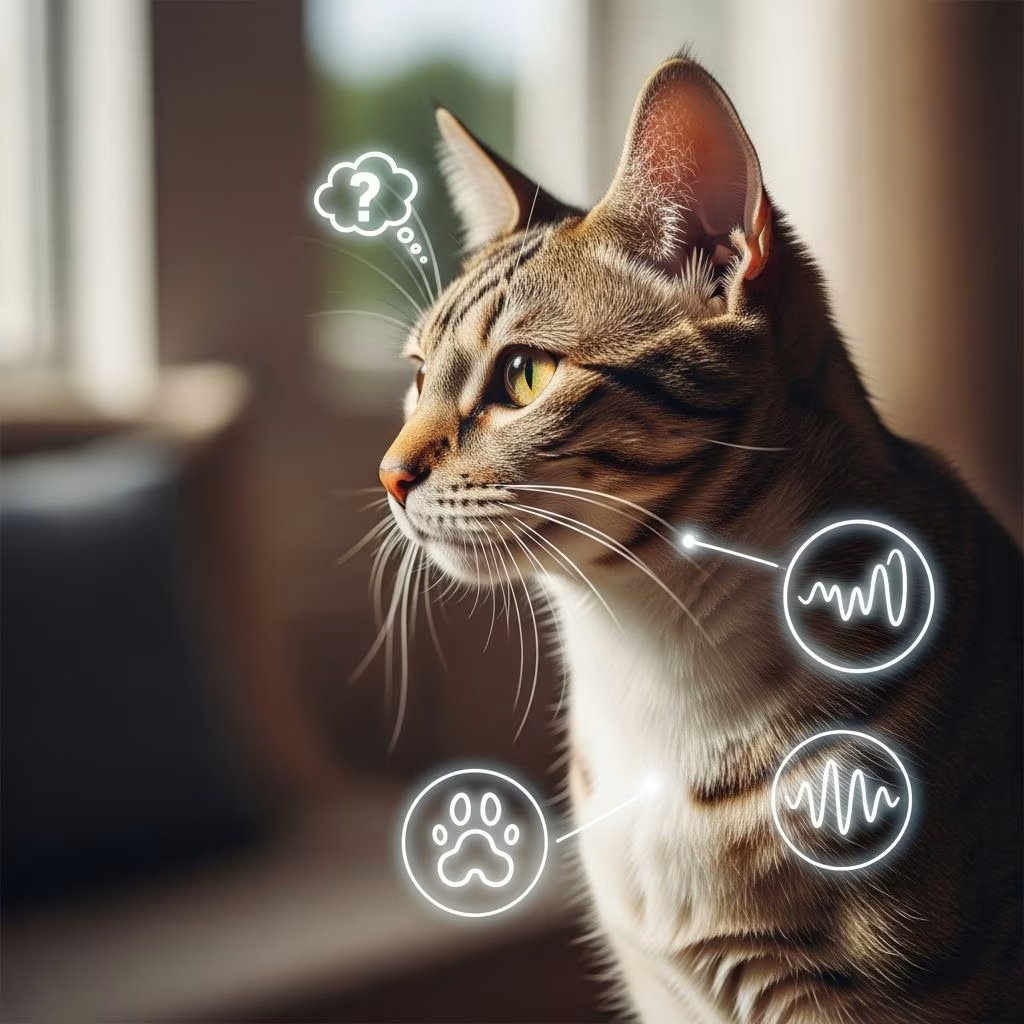
Cats have evolved a sophisticated system of communication that blends instinct with adaptation to human companionship. Unlike dogs, which often vocalize broadly, cats rely heavily on nuanced body language, subtle sounds, chemical scents, and physical touch to convey emotions, desires, and boundaries. Domestication has refined these methods, making cats particularly adept at signaling to humans for essentials like food, affection, or play.
The Power of Visual Cues in Cat-Human Interactions
Visual signals form the cornerstone of feline expression, allowing cats to project confidence, fear, or contentment without a sound. Owners who learn to read these cues can respond more effectively, fostering trust and reducing misunderstandings.
A cat’s **eyes** are among the most expressive features. Narrowed or half-closed eyes often indicate relaxation and trust, akin to a feline smile. Scientific studies confirm that slow blinking—where a cat deliberately closes and opens its eyes slowly—serves as a gesture of goodwill. When humans reciprocate this slow blink, cats are more likely to return the gesture and even approach, enhancing mutual comfort.
- Slow blink: A sign of affection and safety; try mirroring it to invite closer interaction.
- Dilated pupils: Suggest excitement, fear, or low light; context matters for accurate reading.
- Direct stare: Can signal challenge or curiosity; avert your gaze to de-escalate tension.
**Ears** provide real-time updates on a cat’s mood. Forward-pointing ears show interest or happiness, while flattened ears against the head warn of aggression or fright. Swiveling ears scan for sounds, demonstrating alertness.
Tail Talk: The Multilingual Whip
No part of a cat embodies communication like the **tail**, which acts as a dynamic flag for emotions. A high, straight tail with a slight curl at the tip signals friendly greeting, much like a handshake among felines. In contrast, a low, tucked tail indicates fear or submission.
| Tail Position | Meaning | Human Response |
|---|---|---|
| Upright with quiver | Excitement or greeting | Greet back warmly |
| Swishing rapidly | Irritation or agitation | Give space to calm down |
| Puffed and arched | Fear or threat display | Remove stressors gently |
| Low and slow wag | Contemplation or hunting focus | Observe without interrupting |
Understanding tail nuances prevents mishaps, such as petting a swishing-tailed cat, which might lead to scratches from overstimulation.
Vocalizations: From Meows to Chirps
While cats meow primarily at humans rather than each other, their vocal repertoire is diverse. Kittens meow for maternal attention, but adults adapt this for owners, using pitches and durations to request food, entry, or cuddles.
- **Purr**: Typically contentment, but also self-soothing during stress or pain.
- **Trill or chirp**: Joyful hello or encouragement, often when spotting birds.
- **Hiss or growl**: Clear warnings to back off.
- **Chatter**: Frustrated excitement at prey outside a window.
Research notes cats meow more at women, possibly due to higher-pitched voices mimicking queen cats.
Scent Marking: Invisible Bonds
Cats possess scent glands on cheeks, paws, and tails, using them to mark territory and loved ones. **Bunting**—rubbing the head against you—deposits pheromones, claiming you as family. This olfactory message reassures the cat of safety in shared spaces.
Urine spraying or scratching also spreads scent, though indoors it signals stress. Synthetic pheromones mimic these, calming anxious cats in new environments.
Touch and Proximity: Tactile Trust
Physical contact speaks volumes. A cat loafing nearby shows relaxation; exposing the belly invites play (but pet cautiously, as it’s vulnerable).
**Head-butts and rubbing**: Affectionate marking and kneading mimic kitten nursing, evoking security.
Sleeping on you signifies ultimate trust, as sleep exposes vulnerabilities.
Posture and Overall Body Language
Holistic postures reveal states: Arched back with fur raised defends against threats; rolling over solicits play. The ‘loaf’ position—tucked paws under body—denotes pure comfort.
Enhancing Communication: Practical Tips
To bridge the species gap:
- Respond to slow blinks with your own.
- Respect tail swishes by pausing petting.
- Use consistent cues, like a specific word for food.
- Incorporate pheromone products for stress relief.
- Observe daily patterns to anticipate needs.
These actions build reciprocity, turning signals into dialogue.
Common Misinterpretations and Fixes
Owners often mistake aggression for play or aloofness for dislike. A swatting paw during petting means ‘enough’; persistent hiding suggests health issues—consult a vet.
FAQs
What does it mean if my cat slow blinks at me?
It’s a sign of trust and affection, equivalent to a smile. Blink back to strengthen your bond.
Why does my cat meow only at humans?
Adult cats reserve meows for people, a domesticated adaptation to solicit attention or needs.
How can I tell if my cat is happy?
Look for upright tail, kneading, purring, and head rubs—clear indicators of contentment.
Is tail swishing always anger?
Not always; slow wags show focus, rapid ones irritation. Combine with ear and body cues.
Why does my cat bring me ‘gifts’ like dead animals?
It’s teaching or sharing hunting skills, a maternal instinct toward family members.
References
References
- Cat communication – Wikipedia — Wikipedia. 2023-10-15. https://en.wikipedia.org/wiki/Cat_communication
- Scientists Reveal a Simple Trick to Communicate With Your Cat — ScienceAlert. 2020-09-30. https://www.sciencealert.com/scientists-reveal-a-simple-trick-to-communicate-with-your-cat
- 4 Ways Cats Communicate to Humans (Other Than Meowing) — YouTube (Jackson Galaxy). 2022-05-12. https://www.youtube.com/watch?v=ZJ8PEZ4mbmA
- 10 Ways Your Cat Is Communicating With You — Cats.com. 2024-08-20. https://cats.com/how-do-cats-communicate-with-humans
- Cat Communication: A Guide for Humans — Pet Assure. 2023-11-05. https://www.petassure.com/maxscorner/cat-communication-a-guide-for-humans/



