

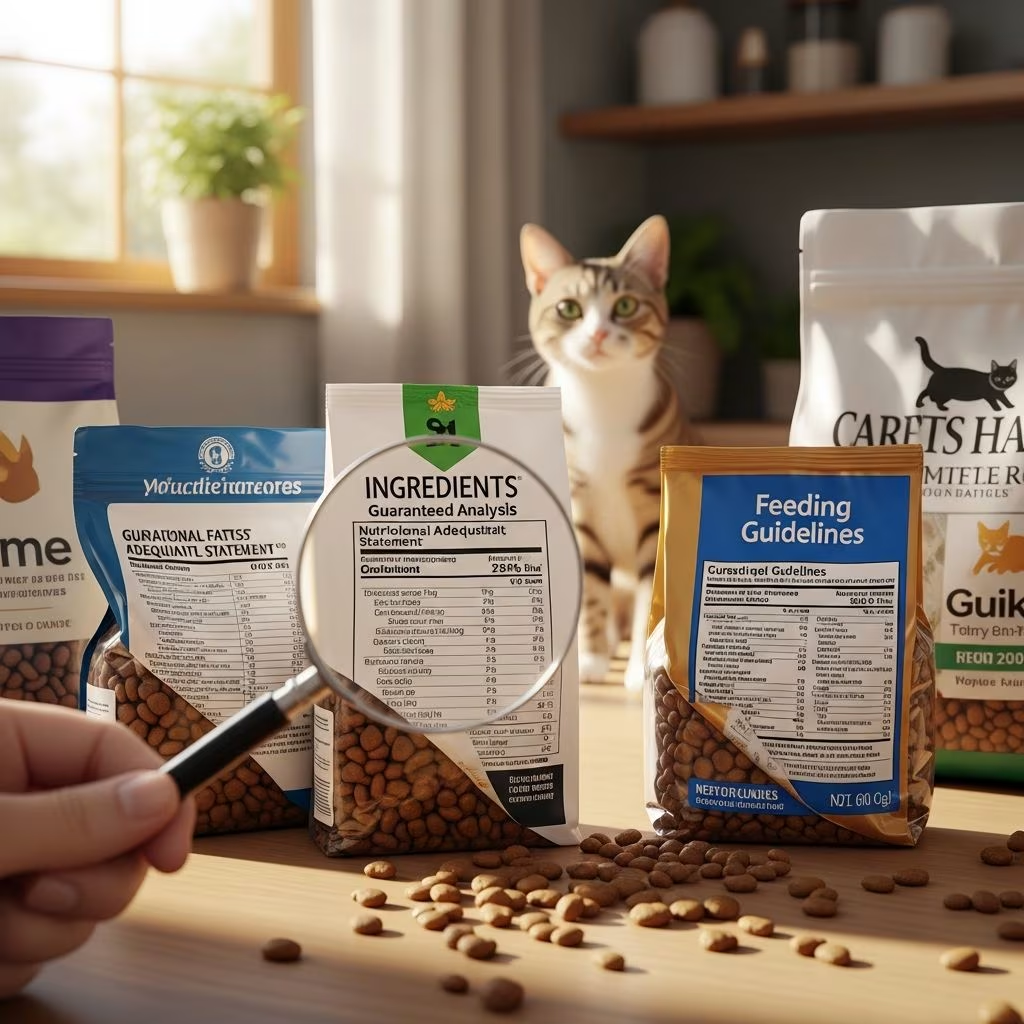
Selecting appropriate nutrition for your cat involves more than simply grabbing a bag or can from the shelf. The label on your cat’s food contains critical information about its nutritional composition, ingredient quality, and suitability for your pet’s life stage. Understanding how to navigate this information empowers you to make informed decisions that support your cat’s health and longevity. This comprehensive guide breaks down the essential components of cat food labeling so you can confidently choose the best options for your feline companion.
The Foundation: Key Elements Required on Every Label
Federal regulations, primarily overseen by the Food and Drug Administration (FDA), establish mandatory requirements for all pet food labeling. These foundational elements appear on every legitimate cat food package and serve as your first checkpoint when evaluating products.
Every cat food label must clearly identify the product by name and include a brand identifier. The label must conspicuously state that the product is intended for cats, rather than relying on images alone. A quantity statement showing the weight or volume of the product must be displayed prominently, typically on the front of the packaging in both English and metric measurements.
The manufacturer or distributor’s name and complete address must appear on the package, allowing consumers to contact the company with questions or concerns. Additionally, all ingredients must be listed in descending order by weight, with the heaviest ingredient appearing first. This ingredient order provides valuable insight into the nutritional foundation of the food.
Interpreting Product Names and Marketing Claims
Product names often serve as marketing tools, but they’re also regulated to prevent misleading consumers. Understanding the naming conventions helps you discern the actual composition of the food beyond appealing descriptions.
When a cat food label features specific ingredient names such as “Grilled Chicken” or “Tasty Beef,” federal regulations require that the named ingredient comprise at least 95 percent of the product, excluding water used in processing. If a label states “Chicken and Fish Combo,” the combined ingredients must total 95 percent, with ingredients listed in order of predominance.
Descriptive terms like “Organic” carry specific regulatory meanings. Foods labeled as “organic” must contain at least 95 percent organic ingredients, not counting added water or salt. Products stating “Made With Organic Ingredients” must contain a minimum of 70 percent organic ingredients by the same standard. If a food contains organic ingredients comprising less than 70 percent of the formula, those ingredients may be identified as organic within the ingredient list, but no official seal can be displayed.
Phrases such as “natural,” “premium,” or “gourmet” are not strictly regulated and should not be your primary decision-making factors. Instead, focus on the objective information provided in the guaranteed analysis and ingredient list.
The Ingredient List: Reading Beyond the First Items
The ingredient list represents one of the most informative sections of a cat food label, though it requires careful interpretation to understand what it truly reveals about food quality.
Pet food manufacturers must list all ingredients in descending order of weight before processing. This means that for a dry kibble, water weight is removed during processing, which can affect the relative proportions of ingredients. A quality cat food should include a recognizable protein source—such as chicken, beef, fish, or lamb—among the top five ingredients. Cats are obligate carnivores, meaning their bodies have evolved to obtain essential nutrients primarily from animal proteins rather than plant-based sources.
Be cautious when examining foods where fillers or grain-based ingredients like ground yellow corn or corn gluten meal appear before meat proteins. These ingredients are less digestible for cats and provide fewer essential amino acids. While grains aren’t inherently harmful, they should not form the foundation of a feline diet.
The ingredient list alone does not provide information about nutrient digestibility or overall food quality. Two foods may list similar ingredients but differ significantly in how well a cat’s body can absorb and utilize those nutrients. This limitation is precisely why supplementary label information becomes essential.
Understanding Guaranteed Analysis: What the Numbers Mean
The guaranteed analysis section provides standardized nutritional information that allows you to compare different products objectively. However, this section requires careful interpretation, particularly when comparing wet and dry foods.
All cat food labels must include a guaranteed analysis showing minimum percentages of crude protein and crude fat, along with maximum percentages of crude fiber and moisture. The term “crude” refers to the testing methodology used to measure these nutrients, not their quality. Additional nutrients that may appear include calcium, phosphorus, linoleic acid, and vitamin A.
When comparing guaranteed analysis percentages across different food types, moisture content significantly affects the numerical values. Wet or canned foods contain substantially more water than dry kibble, which results in lower percentage values for protein and fat even if the actual nutrient density is comparable or superior. To make accurate comparisons between wet and dry foods, you may need to calculate the dry matter basis by removing the moisture percentage from the equation.
The guaranteed analysis provides essential nutritional boundaries but does not reveal information about ingredient quality, nutrient availability, or the specific digestibility of the food for your individual cat. A food meeting minimum protein requirements may use lower-quality protein sources compared to another product meeting the same standards.
Identifying Appropriate Life Stage Formulations
Cat food formulations vary significantly based on life stage requirements. Understanding which formulation suits your cat’s current needs ensures you’re providing appropriate nutrition.
The Association of American Feed Control Officials (AAFCO) recognizes two primary nutritional adequacy categories for cat foods: “All Life Stages” and “Adult Maintenance”. All Life Stages formulations meet the elevated nutritional demands of growing kittens and nursing mothers, typically containing higher levels of calories, calcium, and phosphorus. These formulations support rapid growth and development in young cats.
Adult Maintenance formulations provide appropriate nutrition for healthy adult cats that are neither growing nor reproducing. Most household cats fall into this category, making Adult Maintenance foods suitable for the majority of feline companions. Selecting the correct life stage formulation ensures your cat receives appropriate nutrient levels for their current life circumstances.
Deciphering Nutritional Adequacy Statements
Nutritional adequacy statements represent a critical component of pet food labels, indicating whether a food has been formulated to meet minimum nutritional requirements or actually tested to deliver promised nutrients.
The most common nutritional adequacy statement reads: “[Product Name] is formulated to meet the nutritional levels established by the AAFCO Cat Food Nutrient Profiles for [life stage].” This statement indicates the manufacturer has formulated the recipe to meet minimum standards but may not have conducted actual feeding trials. These “formulated” foods represent the majority of pet food products available.
A superior designation appears on products that have undergone AAFCO-defined feeding trials. The statement reads: “Animal feeding tests using AAFCO procedures substantiate that [Product Name] provides complete and balanced nutrition for [life stage].” These feeding trials represent the gold standard, as real cats have consumed the food and demonstrated that it truly delivers the nutrients claimed on the label. While conducting these trials is costly and therefore uncommon, some major manufacturers including Hill’s and Nestle have implemented them.
A third, less commonly used statement indicates that a product is comparable to a food substantiated through AAFCO feeding tests, sometimes called a “family product”. This designation is appropriate when formulation changes are minor and do not affect the nutritional basis of the original tested product.
Caloric Content: Meeting Your Cat’s Energy Needs
Caloric information appears on cat food labels and becomes increasingly important for managing feline weight and overall health. Understanding your cat’s caloric requirements helps prevent obesity, a significant health concern in domestic cats.
Pet food labels must include a statement of caloric content, typically expressed as kilocalories per cup for dry foods or per can for wet foods. Caloric density varies substantially between food types, with dry kibble containing significantly more calories per unit volume than wet foods due to moisture differences.
Your cat’s individual caloric needs depend on factors including age, activity level, metabolism, and overall health status. A veterinarian can help determine appropriate daily calorie intake for your specific cat. Using the caloric statement in conjunction with feeding directions allows you to portion food appropriately for weight management.
Feeding Directions: Following Manufacturer Guidance
Feeding directions provide essential information about appropriate portion sizes and feeding frequency, though individual cats may require adjustments based on their unique needs.
Most complete and balanced cat foods include feeding directions on the label. These guidelines typically specify daily portions based on cat weight and may vary depending on age, activity level, or metabolic rate. Feeding directions serve as a starting point; however, individual cats metabolize food differently, and adjustments may be necessary to maintain ideal body condition.
Monitor your cat’s body condition and weight regularly while using feeding directions as a baseline. If your cat appears to be gaining or losing weight despite following label recommendations, consult with your veterinarian about appropriate portion adjustments for your individual pet.
Beyond the Label: Consulting with Veterinary Professionals
While understanding cat food labels empowers informed decision-making, veterinary professionals remain the most reliable resource for specific nutritional recommendations for your cat.
Your veterinarian understands your cat’s individual health status, any medical conditions requiring dietary modification, and your pet’s specific nutritional needs. Some cats benefit from prescription diets formulated to address particular health concerns, while others thrive on commercial over-the-counter products meeting AAFCO standards.
Regular veterinary check-ups, typically at least annually for healthy adult cats, allow your veterinarian to assess your cat’s body condition and make recommendations about dietary adjustments if needed. This partnership between pet owner, food manufacturer information, and veterinary guidance ensures your cat receives optimal nutrition throughout their life.
Frequently Asked Questions About Cat Food Labels
What does “by-product” mean on a cat food label?
By-products refer to parts of slaughtered animals not typically consumed by humans, such as organs, bones, and connective tissues. While this term carries negative connotations for many consumers, by-products can provide valuable nutrients and are regulated for safety. The ingredient list indicates exactly which by-products are used, allowing informed evaluation.
Is grain-free cat food healthier?
Grain-free formulations have become popular in recent years, but grains themselves are not inherently unhealthy for cats. Cats do not have a nutritional requirement for grains, but they also do not require grain-free diets unless they have specific allergies or sensitivities. The overall nutritional profile and protein quality matter more than grain-free status. Consult your veterinarian before switching to grain-free options.
How do I compare wet and dry cat foods fairly?
Converting guaranteed analysis percentages to a dry matter basis allows accurate comparisons between wet and dry foods. Subtract the moisture percentage from 100, then divide each nutrient percentage by this number and multiply by 100. This calculation accounts for the significant moisture differences between food types and reveals true nutrient density.
Should I choose foods with AAFCO feeding trial certifications?
Foods substantiated through AAFCO feeding trials represent a higher standard of proof that the food delivers promised nutrition. If available in your price range and your cat enjoys the food, these products offer additional assurance. However, formulated foods meeting AAFCO standards also provide complete and balanced nutrition for most healthy cats.
What are “meal” and “meat by-products” in cat food?
Meals are concentrated protein sources created by rendering meat, poultry, or fish to remove moisture and fat. While less palatable to some consumers, meals are nutrient-dense and provide valuable protein. Meat by-products are processed animal parts. Both are regulated ingredients; their presence does not automatically indicate poor quality, though meat sources are generally preferable to by-product sources.
Making Your Final Selection
Armed with knowledge about cat food label components, you can navigate the pet food aisle with confidence. Focus on products with recognized meat proteins in the ingredient list, a nutritional adequacy statement appropriate for your cat’s life stage, and ideally, a manufacturer you trust with a track record of quality and safety.
Remember that the most expensive or heavily advertised food is not necessarily the best choice for your cat. A moderately priced food providing complete and balanced nutrition with digestible protein sources may serve your cat better than a premium brand with marketing-focused labeling. Your cat’s individual response to a food—demonstrated through healthy body weight, glossy coat, good digestion, and overall vitality—provides the ultimate measure of dietary appropriateness.
By understanding cat food labels, consulting with your veterinarian, and remaining attentive to your cat’s health indicators, you provide the foundation for a long and healthy life for your feline companion.
References
- How to Read Dog & Cat Food Labels — Stella & Chewy’s. https://www.stellaandchewys.com/blogs/articles/pet-food-labels
- How to Read Cat Food Label — PetMD. https://www.petmd.com/cat/slideshows/nutrition-center/determining-best-cat-food-ingredients-label
- Cat Food Labels: Nutrition Facts and Key Ingredients — Willow Glen Pet Hospital. https://willowglenpethospital.com/cat-food-labels/
- Reading Labels — AAFCO (Association of American Feed Control Officials). https://www.aafco.org/consumers/understanding-pet-food/reading-labels/
- How To Read Pet Food Labels — Pet Food Institute. https://www.petfoodinstitute.org/how-to-read-pet-food-labels/
- How to Read and Understand Cat Food Labels — Hill’s Pet Nutrition. https://www.hillspet.com/cat-care/nutrition-feeding/how-to-read-a-cat-food-label



