

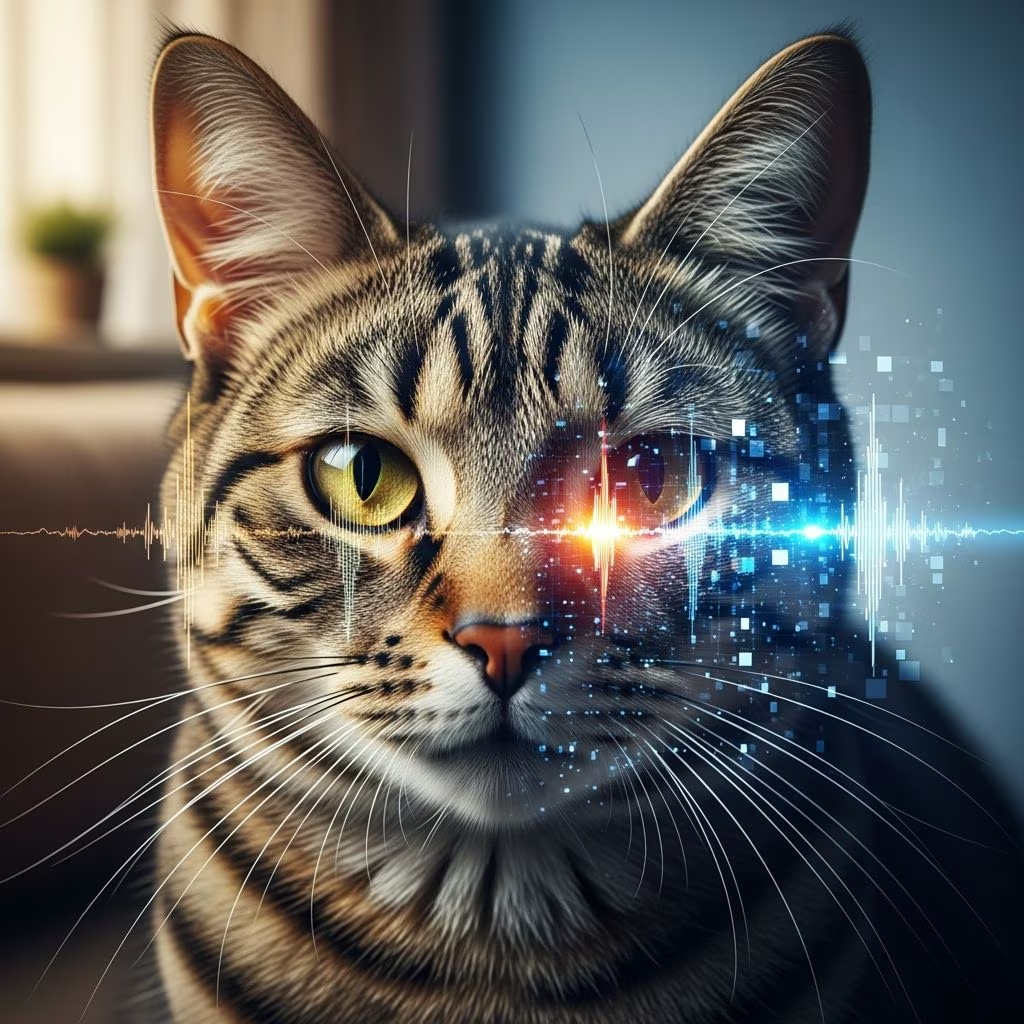
Cats possess a rich repertoire of communication methods that go far beyond meows. Through nuanced body postures, expressive tail movements, facial expressions, vocalizations, and even chemical signals, they convey a wide array of emotions and intentions. Understanding these signals allows pet owners to respond appropriately, fostering trust and preventing misunderstandings that could lead to stress or aggression.
The Role of Posture in Expressing Mood
A cat’s overall body posture serves as a primary indicator of its emotional state. When relaxed, cats often stretch out fully, exposing their belly—a sign of vulnerability and comfort. This open position signals that the cat feels safe in its environment. Conversely, a crouched or huddled posture, where the cat tucks its legs under its body and lowers its head, typically indicates fear or discomfort. In such instances, the cat is minimizing its profile to appear less threatening or to prepare for flight.
Body orientation also plays a crucial role. A cat facing directly toward you with a forward-leaning posture suggests curiosity or confidence, inviting interaction. If the cat turns sideways or backs away, it may be signaling hesitation or a desire for space. These postural cues are context-dependent; for example, a sideways stance might precede a playful pounce or an evasive maneuver.
Tail Movements: The Flag of Feline Feelings
The tail is one of the most dynamic tools in a cat’s communicative arsenal. A vertically raised tail, often with a slight curl at the tip like a question mark, denotes friendliness and greeting. This is common when cats approach familiar humans or other pets, indicating openness to social contact.
Low or tucked tails convey caution or submission. A tail held low and swishing vigorously often signals irritation or agitation—approach with care, as escalation to aggression is possible. Rapid tail lashing, especially when combined with piloerection (fur standing on end), warns of impending defensive actions.
Subtle twitches at the tail’s tip can indicate focused excitement, such as during bird-watching or pre-pounce anticipation. A slow, relaxed sway suggests contentment during casual movement. Observing changes in tail position, like from upright to thrashing during petting, helps detect overstimulation early.
| Tail Position | Meaning | Context Example |
|---|---|---|
| Upright with hook | Friendly greeting | Approaching owner at door |
| Low and swishing | Irritation | During unwanted petting |
| Twitching tip | Excitement/focus | Stalking a toy |
| Tucked under body | Fear/submission | New environment |
Facial Expressions and Ear Positions
Facial features provide rapid, subtle feedback on a cat’s inner state. Relaxed ears point forward or slightly outward, with whiskers loosely positioned. Half-closed eyes or slow blinks are profound trust signals; reciprocating this gesture can deepen the bond, as it mimics a cat’s way of saying “I trust you.”
Ears flattened against the head, combined with dilated pupils and whiskers pulled back, scream fear or aggression. Forward-pushed whiskers and erect ears signal confidence or hunting mode. A tense mouth with bared teeth accompanies hissing, reinforcing defensive intent.
- Relaxed face: Soft eyes, forward ears, neutral whiskers—cat is content.
- Alert face: Wide eyes, swiveled ears, forward whiskers—investigating.
- Fearful face: Flattened ears, large pupils, retracted whiskers—back off immediately.
Vocalizations: From Purrs to Hisses
While body language dominates, sounds offer direct emotional broadcasts. Purring most often signifies pleasure, self-soothing during stress, or even pain relief—context is key. Meows are primarily directed at humans, varying in pitch: short, high-pitched for attention; drawn-out for demands like feeding.
Growls and hisses escalate warnings. A low growl means “stay back,” while a hiss reveals fangs, priming for fight or flight. Yowls or screeches indicate intense distress, territory disputes, or mating calls. Chirps and trills are affectionate greetings, especially from mother cats to kittens.
Scent and Touch: Subtle Chemical and Physical Signals
Cats communicate chemically via pheromones from glands in cheeks, paws, and tails. Rubbing against objects or people deposits scent, marking territory and familiarity. Slow blinks pair with head-butts (bunting) to mix scents, affirming bonds.
Tactile exchanges include tail wrapping around legs for affection or gentle paw taps for attention. Rough grooming (allorubbing) between cats or on owners shows acceptance into the social group.
Contextual Interpretation: Reading the Full Picture
No single signal stands alone; integrate posture, tail, face, and sounds. A high tail with relaxed ears means welcome, but with flattened ears, it could signal defensive readiness. Changes in behavior, like freezing or sudden orientation shifts, demand immediate respect for the cat’s space.
Environmental factors influence signals: novel stimuli provoke caution, while routine fosters openness. Multi-cat homes amplify territorial cues, like puffed tails during standoffs.
Common Misinterpretations and How to Avoid Them
Pet owners often mistake purring for pure happiness, ignoring pain contexts. Tail swishes aren’t always playful—rapid ones spell annoyance. Belly exposure invites disaster if interpreted as a pet-me invitation; it’s trust, not solicitation.
To refine observation, track patterns in a journal: note posture before/after interactions. Video sessions reveal missed subtleties.
Building Trust Through Responsive Communication
Respect signals by pausing petting at early agitation signs. Offer slow blinks, avoid direct stares (predatory), and use toys to channel energy. Positive reinforcement strengthens mutual understanding, reducing stress-related issues like inappropriate elimination.
FAQs
Why does my cat’s tail twitch when I pet it?
A twitching tail tip often shows building excitement or mild irritation. If it escalates to lashing, stop petting to prevent bites.
What does a slow blink from my cat mean?
It’s a sign of trust and relaxation. Blink back slowly to reciprocate and enhance your bond.
Is purring always a good sign?
No—cats purr for comfort during pain or stress too. Check body language for context.
How can I tell if my cat is scared?
Look for crouched posture, flattened ears, dilated pupils, and a tucked tail.
Do all cats communicate the same way?
Breed and personality vary nuances, but core signals like tail-up greetings are universal.
References
- The Definitive Guide to Cat Behavior and Body Language — Tuft & Paw. N/A. https://www.tuftandpaw.com/blogs/cat-guides/the-definitive-guide-to-cat-behavior-and-body-language
- Cat Communication — International Cat Care. N/A. https://icatcare.org/articles/cat-communication
- Cat Communication: A Guide to Feline Body Language — Dakin Humane Society. N/A. https://www.dakinhumane.org/blog-full/cat-communication-a-guide-to-feline-body-language
- Deciphering Your Cat’s Tail Body Language — Wellness Pet Food. N/A. https://www.wellnesspetfood.com/blog/deciphering-your-cats-tail-body-language/
- Cat Body Language 101 — Fear Free Happy Homes (YouTube). 2021-03-16. https://www.youtube.com/watch?v=UEiNMeIGBsk
- How to Read Cat Body Language and Emotions — Best Friends Animal Society. N/A. https://bestfriends.org/pet-care-resources/how-read-cat-body-language-and-emotions



