Decoding Dog Yawns: Meanings and Insights
Explore the hidden reasons behind your dog's yawns, from stress signals to signs of empathy and bonding.
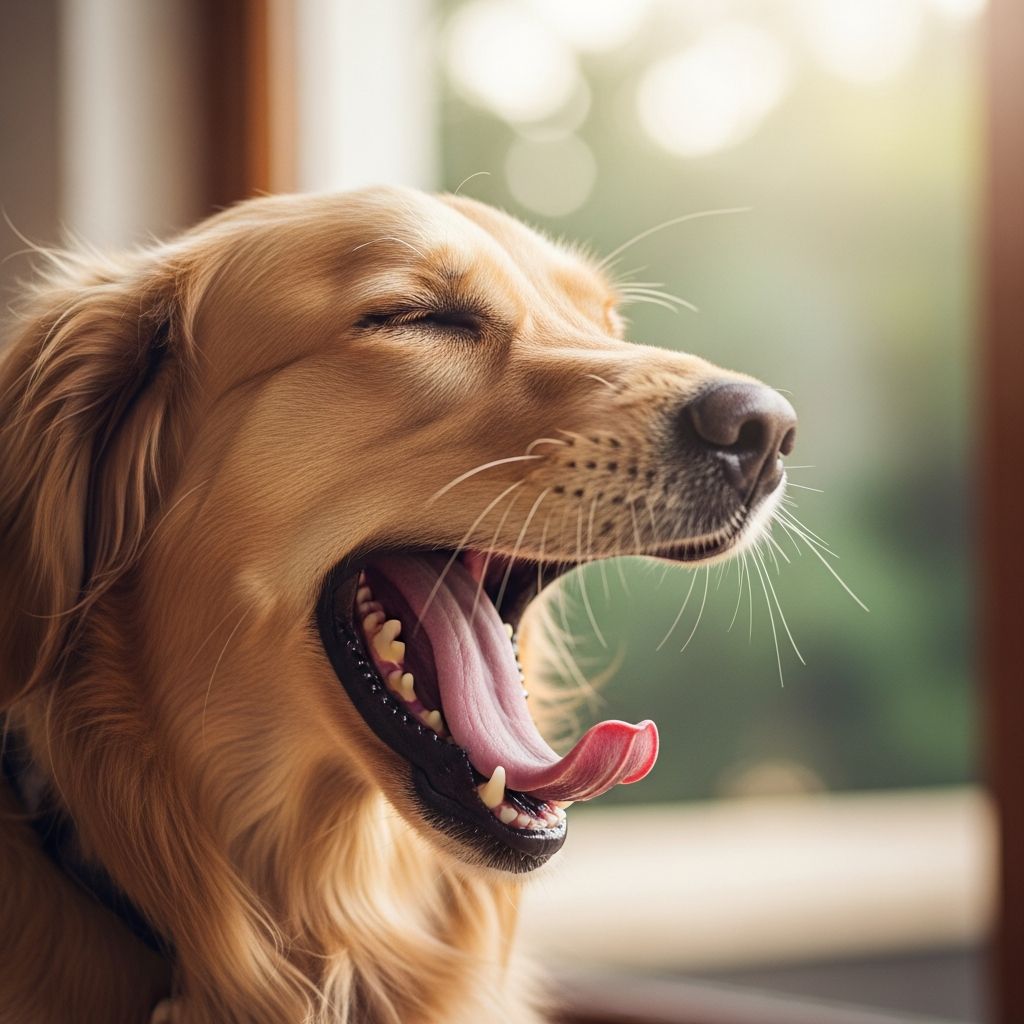
Dogs yawn for a variety of reasons, ranging from basic physiological needs to complex social and emotional signals. This behavior, often overlooked, provides valuable clues into a dog’s state of mind and body.
The Science Behind a Dog’s Yawn
Yawning in dogs serves multiple functions, much like in humans. Physiologically, it may increase oxygen intake or regulate brain temperature. Research indicates that yawning helps transition between states of alertness, such as waking up or calming down.
In canines, this reflex ties closely to brain chemistry changes, including shifts influenced by neurotransmitters like serotonin and dopamine, which impact mood and arousal levels. Unlike humans, where yawns often signal boredom, dog yawns frequently communicate emotions or needs.
Primary Triggers for Yawning in Dogs
Dogs exhibit yawns in response to everyday situations. Here’s a breakdown of common causes:
- Tiredness and Sleep Transitions: The most straightforward reason is fatigue. Yawns often precede naps or follow rest, aiding the shift from sleep to wakefulness.
- Physical Discomfort: Stretching the jaw and neck muscles during a yawn relieves tension built up from inactivity.
- Arousal Regulation: Yawns maintain vigilance, crucial for predators like dogs, by boosting alertness through oxygen flow.
Observing context helps distinguish these. A yawn during play might indicate overstimulation, while one in quiet moments suggests drowsiness.
Yawning as a Stress Indicator
One of the most frequent non-tiredness reasons is stress. Dogs yawn to self-soothe during tense moments, such as vet visits or encounters with unfamiliar dogs.
Studies link frequent yawning to mild anxiety or discomfort. For instance, repetitive yawns accompany body language like lip licking, ear flattening, or avoidance, signaling unease. Heart rate monitoring in experiments shows elevated responses in stressful scenarios, though not always tied directly to yawning.
To address stress yawns:
- Identify triggers: Loud noises, separations, or new environments.
- Provide comfort: Use familiar toys or a quiet space.
- Consult professionals: Persistent yawning may warrant a vet check for pain or health issues.
Contagious Yawning: A Sign of Empathy?
Dogs uniquely catch yawns from humans, not other dogs, hinting at deep interspecies bonds. In a study of 25 dogs, 13 yawned more after owners’ yawns than strangers’, with no heart rate spikes indicating stress.
This phenomenon, observed across breeds, strengthens with familiarity. Dogs yawned 1.0 times on average during owner yawns versus 0.2 for controls. Researchers attribute this to empathy, where mirror neurons trigger imitation, fostering synchronization.
| Model Type | Yawn Frequency (Avg) | Heart Rate Change |
|---|---|---|
| Familiar Owner | 1.0 | No significant increase |
| Unfamiliar Person | Lower | No significant increase |
| Control Movements | 0.2 | Stable |
This table summarizes key findings from empirical research, ruling out distress as the sole cause.
Distinguishing Yawn Types by Context
Not all yawns are equal. Context reveals intent:
- Social Submission: In groups, yawns signal deference, calming potential conflicts.
- Frustration in Training: When confused, dogs yawn to cope with pressure.
- Pain-Related: Excessive yawning pairs with limping or whining, possibly indicating illness.
Monitor patterns: Isolated yawns are normal; clusters suggest underlying issues.
Health Concerns Linked to Excessive Yawning
While usually benign, frequent yawning can flag problems. Conditions like respiratory issues, dental pain, or neurological disorders may provoke it. Vets recommend tracking alongside symptoms like lethargy or appetite loss.
Recent studies emphasize ruling out medical causes before behavioral ones. For example, heart rate data helps differentiate stress from physiological distress.
Enhancing Communication Through Yawn Awareness
Understanding yawns improves owner-dog bonds. Test contagion: Yawn near your dog and note responses, which correlate with attachment strength.
Training tip: During sessions, pause if yawns appear, reducing frustration and building trust. This fosters empathy, mirroring dogs’ responses to us.
FAQs on Dog Yawning
Why does my dog yawn when I’m not tired?
Your dog may be stressed, empathizing, or self-calming. Observe surroundings for clues.
Is contagious yawning proof dogs feel empathy?
It suggests rudimentary empathy, especially with owners, supported by studies excluding stress.
Should I worry about constant yawning?
Yes, if paired with other signs like whining or hiding. See a vet to rule out health issues.
Do all dogs catch yawns?
Not all; about half in studies do, more with familiar people.
Can yawning indicate pain?
Possibly, especially if excessive or with physical symptoms. Professional evaluation is key.
Practical Tips for Dog Owners
To interpret and respond to yawns effectively:
- Keep a journal: Note time, context, and accompanying behaviors.
- Reduce stressors: Use desensitization for triggers like car rides.
- Promote bonding: Regular play enhances empathetic responses.
- Health checks: Annual exams catch issues early.
By tuning into yawns, owners gain insights into their dog’s inner world, leading to happier, healthier pets.
References
- Familiarity Bias and Physiological Responses in Contagious Yawning by Dogs — PMC/NCBI. 2013-07-24. https://pmc.ncbi.nlm.nih.gov/articles/PMC3737103/
- Your Dog Understands Your Yawn — Roger Abrantes, Ethology.eu. Accessed 2026. https://ethology.eu/your-dog-understands-your-yawn/
- ScienceShot: Deciphering a Dog’s Yawn — Science/AAAS. 2013. https://www.science.org/content/article/scienceshot-deciphering-dog-s-yawn
- Why Do Dogs Yawn? Possible Causes and What To Do — PetMD. Recent update. https://www.petmd.com/dog/general-health/why-do-dogs-yawn
- Does Your Dog Yawn Because He Cares? — Answers in Genesis. Recent. https://answersingenesis.org/animal-behavior/does-your-dog-yawn-because-he-cares/
- Did Your Dog Just Yawn Because You Did? — AKC. Recent. http://www.akc.org/expert-advice/lifestyle/do-dogs-yawn-because-owners-do/
- Dogs catch human yawns — Royal Society Publishing. 2008-06-18. https://royalsocietypublishing.org/rsbl/article/4/5/446/50001/Dogs-catch-human-yawns
Similar Articles





Read full bio of Sneha Tete