

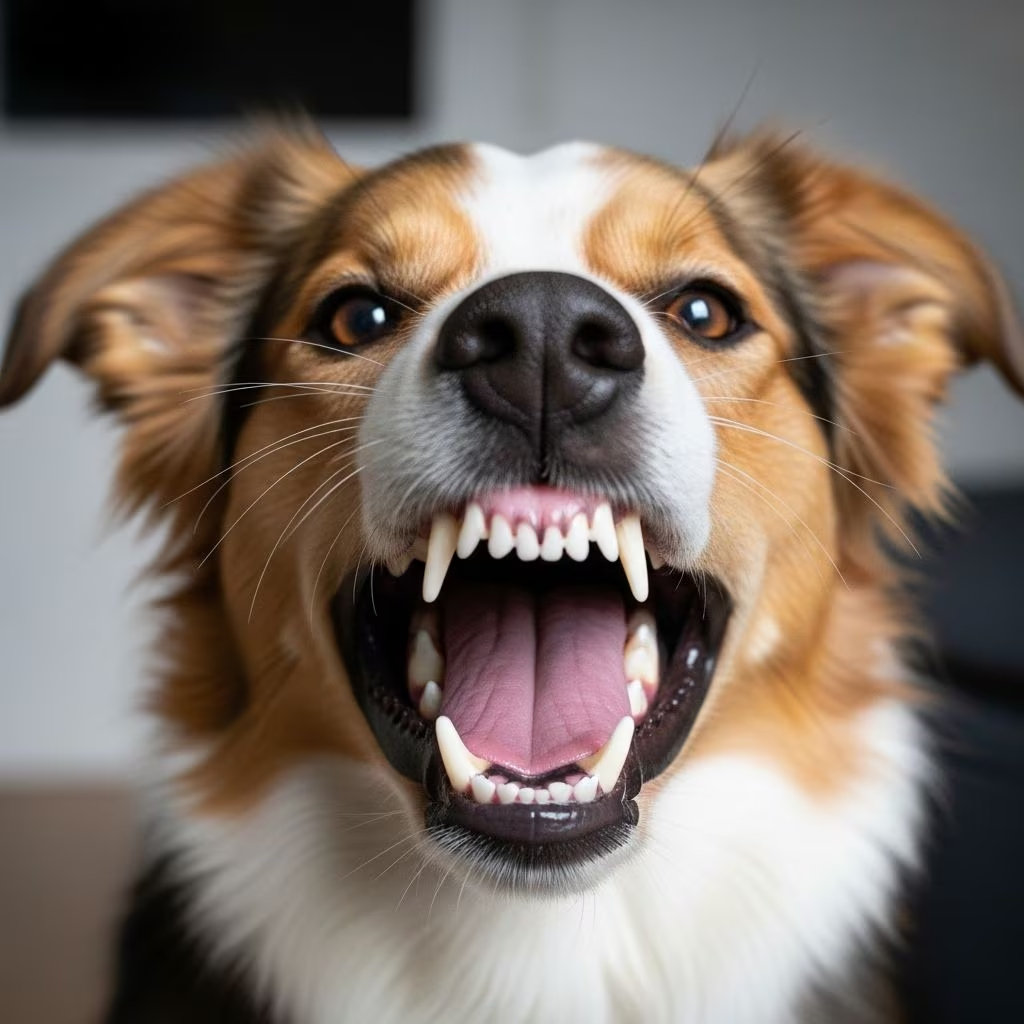
Dogs communicate volumes through body language, and baring teeth stands out as one of the most misinterpreted signals. Far from always signaling danger, this behavior spans friendly intentions to urgent warnings, depending on context, posture, and accompanying cues. Understanding these nuances fosters stronger bonds and prevents mishaps.
Understanding Canine Facial Expressions
Canine facial signals evolved for survival, conveying emotions without words. Teeth-baring, or lip-lifting, varies from a relaxed ‘smile’ to a tense snarl. Key is observing the whole dog: ears, tail, eyes, and stance provide clarity. Relaxed muscles suggest positivity; stiffness indicates tension.
Context matters immensely. A dog approaching with loose movements likely means goodwill, while a frozen posture warns of discomfort. Owners attuned to these signs respond appropriately, enhancing safety and trust.
Benign Reasons: When Teeth Mean No Threat
Not all teeth displays spell trouble. Many reflect joy, respect, or invitation to engage. Recognizing these prevents overreactions that could confuse or scare the dog.
The Submissive or Friendly Grin
A submissive grin appears as a soft, open-mouthed smile with visible teeth, often during greetings. The dog approaches willingly, body relaxed, tail wagging gently, ears neutral or forward. This signals deference or happiness, acknowledging the owner’s leadership.
- Common in reunions after absence or meeting familiar people.
- Puppies use it to appease adults during rough play.
- Accompanied by lip-licking, soft eyes, or play bows.
Respond positively: smile back, use calm praise. Avoid startling touches to maintain the gesture’s calming intent.
Playful Displays During Fun
In play, dogs bare teeth amid excited chomps or mock bites. Look for play bows (front low, rear high), wagging tail, bouncy steps, and ‘play sneezes’—sharp exhales. Teeth show naturally as mouth opens wide.
This occurs in tug-of-war, chase games, or dog-dog romps. Intensity rises but remains controlled; dogs self-handicap to avoid injury.
| Play Signal | Description | Teeth Role |
|---|---|---|
| Play Bow | Chest to ground, butt up | Open mouth with teeth visible |
| Wagging Tail | Broad, full swings | Teeth flash in excitement |
| Bounce | Light, rhythmic hops | Grinning during mock bites |
Encourage safely: supervise multi-dog play, rotate toys to curb overstimulation.
Warning Signals: Recognizing Aggression Precursors
When teeth-baring pairs with tension, it’s a clear ‘back off’ message. Ignoring escalates risks; respecting it de-escalates.
Territorial and Resource Guarding
Dogs protect valuables—food, toys, beds, owners—with stiff posture, hard stare, growls, and lip-curling over items. Mothers guard pups fiercely; some breeds instinctually patrol property.
- Rigid body, forward-leaning.
- Low growls escalating to snaps.
- Triggers: intruders, rival dogs nearing resources.
Management: feed separately, trade-up toys (offer better for guarded item). Professional trainers help recondition.
Leash and Barrier Frustration
Leashes hinder natural curving approaches, sparking leash reactivity: lunging, barking, teeth flashes at passersby. Barriers like fences provoke similar fence-fighting.
Solution: train loose-leash walking, counter-condition with treats at distance. Use baby gates indoors to ease tensions.
Fear and Stress Responses
Fear drives defensive teeth-baring. The dog feels cornered, signaling ‘leave me alone’ via whale eye (whites showing), tucked tail, trembling, cowering.
Triggers and Body Language
Unfamiliar stimuli—loud sounds, strangers, vets—prompt this. Unlike aggression, the dog avoids engagement, body shrinking away.
- Averted gaze, piloerection (raised hackles).
- Yawning, lip-licking as pacifiers.
- Sudden onset in new environments.
Response: remove stressor calmly, no punishment. Desensitize gradually with positive associations.
Health-Related Causes: When Pain Prompts Defense
Sudden or touch-sensitive teeth-baring signals discomfort. Dental woes—tooth decay, fractures—or injuries make mouths tender.
Observe: drooling, pawing face, bad breath, reluctance to eat. Arthritis or internal pain causes snapping if bumped.
- Sudden behavior shifts in seniors.
- Avoidance of head pets.
- Swollen gums or bleeding.
Prioritize vet exam: cleanings prevent escalation. Pain meds restore normalcy.
Contextual Analysis: Reading the Full Picture
No single cue suffices; integrate all. Environment clarifies intent: greetings favor grins, intrusions aggression.
| Behavior Type | Posture | Tail | Ears | Action |
|---|---|---|---|---|
| Friendly Grin | Relaxed | Wag loose | Forward/soft | Approach eagerly |
| Aggressive Snarl | Stiff | High/still | Back/pinned | Freeze, lunge |
| Fearful | Crouched | Tucked | Flat | Retreat, tremble |
| Playful | Bouncy | Fast wag | Pricked | Bow, nip gently |
Video interactions for review; apps track patterns.
Safe Responses and Prevention Strategies
Never punish signals—they communicate needs. Instead:
- Give space: Step back slowly, no eye contact.
- Desensitize: Pair triggers with rewards incrementally.
- Exercise: Daily outlets reduce stress buildup.
- Training: Positive reinforcement builds confidence.
For multi-dog homes, establish routines minimizing rivalry. Consult certified behaviorists for persistent issues.
Common Myths Debunked
Myth 1: All teeth-baring means attack. Reality: Often appeasement.
Myth 2: Submissive grins are rare. Reality: Common in sociable breeds.
Myth 3: Ignore to toughen up. Reality: Suppresses communication, worsens fear.
FAQs
Why does my dog show teeth when happy?
Likely a submissive grin signaling joy and respect. Check relaxed body.
Is teeth-baring always bad?
No, context-dependent: play or grins are fine; stiffness warns.
What if my dog snaps without warning?
Rule out pain via vet, then behaviorist for thresholds.
How to stop resource guarding?
Trade-ups, separate feeding; pro training essential.
Can training eliminate all teeth-showing?
Reduce intensity, but it’s natural communication—manage, don’t erase.
References
- Why Does My Dog Show Their Teeth? — Waggle. 2023. https://mywaggle.com/blogs/pet-behaviour/why-does-my-dog-show-their-teeth
- Why Do Dogs Show Their Teeth? — WebMD. 2024-05-15. https://www.webmd.com/pets/dogs/why-do-dogs-show-their-teeth
- What Does It Mean When a Dog Shows Their Teeth? — Rover.com. 2023-11-10. https://www.rover.com/blog/dog-showing-teeth/
- Why Does Your Dog Bare Its Teeth? — DoggieLawn. 2024. https://doggielawn.com/blogs/blog/baringteeth
- What it Means When Your Dog Shows Their Teeth — Pampered Pets Inc. 2022-08-20. https://www.pamperedpetsinc.com/blog/what-it-means-when-your-dog-shows-their-teeth
- Why Do Dogs Show Their Teeth? — Whole Dog Journal. 2024-02-14. https://www.whole-dog-journal.com/behavior/why-do-dogs-show-their-teeth/
- Why Does My Dog Show Their Teeth? — Beyond the Dog Training. 2023. https://beyondthedogtraining.com/dog-training/why-does-my-dog-show-their-teeth/



