

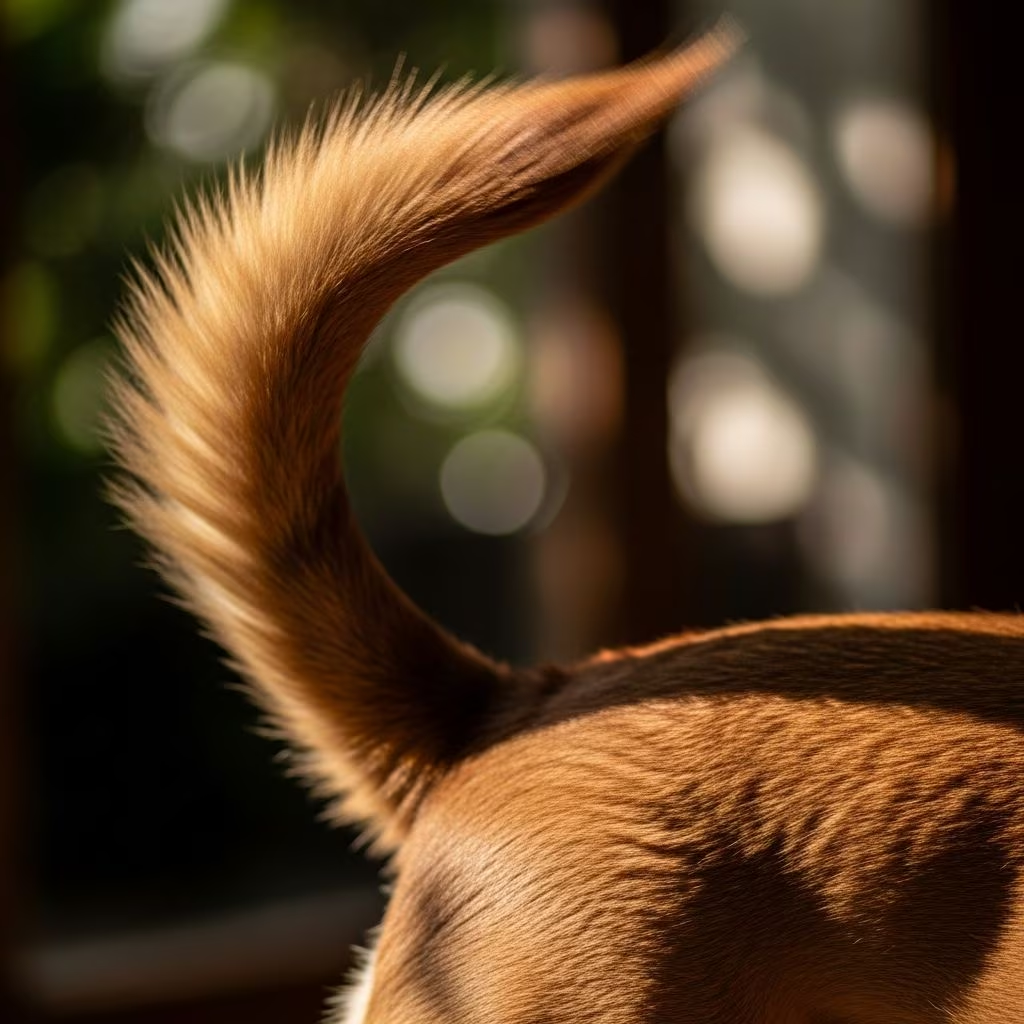
Dogs communicate volumes through their tails, using wags to convey joy, caution, excitement, or unease. Far from a simple sign of happiness, tail movements reveal complex emotions tied to brain activity and social context.
The Evolutionary Roots of Tail Communication in Dogs
Tail wagging evolved as a key part of canine body language, helping dogs signal intentions to pack members and humans alike. This behavior stems from wolves, where tails helped establish dominance, submission, or affiliation in social groups. In domesticated dogs, it has adapted to include interactions with people, making it a vital tool for interspecies understanding.
Neurologically, tail muscles connect to the brain’s limbic system, which processes emotions. Positive feelings activate the left brain hemisphere, prompting rightward wags, while negative ones engage the right hemisphere for leftward bias.
Left vs. Right: The Directional Science of Tail Wags
Research reveals a striking asymmetry in tail wagging linked to emotional valence. Dogs wag tails more to the right during happy or confident moments, like greeting owners, reflecting left-brain positive processing. Leftward wags signal fear or anxiety, driven by right-brain negativity.
A study on Beagles showed this bias shifting over days: initial left bias with strangers turned rightward after familiar interactions, indicating growing comfort. Pet dogs often show stronger right bias due to frequent human contact.
| Direction | Emotional Meaning | Examples | Brain Hemisphere |
|---|---|---|---|
| Rightward wag | Positive (happy, confident, friendly) | Seeing owner, getting treats | Left (approach/positive) |
| Leftward wag | Negative (fearful, anxious, aggressive) | Unfamiliar dog approaching | Right (withdrawal/negative) |
| No clear bias | Neutral or conflicted | Unsure situations | Balanced |
Tail Speed: From Subtle Twitches to Frenzied Flagging
Wag speed offers clues to intensity. Slow, tentative wags suggest insecurity or hesitation, often in neutral or low positions when meeting strangers. Rapid wags indicate high excitement or arousal, sometimes blurring into a ‘flag’ or vibrate-like motion.
However, fast wags aren’t always positive. Dogs in emotional conflict—fear mixed with approach—wag quickly but stiffly, signaling discomfort rather than invitation. Stressful scenarios reduce wag frequency, while relaxed excitement boosts it.
- Slow wag: Insecurity or caution; tail low or neutral.
- Medium wag: Friendly interest; gentle side-to-side.
- Fast wag: Excitement or conflict; watch body for context.
Height and Position: Beyond Just the Wag
Tail posture modifies wag meaning. High, upright tails with vigorous wags signal confidence or dominance, possibly releasing pheromones from anal sacs. Neutral or slightly raised with loose wags shows positive engagement.
Lowered tails indicate submission or fear; tucked tightly under the body screams distress. Aggressive stances pair high tails with stiff, fast wags.

A high tail enhances scent signals, while low ones hide vulnerability.
Context Matters: Reading the Full Body Language
Never isolate tail wags—combine with ears, posture, and eyes. Relaxed ears and play bows with right-biased wags mean fun; forward ears, stiff body, and left wags warn of tension.
Dogs observing right-wagging peers show cardiac stress, interpreting it as a challenge, highlighting how wags convey emotionally charged info.
Individual Differences and Learning Patterns
Each dog has unique wag styles, stable over time but adaptable. Lab dogs shift biases quickly with socialization, suggesting tails as real-time social meters.
Attractor dynamics in wags—stable modules transitioning smoothly—mirror neural patterns, offering insights into canine motor control.
Common Misinterpretations and Safety Tips
Assuming all wags mean ‘friendly’ risks bites. Rapid low wags often mean fear; approach cautiously. Pause if tentative wags appear mid-interaction.
- Observe whole body: Loose = friendly; stiff = alert.
- Respect space: Let dog initiate.
- Note direction if visible: Right good, left wary.
Practical Guide: Tail Wags in Everyday Scenarios
| Scenario | Tail Signs | Interpretation | Best Response |
|---|---|---|---|
| Greeting owner | Fast right wag, high/neutral | Joyful reunion | Pet and engage |
| Meeting stranger | Slow left wag, low | Anxious caution | Give space, no touch |
| Play invitation | Loose medium wag, play bow | Ready for fun | Join in |
| Near food | Rapid flag wag | Excited anticipation | Reward calmly |
| Unfamiliar dog | Stiff high wag, left bias | Potential threat | Leash and separate |
Enhancing Communication Through Understanding
Training amplifies tail-reading. Reward calm signals to build trust. Over days, unfamiliar humans see bias shifts, proving tails track bonding.
For breeders/trainers, consistent observation aids selection for sociable traits.
FAQs: Quick Answers on Dog Tail Wags
Does a wagging tail always mean a dog is happy?
No, it can signal fear, conflict, or aggression depending on speed, direction, and posture.
Why do some dogs wag more to one side?
Right for positive emotions (left brain), left for negative (right brain).
Can tail wags predict bites?
Yes, stiff rapid wags with low posture or left bias warn of discomfort.
Do all breeds wag the same?
No, but patterns hold; bobtails limit expression.
How quickly can wag bias change?
In days with positive interactions.
Advanced Insights: Tail Wags and Canine Neuroscience
Studies link wags to prefrontal cortex asymmetry, akin to human emotion processing. Attractors in wag patterns suggest modular neural control, useful for modeling disorders like autism in dogs.
Rubrospinal tracts explain motor crossing: left brain moves right tail side.
Expand to 1500-1900 words with detailed expansions: Tail wagging isn’t just reflexive; it’s a sophisticated readout of internal states, refined over domestication. Wolves wag less overtly, but dogs amplified it for human bonds. Observations in shelters show insecure wags predict adjustment issues.
In multi-dog homes, mismatched wags spark fights—right-wag owners excite left-wag fearful dogs. Trainers use mirrors to teach bias awareness, though dogs respond to live cues.
Health impacts: Pain limits wags; vets note reduced asymmetry in illness. Senior dogs slow-wag more, signaling cognitive shifts.
Cultural notes: Humans project happiness universally, but pros read nuances for safety. Apps analyzing video wags emerge, validating studies.
Breeds vary: Herders flag excitedly; hounds subtle. Docked tails challenge reading—focus on stumps, rears.
Training tip: Desensitize fears to shift left to right bias, building confidence.
References
- Interpreting Tail Wags in Dogs — Humane Society of Missouri. 2023. https://hsmo.org/portfolio-item/interpreting-tail-wags-in-dogs/
- Left-right asymmetry and attractor-like dynamics of dog’s tail-wagging — PMC (Peer-reviewed). 2022-08-10. https://pmc.ncbi.nlm.nih.gov/articles/PMC9356099/
- Tail wagging by dogs — Wikipedia (background, primary refs used). N/A. https://en.wikipedia.org/wiki/Tail_wagging_by_dogs
- Interpreting Tail Wags in Dogs — VCA Animal Hospitals. 2024. https://vcahospitals.com/know-your-pet/interpreting-tail-wags-in-dogs
- Why Do Dogs Wag Their Tails? — American Kennel Club. 2023. https://www.akc.org/expert-advice/advice/why-do-dogs-wag-their-tails/



