

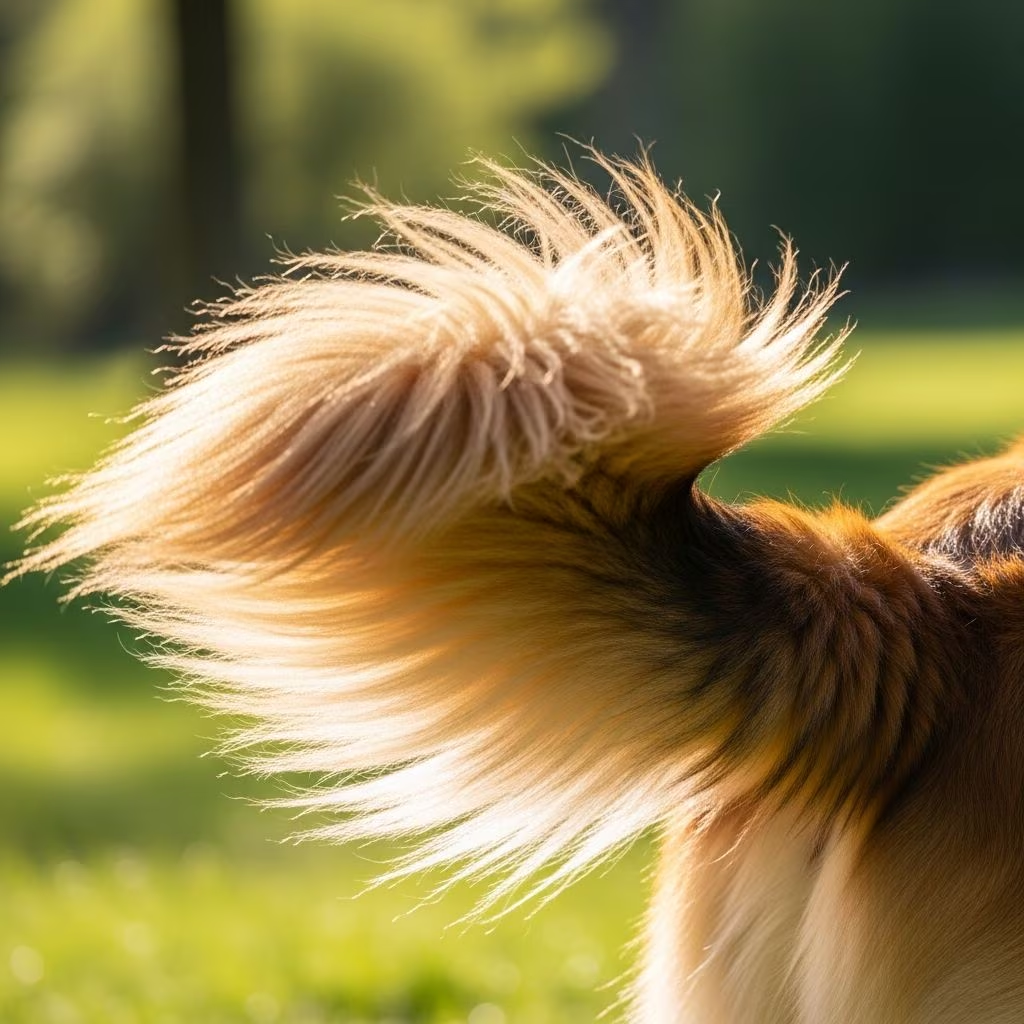
Dogs communicate a wealth of information through their tails, using position, speed, and direction to convey emotions ranging from delight to distress. Mastering these signals enhances owner-pet relationships and prevents misunderstandings that could lead to bites or stress.
The Role of Tails in Canine Expression
Tails serve as dynamic tools in a dog’s nonverbal vocabulary, visible even from afar due to evolutionary adaptations like bushy fur or color contrasts that amplify motion. Unlike human speech, canine communication relies on visual cues, with tails broadcasting states of arousal, intent, or submission to both people and other animals.
Emotional arousal triggers tail movement, but the interpretation hinges on context: a wag might signal joy or frustration depending on accompanying postures like ear position or body stiffness. Owners who ignore these subtleties risk misreading friendliness as aggression, as rapid wags can precede snaps if the dog feels overwhelmed.
Interpreting Tail Positions
Tail height relative to the dog’s neutral position—typically relaxed at spine level—reveals confidence levels. Higher tails indicate assertiveness, while lower ones suggest caution or appeasement.
- Vertical Tail: Held straight up or arched over the back, this posture signals high arousal or dominance, often releasing pheromones from anal glands to mark territory or assert status.
- Neutral Hold: A still tail at mid-height shows calm observation, pausing interactions when paired with a stiff body.
- Lowered Tail: Drooping below neutral conveys uncertainty or a desire to de-escalate, progressing to full tucking in fear.
These positions must be read alongside eyes, ears, and posture for accuracy; a high tail with soft eyes means playfulness, but with a hard stare, it warns of threat.
Understanding Wag Directions and Speeds
Direction matters: rightward wags (from the dog’s view) correlate with positive emotions like happiness, while leftward leans toward fear or negativity, as shown in studies analyzing large dog samples. Speed further refines the message—broad, vigorous sweeps express exuberance, whereas slow, stiff swings hint at ambivalence.
| Wag Type | Description | Emotional Meaning | Context Example |
|---|---|---|---|
| High & Fast Right | Rapid, wide arcs to right | Excitement, confidence | Greeting owner home |
| Low & Slow Left | Slow sweeps to left | Insecurity, apprehension | Unfamiliar vet visit |
| Stiff & Narrow | Quick, tight side-to-side | Arousal, potential aggression | Staring at another dog |
| Broad Helicopter | Full circles | Playful joy | During fetch game |
Context is crucial; a right wag during play reassures safety, but the same in a tense standoff might build to conflict.
Tail Signals in Emotional Contexts
Signs of Joy and Relaxation
Relaxed wags at mid-level with loose body language denote friendliness and openness to interaction. Play bows or bouncy steps amplify this, inviting engagement without tension.
Indicators of Fear and Submission
A tucked tail pressed against the belly screams fear or appeasement, often with crouched posture, flattened ears, and averted gaze. This defensive stance aims to appear non-threatening, common in scary novel environments.
Cues of Aggression and Alertness
Stiff, high tails with minimal wag signal readiness or dominance, escalating if ignored. Paired with forward-leaning posture and raised hackles, it warns of impending action—back off to de-escalate.
Tail Language Among Dogs
In dog-to-dog meetings, tails establish hierarchy swiftly. A loose mid-wag shows play intent, stiff high sets boundaries, and tucked yields space. Scent dispersal via wagging aids recognition, embedding emotional data in pheromones.
Misreads occur when humans approach wagging dogs presuming friendliness, overlooking stiff tails signaling overload. Observe mutual comfort before intervening.
Challenges with Altered Tails
Docked or short-tailed breeds compensate via ears, eyes, posture, and whines, demanding holistic observation. Natural bobtails limit motion, shifting reliance to facial cues and vocalizations for clear messaging.
Enhancing Communication Skills
Practice by noting tail shifts in varied scenarios: walks, greetings, vet visits. Video recordings aid review, noting patterns unique to your dog. Positive reinforcement for calm signals builds trust, reducing fear responses over time.
Combine tail reading with overall body assessment—relaxed mouth means calm, lip-licking signals stress. This comprehensive approach fosters safer, empathetic interactions.
Frequently Asked Questions
Does every wag mean a dog is happy?
No, wags indicate arousal; context, direction, and speed determine if it’s joy, frustration, or threat.
Can tail direction really show emotions?
Yes, research confirms right wags for positives, left for negatives.
What if my dog has no tail?
Focus on ears, posture, eyes, and sounds for full communication.
Why do tails release scents?
Glands at the base spread pheromones during wags, sharing identity and mood.
How do I safely approach a wagging dog?
Check whole body; avoid if stiff or high-tailed.
Practical Tips for Daily Observation
- Start sessions in low-stress home settings to baseline neutral tails.
- Note changes during triggers like strangers or loud noises.
- Use mirrors or apps to capture subtle shifts unnoticed in real-time.
- Consult vets or trainers for breed-specific quirks.
- Reward desired signals to encourage clear expression.
Consistent attention transforms vague hunches into confident reads, averting mishaps and deepening bonds.
References
- Understanding Your Dog’s Tail Language — The Trusted Companion. 2023. https://www.thetrustedcompanion.com/understanding-your-dogs-tail-language
- Decoding Dog Communication: Unraveling the Canine Language — Canine Styles. 2023. https://www.caninestyles.com/blogs/news/decoding-dog-communication-unraveling-the-canine-language
- Interpreting Tail Wags in Dogs — VCA Animal Hospitals. 2024. https://vcahospitals.com/know-your-pet/interpreting-tail-wags-in-dogs
- Understanding Dog Tail Movements: A Detailed Guide — Noble Canine. 2023. https://www.noble-canine.com/post/understanding-dog-tail-movements-a-detailed-guide-on-canine-communication
- Wagging Tails and Happy Hearts — DoggieLawn. 2023. https://doggielawn.com/blogs/blog/wagging-tails-and-happy-hearts-unveiling-the-science-behind-your-dogs-favorite-greeting
- How to Read Dog Body Language — American Kennel Club. 2024. https://www.akc.org/expert-advice/training/how-to-read-dog-body-language/



