

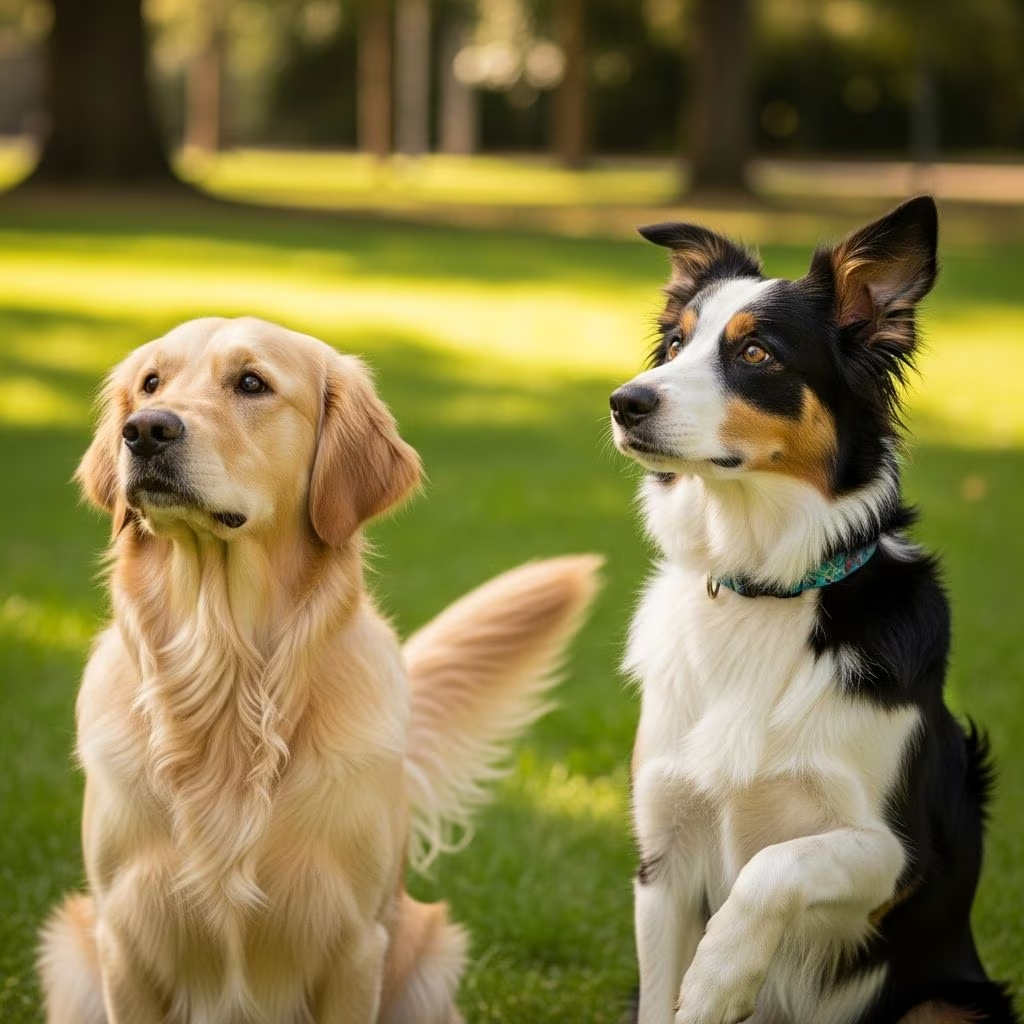
Dogs have evolved alongside humans for thousands of years, developing sophisticated ways to convey their emotions, needs, and intentions. Unlike human speech, canine communication relies heavily on non-verbal cues, making it essential for pet owners to learn these signals for a harmonious relationship. This article breaks down **10 primary methods** dogs use to ‘talk’ to us, drawing from scientific research on their cognitive and social adaptations.
The Evolutionary Roots of Canine-Human Dialogue
Domestication has uniquely equipped dogs to interpret and respond to human cues, surpassing even our closest primate relatives in some skills. Studies show dogs process human gestures like pointing more effectively than chimpanzees, a trait emerging early in puppyhood due to genetic selection. This interspecies bond is reinforced by shared oxytocin release during eye contact and touch, fostering trust and empathy.
Dogs blend visual, auditory, olfactory, and tactile signals, often combining them for nuanced messages. Understanding this multi-modal system prevents misinterpretations, as dogs are ‘watchers’ rather than ‘listeners’ compared to humans.
1. Tail Movements: The Wagging Code
A dog’s tail is a dynamic billboard of emotion. Broad, loose wags from side-to-side typically signal happiness or excitement, especially when the whole rear end sways. However, stiff, high tails with rapid flicks can indicate alertness or mild aggression, while tucked tails convey fear or submission.
Research using motion-capture technology reveals wag direction matters: left-leaning wags occur when seeing familiar people, right-leaning for strangers, reflecting brain hemisphere differences. Observe tail speed and height alongside body posture for full context.
2. Ear Positions: Listening to the Unspoken
Ears forward and perked suggest curiosity or attentiveness, as dogs direct them toward interesting sounds or sights. Flattened ears against the head often mean fear, submission, or defensiveness, signaling a need for space.
Breeds with floppy ears may rely more on other cues, but attentive owners note subtle tilts. Combined with eye contact, forward ears invite interaction, strengthening cooperative communication honed through domestication.
3. Eye Contact and Gaze: Building Trust
Soft, blinking gazes indicate relaxation and affection, triggering oxytocin in both dog and owner. Avoid prolonged staring, which dogs perceive as a threat, potentially leading to avoidance or growls.
Dogs excel at following human gazes and pointing gestures, a skill tested in experiments where they locate hidden treats accurately, outperforming wolves and apes. This gaze-following boosts training success and emotional syncing.
4. Facial Expressions: Reading the Muzzle
A relaxed, open mouth with a loose tongue shows contentment, akin to a human smile. Lip licking can signal stress or appeasement, while raised lips revealing teeth warn of discomfort.
Dogs discern human facial emotions—happy faces prompt play, angry ones caution—via cognitive processing refined over millennia. High-speed camera studies capture these micro-expressions for precise interpretation.
5. Body Posture: The Full Picture
An upright, leaning-forward stance with weight shifted signals confidence or challenge. Play bows—front down, rear up—invite fun, while a lowered head and averted gaze show deference.
Ambivalent postures, like a raised paw during conflict, reflect internal tension. Graduated signals escalate from subtle to bold if ignored, emphasizing observation of the whole body.
6. Vocalizations: From Barks to Whines
Barks vary by pitch, duration, and repetition: short, high-pitched bursts mean excitement, prolonged lows indicate alarm. Whines express need or anxiety, growls warn of boundaries.
Algorithms analyzing thousands of barks differentiate play from threat, revealing context-specific patterns. Dogs modulate volume based on human response, adapting to our auditory preferences.
7. Pawing and Nudging: Direct Requests
Gentle paw lifts or nose nudges request attention, food, or walks. Persistent pawing might signal boredom or discomfort, urging owners to check for issues like hunger or pain.
This tactile method leverages dogs’ sensitivity to touch, mirroring human hand signals they readily comprehend.
8. Scent Marking: Invisible Messages
Dogs deposit pheromones via urine or glands to claim territory or share identity. Sniffing greetings gather social intel, conveying mood and health.
Though less visible to us, respecting scent boundaries prevents stress. Neutering alters marking but not communication intent.
9. Leaning and Proximity: Seeking Connection
Leaning against legs or sitting close demonstrates security and love, releasing bonding hormones. Backing away or freezing indicates overwhelm.
This proximity seeking evolved from pack dynamics, positioning humans as family.
10. Yawning and Licking: Stress Signals
Displacement yawning or lip licking during tension appeases or self-soothes. Excessive licking at owners can plead for calm.
Recognizing these prevents escalation, promoting empathetic responses.
Common Misinterpretations and How to Avoid Them
| Signal | Common Myth | Actual Meaning |
|---|---|---|
| Tail Wagging | Always Happy | Varies by speed/height; fast high wag can be arousal/aggression |
| Eye Contact | Affectionate Stare | Intense stare = threat; soft blinks = love |
| Barking | Random Noise | Specific patterns for alert, play, demand |
| Rolling Over | Play Invitation | Often submission/fear; check context |
Misreading leads to frustration; holistic observation clarifies intent.
Enhancing Mutual Understanding
Respond consistently: reward desired signals, ignore unwanted ones. Training amplifies cooperative cues, leveraging dogs’ gesture comprehension. Tech like eye-tracking refines research, benefiting everyday interactions.
- Use clear hand signals over words.
- Respect space during stress signals.
- Pair vocal tones with actions for tone association.
- Encourage eye contact gently for bonding.
Frequently Asked Questions
How do dogs learn human cues?
Through domestication and conditioning, dogs innately respond to gazes, points, and tones, skills emerging in puppies.
Can all dogs communicate the same way?
Breeds vary by ear/tail structure, but core signals are universal; individuals differ by experience.
What if my dog avoids eye contact?
It may signal shyness or past trauma; build trust gradually without forcing.
Do dogs understand words or just tone?
Both: they learn ~200 words on average, but tone conveys emotion more potently.
How does age affect communication?
Puppies experiment boldly; seniors may slow but retain core skills.
References
- The Science of Canine Communication: Decoding How Dogs Understand Us — Recherche Kennels. 2023. https://recherchekennels.com/the-science-of-canine-communication-decoding-how-dogs-understand-us/
- Dog Communication — Wikipedia (referencing primary studies). 2024. https://en.wikipedia.org/wiki/Dog_communication
- Canine Communication – Interpreting Dog Language — Humane Society of Missouri (.org). 2023. https://hsmo.org/portfolio-item/canine-communication-interpreting-dog-language/
- Cooperative Communication with Humans Evolved to Emerge Early in Dog Puppies — PMC (NCBI, peer-reviewed). 2021-10-26. https://pmc.ncbi.nlm.nih.gov/articles/PMC8610089/



