

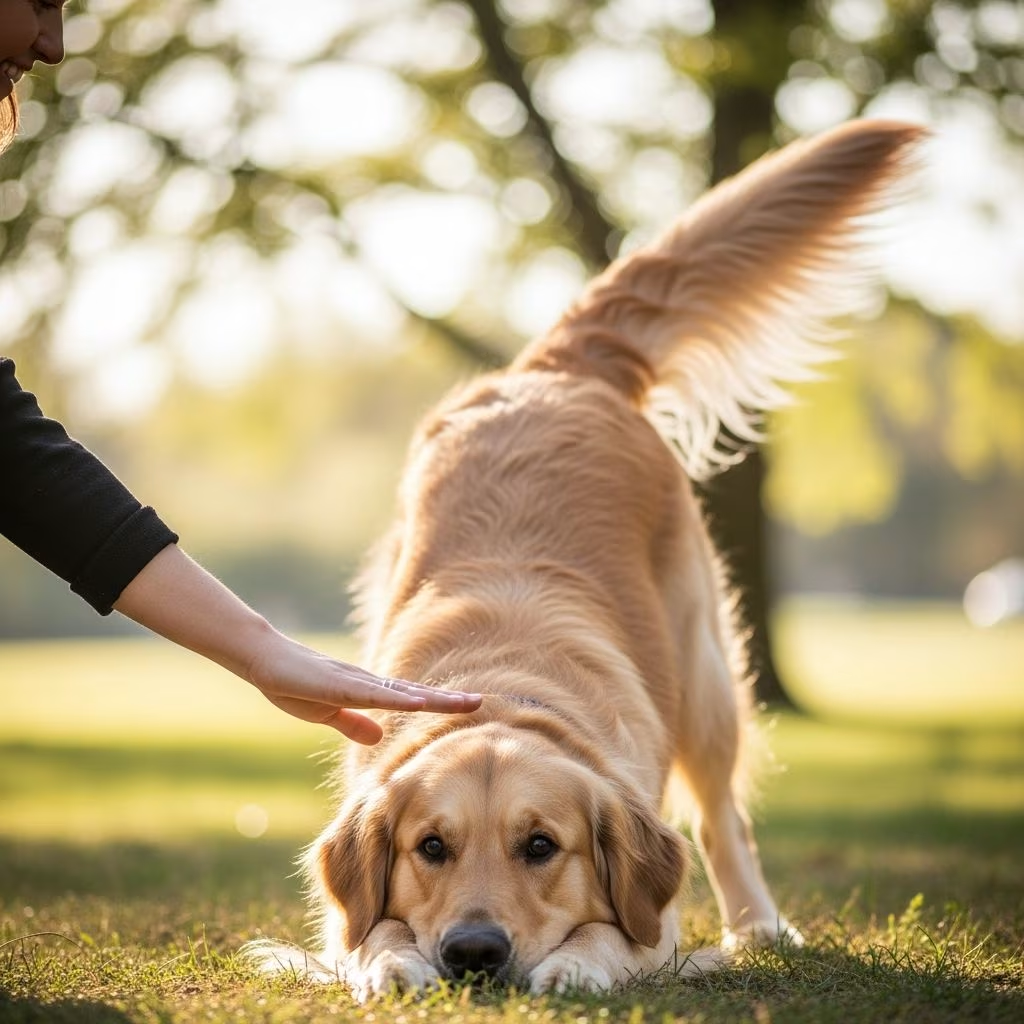
The play bow is one of the most recognizable and endearing behaviors in dogs, characterized by a dog lowering its front end to the ground while keeping the rear elevated, often with a wagging tail and bright eyes. This posture serves as a universal invitation to engage in fun activities, whether with other dogs or humans.
The Anatomy of a Play Bow
Observing a dog in a play bow reveals a precise posture: the elbows and chest drop close to the ground, front legs extended forward, hindquarters raised high, and typically a loose, wagging tail. This position stretches the dog’s muscles, resembling a natural stretch after rest, which has evolved into a clear communicative signal.
Experts note that the bow’s form shows remarkable consistency across breeds and individuals, indicating strong evolutionary stabilization. The stereotyped nature ensures it’s unmistakable, reducing misunderstandings during interactions.
Evolutionary Origins of the Play Bow
The play bow likely originated from simple stretching movements. When wild canids like wolves or ancestral dogs rose from rest, they extended their forelimbs in a bow-like stretch to loosen up before activity. Over time, through ritualization, this action became a deliberate signal: ‘I’m ready for play.’ Positive outcomes from such stretches—leading to social bonding and physical preparation—reinforced its use.
Research on coyotes, wolves, wolf-dog hybrids, beagles, and free-ranging dogs confirms the bow’s low variability in form and duration, hallmarks of important communicative and locomotor behaviors. This evolution via stabilizing selection made the bow a reliable ‘let’s play’ cue across species.
Primary Functions in Canine Socialization
- Play Invitation: The most common role is soliciting play from peers or humans, often at the start of interactions or to restart paused play sessions.
- Greeting Signal: Dogs frequently bow upon reuniting with owners after separations, combining it with eye contact and tail wags to express excitement and affection.
- Conflict Mitigation: During rough play, a bow clarifies that bites or chases are not aggressive, punctuating bouts to maintain fairness.
- Apology Gesture: If a dog accidentally plays too roughly, a quick bow conveys ‘sorry, let’s continue fairly,’ promoting forgiveness and trust.
Studies with wolf and dog puppies show nearly all bows occur in visual range of the recipient, underscoring its role as a visual cue. In one analysis, 100% of wolf puppy bows and 99% of dog puppy bows happened when partners could see them, with barks used if attention was lacking.
Why Dogs Bow Specifically to Humans
Dogs treat humans as social partners, extending play bows to us much like they do to other dogs. A bow upon your return home signals ‘I’ve missed you—let’s play!’ This inclusion of humans reflects domestication, where dogs view us as pack members.
However, context matters. A prolonged bow with a stiff tail might indicate uncertainty or conflict rather than pure play invitation, as the dog seeks reassurance in unfamiliar situations.
| Context | Typical Accompanying Signs | Meaning When Bowing to Human |
|---|---|---|
| Greeting after absence | Fast tail wag, direct gaze, relaxed body | Excited welcome and play request |
| Mid-play session | Barking, bouncing, loose posture | Invitation to continue fun |
| After rough contact | Quick drop, immediate retreat or softer approach | Apology to resume play |
| Uncertain scenario | Prolonged hold, slow wag or still tail | Seeking clarity, not full play |
Distinguishing Play Bows from Similar Postures
Not every front-down posture is a play bow. A true play bow features a perky rear, wagging tail, and forward-oriented body. In contrast:
- Stretch: Performed alone, without eye contact or audience, purely for physical relief.
- Submission: Entire body lowers, ears back, tail tucked—signaling fear, not fun.
- Conflict Bow: Held too long, with tense muscles, indicating ambivalence rather than joy.
Visual contact is key; bows rarely occur if the partner isn’t looking, confirming intentional communication.
Should You Reciprocate the Play Bow?
Responding to a play bow strengthens your bond. Mimicking the posture—by crouching low with hands forward—often elicits joyful responses, as dogs recognize it as reciprocity. Alternatively, use toys, gentle tosses, or enthusiastic voice to engage.
Avoid ignoring repeated bows, as it may frustrate the dog. Instead, match energy levels to teach boundaries, ensuring play remains positive and controlled.
Training Dogs to Bow on Command
Teaching the play bow as a trick leverages its natural inclination:
- Use a treat to lure the dog into position: hold it low to prompt front lowering.
- Mark with a clicker or ‘yes’ when rear stays up.
- Add a verbal cue like ‘bow’ before luring, fading treats over time.
- Practice in short sessions to build reliability.
This not only entertains but reinforces understanding of human cues, enhancing communication.
Play Bows Across Breeds and Ages
All dogs bow, but frequency varies. Puppies use it most prolifically during socialization, while seniors may bow less due to mobility. High-energy breeds like Border Collies or Labs bow often to initiate activity, whereas calmer breeds like Bulldogs do so more selectively.
Age studies reveal puppies bow almost exclusively in sight, refining the skill for adult social dynamics where bows also serve metacommunication—clarifying play intent amid ambiguous actions.
Health and Behavioral Insights from Bows
Frequent bowing indicates a healthy, playful dog, but reluctance might signal pain, arthritis, or boredom. Monitor for changes; a once-playful dog avoiding bows warrants a vet check.
In multi-dog homes, bows promote harmony by diffusing tension, embodying self-handicapping (e.g., dominant dogs rolling over) and honest signaling, where even mock aggression follows a bow without eliciting true fear 85% of the time.
Common Misinterpretations and Fixes
Owners sometimes mistake bows for aggression due to accompanying barks or lunges, but the posture clarifies play. Educate children and visitors: a bowing dog is friendly, not threatening.
To address overzealous bowing (e.g., jumping guests), redirect with commands like ‘sit’ before play, teaching impulse control without dampening spirit.
Frequently Asked Questions (FAQs)
What if my dog bows but doesn’t want to play?
A lingering bow with stiff posture signals uncertainty. Offer calm reassurance via petting or space, avoiding forced interaction.
Do all dogs play bow?
Yes, it’s innate, though expression varies by personality, health, and environment.
Is play bowing learned or instinctual?
Instinctual via evolution, refined through social experience.
Can play bows indicate dominance?
No, they’re submissive invitations for equality in play, often with role-reversals.
How often should dogs bow?
As needed for social needs; excessive might mean unmet exercise demands.
Enhancing Play Through Bow Awareness
Recognizing play bows enriches interactions, fostering trust and joy. By honoring these signals, owners create fair, fun environments mirroring canine social norms—essential for development and well-being.
References
- Understanding Dog Bows and Play Stances — Rover.com. Accessed 2026. https://www.rover.com/blog/dog-play-bow/
- Dogs at Play: How and Why Bowing Came to Mean “Let’s Play” — Psychology Today. 2025-03-01. https://www.psychologytoday.com/us/blog/animal-emotions/202503/dogs-at-play-how-and-why-bowing-came-to-mean-lets-play
- The Function of Play Bows in Dog and Wolf Puppies — Companion Animal Psychology. 2017-02-01. https://www.companionanimalpsychology.com/2017/02/the-function-of-play-bows-in-dog-and.html
- DOG BODY LANGUAGE- The Play Bow — YouTube (Dog Body Language channel). 2017 (approx.). https://www.youtube.com/watch?v=BGT9gTrmjSw



