
Decoding Your Dog’s Paw Touches
Unravel the hidden messages in your dog's gentle paw placements and strengthen your bond through better understanding.
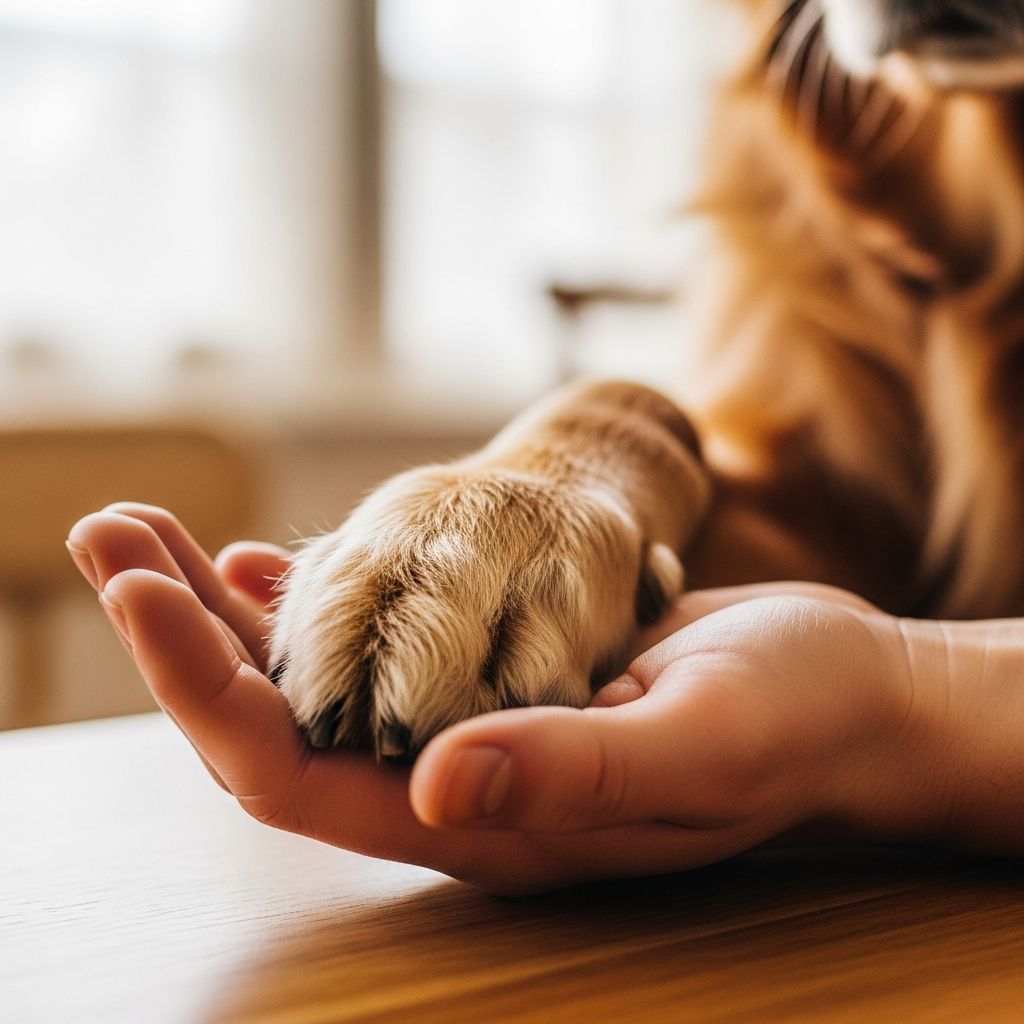
Dogs frequently place their paws on their owners as a primary form of communication, conveying needs, emotions, or desires through this instinctive gesture.
The Instinctive Roots of Paw Placement
Pawing originates in puppyhood, where young dogs use it to solicit milk from their mothers or interact with littermates. This behavior evolves into a reliable tool for adult dogs to engage humans, as owners often respond positively, reinforcing its use. Over time, dogs learn that a paw on your leg or arm prompts action, whether it’s food, play, or comfort.
Research highlights how dogs adapt pawing based on context. A study from the University of Veterinary Medicine in Vienna shows dogs recognize human emotions and adjust behaviors accordingly, using paws to respond empathetically.
Primary Motivations Behind the Paw
Dogs employ paw touches for diverse reasons. Understanding these helps owners respond appropriately, fostering trust and reducing frustration.
- Seeking Attention: A common motive, especially when bored. Dogs paw to initiate interaction, like play or petting. Body language such as a wagging tail or alert ears accompanies this.
- Expressing Affection: Often called a ‘dog hug,’ pawing demonstrates love and bonding. It triggers oxytocin release, mirroring human affection responses.
- Signaling Needs: Hunger, potty breaks, or walks prompt pawing. The American Kennel Club notes it’s like a verbal request: ‘I need something now.’
Emotional and Calming Signals
Not all pawing seeks positivity. Dogs use paws to manage emotions or set boundaries.
| Context | Body Language Cues | Meaning | Best Response |
|---|---|---|---|
| Stress or Anxiety | Ears back, yawning, tense posture | Seeking reassurance | Offer calm petting, safe space |
| Overstimulation | Light paw push, avoidance | Requesting space | Step back, reduce interaction |
| Empathy | Soft paw during owner’s distress | Comforting you | Acknowledge gently |
| Play Invitation | Play bow, bouncy movements | Start of fun | Engage briefly |
During anxious moments like thunderstorms, dogs paw for security. Heavy breathing or tucked tails signal this need for comfort.
Contextual Variations in Paw Behavior
Paw placement changes with situations. A paw on your foot while cooking might mean ‘include me,’ while one on your lap during TV time signals contentment or boredom.
Puppies paw more vigorously to initiate play, often with mouthing or jumping. Seniors may paw gently for reassurance in unfamiliar settings, like vet visits. Breeds vary too: herding dogs like Aussies paw to ‘herd’ attention, while lap dogs use it for closeness.
Strengthening Communication Through Observation
Observe full body language for accurate interpretation. A relaxed dog with a loose tail paws for fun; a stiff one signals unease. Track patterns: note time of day, recent activities, and outcomes to predict meanings.
Enhance this by teaching alternatives. Reward verbal cues or sits over pawing for requests. Use puzzle toys for bored dogs, reducing unwanted pawing.
Training Tips to Manage Excessive Pawing
While endearing, constant pawing can annoy. Discourage reinforcement accidentally: ignoring pawing but rewarding calm behavior works.
- Identify triggers: log when pawing occurs.
- Ignore the paw: turn away without speaking.
- Reward alternatives: treat for sitting quietly.
- Provide outlets: walks, toys for energy.
- Consult pros: for persistent issues, seek behaviorists.
Consistency prevents mixed signals. Positive reinforcement builds desired habits without punishment.
Breed and Age Influences on Pawing
Genetics play a role. Touch-sensitive breeds like Labs paw affectionately, while independent ones like Akitas use it sparingly. Age shifts priorities: puppies paw playfully, adults for needs, elders for comfort.
Health factors matter too. Arthritis might limit pawing, or pain could increase it as a distress signal. Regular vet checks ensure no medical issues underlie behavior changes.
Building Deeper Bonds
Embracing pawing’s meanings deepens connections. Respond to affection with mutual touch; address needs promptly. Dogs mirroring human empathy—pawing during sadness—shows profound attunement.
Incorporate routines: scheduled play reduces attention pawing. Mindful responses teach dogs you’re attuned, enhancing mutual trust.
Common Myths About Dog Pawing
- Myth: Always dominance. Rarely; it’s communication, not control.
- Myth: Only needy dogs do it. Affectionate ones paw too.
- Myth: Ignore all pawing. Context matters; address valid needs.
Frequently Asked Questions
Why does my dog paw me when I’m on my phone?
This attention-seeking counters perceived neglect. Offer a toy or short play session.
Is pawing a sign of aggression?
No, unless paired with growling or stiffening. It’s typically benign.
How to stop pawing at night?
Establish bedtime routines; ignore pawing, ensure daytime exercise.
Do all dogs paw owners?
Most do, but frequency varies by personality and training.
Should I paw my dog back?
Gently, to mimic; observe their comfort.
References
- Do Dogs Put Their Paws on You? It Says More About … – YouTube — YouTube. 2023. https://www.youtube.com/watch?v=3B5KVNmMXUE
- Why Dogs Put Their Paws on People in 2025 – Ask A Vet — Ask A Vet. 2025. https://askavet.com/blogs/dog-behavior-training/why-dogs-put-their-paws-on-people-in-2025-vet-approved-signals-advice-%F0%9F%90%B6%E2%9C%8B
- Why Do Dogs Put Their Paws On People? – PetMD — PetMD. 2024. https://www.petmd.com/dog/behavior/why-do-dogs-put-their-paws-on-people
- Why Does My Dog Put Their Paw On Me? – American Kennel Club — AKC. 2024. https://www.akc.org/expert-advice/advice/why-does-my-dog-put-paw-on-me/
Similar Articles








Read full bio of medha deb




