

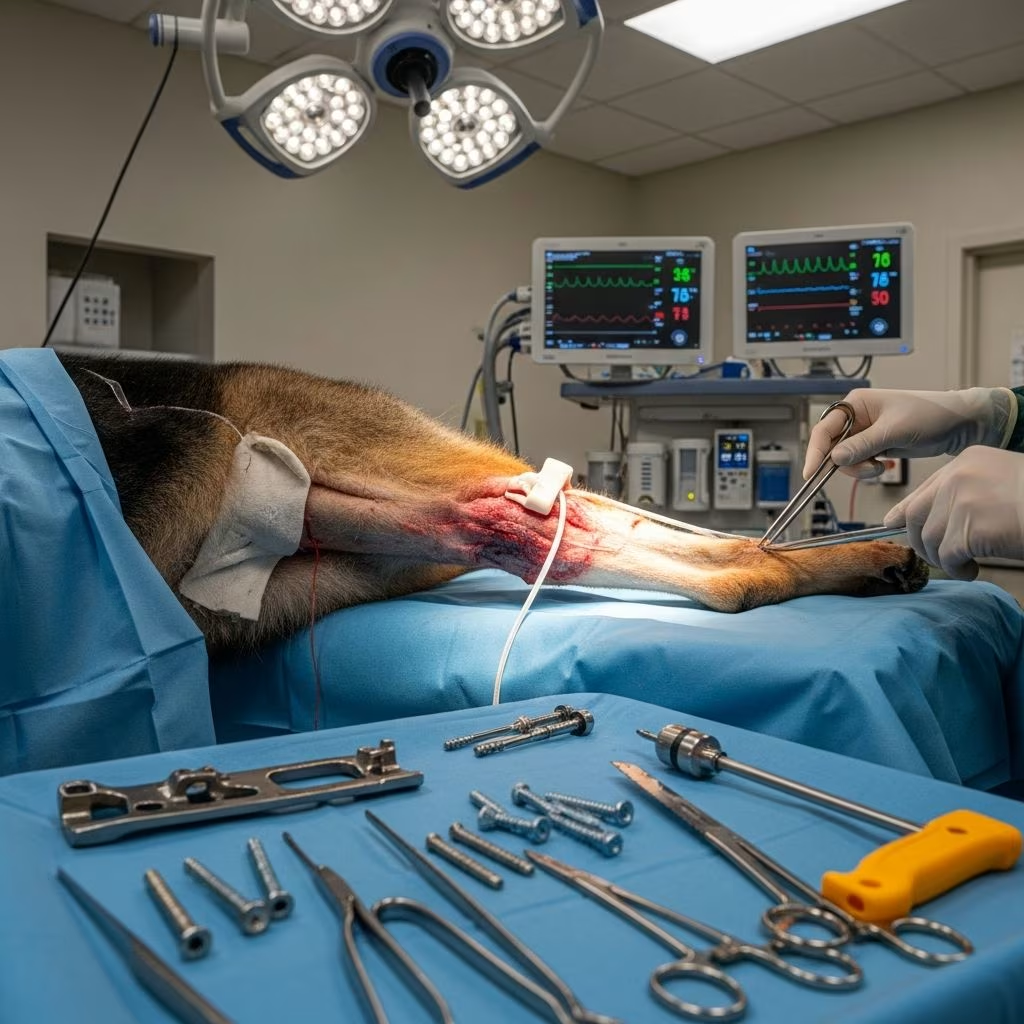
Orthopedic surgeries in dogs address musculoskeletal issues like ligament tears, hip dysplasia, fractures, and joint instability, restoring mobility and reducing pain. These procedures use tools such as bone plates, screws, pins, or artificial joints to help healthy dogs return to normal function.TPLO, TTA, FHO, and THR are among the most frequent, especially for knee and hip problems that affect millions of pets yearly.
Why Orthopedic Surgery Matters for Canine Health
Dogs, particularly active or large breeds, often suffer from orthopedic conditions due to genetics, injury, or age. A torn cranial cruciate ligament (CCL)—equivalent to a human ACL—accounts for about 85% of canine orthopedic surgeries, leading to lameness, swelling, and arthritis if untreated. Hip dysplasia causes malformed joints, resulting in chronic discomfort, while fractures from trauma demand prompt intervention to prevent misalignment and long-term issues.
Pre-surgery evaluations include blood work, physical exams, and imaging to ensure candidates are fit, minimizing complications. Success hinges on the dog’s overall health, as underlying conditions can impair healing. Owners play a key role by recognizing signs like limping, reluctance to jump, or stiffness, prompting early veterinary consultation.
Understanding CCL Injuries and Repair Techniques
The stifle joint, or dog’s knee, relies on the CCL for stability. Rupture destabilizes the joint, accelerating degeneration. Two advanced repairs dominate: TPLO and TTA, both altering knee biomechanics rather than directly fixing the ligament.
Tibial Plateau Leveling Osteotomy (TPLO)
TPLO involves cutting the tibia to flatten its plateau, neutralizing shear forces that strain the CCL. A metal plate secures the bone during healing. Ideal for large, athletic dogs, it promotes rapid recovery and superior long-term stability.
- Procedure Steps: Specialized saw reshapes tibia; plate and screws stabilize; 12-week restricted activity follows.
- Benefits: Reduces arthritis risk; high success in active breeds.
- Candidates: Dogs over 30 pounds with full or partial tears.
Tibial Tuberosity Advancement (TTA)
TTA advances the tibial tuberosity where the patellar tendon attaches, balancing forces across the knee. A cage or plate holds position. It offers quicker recovery than older methods and suits various sizes.
- Key Advantages: Less invasive bone cut; effective for smaller dogs.
- Recovery: Weight-bearing often resumes within days.
| Procedure | Best For | Recovery Time | Success Rate |
|---|---|---|---|
| TPLO | Large breeds, athletes | 3-4 months full activity | 90-95% |
| TTA | Medium-small dogs | 2-3 months | 85-90% |
Hip Conditions: THR vs. FHO Options
Hip dysplasia or fractures lead to painful ball-and-socket joint issues. Surgical choices depend on age, size, and damage severity.
Total Hip Replacement (THR)
THR removes diseased bone and cartilage, implanting a prosthetic joint mimicking natural anatomy. Cemented or cementless stems anchor it, allowing near-normal gait. Best for young, healthy adults.
- Process: Acetabulum reaming, femoral head resection, prosthesis insertion.
- Outcomes: 95% pets regain full function; durable 10-15 years.
Femoral Head Osteotomy (FHO)
FHO excises the femoral head and neck, letting scar tissue form a ‘false joint.’ Cost-effective for small breeds, fractures, or severe dysplasia in older dogs.
- Advantages: Pain relief without implants; lower cost.
- Limitations: Less ideal for heavy dogs; may not restore full range.
THR suits performance dogs seeking maximal mobility, while FHO prioritizes affordability and salvage.
Fracture Management and Other Corrections
Bone breaks from falls or accidents require precise fixation for proper union. Methods include internal plating/screws, external frames, or casts.
- Internal Fixation: Plates bridge fractures, ideal for long bones.
- External Fixation: Pins through skin to frames; good for infections.
- Conservative: Splints for stable, distal limb fractures.
Additional surgeries address patellar luxation (kneecap slippage) via groove deepening or trochlear block recession, and medial patellar luxation (MPL) corrections. Arthroscopy aids minimally invasive joint exploration.
Preparing for Your Dog’s Orthopedic Procedure
Expect diagnostics like X-rays, CT scans, or arthroscopy. Anesthesia protocols monitor vitals, with pain management starting pre-op. Post-op, strict rest (crate confinement), physical therapy, and meds prevent swelling.
- Home Care: Short leash walks; ice packs; joint supplements.
- Rehab: Underwater treadmill, laser therapy accelerate healing.
- Costs: $3,000-$7,000 depending on procedure and location.
Long-Term Success and Prevention Strategies
Outcomes exceed 90% for most surgeries with compliance. Prevent via weight control, joint supplements (glucosamine), low-impact exercise, and early screening in at-risk breeds like Labs or Rottweilers.
Monitor for complications: infection (1-5%), implant failure, or delayed union. Follow-ups at 2, 6, and 12 weeks track progress.
Frequently Asked Questions (FAQs)
Is TPLO better than TTA?
Both excel for CCL tears; TPLO edges for giants, TTA for smaller dogs. Vet expertise guides choice.
How long until my dog walks normally after THR?
Most bear weight day 1; full activity by 3 months.
Can older dogs have FHO?
Yes, especially for pain relief in seniors.
What breeds need these surgeries most?
Golden Retrievers, German Shepherds for CCL; Bulldogs for luxation.
Does insurance cover orthopedic surgery?
Many policies do; check exclusions for pre-existing issues.
Consulting Your Veterinarian Effectively
Prepare questions: success rates, risks, alternatives, rehab plans. Board-certified surgeons boost outcomes. Early intervention preserves joint health.
References
- Orthopedic Surgery in Dogs — St. Louis Animal Emergency Clinic. 2023-08-31. https://www.stlouisanimalemergencyclinic.org/site/blog/2023/08/31/orthopedic-surgery-dogs
- Orthopedic Surgery in Dogs — Meadow Vista Veterinary. 2024-08-15. https://www.meadowvistavet.com/site/blog/2024/08/15/orthopedic-surgery-dogs
- Your Guide to Orthopedic Surgery in Dogs — Southborough Veterinary Hospital. 2024-04-15. https://www.southboroughvet.com/site/blog/2024/04/15/orthopedic-dog-surgery
- Understanding Pet Orthopedic Surgery Options — Ark Animal Hospital. N/A. https://www.arkanimalnola.com/blog/understanding-pet-orthopedic-surgery-options
- What is the Importance of Orthopedic Surgery in Dogs? — Live Oak Animal Hospital. N/A. https://www.liveoaklubbock.com/dogs/what-is-the-importance-of-orthopedic-surgery-in-dogs/
- Orthopedic Surgery Options for Dogs and Cats — Clifton Vet Clinic. N/A. https://www.cliftonvetclinic.com/blog/orthopedic-surgery-options-for-dogs-and-cats
- The Top 10 Orthopedic Surgeries for Dogs: A Comprehensive Guide — Hudson Valley Veterinary Surgical Emergencies. N/A. https://www.hvsevet.com/blog/30/the-top-10-orthopedic-surgeries-for-dogs-a-comprehensive-guide



