

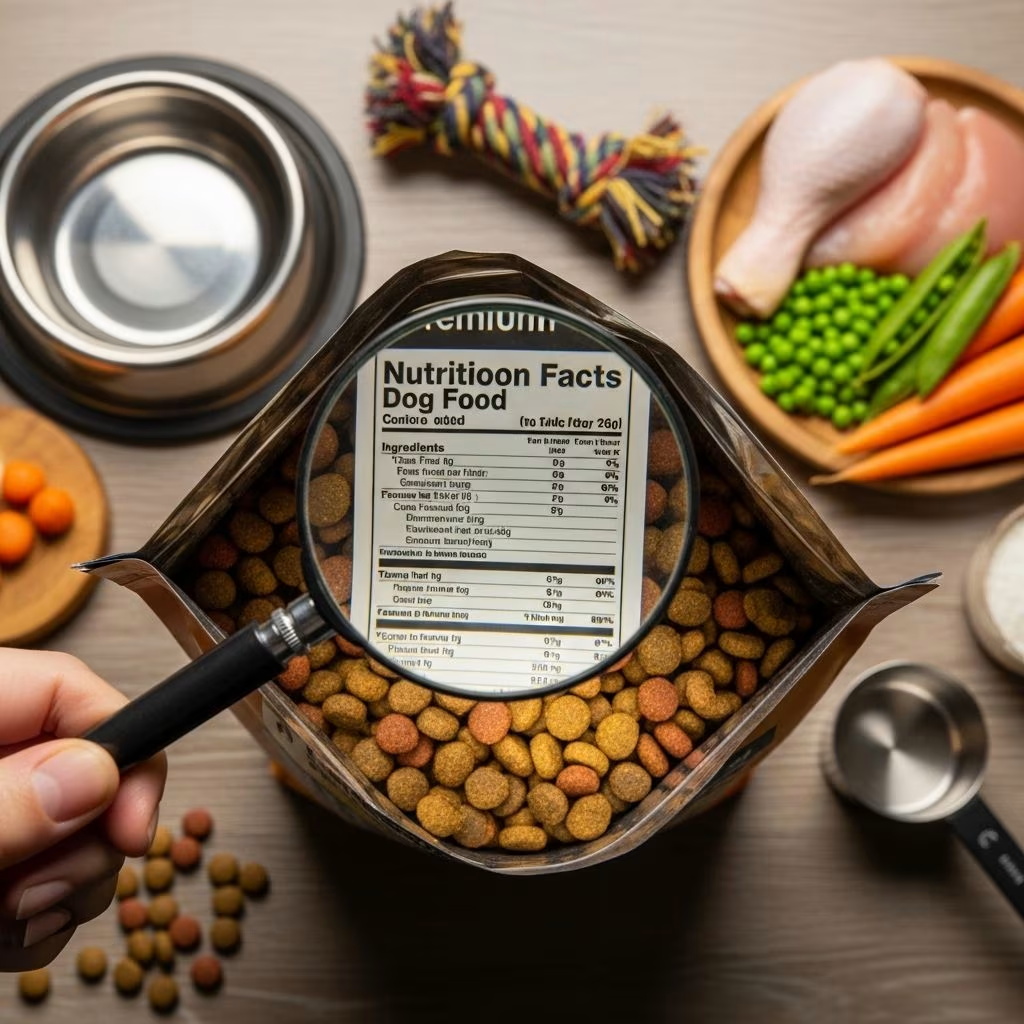
Selecting the right dog food is crucial for your pet’s long-term health, energy levels, and overall well-being. Dog food labels pack a wealth of information, but they can overwhelm even seasoned pet owners with technical terms and fine print. This guide breaks down every essential element, empowering you to make confident, informed decisions based on science-backed standards from bodies like the FDA and AAFCO. By mastering label reading, you’ll prioritize real nutrition over marketing hype, ensuring your dog thrives at every life stage.
Why Label Literacy Matters for Your Dog’s Diet
Pet food isn’t just filler—it’s the foundation of your dog’s health. Poorly formulated foods can lead to obesity, digestive issues, nutrient deficiencies, or allergies. Labels regulated by the Association of American Feed Control Officials (AAFCO) and the FDA provide transparency on composition, nutritional value, and suitability. Understanding them helps you spot high-quality products with named meat sources first, balanced macros, and complete nutrition profiles. Studies from veterinary sources emphasize that label-savvy owners choose foods matching their dog’s age, breed size, activity level, and health needs, reducing risks like joint problems in large breeds or dental issues in seniors.
Essential Components Every Dog Food Label Must Include
All commercial dog foods in the U.S. follow strict labeling rules. Here’s what to expect on every package:
- Product Identification: Includes brand, specific product name (e.g., “Beef Formula”), and species (“Dog Food”). Names follow AAFCO rules like the 95% Rule (named ingredients ≥95% of product, excluding water), 25% Rule (for dinners/entrees ≥25%), or 3% “with” rule.
- Net Quantity: Weight in pounds/ounces and metric units on the front for easy comparison.
- Manufacturer/Distributor Info: Name and address reveals production origin; not always the brand owner.
These basics ensure traceability and portion accuracy. Always verify against store claims to avoid misleading packaging.
Mastering the Ingredient List: What It Reveals
The ingredient list is listed by descending weight— the first five often comprise 80%+ of the formula. Prioritize whole meats (e.g., “chicken,” “beef”) over meals or by-products for superior protein. By-products like organs offer nutrients but clarify if they’re organ-specific or generic. Watch for fillers like corn, wheat, or anonymous “animal fat.” Generic terms (“poultry by-product meal”) hide lower quality. Look for recognizable, minimally processed items: fruits, veggies for antioxidants, and probiotics for gut health.
| Ingredient Type | Pros | Cons | Examples |
|---|---|---|---|
| Named Meats | High digestibility, complete proteins | May be costlier | Chicken, salmon |
| Grain-Free Carbs | Novel proteins for allergies | Taurine concerns in some formulas | Sweet potato, peas |
| Fillers | Cheap bulk | Low nutrition, allergy triggers | Corn gluten, brewers rice |
| Additives | Preserve shelf life | Artificial colors/flavors | Natural tocopherols vs. BHA |
Avoid split-listing tricks (e.g., multiple grain entries to dilute meat). Aim for 26-30% protein minimum for adults, higher for puppies.
Guaranteed Analysis: Breaking Down Nutrient Levels
This section lists minimum/maximum percentages for crude protein, fat, fiber, moisture, plus optional others like omega fatty acids. “Crude” measures basic content, not bioavailability—subtract moisture (typically 10-12% dry kibble, 75-80% wet) for dry matter comparison.
- Crude Protein (min): 18-22% adults, 22-32% growth/reproduction.
- Crude Fat (min): 8-15% for energy/skin health.
- Crude Fiber (max): 5-6% for digestion.
- Moisture (max): Adjusts true nutrient density.
Calculate carbs: 100 – (protein + fat + fiber + moisture + ash if listed). Under 40% ideal. Compare across brands using dry matter math: (nutrient % / (100 – moisture %)) x 100.
Nutritional Adequacy Statement: The Gold Standard Check
The most critical part: Confirms if food is “complete and balanced” for all life stages, adults, growth, etc., via lab tests or feeding trials. Phrases like “formulated to meet AAFCO profiles” (cheaper) vs. “feeding trials” (gold standard) matter. Snacks/treats lack this, so limit to 10% calories. Match to your dog’s needs: puppies need growth formulas, seniors maintenance.
Calorie Content and Feeding Directions
Listed as kcal/kg or per cup/can. Factor age, weight, neuter status, activity. Overfeeding causes 50%+ obesity in dogs. Use calculators: e.g., 30-lb active adult needs ~800-1000 kcal/day. Guidelines are starting points—adjust via body condition scoring.
Navigating Product Name Rules and Marketing Claims
AAFCO governs names to prevent deception:
- 95% Rule: “Salmon Dog Food” ≥95% salmon (wet) or 70% dry.
- 25% Rule: “Tuna Dinner” ≥25% tuna.
- 3% or Flavor Rule: “With Chicken” ≥3%; “Chicken Flavor” just aroma.
Ignore vague claims like “natural” (AAFCO-defined but loose) or “holistic.” Focus on facts.
Tailoring Choices to Life Stages and Special Needs
Puppies: Higher protein/fat, DHA for brain. Adults: Balanced maintenance. Seniors: Joint support, lower calories. Large breeds: Controlled calcium for bones. Allergies: Novel proteins/hypoallergenic. Consult vets for medical diets.
Common Pitfalls and Red Flags to Avoid
- Long ingredient lists with fillers first.
- Missing adequacy statement.
- Excessive vague terms (“meat meal” without species).
- No calorie info for weight management.
- Expired freshness dates.
Cross-check with AAFCO.org for updates.
Practical Tips for Comparing Dog Foods
- Scan first 5 ingredients.
- Verify adequacy for your dog.
- Compute dry matter nutrients.
- Read full label, not just front.
- Test small bags first.
Transition gradually over 7-10 days.
Frequently Asked Questions (FAQs)
What does AAFCO complete and balanced mean?
It guarantees the food meets minimum nutrient profiles for specified life stages via formulation or trials.
Are by-products bad?
No—liver, heart provide bioavailable nutrients; avoid if allergies suspected.
How do wet vs. dry foods compare?
Normalize via dry matter; wet aids hydration but higher calorie density per volume.
Grain-free is always better?
Not necessarily—dilated cardiomyopathy links in some; grains offer fiber/vitamins.
Where’s the best place to store opened food?
Airtight container in cool, dry spot; use within 4-6 weeks.
Empowering Your Dog’s Nutrition Journey
With these tools, transform label confusion into canine care expertise. Prioritize transparency, balance, and vet input for a happier, healthier pup. Regular weigh-ins and stool checks validate choices.
References
- How to Read Pet Food Labels | A Guide for Dog and Cat Owners — Pet Assure. 2023. https://www.petassure.com/maxscorner/guide-to-reading-pet-food-labels/
- How to Read Dog & Cat Food Labels — Stella & Chewy’s. 2024. https://www.stellaandchewys.com/blogs/articles/pet-food-labels
- Deciphering Dog Food Labels — VCA Animal Hospitals. 2023-10-01. https://vcahospitals.com/know-your-pet/deciphering-dog-food-labels
- How to Read a Dog Food Label — Bil-Jac. 2024. https://www.bil-jac.com/the-dog-blog/posts/how-to-read-a-dog-food-label/
- A Guide to Dog Food Ingredients and Reading Dog Food Labels — PetMD. 2025-01-15. https://www.petmd.com/dog/nutrition/pet-food-ingredient-and-label-guide
- Pet Foods: How to Read Labels — University of Nebraska-Lincoln Extension. 2022. https://extensionpublications.unl.edu/assets/html/g1960/build/g1960.htm



