

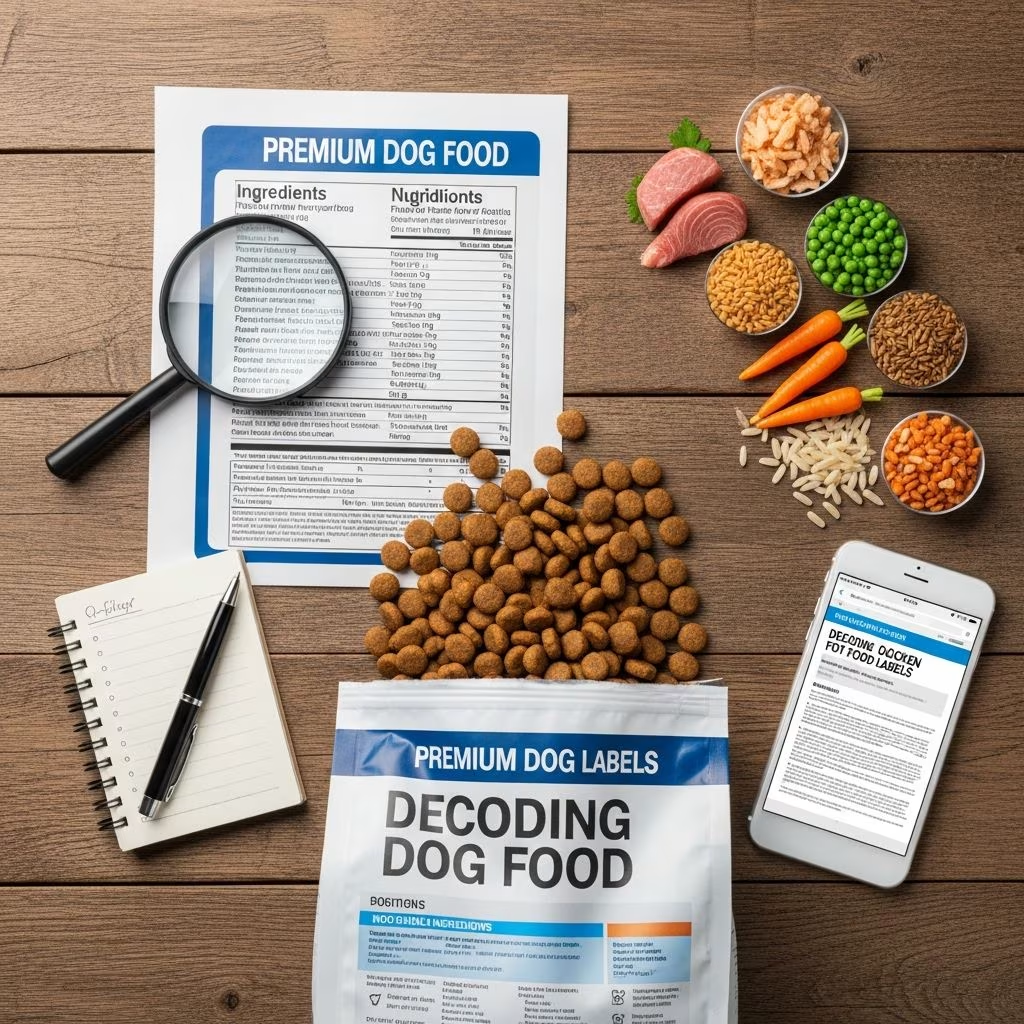
Choosing the right dog food can significantly impact your pet’s health, energy levels, and longevity. Dog food labels contain critical information regulated by standards like those from the Association of American Feed Control Officials (AAFCO), but they can be confusing without guidance. This guide breaks down every section of a typical label, helping you make informed decisions based on reliable nutritional data.
Understanding the Principal Display Panel
The front of the package, known as the principal display panel, provides the first clues about the product. It must include the brand or product name, the intended species (e.g., “dog food”), and the net quantity, listed in both imperial and metric units for easy comparison.
- Product Name Rules: Names follow strict AAFCO guidelines. For instance, if it says “Beef Dog Food,” at least 95% of the product (including water for wet foods, totaling 70% solids) must be beef. This ensures the named ingredient dominates the formula.
- “With” Claims: Phrases like “Dog Food with Chicken” require only 3% chicken, a much lower threshold that savvy shoppers should note to avoid misleading impressions.
- Flavor Designations: Terms like “chicken flavor” must match an ingredient providing that flavor, such as chicken fat, printed in the same size and font as other name elements.
Always scrutinize the name for these percentages to gauge true ingredient prominence. Misleading titles can inflate perceived quality.
Net Weight and Packaging Details
Next to the product name, the net weight statement tells you exactly how much food is inside, such as “30 lbs (13.6 kg).” This allows cost-per-pound comparisons across brands, essential for budgeting without sacrificing quality.
Look for expiration or “best by” dates, often on the back or bottom, to ensure freshness. Stale food loses nutritional value and may harbor bacteria.
Ingredients List: The Heart of the Label
The ingredients statement is arguably the most vital section, listing all components in descending order by pre-processing weight. This reveals the true composition before cooking or drying affects proportions.
- First ingredients are the heaviest; for example, if “chicken” tops the list, it outweighs everything else initially.
- Each must use its common name per AAFCO definitions—no vague “animal protein products” allowed. Named meats mean muscle meat, not byproducts unless specified.
- Watch for water weight: Whole meats include moisture, so dehydrated versions lower on the list might contribute more dry matter.
Common pitfalls include split ingredients (e.g., “chicken” and “chicken meal” separately) to boost a protein’s apparent prominence, or collective terms skirting specificity. Prioritize recognizable, high-quality sources like named meats over generics.
| Ingredient Type | Examples | Implications |
|---|---|---|
| Named Meats | Chicken, Beef | Muscle meat; high-quality protein source |
| Meals | Chicken Meal | Concentrated protein after fat/moisture removal; often nutrient-dense |
| Byproducts | Chicken Byproduct Meal | Organs/skins; nutritious but lower preference for some |
| Grains/Fillers | Corn, Wheat | Carb sources; check for allergies or digestive issues |
Guaranteed Analysis: Nutrient Breakdown
This panel lists minimum crude protein and fat percentages, maximum crude fiber and moisture. It’s as-fed basis, so dry foods show higher numbers than wet ones due to less water.
- Crude Protein (min): Minimum guaranteed; e.g., 26% means at least that much.
- Crude Fat (min): Energy source; higher for active dogs.
- Crude Fiber (max): Digestive aid; 5% typical for adults.
- Moisture (max): 10% dry, 78% wet; adjust for dry matter comparison.
Recent updates mirror human nutrition facts, including calories, carbs, and serving sizes for precision. Values must meet AAFCO profiles, but check for voluntary extras like omega fatty acids.
Nutritional Adequacy Statement: The Gold Standard
This declares if the food is “complete and balanced” for specific life stages, backed by AAFCO testing or formulation. Options include:
- All life stages
- Growth (puppies)
- Maintenance (adults)
- Gestation/lactation
Without this, it’s a supplement only—not a sole diet. Vets stress matching to your dog’s age, size, and health.
Feeding Directions and Calorie Content
Guidelines suggest daily amounts by weight/activity, but adjust per your dog’s needs. Calorie statements (kcal/kg or per cup) enable precise portioning to prevent obesity.
For example, a 20-lb active adult might need 800-1000 kcal/day. Overfeeding common pitfalls; consult vets for tailored plans.
Manufacturer Information and Claims
The maker’s name/address ensures accountability. Claims like “natural” mean no synthetic additives beyond approved vitamins (per AAFCO). Verify via contact for recalls or questions.
Common Label Red Flags and Tips
Avoid:
- Vague names without 95%/25% compliance
- Long ingredient lists with fillers first
- Missing adequacy statements
- Expired dates
Tips: Compare dry matter (subtract moisture/100 for %), read beyond marketing, rotate if needed but transition slowly.
Life Stage-Specific Considerations
Puppies
Need higher protein/fat for growth; look for “growth” statements and DHA for brain development.
Adults
Balanced maintenance; moderate calories to sustain weight.
Seniors
Joint support (glucosamine), lower calories, higher fiber.
FAQ
What does AAFCO approval mean?
It confirms the food meets nutrient profiles via lab or feeding trials.
How to compare wet vs. dry foods?
Use dry matter basis: Nutrient % / (100 – moisture %).
Are grain-free diets better?
Not necessarily; balance per vet advice, as some link to heart issues.
What if my dog has allergies?
Scan for triggers low on list; hydrolyzed proteins help.
Can treats be the only food?
No—lacks completeness unless labeled as such.
Advanced Reading: Beyond Basics
Dig into parentheticals explaining sub-ingredients (e.g., vitamins listed under premixes). Updated labels clarify these for transparency. Cross-check with AAFCO’s ingredient dictionary online.
For special diets (weight management, urinary health), seek targeted guarantees like reduced phosphorus.
Table for quick nutrient needs:
| Life Stage | Min Protein (%) | Min Fat (%) | Max Fiber (%) |
|---|---|---|---|
| Growth/Puppy | 22.5 | 8.5 | 5 |
| Adult Maintenance | 18 | 5.5 | ??? |
| Senior/Light | 18 | 5 | ??? |
(Dry matter basis per AAFCO)
Empower yourself: Labels evolve, but core AAFCO rules ensure baseline safety. Pair with vet input for optimal health.
References
- How to Read a Dog Food Label — American Kennel Club. 2023-05-15. https://www.akc.org/expert-advice/nutrition/how-to-read-a-dog-food-label/
- How to Read Dog Food Labels — Purina US. 2024-02-10. https://www.purina.com/articles/dog/health/nutrition/how-to-read-dog-food-label
- Deciphering Dog Food Labels — VCA Animal Hospitals. 2023-11-20. https://vcahospitals.com/know-your-pet/deciphering-dog-food-labels
- How To Read Pet Food Labels — Pet Food Institute. 2024-01-05. https://www.petfoodinstitute.org/how-to-read-pet-food-labels/
- Reading Labels — AAFCO. 2025-03-01. https://www.aafco.org/consumers/understanding-pet-food/reading-labels/
- How to Read a Pet Food Label — IFA Helping to Grow Blog. 2023-08-12. https://grow.ifa.coop/pets/how-to-read-a-pet-food-label



