

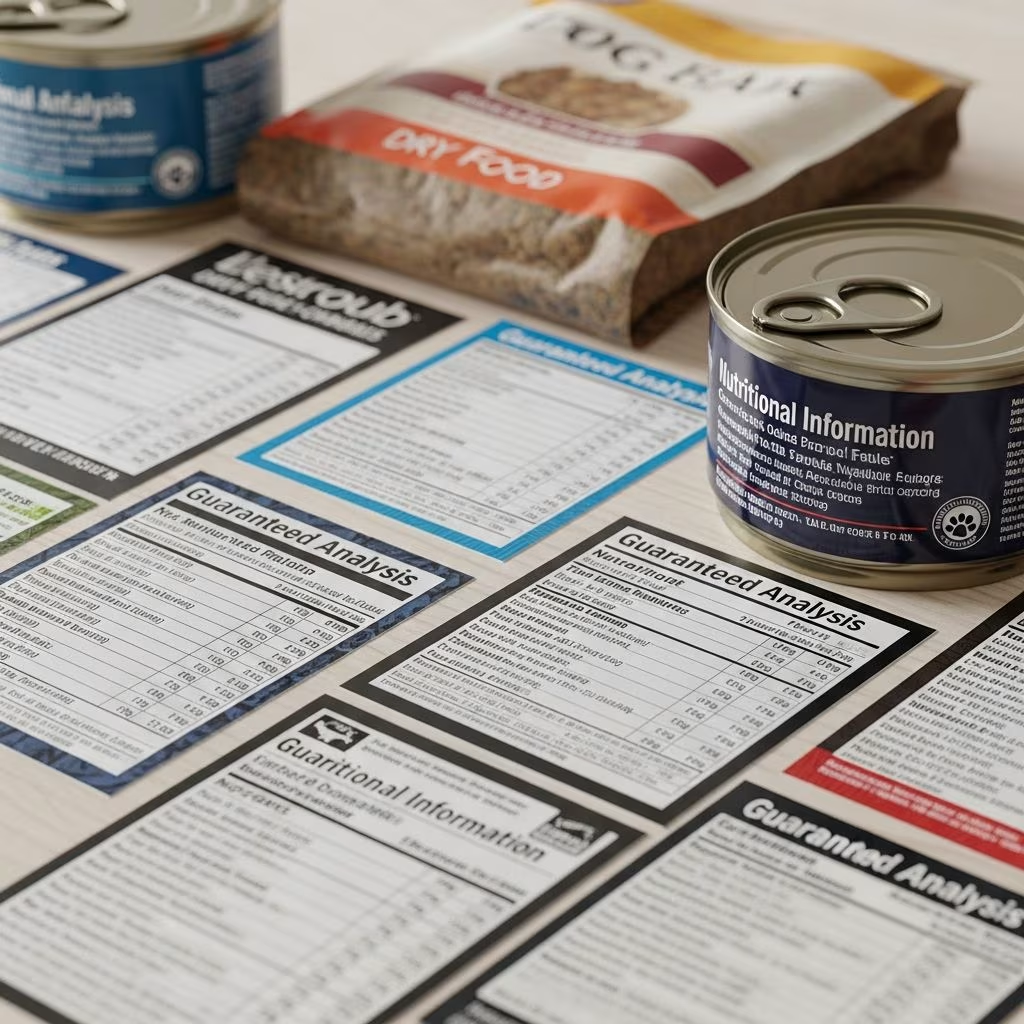
Selecting the right dog food starts with understanding the label. Every package contains critical details regulated by standards like those from the Association of American Feed Control Officials (AAFCO), helping owners ensure their pets receive balanced nutrition. This guide breaks down each component, empowering you to make confident choices.
Core Elements on Every Dog Food Package
Dog food labels follow a standardized format across the U.S. and Canada, mandated by regulatory bodies. These elements provide transparency about contents, nutritional value, and suitability.
- Product and Brand Name: Identifies the food uniquely, often hinting at primary ingredients.
- Net Quantity: Lists weight in pounds/ounces and metric units for easy comparison.
- Species Designation: Clearly states “dog food” on the main panel, distinguishing it from cat or other pet products.
- Manufacturer Details: Includes company name and address for accountability.
These basics ensure you know exactly what you’re buying at a glance.
Mastering the Ingredient List
The ingredients section is pivotal, listed in descending order by weight before processing. This reveals the true composition, from primary proteins to fillers. Each must use its common or AAFCO-defined name, prohibiting vague terms like “animal protein products.”
Top ingredients dominate the formula. For instance, if meat is first, it forms the bulk. Watch for species-specific naming in meats beyond common livestock, promoting clarity.
| Ingredient Position | Typical Role | Example |
|---|---|---|
| 1st-3rd | Main protein/fat sources | Chicken, beef, lamb |
| Mid-list | Grains, veggies, supplements | Brown rice, peas, vitamins |
| End | Preservatives, flavors | Salt, natural flavors |
Split ingredients like “chicken meal” indicate concentrated sources, often nutrient-dense but check definitions via AAFCO resources.
Guaranteed Analysis: Nutrient Breakdown
This panel lists minimum percentages for crude protein, fat, fiber, and maximum moisture. It doesn’t reflect exact amounts or digestibility but allows comparisons. Moisture skews dry vs. wet foods, so use dry matter basis for fairness.
Dry Matter Calculation: Divide nutrient % by (100 – moisture %) and multiply by 100. Example: 25% protein at 10% moisture = (25 / 90) * 100 = 27.8% dry matter protein.
- Protein: Minimum, vital for muscle health.
- Fat: Minimum, energy source.
- Fiber: Maximum, aids digestion.
- Moisture: Maximum, typically 10% dry, 75%+ canned.
Optional additions like omega fatty acids or ash provide extras.
Nutritional Adequacy Statement Explained
This declares if the food meets AAFCO profiles for life stages: growth (puppies), maintenance (adults), all life stages, or gestation/lactation. Look for: “[Product] is formulated to meet the nutritional levels established by the AAFCO Dog Food Nutrient Profiles for [life stage].”
Match to your dog’s needs—puppies require higher calories/protein. Treats lack this, unsuitable as sole diet.
Deciphering Product Naming Rules
Names aren’t arbitrary; AAFCO enforces percentage-based rules for honesty.
- 95% Rule: “Beef Dog Food” means ≥95% beef (70% excluding water), plus 25% if dinner/platter named.
- 25% Rule: “Beef Dinner” requires ≥25% beef.
- 3% or ‘With’ Rule: “With Beef” means ≥3% beef—far less prominent.
- Flavor Rule: “Beef Flavor” needs only detectable flavor, often from fats.
These prevent misleading claims, ensuring names reflect reality.
Feeding Directions and Calorie Info
Guidelines suggest daily amounts by weight, adjustable for activity. Calorie statements (kcal/kg or per cup) aid portioning, especially for weight management. Consult vets for specifics.
Common Pitfalls and Red Flags
Avoid hype: Claims like “premium” or “human-grade” lack regulation. Font tricks emphasizing ingredients are banned—uniformity rules.
- Unnamed byproducts: Can be nutritious but specify source.
- Excess fillers: Corn/wheat early may indicate cheap carbs.
- Missing adequacy statement: Risky for complete feeding.
Cross-check with AAFCO for ingredient truths.
Comparing Foods: Tools and Tips
Use apps or spreadsheets for side-by-side analysis. Prioritize whole meats first, balanced guarantees, and life-stage match. Consider recalls via FDA site.
| Food A (Dry) | Food B (Wet) | Dry Matter Comparison |
|---|---|---|
| Protein 28%, Moist 10% | Protein 10%, Moist 75% | A: 31%, B: 40% |
| Fat 15% | Fat 6% | A: 17%, B: 24% |
Wet often shows higher dry matter nutrients.
Special Diets and Life Stages
Puppies need growth formulas; seniors may benefit from joint/glucosamine adds. Therapeutic diets require vet approval, labels note specifics.
FAQs: Dog Food Label Basics
What does ‘complete and balanced’ mean? Meets all AAFCO nutrient profiles for specified life stages via formulation or testing.
Is ‘natural’ regulated? Means no artificial preservatives/colors; verify ingredients.
How to spot byproducts? Listed as ‘chicken by-product meal’—nutrient-rich organs/skin.
Grain-free safe? Check FDA updates; balance taurine/DCM risks.
Best storage? Cool, dry place; heed best-by dates.
Beyond the Label: Holistic Choices
Labels inform, but pair with vet advice, dog response (coat, energy), and transitions gradually. Rotate proteins seasonally if allergies absent.
Understanding labels transforms feeding from guesswork to precision nutrition, fostering healthier, happier dogs.
References
- How to Read a Dog Food Label — American Kennel Club. 2023-10-15. https://www.akc.org/expert-advice/nutrition/how-to-read-a-dog-food-label/
- Deciphering Dog Food Labels — VCA Animal Hospitals. 2024-02-20. https://vcahospitals.com/know-your-pet/deciphering-dog-food-labels
- Reading Labels — AAFCO. 2025-01-10. https://www.aafco.org/consumers/understanding-pet-food/reading-labels/
- Understanding Pet Food Labels – AAFCO — Purina Institute. 2024-05-05. https://www.purinainstitute.com/centresquare/understanding-pet-food/understanding-pet-food-labels-aafco
- Pet Foods: How to Read Labels — University of Nebraska-Lincoln Extension. 2022-11-12. https://extensionpublications.unl.edu/assets/html/g1960/build/g1960.htm



