

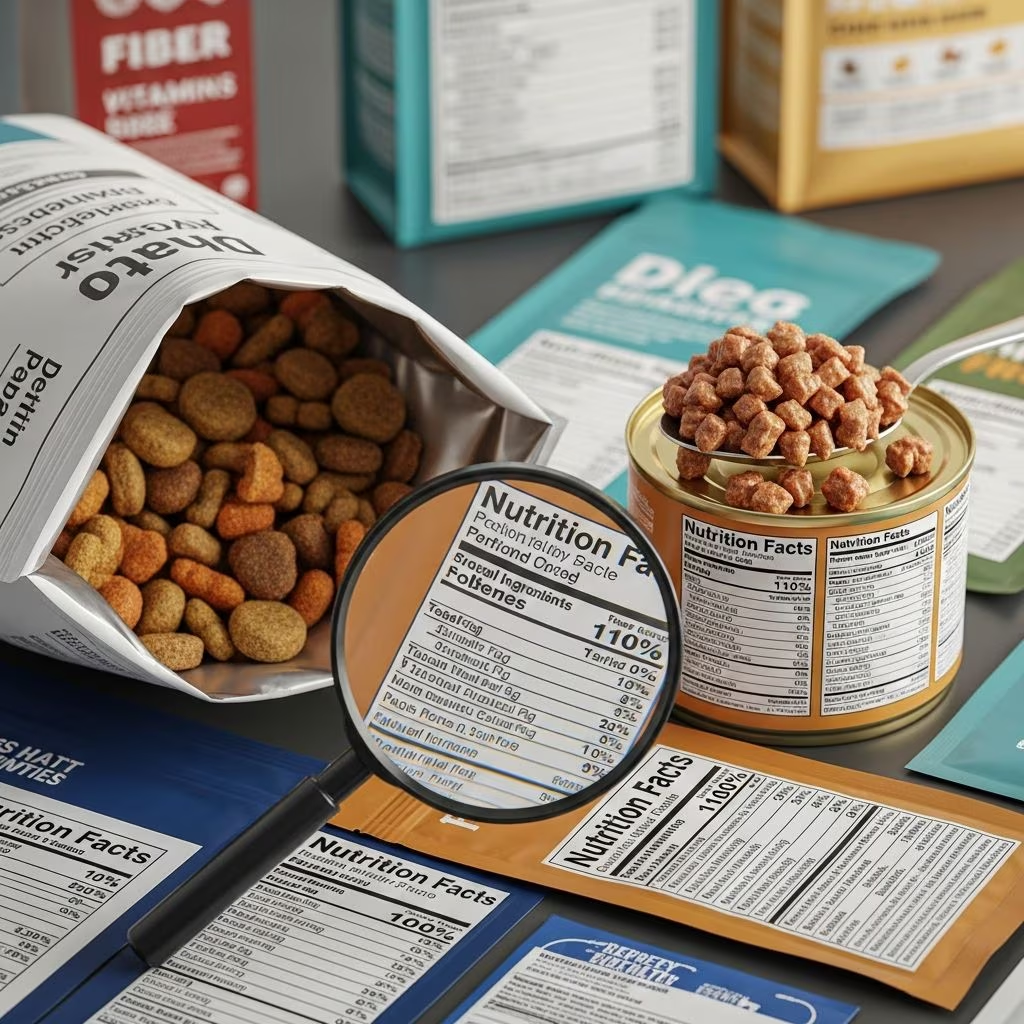
Choosing the right commercial dog food can feel overwhelming amid flashy packaging and bold claims. By mastering label reading, pet owners empower themselves to select products that truly nourish their dogs. This guide breaks down every key section, from ingredients to regulatory statements, helping you prioritize quality and avoid common pitfalls.
Understanding the Principal Display Panel
The front of any dog food package serves as the first impression, legally required to include specific details. It features the product name, intended purpose, and net quantity. The name often hints at primary ingredients, governed by strict rules like the 95% rule: if labeled ‘Chicken Dog Food,’ at least 95% must be chicken (including water for wet foods, totaling 70% solids).
The purpose statement clarifies if it’s a complete diet for dogs or merely a treat. Complete foods sustain dogs as their sole nutrition source, unlike snacks requiring dietary supplements. Net weight appears in both imperial and metric units for easy comparisons, such as pounds/ounces and grams/kilograms.
- Product Name Rules: ‘With [ingredient]’ means only 3% minimum, drastically lowering expectations compared to names without qualifiers.
- Net Quantity: Compare cost per pound across brands for value assessment.
- Purpose: Look for ‘dog food’ versus ‘treat’ to confirm completeness.
Mastering the Ingredients List
Ingredients dominate label scrutiny, listed in descending order by pre-cooking weight. The first item sets the tone: prioritize recognizable whole foods like ‘chicken’ or ‘beef’ over vague ‘meat meal’ or by-products. Real food ingredients—meats, vegetables, grains—signal quality, while unrecognizable chemicals or fillers raise red flags.
Meat should feature prominently, as dogs thrive on animal proteins. Avoid meals unless specified (e.g., ‘chicken meal’ from fresh chicken), as ‘meat and bone meal’ may include unspecified sources. High-quality foods limit fillers; if corn, wheat, or soy dominate, reconsider for potential allergens or low digestibility.
| Ingredient Type | Quality Indicator | Example |
|---|---|---|
| Named Meat | High | Chicken, Beef |
| Meat Meal | Medium (if specified) | Chicken Meal |
| By-Product Meal | Low | Chicken By-Product Meal |
| Fillers | Low | Corn Gluten Meal |
Pro tip: Ignore marketing adjectives like ‘premium’ or ‘holistic’—only ‘complete and balanced’ holds regulatory weight.
Interpreting the Guaranteed Analysis
This box provides nutrient percentages on an ‘as-fed’ basis: minimum crude protein and fat, maximum crude fiber and moisture. ‘Crude’ denotes testing methods, not quality. For fair comparisons, convert to dry matter basis, especially across wet and dry foods.
AAFCO minimums for adult maintenance: 22% protein, 5% fat (dry matter). Puppies need more. Fat levels guide calorie density—higher fat means energy-rich food. Ignore ‘lite’ claims; compare raw numbers, as one ‘reduced calorie’ may exceed another’s regular fat.
Calories, if listed, vary by unit (kcal/cup vs. kg); use protein/fat as proxies. Fiber aids digestion but excess bulks cheaply.
- Protein: Minimum 22-26% dry matter for adults; higher for growth.
- Fat: 5-15%+; matches activity needs.
- Fiber/Moisture: Max 5-10% fiber, 10% dry/75% wet moisture.
The Nutritional Adequacy Statement: Your Safety Net
Mandatory for complete foods, this declares if it’s ‘complete and balanced’ for life stages like growth, reproduction, adult maintenance, or all stages. Backed by AAFCO via formulation to profiles or feeding trials (e.g., 26 weeks adults, 10 weeks growth).
Formulation matches lab nutrient targets; trials prove real-dog health via bloodwork, weight stability. Prefer trial-backed for rigor. All-life-stages suits multi-dog homes but may excess nutrients for seniors (no specific AAFCO senior profile).
WSAVA advises: Choose reputable makers with transparent research, AAFCO statements, and quality checks.
Deciphering Feeding Directions and Manufacturer Info
Directions estimate daily amounts by weight/activity, but adjust per your dog’s needs—monitor body condition. Manufacturer details ensure traceability; contact for specifics.
Sell-by dates prevent staleness. Calorie statements aid precision feeding, especially for weight management.
Navigating Life Stage and Special Needs Formulas
Match food to age/activity: Puppy (growth), Adult (maintenance), Senior (joint/digestive support), Performance (high energy). ‘All life stages’ covers broadly but verify suitability. Medical diets require vet input.
| Life Stage | Key Nutrient Focus | AAFCO Minimum (Dry Matter) |
|---|---|---|
| Growth/Puppy | Protein, Fat, Calcium | 22% Protein, 8% Fat |
| Adult Maintenance | Balanced Energy | 18-22% Protein, 5% Fat |
| All Stages | Growth + Maintenance | Meets Highest Needs |
Beyond Labels: Processing and Quality Checks
Kibble extrusion heats nutrients, potentially degrading some; raw foods preserve more but risk pathogens—balance with safety. Reputable brands test for contaminants, publish data.
WSAVA criteria: Reputable manufacturers, public research, rigorous testing.
Practical Tips for Everyday Shopping
- Scan ingredients first: Whole foods top list.
- Check AAFCO statement for life stage match.
- Compare protein/fat dry matter across foods.
- Buy from trusted sources; check dates.
- Transition gradually over 7-10 days.
Common Label Myths Debunked
- Myth: Higher protein always better. Excess strains kidneys in some dogs.
- Myth: Grain-free is superior. No evidence; may link to heart issues.
- Myth: ‘Natural’ equals healthy. Unregulated term.
FAQs: Dog Food Label Essentials
What does ‘complete and balanced’ mean?
It guarantees all nutrients in proper ratios for the stated life stage, per AAFCO.
How do I compare wet vs. dry food?
Calculate dry matter: (Nutrient % / (100 – Moisture %)) * 100.
Is ‘human-grade’ meaningful?
Not regulated; focus on ingredients and AAFCO.
What if no calorie info?
Use fat % as energy proxy; contact manufacturer.
Can treats be sole diet?
No—only complete foods.
Building a Feeding Plan
Combine label savvy with vet advice. Weigh monthly, adjust portions. Supplements rarely needed in balanced foods. Your dog’s shiny coat, energy, and stool quality signal success.
References
- The Top 5 Things to Look for on a Commercial Dog Food Label — Whole Dog Journal. 2023. https://www.whole-dog-journal.com/food/the-top-5-things-to-look-for-on-a-commercial-dog-food-label/
- Feeding with Confidence: A Short Guide to Commercial Dog Food — Canine Ceuticals. 2024. https://canineceuticals.com.au/blogs/news/guide-to-commercial-dog-food-choices
- How to Read a Dog Food Label — American Kennel Club. 2025-03-15. https://www.akc.org/expert-advice/nutrition/how-to-read-a-dog-food-label/
- Selecting Commercial Pet Food: A No-Nonsense Guide — Sunshine Pet Hospital. 2024. https://sunshinepethospital.com/pet-food/
- Pet Foods: How to Read Labels — University of Nebraska-Lincoln Extension. 2022. https://extensionpublications.unl.edu/assets/html/g1960/build/g1960.htm
- Selecting the Right Pet Food — AAFCO. 2025. https://www.aafco.org/consumers/understanding-pet-food/selecting-the-right-pet-food/
- Guidelines on Selecting Pet Foods — WSAVA. 2021-04-01. https://wsava.org/wp-content/uploads/2021/04/Selecting-a-pet-food-for-your-pet-updated-2021_WSAVA-Global-Nutrition-Toolkit.pdf



