

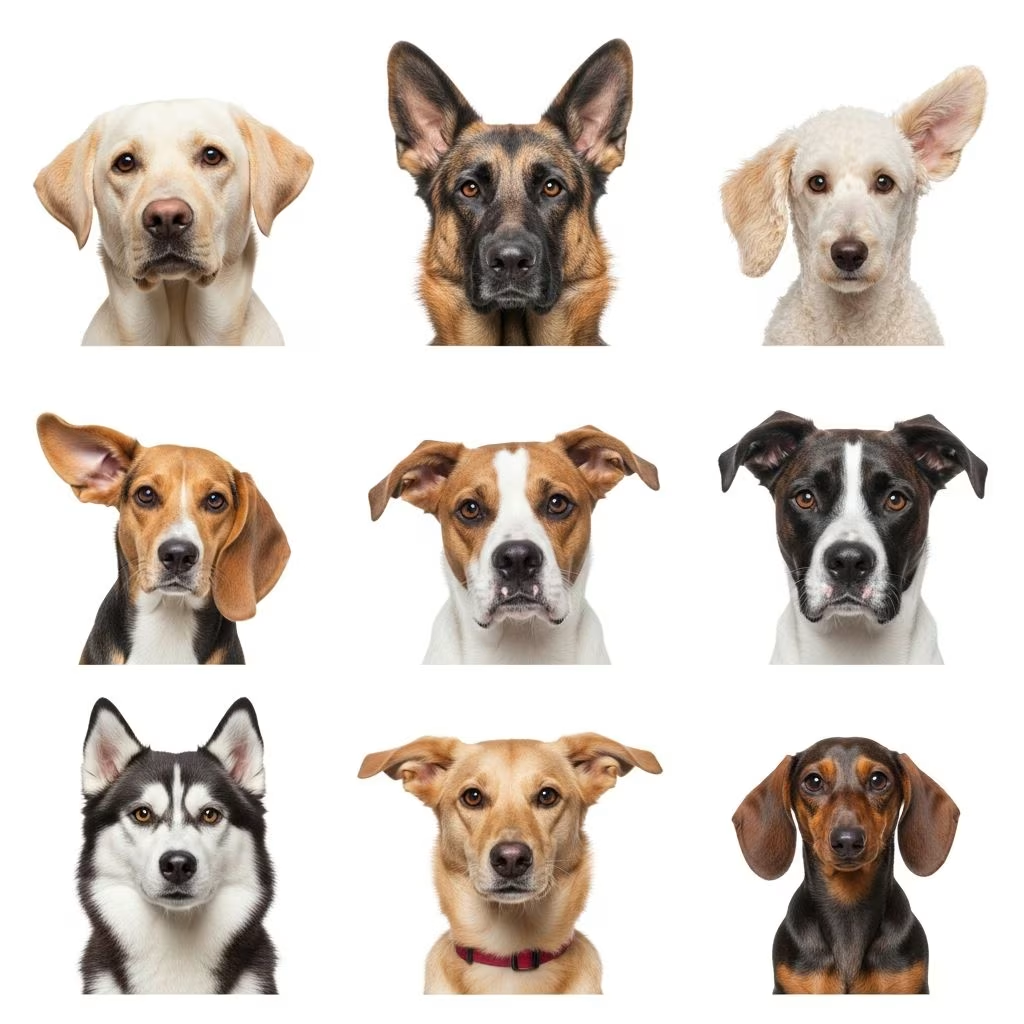
Dogs express a wide range of emotions through subtle body language cues, and their ears serve as one of the most expressive features. By learning to interpret ear positions, owners can better understand their pet’s mood, prevent potential conflicts, and strengthen the human-canine bond. This guide explores various ear signals, their meanings, and how to combine them with other body language for accurate readings.
Why Dog Ears Matter in Body Language
Canine ears are highly mobile, allowing dogs to convey alertness, curiosity, fear, or relaxation. Unlike humans, dogs use ear movements as primary signals in social interactions. Research shows that ear positions correlate directly with arousal levels and emotional states, making them reliable indicators when observed alongside tail, eyes, and posture. Even breeds with floppy or cropped ears communicate through base muscle tension, though signals may be subtler.
Understanding these signals promotes safer interactions, especially with unfamiliar dogs. For instance, misreading a pinned-back ear as playfulness could lead to bites, while recognizing forward ears as focus helps during training.
Basic Ear Positions and Their Core Meanings
Dogs display several distinct ear configurations, each tied to specific emotional contexts. Here’s a breakdown of the most common ones:
- Relaxed Ears: Positioned naturally, neither forward nor back, indicating a calm and content state. The dog feels secure in its environment.
- Forward and Perked: Ears lifted and directed ahead, signaling high arousal, interest, or attention to a stimulus like a sound or toy.
- Pinned Back: Ears flattened against the head, often denoting fear, submission, or anxiety. Tight pinning suggests intense discomfort.
- Rotated or Airplane: Ears angled sideways, reflecting uncertainty or ambivalence about a situation.
- Tightly Together: Ears pulled forward and close, showing intense focus that could precede action like chasing.
These positions vary by breed. Prick-eared dogs like German Shepherds display clear signals, while Basset Hounds rely on base lifts.
Dog Ear Positions Chart
| Ear Position | Primary Meaning | Accompanying Body Language |
|---|---|---|
| Relaxed/Natural | Calm, content | Loose body, soft eyes, circular tail wag |
| Perked Forward | Alert, aroused | Stiff posture or bouncy movement, wide eyes |
| Pinned Loosely Back | Submissive, friendly | Tail low, leaning in |
| Tightly Pinned | Fearful, aggressive | Low body, raised hackles, stiff tail |
| Sideways (Airplane) | Uncertain, conflicted | Mixed signals like half-wag tail |
| Swiveling/Rotated | Listening, curious | Head tilted, ears tracking sound |
Alertness and Arousal: Forward-Facing Ears
When ears point forward like radar dishes, your dog is locked onto something intriguing. This high-arousal state can stem from excitement, such as during play, or wariness toward a potential threat. Veterinary experts note that forward ears prepare dogs for ‘fight or flight,’ with muscles tensed for quick response.
Observe the full picture: Playful arousal pairs with a wagging tail and playful bows, while aggressive intent shows stiff legs and a hard stare. Floppy-eared breeds lift ear bases to face the triangular flap forward, mimicking prick ears. Training sessions often feature this position as dogs concentrate on commands or toys.
Fear and Submission: The Pinned-Back Signal
One of the clearest distress signals, pinned ears signal a dog trying to appear smaller and less threatening. Loosely pinned ears during greetings indicate friendliness or appeasement, common in social dogs like Golden Retrievers. However, ears pressed flat against the skull—sometimes called ‘seal ears’—denote extreme fear, often with a cowering body, tucked tail, and averted gaze.
In anxious contexts like vet visits or loud noises, dogs may pin ears while freezing or fleeing. Behaviorists emphasize combining this with whale eye (whites showing) for confirmation of stress. Never approach a dog showing these signs without caution.
Neutral and Relaxed States: Contentment Indicators
Truly relaxed dogs hold ears in a neutral position, with minimal muscle engagement. This reflects comfort and trust, often seen during petting or rest. Happy dogs might fold ears back submissively while leaning in, accompanied by squinting eyes and panting mouths.
Circular tail wags reinforce this positivity. Even in playful submission, ears relax backward without tension, distinguishing it from fear.
Breed Variations in Ear Expression
Not all dogs express equally. Prick-eared breeds like Huskies offer vivid signals, while drop-eared Spaniels use subtler base movements. Cropped ears limit visibility, shifting focus to shoulders and tail. Owners of long-eared hounds should watch for forward base tension during arousal.
Learn your dog’s neutral baseline through observation in low-stress settings. Compare to changes during interactions for accurate interpretation.
Contextual Factors: Reading Ears with Full Body Language
Isolated ear signals mislead; integrate with overall posture. Forward ears with loose, bouncy movements spell excitement, but paired with a rigid stance signal aggression. Pinned ears during running or bowing indicate joy, not fear.
- Positive Context: Forward ears + play bow + fast tail wag = Invitation to engage.
- Negative Context: Pinned ears + stiff body + growling = Back away slowly.
- Mixed Signals: Airplane ears + hesitant tail = Uncertainty; give space.
A 2018 study highlights eyes and mouth as key complements: relaxed mouth softens alert ears, while lip curling intensifies warnings.
Practical Tips for Owners
Practice daily observation to master these cues. During walks, note ear reactions to stimuli. Use positive reinforcement to associate training with relaxed ears. If stress signs appear frequently, consult a behaviorist.
For multi-dog homes, recognize inter-dog signals to prevent fights. Teach children safe approaches by spotting happy vs. wary ears.
Common Misinterpretations to Avoid
Many assume all pinned ears mean aggression, ignoring submissive joy. Forward ears aren’t always friendly—context matters. Breeds like those with naturally erect ears may default to perked, so track deviations from normal.
FAQs on Dog Ear Signals
What do forward-pointing dog ears mean?
They indicate alertness or high interest in a stimulus, like a noise or toy. Check body for excitement vs. tension.
Are pinned-back ears always a sign of fear?
No, loose pinning can show happiness or submission during play or greetings. Tight pinning signals distress.
How do floppy-eared dogs communicate?
Through base muscle lifts or drops, creating subtle forward or back tilts. Observe the ear root.
Can I train my dog to change ear positions?
Ear control is instinctual, not trainable, but you can condition relaxed states via positive experiences.
What if ears switch positions rapidly?
This suggests confusion or uncertainty. Remove stressors and observe for calming.
Enhancing Communication Through Awareness
Mastering ear signals transforms ownership. Proactive reading fosters trust, reduces accidents, and enriches life together. Regular practice reveals your dog’s unique ‘dialect,’ deepening mutual understanding.
References
- Deciphering Your Dog—Canine Body Language — Star of Texas Veterinary. Accessed 2026. https://staroftexasvet.com/deciphering-your-dog-canine-body-language/
- What Do Your Dog’s Ear Positions Mean? — Rover.com. Accessed 2026. https://www.rover.com/blog/dog-ear-position-chart/
- Dog Ear Signals — Whole Dog Journal. Accessed 2026. https://www.whole-dog-journal.com/behavior/dog-ear-signals/
- Canine body language: what do ears tell us? — YouTube (Rachel Marderosian, CPDT-KA). Accessed 2026. https://www.youtube.com/watch?v=08tWJRp1RXg
- Doggie Decoding: Understanding Canine Body Language — Texas A&M University College of Veterinary Medicine. Accessed 2026. https://vetmed.tamu.edu/news/pet-talk/understanding-canine-body-language/



