

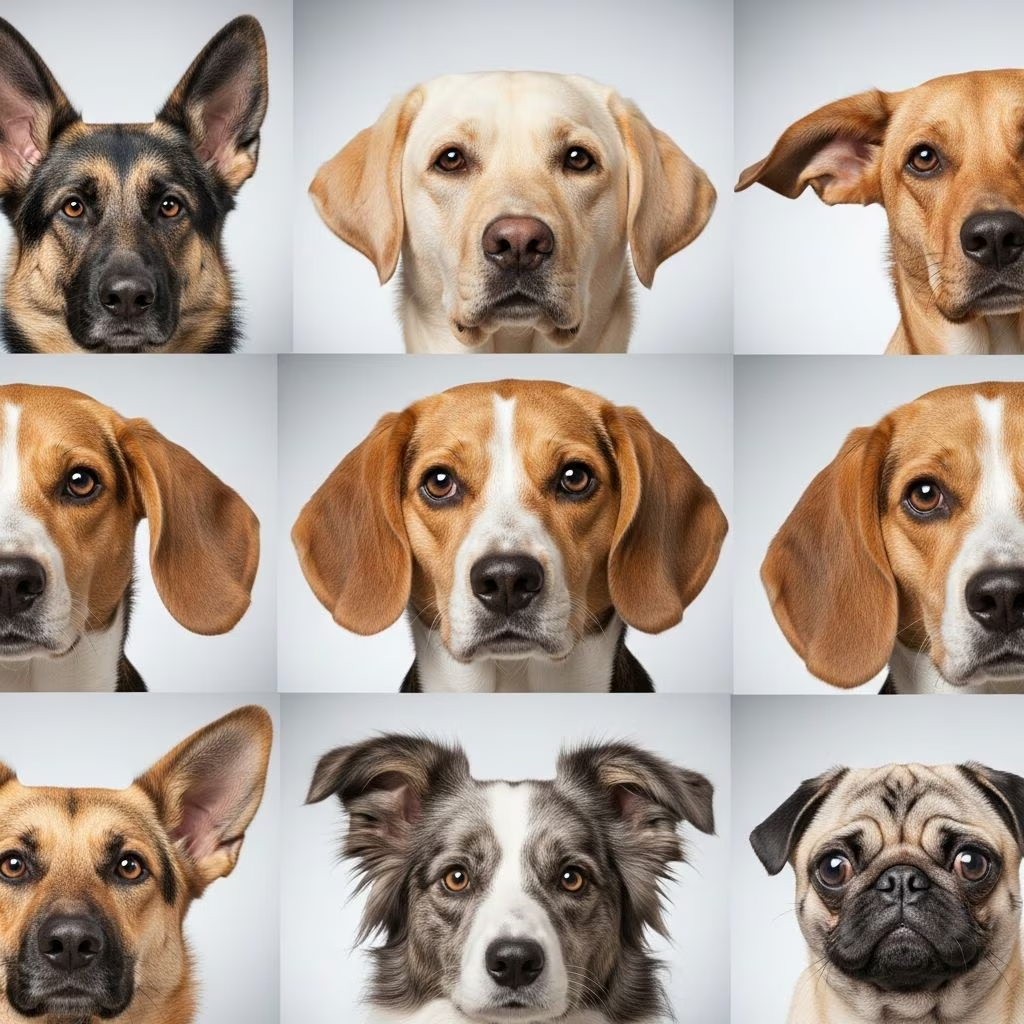
Dogs convey a wealth of information through their ears, which serve as dynamic indicators of their emotional state and intentions. These mobile appendages adjust position to signal everything from curiosity to distress, helping owners foster stronger relationships and prevent misunderstandings. By observing ear movements in context with other body cues, you can better interpret your dog’s needs.
The Anatomy of Dog Ears and Their Role in Expression
Dog ears vary widely by breed, from erect prick ears to floppy drop ears, yet all function as expressive tools. Erect ears allow for pronounced pivoting and angling, making signals clear, while long-eared breeds like Basset Hounds rely on base muscle tension for subtler shifts. This adaptability stems from over 18 muscles in each ear, enabling precise control for directional hearing and social signaling.
Understanding this anatomy is key: prick-eared dogs like German Shepherds display bold forward thrusts, whereas drop-eared Spaniels show tension at the ear base. Regardless of shape, ear position reflects arousal levels and context, as confirmed in studies on canine ethology.
Key Ear Positions and Their Meanings
Dogs exhibit several distinct ear configurations, each tied to specific emotions. Here’s a breakdown:
- Forward and Perked Ears: Indicate heightened alertness or interest. The ears point directly ahead, often like radar dishes tracking sounds. This suggests focus on a stimulus, such as a toy or approaching person.
- Relaxed or Neutral Ears: Positioned naturally without tension, signaling contentment. In drop-eared dogs, they hang loosely; in erect types, they sit midway without stiffness.
- Pinned or Flattened Back Ears: Pulled tightly against the head, denoting fear, anxiety, or submission. Degrees vary: slight pinning shows appeasement, while extreme flattening signals intense distress, sometimes called ‘seal ears’.
- Sideways or Airplane Ears: Ears splayed outward, reflecting ambivalence or mild uncertainty. Common in conflicted states, like wanting to approach but feeling hesitant.
- Rotated or Asymmetrical Ears: One or both ears swiveling independently, used for pinpointing sounds from odd angles. This shows active listening without full commitment.
- Tightly Clenched Forward Ears: Ears rigid and nearly touching, marking high intensity. Could precede excited charges or aggressive postures, depending on body tension.
Ear Signals in Context: Pairing with Body Language
Ear positions alone can mislead; always assess the full picture. Forward ears with a loose, wagging tail and bouncy posture mean playful excitement. Conversely, the same ears with a stiff body, hard stare, and raised hackles signal potential aggression.
For fear, pinned ears accompany a lowered body, tucked tail, and averted gaze—whale eye, where whites show. Relaxed ears pair with soft eyes, leaning, or play bows for joy. Texas A&M veterinary experts emphasize circular tail wags with neutral ears as peak happiness indicators.
| Ear Position | Positive Context (Body Cues) | Negative Context (Body Cues) |
|---|---|---|
| Forward/Perked | Loose tail wag, play bow, relaxed mouth | Stiff posture, intense stare, hackles up |
| Pinned Back | Playful submission, wiggly body | Low crouch, tail tuck, lip licking |
| Neutral/Relaxed | Leaning in, squinting eyes, panting | Rarely negative alone |
| Sideways | Mild curiosity, slight wag | Body freeze, yawning |
This table summarizes combinations for quick reference, drawn from behaviorist observations.
Breed Variations: Reading Beyond the Obvious
Not all dogs express equally. Cropped ears limit visibility, floppy ones obscure flattening, and erect breeds amplify signals. Golden Retrievers, for instance, pin ears for both joy and nerves—context clarifies. Floppy-eared dogs lift base tendons forward in arousal, mimicking prick ears.
Adapt your reading: Watch for ear leather tension in long-eared pups or subtle base shifts in prick-eared ones. Italian research highlights how arousal degrees dictate pull-back intensity, applicable across breeds.
Common Scenarios: Ears in Everyday Life
During Greetings and Play
In social encounters, slightly pinned ears with a wagging tail often mean friendly submission. Forward ears during fetch signal laser focus on the ball. Video analyses show lifted ears in joyful chases, contrasting anxious side-tipping.
On Walks and New Environments
Curious walks feature pointed ears tracking novel sounds. Anxiety in crowds prompts pinning, urging owners to create distance.
Training and Focus Moments
Tense, forward ears denote concentration during commands. Relaxed positions post-success indicate satisfaction.
Why Context Matters: Arousal vs. Emotion
Ears primarily track arousal levels, not emotions directly. High arousal (perked ears) can flip from thrill to threat based on tail, posture, and eyes. A 2018 study notes forward ears for approach intent, back for appeasement, stressing holistic reads.
Conflicting signals—like up ears with down tail—warrant caution, as they suggest inner turmoil.
Practical Tips for Owners
- Practice daily observation: Note your dog’s baseline neutral ears.
- Combine cues: Never isolate ears from tail, mouth, or posture.
- Use positive reinforcement: Reward calm signals to encourage clear communication.
- Consult pros: For persistent fear signals, seek certified trainers or vets.
- Video record: Capture subtle shifts for review.
Frequently Asked Questions (FAQs)
What if my dog has cropped ears?
Cropped ears reduce visibility, so prioritize body posture, tail, and eyes. Muscle tension at the base may still hint at pinning.
Do all dogs pin ears the same way?
No—breed anatomy affects expression. Learn your dog’s unique styles through consistent watching.
Can ear signals predict aggression?
Paired with stiffening and staring, yes—but always err safe and disengage.
How do I teach my dog clearer signals?
You can’t change innate signals, but calm environments and training build confidence for reliable expression.
What about puppies?
Pups have developing muscles; their signals mature around 6-12 months. Patience is key.
Enhancing Your Bond Through Awareness
Mastering ear language transforms interactions, reducing mishaps and deepening trust. Regular practice turns you into a canine whisperer, spotting joy in a subtle lift or worry in a flatten before vocal cues arise. Vets and behaviorists universally advocate this skill for harmonious homes.
References
- Deciphering Your Dog—Canine Body Language — Star of Texas Veterinary. Accessed 2026. https://staroftexasvet.com/deciphering-your-dog-canine-body-language/
- What Do Your Dog’s Ear Positions Mean? — Rover.com. Accessed 2026. https://www.rover.com/blog/dog-ear-position-chart/
- Dog Ear Signals — Whole Dog Journal. 2018. https://www.whole-dog-journal.com/behavior/dog-ear-signals/
- Canine body language: what do ears tell us? — Rachel Marderosian, CPDT-KA (YouTube). Accessed 2026. https://www.youtube.com/watch?v=08tWJRp1RXg
- Doggie Decoding: Understanding Canine Body Language — Texas A&M College of Veterinary Medicine. Accessed 2026. https://vetmed.tamu.edu/news/pet-talk/understanding-canine-body-language/



