

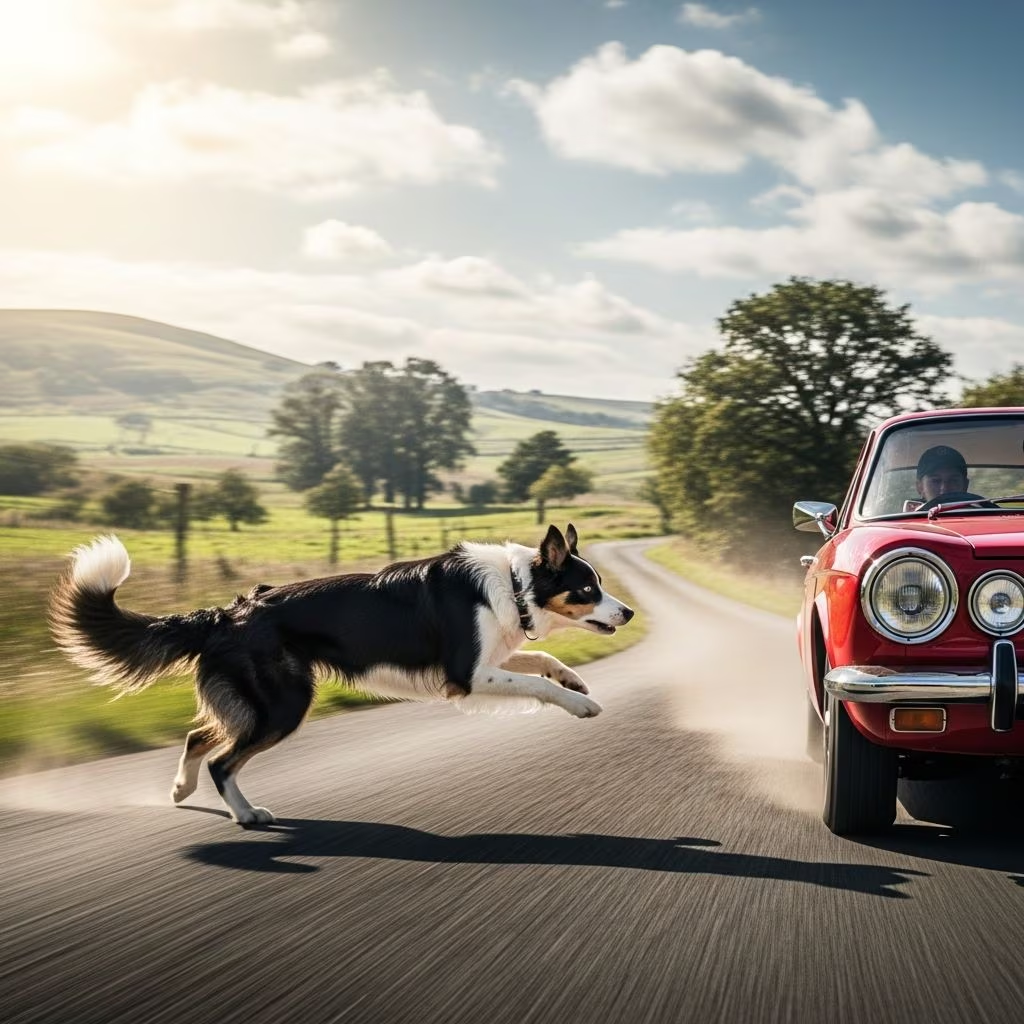
Dogs chasing cars is a captivating yet perilous behavior rooted in their evolutionary instincts. This action stems primarily from a dog’s **predatory drive**, where fast-moving objects trigger an innate sequence of responses leading to pursuit.
The Evolutionary Roots of Pursuit Behavior
From a biological standpoint, canines are wired for hunting. The predatory sequence—orienting to movement, stalking, chasing, grabbing, biting, and killing—activates when a dog spots a vehicle speeding by. Unlike humans who recognize cars as non-prey, dogs perceive them as elusive targets demanding chase. This instinct ensured survival for wild ancestors pursuing game, but in modern environments, it poses severe risks like traffic accidents.
Herding breeds amplify this tendency. Dogs like Border Collies and Australian Shepherds were selectively bred to control livestock motion, making any rapid movement a cue for intervention. Terriers, with their high prey drives honed for vermin hunting, and sighthounds like Greyhounds, optimized for spotting distant motion, are particularly susceptible.
Other Triggers Beyond Pure Instinct
Not all chases are predatory. Some dogs react territorially, viewing passing vehicles as intruders encroaching on their space. They pursue until the ‘threat’ exits their domain, a protective response common in yard-based incidents.
- Territorial Defense: Dogs bark and lunge to ‘drive away’ cars from home boundaries.
- Fear-Based Reactions: Past accidents or observed traumas link vehicles to danger, prompting defensive chases.
- Habitual Reinforcement: Repeated unchallenged pursuits create a thrilling loop, as the adrenaline rush becomes self-rewarding.
High-energy dogs without outlets are prime candidates, turning boredom into fixation on road traffic.
Breeds Most Prone to Vehicle Pursuit
Certain lineages show stronger inclinations due to genetic programming. Understanding breed traits helps tailor prevention.
| Breed Group | Examples | Primary Drive |
|---|---|---|
| Herding | Border Collie, Australian Shepherd, German Shepherd | Motion control and pursuit |
| Terriers | Jack Russell, Fox Terrier | High prey chase instinct |
| Sighthounds | Greyhound, Whippet | Visual motion detection |
| Working | Belgian Malinois | Intense drive and speed |
These breeds thrive with jobs channeling their energy, reducing random chases.
The Real Dangers of Unchecked Chasing
Beyond immediate collision risks, habitual chasers develop stress-related issues. Obsessive scanning of roads leads to anxiety, poor walk focus, and eroded recall reliability. Owners face heart-stopping moments, potential swerves causing human harm, and escalating vet bills from injuries.
Chronic arousal shifts dogs into ‘reactive brain’ mode, impairing learning until calmed. Ignoring this invites broader behavioral spirals.
Building a Safer Foundation: Prevention Essentials
Proactive management trumps reaction. Secure yards with fences preventing road access. Use long lines or harnesses on walks near traffic. Provide ample exercise—not just physical, but mental via puzzles, scent games, and training to tire the mind.
A fulfilled dog with purpose resists distractions. High-drive types need structured tasks like agility or obedience drills.
Core Training Techniques to Curb the Chase
Effective training reframes vehicles as non-threats. Avoid punishment, which suppresses without resolving underlying emotions. Instead, employ counterconditioning and positive reinforcement.
Impulse Control Foundations
- Emergency Recall: Practice ‘come’ with high-value rewards in low-distraction settings, graduating to mild traffic.
- Engagement Games: ‘Watch me’ cues redirect focus; reward eye contact amid distant car sights.
- Leave It Command: Teach ignoring temptations, applying to passing vehicles.
Counterconditioning Protocol
Pair car sightings with positivity: At safe distance, mark calm observation with treats. Gradually close proximity as association builds—cars now signal rewards, not chase cues.
Pattern games like ‘look at that’ (acknowledge then disengage) build tolerance. Long-line practice ensures control during lapses.
Advanced Desensitization
Simulate with toys on wheels or parked cars starting slowly. Professional trainers aid reactive cases, using tools like e-collars only under guidance.
Environmental and Lifestyle Adjustments
Route walks from busy roads. Mental fatigue via sniffari walks or food-dispensing toys outperforms endless fetch. Consistent routines foster security, diminishing territorial outbursts.
- Decompression hikes for calm exploration.
- Interactive feeders for mealtimes.
- Job assignments: herders fetch specific items, terriers hunt toys.
When to Seek Professional Help
If DIY fails or intensity escalates, consult certified behaviorists. They diagnose nuances like fear overlays, crafting personalized plans. Early intervention prevents entrenchment.
Frequently Asked Questions
Can all dogs be trained out of car chasing?
Yes, with patience and consistency. Instinct varies, but management and training succeed for most.
How long does training take?
Weeks to months, depending on dog age, breed, and prior habits. Daily sessions accelerate progress.
Is muzzle training helpful?
For reactive chasers, yes—it prevents bites while building calm responses.
What if my dog chases in the yard?
Block visibility with fencing or visual barriers; train indoors first.
Does neutering reduce chasing?
It may temper some drives but doesn’t eliminate instinct-based behavior.
Long-Term Success Strategies
Sustain gains with lifelong enrichment. Rotate activities to combat boredom. Monitor for regressions during life changes like moves. Celebrate progress—reliable loose-leash walking near traffic marks victory.
Ultimately, decoding this behavior empowers owners to harness instincts positively, ensuring joyful, secure companionship.
References
- Why Do Dogs Chase Cars? — Mental Floss. 2023-05-15. https://www.mentalfloss.com/animals/dogs/why-dogs-chase-cars
- Why Dogs Chase Cars — And How to Put the Brakes on It — The Training of Dogs. 2024-08-20. https://www.thetrainingofdogs.com/post/stop-dog-car-chasing-behaviour
- Why dogs chase cars and bikes? — YouTube (Educational Channel). 2022-11-10. https://www.youtube.com/watch?v=W508ASdAWJQ
- How to Prevent Your Dog From Chasing Cars — American Kennel Club (AKC). 2025-01-12. https://www.akc.org/expert-advice/training/prevent-dog-chasing-cars/
- How to Stop Your Dog From Chasing Cars — WebMD Healthy Pets. 2024-03-05. https://www.webmd.com/pets/dogs/why-do-dogs-chase-cars



