

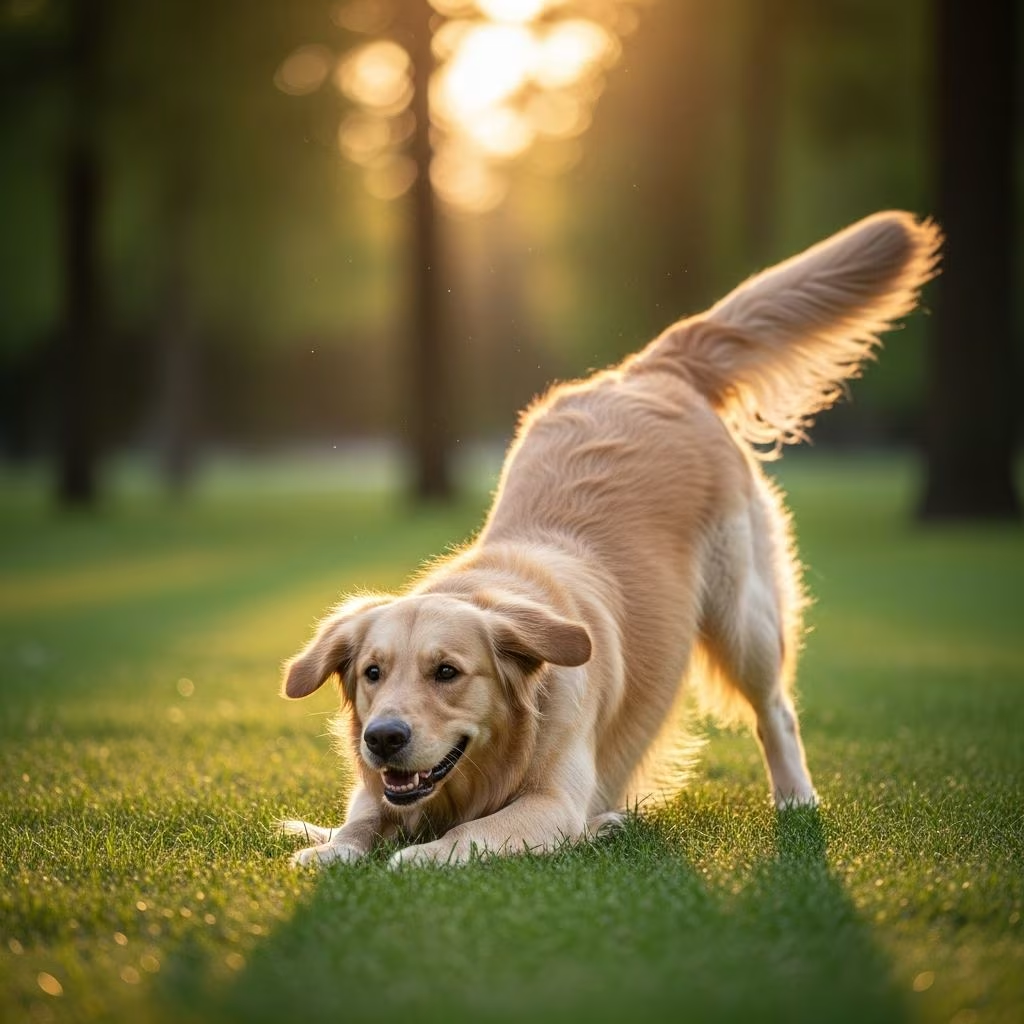
Dogs frequently lower their front end to the ground while keeping their rear elevated, a posture commonly called the “bow.” This distinctive stance serves multiple purposes in canine communication, primarily signaling an invitation to engage but also conveying other emotions or physical needs depending on accompanying cues.
Understanding the Anatomy of a Dog Bow
The classic dog bow involves extending the front legs forward, dropping the chest close to or touching the ground, and lifting the hindquarters high with the tail often wagging vigorously. This position stretches the dog’s spine, shoulders, and legs, mimicking a yoga “downward dog” pose. Observers note its prevalence across breeds and ages, making it a universal canine expression.
Context is crucial: a loose, bouncy bow with bright eyes and play growls differs sharply from a tense, reluctant drop. Evolutionary biologists suggest this ritualized form evolved through stabilizing selection, where consistent physical traits ensure clear signaling with minimal misinterpretation during social interactions.
Primary Reasons Dogs Perform the Bow Posture
Dogs bow for several interconnected reasons, each tied to their social and physical world. Here’s a breakdown of the most common motivations:
- Invitation to Play: The most recognized function is the play bow, where a dog signals readiness for fun. Often seen before fetch or tug-of-war, it includes rapid tail wags, excited barking, and zigzagging movements.
- Friendly Greeting: Upon your return home, a bow expresses joy and acceptance without demanding rough play. It’s a polite “hello” radiating enthusiasm.
- Post-Nap Stretch: After sleeping, dogs bow to loosen stiff muscles, frequently paired with a wide yawn. This relieves tension built from prolonged rest.
- Submission or Respect: In deference to a perceived superior, like a household dominant dog or cautious human approach, the bow shows non-threat. Accompanied by flattened ears, low tail, and lip licking.
- Mirroring Human Actions: Athletic dogs may imitate owners’ yoga or exercise stretches, joining in the motion naturally.
How Play Bows Facilitate Social Bonds
Play bows are not random; they structure dog interactions. Research on puppies shows bows often precede chases or wrestling, positioning the bower for quick retreats or pursuits. This metacommunication clarifies that rough actions are playful, not aggressive.
In multi-dog homes, bows reduce conflicts by explicitly inviting fair play. Wolves and dogs alike use them, indicating deep evolutionary roots. Owners can reciprocate by mimicking the pose or tossing a toy, strengthening trust.
| Bow Type | Key Indicators | Typical Response |
|---|---|---|
| Play Bow | High tail wag, bouncy body, alert eyes | Join in with toys or chase |
| Greeting Bow | Relaxed wag, direct eye contact | Pet gently, offer calm affection |
| Stretch Bow | Yawn, slow extension, post-sleep | Allow space for full stretch |
| Submissive Bow | Low tail, averted gaze, slow approach | Avoid looming; use soft voice |
When Bowing Signals Potential Health Issues
Not all bows are benign. The “prayer position”—front end down, rear up, but with a tucked abdomen—often denotes abdominal discomfort from bloat, pancreatitis, or nausea. Watch for vomiting, lethargy, diarrhea, or appetite loss alongside repeated bows.
Sudden onset or isolated bowing without play context warrants veterinary attention. For instance, frequent prayer-like postures in large breeds may signal gastric dilatation-volvulus (GDV), a life-threatening emergency. Distinguish by stiffness, whining, or avoidance of touch versus playful looseness.
Breed and Age Variations in Bowing Behavior
Breed influences bow frequency: high-energy herding breeds like Border Collies bow often to initiate herding games, while brachycephalic (short-nosed) dogs like Bulldogs may bow less due to physical limitations. Puppies bow prolifically during socialization, honing play skills, whereas seniors might limit to gentle stretches.
Spayed or neutered dogs show no significant difference, but anxious rescues may overuse submissive bows from past trauma. Training mitigates this by building confidence.
Training Tips to Encourage Positive Bowing
Harness the bow for training. Teach “bow” as a trick: lure with a treat to the ground, reward upright posture. Use for impulse control—bow means “wait for permission to play.” Positive reinforcement prevents submissive overuse.
In group play, supervise to ensure bows lead to equitable fun. If pain suspected, restrict activity and consult vets promptly.
FAQs: Common Questions About Dog Bowing
Is every dog bow a play invitation?
No. While dominant, context matters. Play bows feature wiggly bodies; others show tension or relaxation.
Should I worry if my dog bows excessively?
Yes, if paired with symptoms like whining or appetite changes. It may indicate GI distress—see a vet.
Can I train my dog to bow on command?
Absolutely. Use treats to shape the posture, naming it for fun tricks or greetings.
Do all dogs bow the same way?
Variations exist by breed and flexibility, but the core form—front low, rear high—remains consistent.
What if my dog bows to strangers?
Often friendliness, but monitor for overexcitement. Reward calm behavior.
Enhancing Communication Through Observation
Mastering bow interpretation deepens your bond. Combine with ear positions, tail carriage, and vocalizations for full reads. Apps tracking behavior patterns aid owners in spotting anomalies early.
Daily routines incorporating play bows boost endorphins, reducing stress. Evolutionary insights remind us: this simple stretch evolved into a profound social tool, enabling joy across species.
References
- Why Does My Dog Bow to Me? 5 Vet-Reviewed Reasons — Dogster. 2023. https://www.dogster.com/dog-behavior/why-does-my-dog-bow-to-me
- What Does It Mean When My Dog Bows? — Dial A Vet. 2024. https://www.dialavet.com/blog/what-does-it-mean-when-my-dog-bows
- Dogs at Play: How and Why Bowing Came to Mean “Let’s Play” — Psychology Today. 2025-03-01. https://www.psychologytoday.com/us/blog/animal-emotions/202503/dogs-at-play-how-and-why-bowing-came-to-mean-lets-play
- The Function of Play Bows in Dog and Wolf Puppies — Companion Animal Psychology. 2017-02. https://www.companionanimalpsychology.com/2017/02/the-function-of-play-bows-in-dog-and.html



