

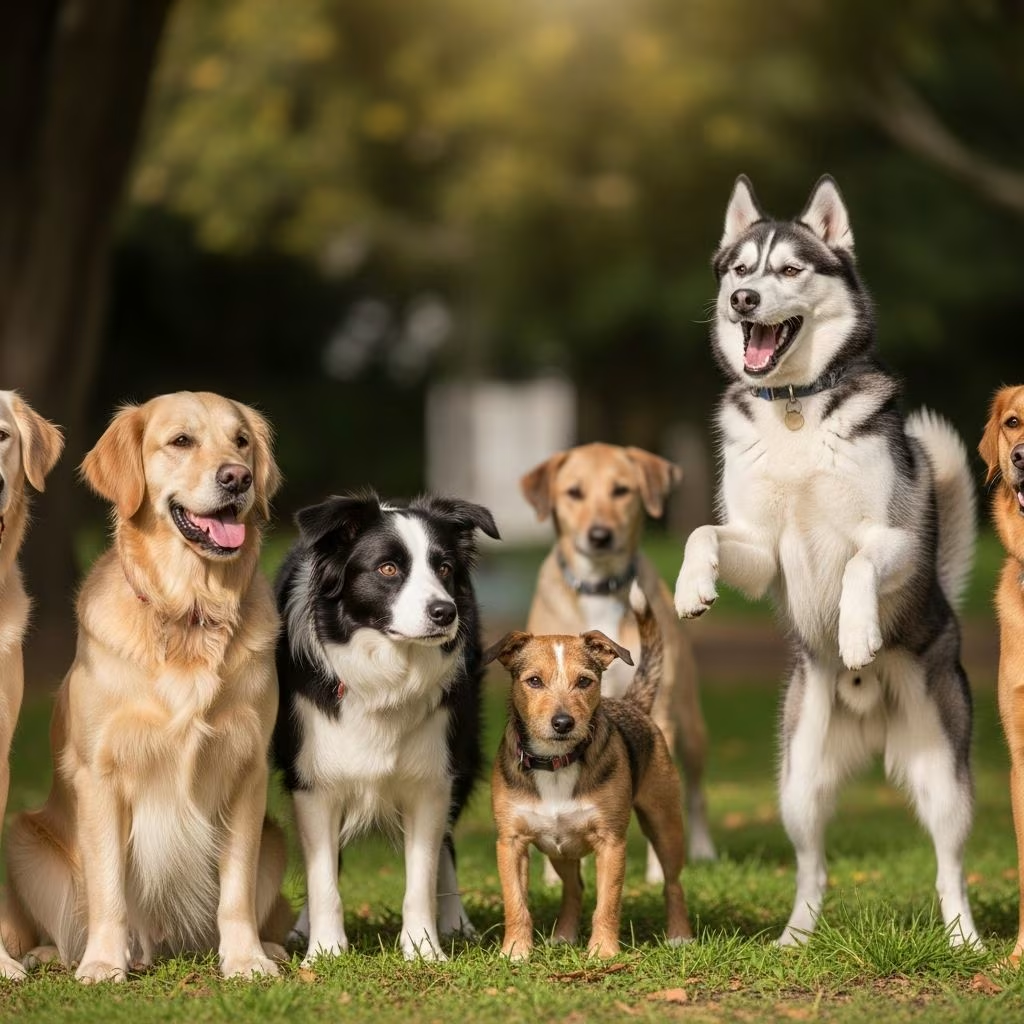
Dogs communicate primarily through their bodies rather than words, using a complex system of postures, facial expressions, and movements to express emotions ranging from joy to fear. Understanding these signals fosters stronger human-canine bonds, enhances safety during interactions, and helps prevent behavioral issues by addressing needs early. This guide breaks down key elements of canine communication, drawing from established veterinary and behavioral insights to equip you with practical knowledge.
Why Learning Canine Signals Matters
Observing a dog’s entire body provides the fullest picture of its emotional state, as isolated cues like a wagging tail can mislead. For instance, rapid tail wags might signal arousal rather than happiness, potentially indicating frustration or aggression when paired with stiff posture. Recognizing stress early promotes welfare, reduces bite risks, and improves training outcomes by respecting the dog’s comfort levels.
Owners who misread signals often inadvertently escalate tensions, such as approaching a fearful dog that freezes in warning. Proactive interpretation allows interventions like creating space, preventing escalations to growls or snaps.
Interpreting Tail Positions and Movements
The tail is a prominent communicator, but context is crucial. A relaxed, broad wag sweeping side-to-side from a neutral position typically indicates friendliness or contentment. Circular wags suggest high joy, often seen in enthusiastic greetings.
- High, stiff tail: Signals alertness or agitation; if wagging in short, rigid strokes, it may denote threat assessment rather than playfulness.
- Low or tucked tail: Conveys fear, submission, or discomfort; a fast low wag amplifies uncertainty.
- Slow wag: Reflects calm relaxation, especially if the whole body sways.
Combine tail cues with body stance: a high tail with forward-leaning posture warns of potential lunging.
Facial Expressions: Eyes, Ears, and Mouth
Facial features offer subtle yet vital insights. Soft, squinting eyes paired with a relaxed mouth signal comfort, while wide, hard stares indicate tension or challenge.
| Feature | Relaxed Signal | Stressed Signal |
|---|---|---|
| Eyes | Squinty, blinking, soft gaze | Wide open, staring, averted |
| Ears | Neutral or slightly back | Flattened back, pinned |
| Mouth | Slightly open, tongue out | Closed tight, lip licking |
Lip licking or yawning often serves as a calming signal to de-escalate situations, not just hunger or tiredness. Ears forward show interest; flattened ones denote fear or defensiveness.
Body Postures and Weight Distribution
Posture reveals intentions clearly. A play bow—front low, rear high—invites fun, often with bouncy movements. Conversely, a frozen stance signals caution; the dog is assessing threats and may guard resources.
- Leaning in: Comfort and affection, like resting against legs.
- Leaning away or crouching: Avoidance or submission to appease dominants.
- Raised hackles: Arousal from fear, excitement, or aggression; not always hostile but requires context.
Weight shifted forward predicts advance or charge; rearward suggests retreat readiness.
Signs of Relaxation and Contentment
Happy dogs display loose, fluid movements. Look for:
- Open mouth with lolling tongue.
- Relaxed ears and neutral tail.
- Belly exposure with gentle wagging, inviting (but not demanding) interaction.
- Play bows and zooming around.
These indicate trust and low stress, ideal for bonding activities like petting or walks.
Recognizing Stress, Fear, and Discomfort
Early stress signs prevent escalations. Common indicators include:
- Body stiffness or freezing.
- Yawning, lip licking, head turns away.
- Tail tucking, ears back, piloerection (raised fur).
Fear progresses: avoidance first, then warnings like growls or air snaps, culminating in bites if ignored. Submissive grins—exposed teeth with relaxed eyes—aim to pacify, not threaten.
Aggression Warning Signs
Aggressive postures demand space. Key markers:
- Stiff body, forward lean, growling with bared teeth.
- High tail, direct stare, lunging.
- Muzzle tension, wrinkled lips.
These are defensive broadcasts; intervening by removing triggers de-escalates safely.
Contextual Factors in Interpretation
No signal stands alone—consider breed, individual history, and environment. Pointing breeds raise paws for prey, but others signal hesitation. Multi-dog interactions amplify nuances; a dominant dog may hold ears/tail high during greetings.
Vocalizations complement: playful barks differ from sharp warnings. Observe baselines for your dog to spot deviations accurately.
Practical Tips for Better Communication
- Watch the whole dog, not just tail or eyes.
- Respect calming signals by giving space.
- Use positive reinforcement for desired behaviors.
- Avoid punishment, which heightens fear.
- Consult professionals for persistent issues.
Practice in low-stakes settings, like parks, to hone skills.
Common Misconceptions About Dog Signals
Tail wagging always means happy: No—context determines if it’s joy or agitation.
Belly up means rub me: Often submission; approach cautiously to avoid startling.
Hackles mean attack: Indicates high arousal, varying by accompanying cues.
FAQs
What does a stiff tail wag mean?
A stiff, high wag often signals arousal or potential aggression, especially with forward posture. Assess full body language.
How can I tell if my dog is scared?
Look for tucked tail, flattened ears, lip licking, avoidance, or freezing. Give space immediately.
Is lip licking always thirst?
No, it’s frequently a stress-relief signal or appeasement gesture.
What is a play bow?
Chest down, rump up—clear invitation to play, usually with wiggly body.
Should I pet a dog showing teeth?
Avoid if stiff; submissive grins are relaxed, but err on caution.
Enhancing Your Bond Through Awareness
Mastering these cues transforms ownership, turning potential conflicts into harmonious interactions. Regular observation builds intuition, while training reinforces mutual understanding. Prioritize welfare by heeding signals, ensuring joyful companionship.
References
- Canine Body Language — Positively.com. Accessed 2026. https://positively.com/dog-training/article/communication-canine-body-language
- How to Read Dog Body Language — American Kennel Club. Accessed 2026. https://www.akc.org/expert-advice/training/how-to-read-dog-body-language/
- Understanding Your Dog’s Body Language: A Guide to Canine Communication — Texas A&M University. 2025-03-13. https://stories.tamu.edu/news/2025/03/13/understanding-your-dogs-body-language-a-guide-to-canine-communication/
- Canine Body Language — Purdue University Center for Animal Welfare. Accessed 2026. https://caninewelfare.centers.purdue.edu/behavior/canine-body-language/
- Canine Body Language — ASPCA (PDF). Accessed 2026. https://www.scanimalshelter.org/sites/default/files/Canine_Body_Language_ASPCA.pdf
- Dog Body Language: Signs of Comfort, Stress, and More — Best Friends Animal Society. Accessed 2026. https://bestfriends.org/pet-care-resources/dog-body-language-signs-comfort-stress-and-more



