

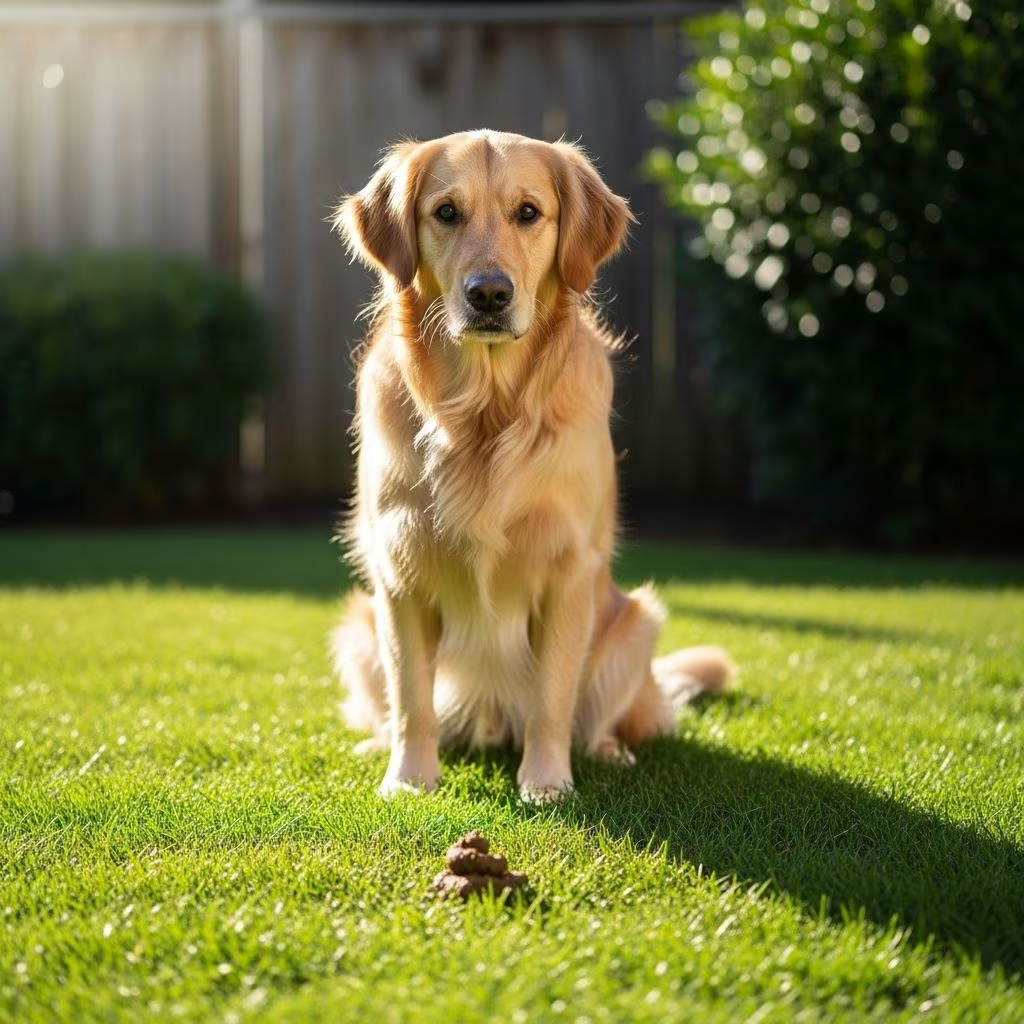
Coprophagia, the act of dogs eating their own or other animals’ feces, affects up to 24% of dogs at least occasionally and 16% habitually. This behavior, while repulsive to humans, stems from deep-rooted instincts, nutritional needs, and environmental factors. Understanding its causes empowers owners to address it effectively without unnecessary alarm.
The Evolutionary Roots of Feces Consumption
Dogs descend from wolves, whose survival strategies included consuming fresh feces to safeguard dens from parasites. In wild packs, leaving droppings in resting areas risked reinfestation as parasite larvae hatch quickly from eggs. By ingesting stool promptly, wolves prevented this threat, a trait persisting in modern dogs.
Mother dogs exemplify this through den sanitation: they eat puppies’ feces and lick their hindquarters for the first few weeks post-birth, minimizing infection risks in confined spaces. Puppies mimic this, consuming their own or littermates’ waste (autocoprophagia or conspecific coprophagy). Veterinary researchers at UC Davis, led by Dr. Benjamin Hart, link this to an innate predisposition, noting no strong ties to diet or age but a clear evolutionary echo.
Nutritional Drivers Behind the Habit
Some dogs turn to feces when diets fall short. Modern kibble, rich in fats and proteins, may leave undigested residues appealing as a ‘second-hand’ meal. Herbivore manure, like from horses or rabbits, offers semi-digested plants, antioxidants, vitamins, and enzymes dogs might crave.
Stray dogs in food-scarce areas consume human or animal waste for survival, hinting at nutrient supplementation. While not all cases involve deficiencies, enzyme supplements or diet tweaks can help. A PMC study on conspecific coprophagy highlights this paradox: feces provide microbes aiding digestion or filling gaps from poor absorption.
| Nutrient Source | Potential Benefit | Common Feces Type |
|---|---|---|
| Vitamins & Minerals | Recoups losses from incomplete digestion | Horse, rabbit |
| Antioxidants | Boosts health in varied diets | Ungulate (hoofed herbivores) |
| Microbes | Supports gut flora | Own or conspecific |
| Proteins/Fats | Extra calories when hungry | Cat, dog |
Behavioral and Psychological Triggers
Beyond biology, behavior plays a key role. Attention-seeking tops the list: dogs notice owners’ strong reactions—scolding or chasing—and repeat the act for interaction, even negative. Ignore calmly to break this cycle.
- Exploratory Instinct: Puppies mouth everything, including smelly feces, to learn via taste and scent.
- Anxiety Response: Stress from harsh house-training creates a loop—dogs eliminate, eat evidence to hide it, then face punishment anyway.
- Mimicry: Dogs copy pack mates; if one eats poop, others join in.
- Boredom or Compulsion: Understimulated dogs resort to habits like this for entertainment.
Unlike nutritional cases, behavioral ones persist across health dogs, per UC Davis surveys.
Health Risks and When to Worry
Occasional coprophagia rarely harms healthy dogs, but frequency signals issues. Parasites, digestive disorders (e.g., exocrine pancreatic insufficiency), or diabetes can drive it. Feces carry bacteria like Salmonella or parasites such as roundworms, risking zoonotic transmission.
Sudden onset in adults warrants a vet visit to rule out deficiencies or illness. The Smithsonian’s conservation genomics notes coprophagy can signal stress, poor digestion, or nutrient theft by internal parasites. Monitor for vomiting, diarrhea, or weight loss alongside the habit.
Proven Strategies to Discourage Coprophagia
Deterrence combines management, training, and health checks. No single fix works universally, as causes vary, but consistency yields results.
- Veterinary Evaluation: Test for deficiencies, parasites, or diseases first.
- Diet Optimization: Switch to highly digestible food; add probiotics or B-vitamins if recommended.
- Training Techniques: Use ‘leave it’ commands with positive reinforcement. Leash walks prevent access; supervise yards.
- Environmental Management: Scoop poop immediately; use motion-activated deterrents like citrus sprays.
- Behavioral Interventions: Increase exercise and enrichment to reduce boredom. For attention-seekers, reward calm behavior instead.
Studies show treatments succeed in only a minority without addressing roots, so combine approaches.
Common Myths Debunked
- Myth: It’s always a vitamin deficiency. Rare in balanced diets; evolution explains most cases.
- Myth: Punishing stops it. Often worsens via anxiety or attention reinforcement.
- Myth: Only puppies do it. Persists into adulthood for 16% of dogs.
FAQs on Dogs Eating Poop
Is coprophagia normal?
Yes, evolutionarily normal but undesirable. 1 in 6 dogs do it frequently; intervene if persistent.
Why do dogs prefer cat poop?
High-protein, palatable due to feline diets; keep litter inaccessible.
How long does puppy coprophagia last?
Often fades by 6-9 months with training, but monitor.
Can supplements alone fix it?
Not reliably; address behavioral causes too.
Is it dangerous for my dog?
Low risk occasionally, but vet check for habits to prevent infections.
Long-Term Management for a Poop-Free Life
Patience and holistic strategies transform coprophagia. Track incidents in a journal noting diet, stress, and routine changes to pinpoint triggers. Breeds like Labs or Beagles may show higher rates due to curiosity, but all can improve with diligence.
Consult vets for tailored plans; products like offal-based deterrents (e.g., pineapple in food) show mixed anecdotal success by making poop unappealing. Ultimately, viewing coprophagia as a signal—evolutionary holdover, unmet need, or bid for connection—fosters empathy and solutions.
References
- WHY DO DOGS EAT POOP? — The Dish on Science, Stanford. 2023. https://thedishonscience.stanford.edu/articles/rvuid1mxx6u1wkdlk1o6u40xv1zfga
- The Evolutionary Reason Behind Dogs Eating Their Own Poop — The Aggie, UC Davis. 2018-02-25. https://theaggie.org/2018/02/25/evolutionary-reason-behind-dogs-eating-poop/
- Why do Dogs Eat Their Poop? — Patton Veterinary Hospital. 2023. https://pattonvethospital.com/blog/1105264-why-do-dogs-eat-their-poop
- Why Do Dogs Eat Poop? Unveiling the Science Behind This Peculiar Behavior — YEG Vet. 2023. https://www.yegvet.ca/why-do-dogs-eat-poop-unveiling-the-science-behind-this-peculiar-behavior/
- Why Dogs Eat Poop And How To Stop It — American Kennel Club. 2023. https://www.akc.org/expert-advice/health/why-dogs-eat-poop/
- Why Do Animals Eat Poop? (And Why It Might Be a Good Thing) — Smithsonian National Zoo. 2023. https://nationalzoo.si.edu/center-conservation-genomics/news/why-do-animals-eat-poop-and-why-it-might-be-good-thing
- The paradox of canine conspecific coprophagy — PMC, NIH. 2018. https://pmc.ncbi.nlm.nih.gov/articles/PMC5980124/



