

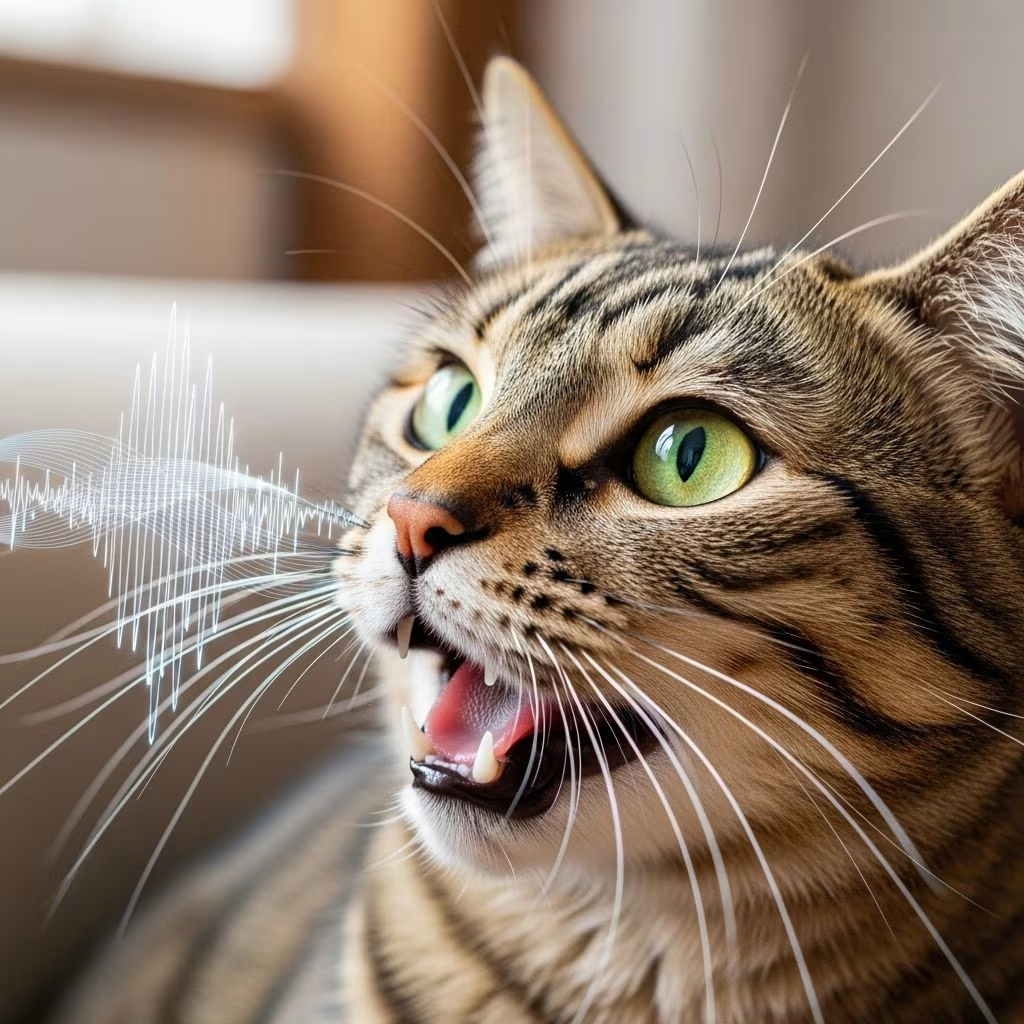
Cats possess a rich repertoire of sounds that serve as their primary means of communication, especially with humans. These vocalizations range from soft purrs to intense growls, each carrying specific messages about their emotions, needs, or intentions. Understanding these noises can transform your relationship with your pet, allowing you to respond appropriately to their signals.
The Science Behind Feline Sounds
Feline vocalizations evolved primarily for interaction with humans rather than other cats. Adult cats rarely meow at each other, reserving this sound for people to convey hunger, affection, or discomfort. Research indicates cats produce over 100 distinct vocalizations, varying in pitch, duration, and intensity to express a spectrum of feelings. The larynx and vocal cords create these sounds, modulated by the cat’s brain to match contexts like contentment or distress.
Context is crucial; the same sound can mean different things based on body language, environment, and frequency. For instance, a purr often signals happiness but can also indicate pain in injured cats, as the vibration promotes healing.
Common Cat Sounds and Their Interpretations
Let’s break down the most frequent vocalizations, explaining their typical meanings and when to pay close attention.
Meowing: The Universal Call
The meow is the quintessential cat sound, versatile and directed mostly at humans. Short, high-pitched meows act as greetings or casual hellos, while drawn-out, low-toned ones demand food, entry, or attention. Kittens meow to locate their mother, a behavior persisting into adulthood for owner interaction.
- Greeting meow: Brief and cheerful, often when you return home.
- Demanding meow: Prolonged and insistent, signaling hunger or playtime.
- Distressed meow: Guttural and intense, indicating anxiety, like at the vet.
Each household develops unique meow ‘dialects’ for specific requests, highlighting cats’ adaptability to human cues.
Purring: More Than Just Contentment
Purring involves rapid vibrations from the laryngeal muscles, audible during both inhalation and exhalation. Commonly linked to pleasure during petting, it also occurs in stressful situations like illness or injury, aiding bone healing through specific frequencies.
| Context | Purr Meaning | Accompanying Signs |
|---|---|---|
| Relaxed petting | Contentment | Half-closed eyes, kneading paws |
| In pain or fear | Self-soothing | Tense body, dilated pupils |
| Nursing kittens | Comforting | Mother licking offspring |
Observe ears and tail: forward ears suggest happiness, flattened ones warn of discomfort.
Chirps, Trills, and Chatter: Excitement and Greeting
These bird-like sounds convey positivity. A trill is a short, rising note, like a friendly \”hello\” from mother cats to kittens or adults to owners. Chirps and chattering happen when spotting prey through a window, with jaw trembling from predatory thrill.
- Trill: Excited greeting or encouragement to follow.
- Chirp/Chatter: Frustration at unreachable birds or insects.
These vocalizations strengthen social bonds and express mild arousal.
Growls, Hisses, and Yowls: Warning Signals
Aggressive sounds protect territory or signal fear. Growls are low, rumbling threats; hisses mimic snakes to deter; yowls are loud cries of distress or mating calls.
In multi-cat homes, these prevent fights by establishing boundaries. Unneutered cats yowl more during heat, carrying far to attract mates.
| Sound | Purpose | Response Advice |
|---|---|---|
| Growl | Territorial warning | Give space, avoid eye contact |
| Hiss | Fear defense | Retreat slowly |
| Yowl | Pain or heat | Check for injury; consult vet |
Contextual Factors Influencing Vocalizations
No sound exists in isolation. Age affects usage: kittens meow frequently, adults less so among peers. Breed variations exist, with Siamese cats being notably vocal. Health issues amplify certain noises; excessive meowing might signal hyperthyroidism or cognitive decline in seniors.
Environmental triggers matter too. Boredom leads to attention-seeking meows, while new pets provoke growls. Track patterns with a journal: note time, sound, and situation for insights.
Enhancing Communication with Your Cat
Responding correctly reinforces trust. For meows, provide food or play promptly. Mimic trills to greet back, fostering reciprocity. Ignore demands sparingly to avoid training bad habits, but address genuine needs.
Enrich environments with toys, scratching posts, and perches to reduce frustration vocalizations. Spaying/neutering cuts mating yowls significantly.
Health Indicators in Cat Noises
Changes warrant attention. Sudden loud meowing could mean pain, deafness, or thyroid problems. Purring with aggression signals discomfort. Consult vets for persistent alterations, as early detection saves lives.
Frequently Asked Questions (FAQs)
Why does my cat meow at night?
Nighttime meowing often stems from hunger, loneliness, or age-related confusion. Ensure dinner is late, provide comfort, and rule out medical issues.
Is excessive purring always good?
No, context matters. Purring during stress or illness is self-comforting, not happiness.
What if my cat chatters at birds?
It’s instinctual excitement. Offer puzzle toys channeling hunting urges.
Do cats yowl more as they age?
Yes, due to cognitive dysfunction. Vet check-ups and routines help manage it.
Can I train my cat to meow less?
Yes, by fulfilling needs proactively and ignoring attention bids. Consistency is key.
Advanced Tips for Cat Whisperers
Record sounds for analysis; apps identify patterns. Study body language: tail flicks with growls amplify threats. Multi-cat dynamics require monitoring inter-cat vocalizations, mostly non-verbal.
Building vocabulary involves repetition. Say \”food\” during meals; cats associate words with meows. Patience yields fluent conversations.
References
- Listening and Understanding Your Cat’s Meow — Purina. 2023. https://www.purina.com.au/cat-meow-meaning.html
- The 10 main sounds a cat makes — Fundación Affinity. 2022-10-15. https://www.fundacion-affinity.org/en/library/the-10-main-sounds-a-cat-makes
- Cat Vocalizations and What They Mean — Jackson Galaxy (YouTube). 2020-08-22. https://www.youtube.com/watch?v=LxhT_q9oUf8
- Cat communication — Wikipedia. 2026-02-01. https://en.wikipedia.org/wiki/Cat_communication
- 9 Cat Noises and What They Mean — PetMD. 2024-05-10. https://www.petmd.com/cat/general-health/cat-noises



