
Cat Tail Signals: Complete Guide To Reading Your Cat’s Tail
Unlock the secrets of your cat's emotions through tail movements and positions for stronger bonds and better care.
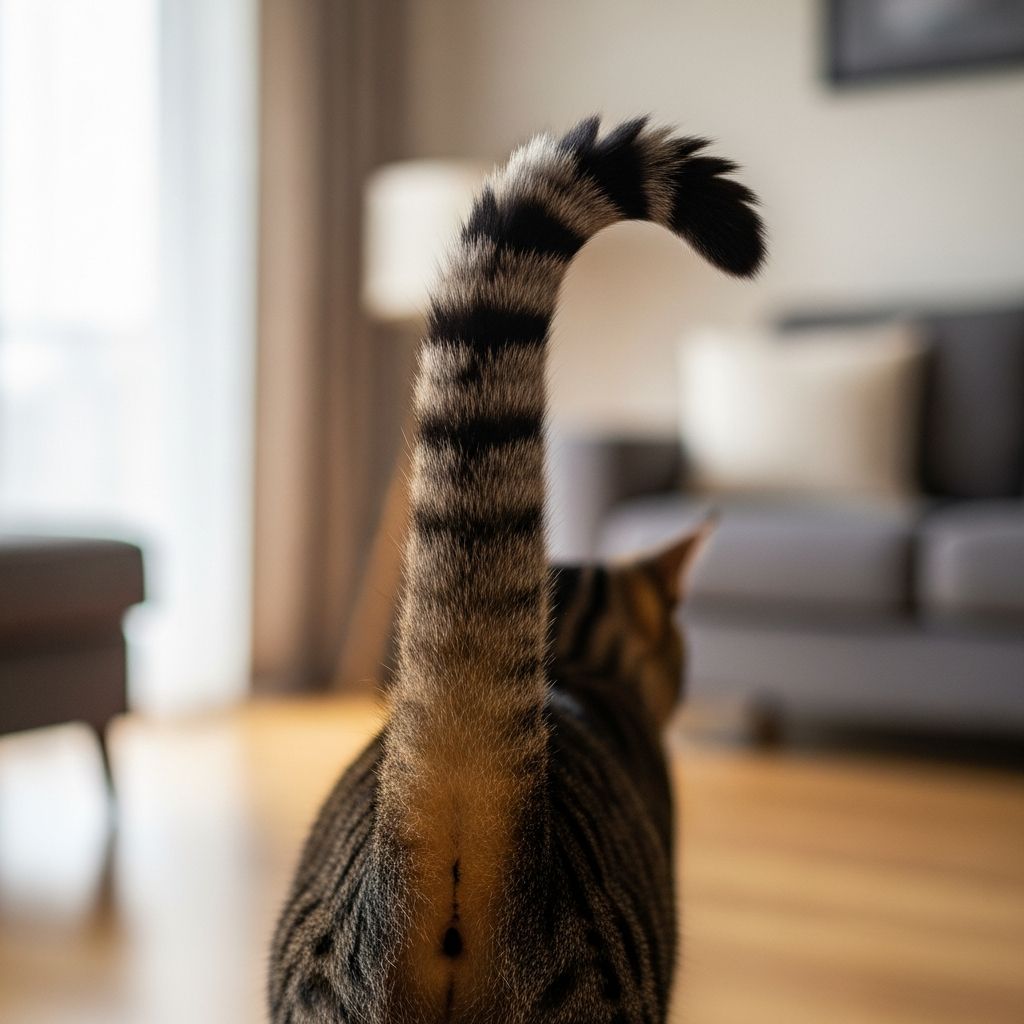
Cats convey a wide array of emotions through their tails, serving as a primary tool for nonverbal communication with humans and other felines. Observing tail positions and movements allows pet owners to interpret needs, moods, and intentions accurately, fostering deeper connections and preventing misunderstandings.
The Anatomy and Purpose of a Cat’s Tail
A cat’s tail is more than an appendage; it functions as a balance aid during jumps and runs, a sensory organ packed with nerve endings, and a dynamic communicator. These nerves detect subtle environmental changes, helping cats navigate tight spaces or detect nearby threats without turning their heads. In social contexts, tail signals combine with ear positions and body posture to form comprehensive messages, though research highlights ears as slightly more predictive in cat-to-cat interactions.
Positive Tail Positions: Signs of Happiness and Confidence
When a cat holds its tail straight up, it typically signals confidence, sociability, and a friendly approach. This upright posture, often seen as kittens greet their mothers or adults meet familiar humans, invites interaction and petting. A slight quiver at the tip while held high amplifies excitement, especially upon seeing a beloved owner, akin to a vibrating welcome.
The question-mark curl, where the tail rises vertically but hooks at the end, denotes a playful, amicable mood ready for engagement. Cats displaying this prefer affection on cheeks, chin, or ears rather than direct tail handling.
Table: Common Friendly Tail Gestures
| Tail Position | Meaning | Best Response |
|---|---|---|
| Straight up, steady | Confident greeting | Offer pets or play |
| Straight up, quivering | Thrilled excitement | Reciprocate affection |
| Question-mark hook | Playful invitation | Scratch face area |
Neutral and Relaxed Tail Behaviors
A tail wrapped snugly around the body often indicates relaxation or self-warming, common in resting outdoor cats seeking comfort. This position suggests a desire for minimal disturbance, though context matters—pair it with soft eyes for contentment.
During movement, cats may twine tails with companions or gently drape them over a human arm, mimicking a hug to express affection and trust. Such wrapping reinforces bonds in multi-cat homes or with owners.
Warning Signals: Agitation and Aggression
Fast lashing or thrashing tails scream irritation or impending aggression. This rapid side-to-side whip, sometimes thumping the ground, demands space—ignoring it risks escalation to swats, hisses, or bites. Twitching tails, subtler and focused, appear during hunts or window-watching birds, signaling intense concentration rather than anger.
Tucked tails low or between legs reveal fear, submission, or discomfort, often with arched backs or flattened ears. Pain, illness, or threats prompt this protective posture, urging gentle observation over intervention.
Contextual Factors in Tail Interpretation
Tail signals gain full meaning when viewed alongside ears, eyes, whiskers, and overall posture. For instance, erect ears with a high tail predict positive interactions, while flattened ears override tail cues toward negativity. Changes in tail movement during petting—from still to lashing—indicate overstimulation, a cue to pause.
Gender and familiarity influence displays; females more often use upright tails in greetings, especially leading to rubbing. Indoor vs. outdoor settings also alter baselines—strays may hold tails lower due to caution.
Scientific Insights into Feline Tail Communication
Studies confirm tails as key in human-cat bonds, with upright displays signaling approachability more than in cat-cat dynamics, where ears dominate. A 1997 University of Southampton experiment showed cats preferring silhouettes with raised tails, underscoring instinctive recognition. Peer-reviewed analysis of dyadic interactions emphasizes multimodal cues, blending tail with ears for outcome prediction.
Practical Tips for Responding to Tail Cues
- Observe holistically: Combine tail with facial and body signals for accuracy.
- Respect boundaries: Cease interaction at lashing or tucking to build trust.
- Encourage positives: Reward upright tails with play or treats to reinforce bonds.
- Monitor changes: Sudden shifts may signal health issues; consult vets if persistent.
- Practice daily: Note patterns during routines to personalize care.
Common Myths About Cat Tails
Many assume all upright tails mean happiness, overlooking quivers or contexts like spraying territory. Tail chasing isn’t mere play—stress or medical issues like hyperesthesia warrant checks. Wrapping isn’t always cuddly; tight coils signal unease.
Enhancing Your Cat’s Communication Skills
Expose kittens to varied interactions to develop nuanced signaling. Provide enrichment like toys and perches to reduce frustration tails. Consistent responses to cues teach reliability, strengthening human-feline rapport.
Frequently Asked Questions (FAQs)
What does a puffed-up tail mean?
A bushy, inflated tail signals fear or aggression, as cats make themselves appear larger to deter threats. Accompanied by hissing, it’s a clear back-off warning.
Why does my cat flick its tail while purring?
Mild twitching with purring might show contentment mixed with overstimulation. Slow pets and watch for escalation.
Is tail wagging the same in cats as dogs?
No—cat wags indicate annoyance, unlike dogs’ joyful version. Context is crucial.
Can injured tails affect communication?
Yes, pain limits movement, mimicking fear signals. Seek veterinary care promptly.
How to teach my cat better tail signals?
You can’t ‘teach’ but reinforce through positive responses, encouraging clear expression.
Advanced Tail Reading for Multi-Cat Homes
In groups, tail twining denotes alliances, while parallel lashing shows collective irritation. Kittens learn from mothers’ displays, inheriting social fluency. Monitor hierarchies—dominant cats lead with high tails.
For seniors or rescues, tails may stiffen with age or trauma. Patience rebuilds expressiveness, improving welfare.
References
- How to Read Your Cat’s Tail Language and Meaning — The Refined Feline. 2023. https://www.therefinedfeline.com/how-to-read-your-cats-tail-language-and-meaning/
- Heads and Tails: An Analysis of Visual Signals in Cats, Felis catus — PMC/NCBI (Peer-reviewed). 2021-09-29. https://pmc.ncbi.nlm.nih.gov/articles/PMC8469685/
- Deciphering Your Cat’s Tail Body Language — Wellness Pet Food. 2023. https://www.wellnesspetfood.com/blog/deciphering-your-cats-tail-body-language/
- How to Read Your Cat’s Tail Language and Meaning — PetMD. 2023. https://www.petmd.com/cat/behavior/cat-tail-language
- Why Do Cats Have Tails — Cats Protection. 2023. https://www.cats.org.uk/cats-blog/why-do-cats-have-tails
- Cat Tail Communication — Ark-Valley Humane Society. 2023. https://www.ark-valley.org/cat-tail-communication/
Similar Articles








Read full bio of medha deb




